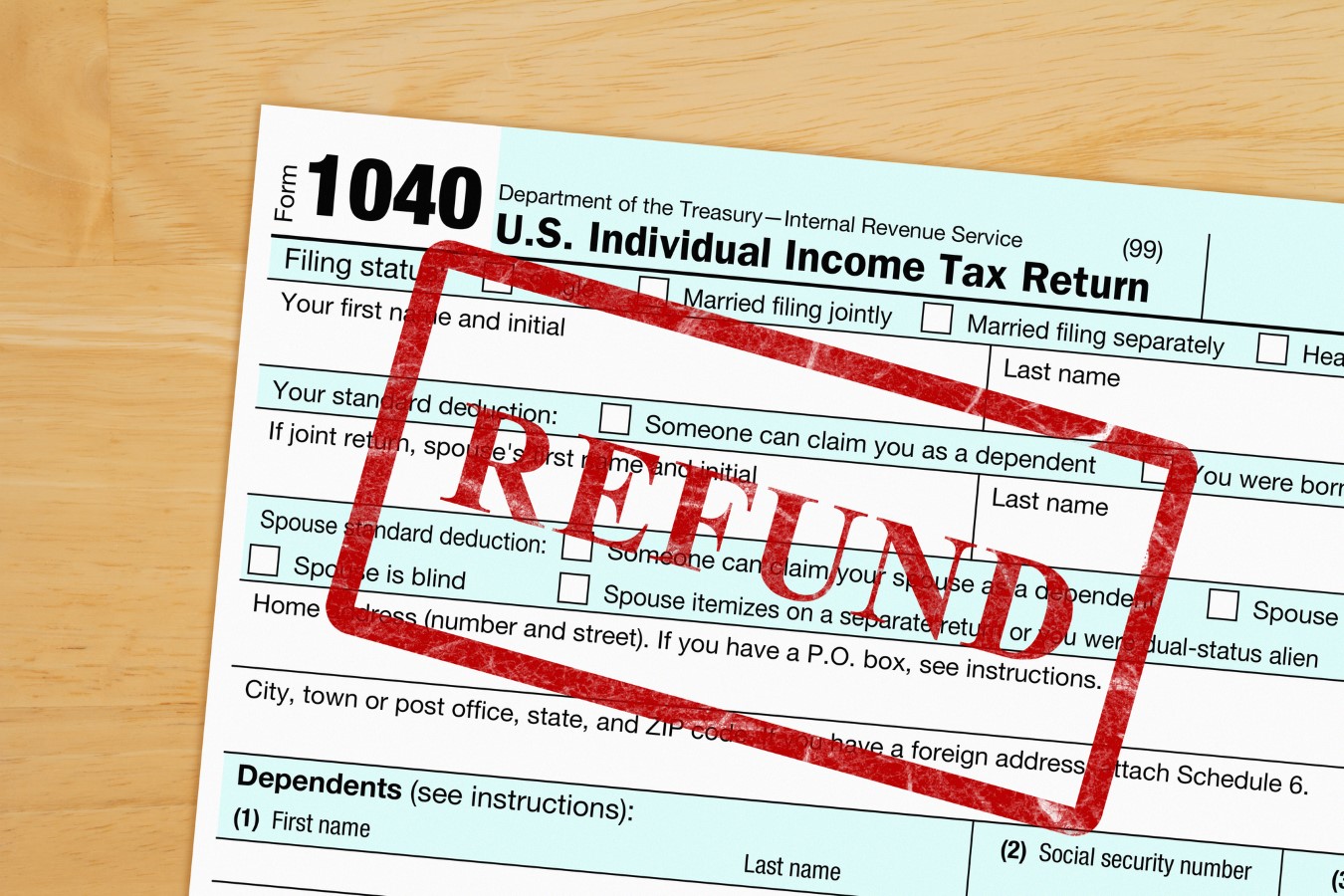
$1,000–$2,000 Refunds? Millions of Americans Could See a Bigger-Than-Usual Tax Season After Trump Tax Law

Americans may be in for an unusually large payday next tax season. Treasury Secretary Scott Bessent says the upcoming filing year could deliver some of the biggest tax refunds in history; thanks to sweeping tax cuts in President Donald Trump’s One Big Beautiful Bill Act (OBBBA).
Treasury Secretary Predicts a “Gigantic” Refund Year
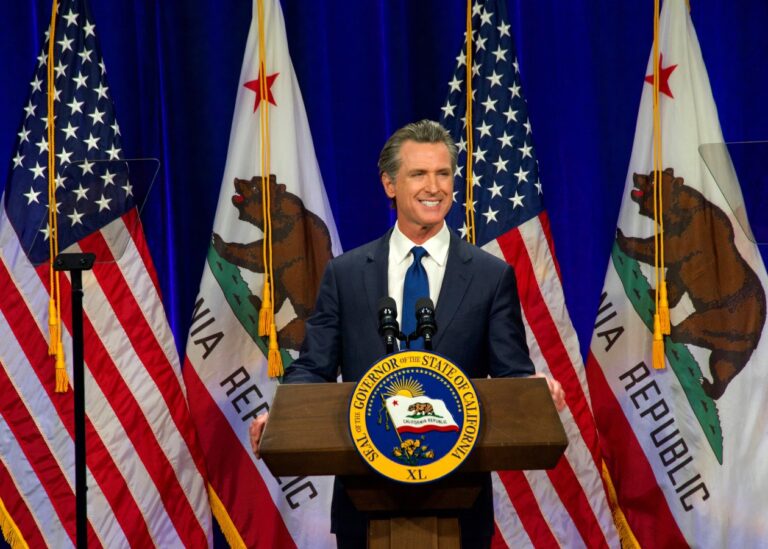
Treasury Secretary Scott Bessent, who is also serving as acting IRS commissioner, made waves during an appearance on the All-In Podcast this week when he predicted a massive refund cycle in early 2026.
According to Bessent, many American households could receive $1,000 to $2,000 in tax refunds; far above normal levels.
His reasoning is simple: workers didn’t adjust their tax withholdings after the Trump tax cuts passed, meaning they paid more throughout the year than they ultimately owed.
What Is the One Big Beautiful Bill Act?

Signed into law by President Trump in July 2025, the One Big Beautiful Bill Act is a sweeping spending and tax package that introduced broad-based tax cuts for individuals and families.
Crucially, many of these tax changes apply retroactively to the beginning of 2025, setting the stage for larger refunds when taxpayers file their returns in 2026.
Why Refunds Are Bigger Instead of Paychecks

Normally, tax cuts show up gradually as higher take-home pay. That didn’t happen this time.
Because the IRS did not update withholding tables after the OBBBA became law, most employers continued withholding taxes at pre-cut levels. The result? Workers effectively overpaid taxes throughout 2025 and will get that money back in one lump sum.
How Much Money Are We Talking About?

The nonpartisan Tax Foundation estimates that the OBBBA reduced individual taxes by $144 billion for 2025. Outside analyses suggest as much as $100 billion of that could be returned to taxpayers through refunds.
On average, refunds could increase by up to $1,000, though actual amounts will vary based on income, family size, and deductions.
Seven Tax Cuts Fueling Larger Refunds

The Tax Foundation identified seven major tax changes under the OBBBA that could boost refunds, including:
An increased child tax credit
A higher standard deduction
A larger SALT deduction cap
New or expanded deductions for seniors
Deductions for auto loan interest
Expanded exclusions for tip income
New deductions for overtime pay
Together, these provisions significantly reduce tax liability for many households.
Tip Income Gets a Break

Under the new tax law, tip income will be deductible for tax years 2025 through 2028, whether or not you itemize your deductions.
This deduction applies to qualified tips; cash or credit card tips, earned in jobs the IRS identifies as customarily receiving tips as of December 31, 2024.
The Treasury Department published the official list of eligible occupations by October 2, 2025.
The maximum deduction is $25,000 per year.
For self-employed workers, the deduction cannot exceed the net income from the business where the tips were earned.
To claim it, taxpayers must include their Social Security Number on their return and file jointly if married.
The deduction gradually phases out for those with a modified adjusted gross income (MAGI) above $150,000 for single filers and $300,000 for joint filers.
No Tax On Overtime Pay

Unlike tips, overtime pay did not previously have separate reporting lines on Form W-2 because regular wages and overtime were taxed the same.
Under the new law, workers can claim a deduction for qualified overtime pay of $12,500 for singles and $25,000 for married couples filing jointly.
Like the tip deduction, this is a temporary deduction for tax years 2025 through 2028 and applies whether or not you itemize.
For this rule, overtime compensation is defined as the amount above your regular rate of pay; essentially the “half” portion of time-and-a-half pay. Only this extra portion qualifies for the deduction.
While the IRS had previously indicated that overtime pay should be reported on Form W-2, Form 1099, or another statement, the lack of W-2 changes in 2025 means it’s currently unclear how this income will be reported for claiming the deduction.
New Senior Deduction

Under the One Big Beautiful Bill Act (OBBBA), seniors age 65 and older can claim a new, temporary $6,000 deduction starting in 2025, which expires after 2028.
This deduction is available whether you take the standard deduction or itemize your deductions.
It serves as a substitute for Trump’s “no tax on Social Security” promise, as there is no separate provision for Social Security.
The deduction applies to taxpayers who are 65 or older by the last day of the tax year.
It is in addition to the current senior standard deduction and can be claimed by all eligible seniors, regardless of itemizing.
For married couples where both spouses qualify, the deduction doubles to $12,000.
Taxpayers must include their Social Security Number on the return and file jointly if married.
The deduction gradually phases out for those with a modified adjusted gross income (MAGI) above $75,000 for single filers or $150,000 for joint filers.
Auto Loan Interest Deduction

A temporary deduction allows taxpayers to deduct interest on qualified auto loans from 2025 through 2028.
It applies to personal use vehicles on a loan originated after 2024 with final assembly in America.
The deduction phases out for MAGI above $100,000 (single) or $200,000 (joint filers).
Retroactive application to January 1, 2025, provides relief to households paying higher auto loan interest.
Increased State and Local Tax (SALT) Deduction

OBBBA raises the SALT deduction limits for taxpayers paying high state and local taxes from $10,000 to $40,000. This cap is also scheduled to increase by 1% each year from 2026 to 2029.
Effective 2025–2028, more of your state income, property, and sales taxes can reduce federal taxable income.
Phase-outs start at $500,000 MAGI.
Residents of high-tax states stand to benefit most, with retroactive effect for 2025.
Permanent Increase in the Standard Deduction

The standard deduction is permanently increased under OBBBA: $15,750 for singles and $31,500 for married couples filing jointly in 2025, indexed annually for inflation.
This permanent boost simplifies filing for millions, reduces taxable income across the board, and complements temporary deductions for tips, overtime, and seniors.
Permanent Boost to the Child Tax Credit

The child tax credit is permanently raised to $2,200 per child. The credit will be adjusted annually for inflation starting in 2026.
Phase-outs apply at $200,000 MAGI for singles and $400,000 MAGI for joint filers. Fully refundable, it ensures low- and middle-income families receive the maximum benefit, further increasing expected refunds.
Who Benefits the Most From the Refund Surge?

Households with multiple workers, children, or qualifying deductions stand to gain the most.
Middle-income families are expected to see particularly noticeable increases, especially those who qualify for the enhanced child tax credit or standard deduction.
Not everyone will receive a massive refund, but millions could see checks larger than anything they’ve received before.
Could This Be the Largest Refund Cycle Ever?

The Trump administration believes so. Officials are openly predicting the largest tax refund cycle in U.S. history during the spring 2026 filing season, driven by the combination of retroactive tax cuts and unchanged withholding rates.
What Taxpayers Should Do Now

While the refunds may be welcome, experts caution that large refunds mean taxpayers effectively gave the government an interest-free loan. Going forward, workers may want to review and adjust their withholdings to better align with the new tax law.
For now, though, millions of Americans can look forward to a rare surprise: a tax season that actually feels like a windfall.
Like Financial Freedom Countdown content? Be sure to follow us!
Ray Dalio Joins Michael Dell in Backing Trump Accounts for America’s Kids

President Trump’s signature “One Big Beautiful Bill” created tax-advantaged “Trump Accounts” to give American children an investment-powered jumpstart in life. President Trump’s new child investment program is quickly attracting some of the most powerful names in American finance. Hedge fund legend Ray Dalio and tech billionaire Michael Dell are now publicly backing Trump Accounts, pouring billions of private dollars into a system designed to give U.S. children an early stake in the stock market. What began as a $1,000 government seed investment for newborns is rapidly evolving into a public-private wealth-building engine, backed by Wall Street, Silicon Valley, and major philanthropies. Supporters say the surge of elite funding is a clear signal that Trump Accounts could become one of the most significant long-term savings initiatives ever created for American families.
Ray Dalio Joins Michael Dell in Backing Trump Accounts for America’s Kids
Trump Promises $1,776 ‘Warrior Dividend’ Checks; Even as Tariff Revenue Falls Short

President Donald Trump is sending $1,776 checks to nearly 1.5 million U.S. military personnel ahead of the holidays, branding the payments as a patriotic “warrior dividend.” The White House says the money reflects respect for service members and the success of Trump’s tariff-driven economic strategy. But behind the headline-grabbing checks is a growing gap between tariff promises and tariff reality.
Trump Promises $1,776 ‘Warrior Dividend’ Checks; Even as Tariff Revenue Falls Short

Did you find this article helpful? We’d love to hear your thoughts! Leave a comment with the box on the left-hand side of the screen and share your thoughts.
Also, do you want to stay up-to-date on our latest content?
1. Follow us by clicking the [+ Follow] button above,
2. Give the article a Thumbs Up on the top-left side of the screen.
3. And lastly, if you think this information would benefit your friends and family, don’t hesitate to share it with them!

John Dealbreuin came from a third world country to the US with only $1,000 not knowing anyone; guided by an immigrant dream. In 12 years, he achieved his retirement number.
He started Financial Freedom Countdown to help everyone think differently about their financial challenges and live their best lives. John resides in the San Francisco Bay Area enjoying nature trails and weight training.
Here are his recommended tools
Personal Capital: This is a free tool John uses to track his net worth on a regular basis and as a retirement planner. It also alerts him wrt hidden fees and has a budget tracker included.
Platforms like Yieldstreet provide investment options in art, legal, real estate, structured notes, venture capital, etc. They also have fixed-income portfolios spread across multiple asset classes with a single investment with low minimums of $10,000.