Millions Could Lose Student Loan Forgiveness Under New Trump Rules

A major student-loan forgiveness program millions of Americans rely on could soon look very different. Changes to the Public Service Loan Forgiveness (PSLF) program are already finalized; and while they won’t take effect until 2026, they’re sparking lawsuits, political backlash, and deep concern among borrowers who’ve spent years working toward debt relief.
What Is Public Service Loan Forgiveness and Why It’s So Important

Congress created PSLF in 2007 to encourage Americans to work in public service roles like teaching, nursing, emergency response, and nonprofit work. The deal was simple: make qualifying student-loan payments for 10 years while working for a government or nonprofit employer, and the remaining balance would be forgiven.
For many borrowers, PSLF isn’t just a perk; it’s the financial backbone that made public service careers possible in the first place.
About 7 Million Borrowers Are Enrolled

Roughly 7 million student-loan borrowers are currently enrolled in PSLF. Many have planned their careers, family finances, and long-term goals around the expectation that their loans would eventually be wiped out after a decade of service.
That’s why even future changes; years away, are causing anxiety.
What the Trump Administration Is Changing

The Department of Education finalized a new rule in response to a March executive order from President Donald Trump. The rule narrows who qualifies as a “public service” employer, potentially limiting which jobs allow borrowers to earn credit toward loan forgiveness.
The administration says the goal is to ensure PSLF benefits go only to employers that follow the law and genuinely serve the public.
A New, Narrower Definition of “Qualifying Employer”

Under the new rule, employers that participate in what the department calls “substantial illegal purpose” could be excluded from PSLF eligibility.
A department fact sheet says this includes actions such as aiding and abetting violations of Federal immigration laws, engaging in a pattern of violating State laws or providing gender-affirming care.
If an employer is ruled ineligible, borrowers working there would no longer earn PSLF credit for future payments; even if their job duties haven’t changed.
When the Changes Will Take Effect

The rule is scheduled to take effect in July 2026. For now, loan servicers say borrowers don’t need to panic.
“For now, there are no impacts to borrowers, payment counts, or discharges,” a servicer said in a recent update.
What Happens If an Employer Is Disqualified

Employers deemed ineligible will be notified and allowed to challenge the decision.
For employers that have been found to have a substantial illegal purpose and wish to regain
eligibility, they may either:
1. Reapply to serve as a qualifying employer 10 years after the date of the determination; or
2. Enter into a corrective action plan prior to an ineligibility determination that is agreed to
by the Secretary in order to maintain a qualifying employer status.
Borrowers, however, cannot appeal on their own regarding employer’s qualifying employer status.
If an employer loses eligibility, any new payments borrowers make while working there will not count toward PSLF; though payments made in the past would still be valid.
Borrowers Say the Changes Could Derail Their Careers

Public service workers say the uncertainty alone is damaging. Many worry they could lose forgiveness eligibility through no fault of their own, even after years of qualifying payments.
One teacher said, “I’m counting my lucky stars that there’s still the possibility that this PSLF program will remain intact because I have dedicated my whole professional life to public service.”
Democrats Push Back and Bernie Sanders Speaks Out
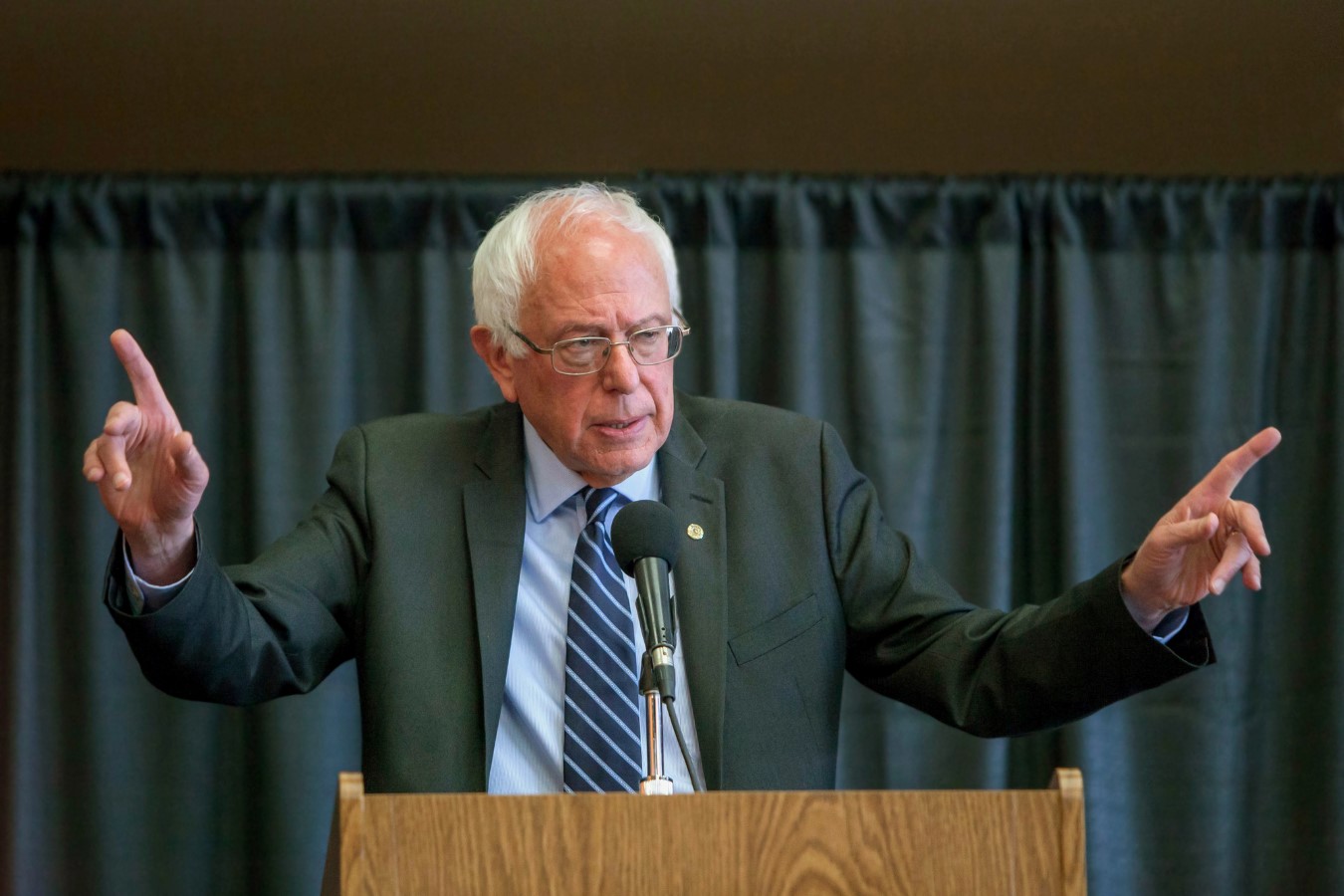
Democratic lawmakers have been vocal in opposing the changes, accusing the administration of politicizing a program meant to support public servants.
Sen. Bernie Sanders wrote on X that the administration does “not have the right to take away student debt forgiveness from teachers, nurses, veterans and other public servants if they do not show loyalty to your right-wing political agenda.”
Other Democrats argue the rule could discourage people from entering public service jobs at a time when schools, hospitals, and nonprofits already face staffing shortages.
Lawsuits Are Challenging the Rule

Advocacy groups and nonprofits have already filed lawsuits against the administration, claiming the changes violate federal law and undermine the purpose of PSLF. The lawsuits argue that narrowing eligibility could harm government and nonprofit recruitment nationwide.
The legal battles could determine whether the rule is delayed, altered; or blocked entirely.
The Administration’s Defense

Education Department officials say the changes are necessary to protect taxpayers and refocus PSLF on traditional public service roles. Under Secretary of Education Nicholas Kent said the program should prioritize “teachers, first responders, and civil servants who tirelessly serve their communities.”
What Borrowers Can Do Right Now

For now, nothing changes for current PSLF borrowers. Payments still count, and forgiveness remains available under existing rules; at least until 2026.
But for millions of public service workers, the debate has already raised a troubling question: Can they still count on a promise they’ve been working toward for years?
Like Financial Freedom Countdown content? Be sure to follow us!
Remember These Christmas Movie Houses? Their Prices Today Will Shock You

Christmas movies are timeless favorites. From Home Alone to Miracle on 34th Street, these beloved films feature now-iconic homes where families gather and holiday magic unfolds. We’ve all imagined living in these houses; but could the average American afford to buy one today?
Remember These Christmas Movie Houses? Their Prices Today Will Shock You
New Social Security CBO Proposal Would Cut Benefits for Top 50% of Retirees
The Congressional Budget Office (CBO) has released a controversial new budget option that aims to shore up the federal government’s finances by targeting the retirement checks of high-income Americans. With the federal deficit hitting a staggering $1.8 trillion in Fiscal Year 2025 and the Social Security insolvency clock ticking down to 2033, this proposal offers a stark look at one potential “fix”: changing the math to pay the wealthy less.
New Social Security CBO Proposal Would Cut Benefits for Top 50% of Retirees
Social Security Crisis: New Plan Could Tax High Earners to Prevent 21% Benefit Cut
The United States is facing a fiscal double-whammy: a ballooning federal budget deficit and a Social Security trust fund racing toward depletion. With the Congressional Budget Office (CBO) releasing new numbers on potential fixes, one option is gaining significant attention: uncapping the Social Security payroll tax.
Social Security Crisis: New Plan Could Tax High Earners to Prevent 21% Benefit Cut
The $270,000 Retirement Trap: Vanguard Says You’re Planning for Health Care Costs All Wrong

Health care costs in retirement are consistently cited as the single greatest financial worry for pre-retirees and retirees. Experts, like those at the Employee Benefit Research Institute (EBRI), have quantified the savings needed for a 65-year-old couple at a daunting $270,000 to cover total health care premiums and out-of-pocket costs throughout retirement (excluding long-term care). However, new research from Vanguard, in partnership with Mercer Health & Benefits, suggests that focusing on this large, lifetime lump sum is not only overwhelming but also the wrong way to plan.
The $270,000 Retirement Trap: Vanguard Says You’re Planning for Health Care Costs All Wrong

Did you find this article helpful? We’d love to hear your thoughts! Leave a comment with the box on the left-hand side of the screen and share your thoughts.
Also, do you want to stay up-to-date on our latest content?
1. Follow us by clicking the [+ Follow] button above,
2. Give the article a Thumbs Up on the top-left side of the screen.
3. And lastly, if you think this information would benefit your friends and family, don’t hesitate to share it with them!

John Dealbreuin came from a third world country to the US with only $1,000 not knowing anyone; guided by an immigrant dream. In 12 years, he achieved his retirement number.
He started Financial Freedom Countdown to help everyone think differently about their financial challenges and live their best lives. John resides in the San Francisco Bay Area enjoying nature trails and weight training.
Here are his recommended tools
Personal Capital: This is a free tool John uses to track his net worth on a regular basis and as a retirement planner. It also alerts him wrt hidden fees and has a budget tracker included.
Platforms like Yieldstreet provide investment options in art, legal, real estate, structured notes, venture capital, etc. They also have fixed-income portfolios spread across multiple asset classes with a single investment with low minimums of $10,000.