Student loan forgiveness could restart after court ruling on SAVE plan but millions of borrowers still face uncertainty
Millions of federal student loan borrowers could soon see progress toward loan forgiveness resume after a federal judge cleared the legal path for the Biden-era SAVE repayment plan to move forward. But despite the court ruling, uncertainty remains as the Department of Education has not said whether it will restore the program’s benefits, leaving more than 7 million borrowers still waiting for clarity.
The decision comes after nearly two years of legal battles over SAVE, a program designed to lower monthly payments and accelerate loan forgiveness for borrowers with federal student debt. Even though the court dismissed the lawsuit blocking the plan, the Department of Education has not yet provided guidance on whether it will restart the program’s benefits.
Federal court dismisses lawsuit that froze SAVE plan

A federal district court overseeing the litigation recently dismissed the lawsuit challenging the SAVE repayment plan, effectively dissolving the injunction that had blocked the program since 2024.
The court rejected a request from the Department of Education and the state of Missouri to formally approve a settlement agreement that would have ended the program. Instead, the judge concluded there was no longer a legal dispute because both sides now oppose SAVE and Congress has already passed legislation to phase it out.
The dismissal surprised many borrowers and experts who expected the court to rule on the proposed settlement rather than end the case entirely.
Judge again refuses request to re-block the repayment program
After the lawsuit was dismissed, Missouri and several other GOP-led states quickly appealed and asked the district court to temporarily reinstate the injunction that had blocked SAVE.
However, the judge denied that request, allowing the earlier dismissal to stand.
“The key ingredient missing in this case—in light of the parties’ lack of adversity and agreement as to the intended relief—is any real necessity that the Court intervene to redress an alleged ongoing injury when the parties have, and have had, the ability, and now the agreement, to achieve it among themselves,” the court wrote in its ruling.
The judge added that continuing litigation would serve little purpose given the parties’ alignment.
Court says settlement did not require its approval
In rejecting the request to enforce the proposed settlement agreement, the court also noted that the deal had never formally been presented for approval.
“As to that settlement agreement, in addition to the Court’s previous note that the settlement agreement was not presented to the Court … the Court notes that no party has alerted the Court that the settlement agreement cannot be carried out absent Court approval, which was not sought,” the ruling stated.
The judge suggested the Department of Education could still pursue administrative steps to wind down the program without court involvement.
SAVE plan could still be repealed through rulemaking

The settlement agreement itself indicated that the Department of Education planned to repeal the SAVE regulations through a negotiated rulemaking process.
That process, however, is lengthy and complicated, often taking more than a year to complete.
The court appeared to question why the department had not already begun preparing for the transition, noting that officials had ample time to plan changes after Congress passed legislation phasing out SAVE.
Congress has already scheduled the end of SAVE
The long-term fate of the program may already be decided by legislation.
Congress passed a major policy package known as the One Big Beautiful Bill Act, which mandates that the SAVE plan be dissolved by July 2028.
That law also introduces a new repayment structure called the Repayment Assistance Plan (RAP), which will eventually replace many existing income-driven repayment options.
Millions of borrowers remain stuck in forbearance

Roughly 7 to 8 million borrowers enrolled in SAVE have been in administrative forbearance since mid-2024 as the plan moved through the courts.
During that period, payments were paused. However, borrowers have also been unable to make progress toward forgiveness under SAVE’s time-based rules.
Interest began accruing again in August 2025, meaning balances for many borrowers are now growing despite the payment pause.
Advocates say borrowers should regain benefits immediately

Borrower advocacy groups argue that the court’s ruling removes the last legal barrier preventing the Department of Education from restoring SAVE’s benefits.
“A federal judge in Missouri has (again!) declined to block SAVE from going into effect,” the advocacy group Protect Borrowers said in a statement. “Eligible borrowers currently have a right to cancellation and affordable payments under SAVE.”
Similarly, the Debt Collective said borrowers should be able to apply for relief again.
“Legally, individual debtors should be able to apply for student debt relief again starting now,” the group said.
Despite the legal opening, many experts believe the Department of Education may not quickly revive SAVE.
“This is uncharted territory,” said a legal expert noting that the department is unlikely to reimplement the program “without a fight.”
Student loan advocates also noted that the department could move to eliminate the program earlier than 2028 through the rulemaking process.
Even if officials wanted to restart the program immediately, the administrative systems required to do so cannot simply be turned back on overnight.
Borrowers may face a financial cliff when payments resume

Experts warn that borrowers should prepare for potentially higher payments once the current forbearance ends.
The National Consumer Law Center warned that eliminating SAVE could dramatically increase monthly bills.
“The consequence of eliminating the SAVE plan for individual borrowers would be enormous,” the organization said. “For example, an unmarried student loan borrower with annual income of $45,000 enrolled in the SAVE plan could see their monthly payments more than quadruple from $38 to $175.”
Advocates say the sudden jump could be financially jarring for borrowers who have not received bills for more than a year.
Borrowers are encouraged to explore other repayment options

Because the future of SAVE remains uncertain, advisors say borrowers should start evaluating other repayment plans.
One option is Income-Based Repayment (IBR), which caps monthly payments at roughly 10% to 15% of discretionary income and is expected to remain available after the repayment system overhaul.
Borrowers could also consider Pay As You Earn (PAYE) or Income-Contingent Repayment (ICR), though both programs are scheduled to end by 2028.
A new program known as the Repayment Assistance Plan (RAP) is scheduled to launch in July as part of the broader overhaul of federal student loan repayment.
RAP will set payments between 1% and 10% of a borrower’s adjusted gross income, with a minimum monthly payment of $10.
However, the timeline to forgiveness under RAP is longer than under many existing plans, requiring about 30 years of qualifying payments before any remaining balance is canceled.
Borrowers still waiting for guidance from the Education Department

For now, the biggest question remains whether the Department of Education will act on the court’s decision.
The agency has not updated its SAVE legal challenge webpage since December and has not announced whether it plans to resume payments or process forgiveness under the program.
As the courts, Congress and federal agencies continue to battle over the program’s future, millions of borrowers remain stuck in a prolonged state of uncertainty.
“It is not lost on the Court that millions of borrowers who enrolled in the SAVE plan have patiently awaited clarity while this litigation has proceeded,” the judge wrote. “However, that clarity must come from the Department of Education, and not from this Court.”
Like Financial Freedom Countdown content? Be sure to follow us!
14 essential strategies to maximize your Social Security and avoid costly mistakes
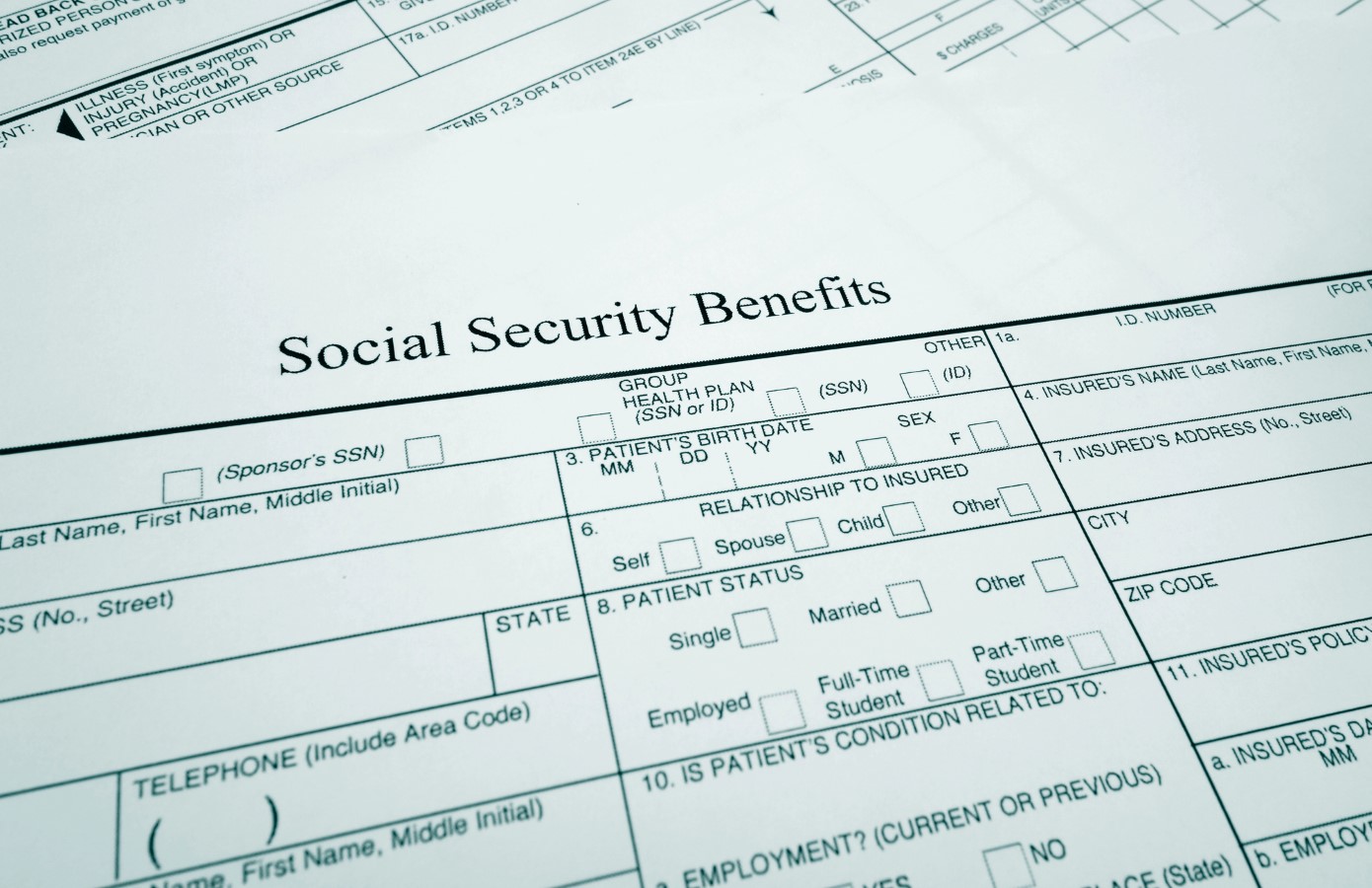
Social Security is a vital lifeline for many seniors, providing crucial income support during retirement. With inflation at its highest in four decades, Social Security’s inflation-adjusted benefits offer protection against rising costs.
Rising interest rates have disrupted many retirement portfolios, causing bond fund values to plummet. In this volatile financial landscape, Social Security can stabilize a typical stock-bond retirement portfolio. By implementing smart strategies, retirees can maximize their Social Security benefits and ensure a more secure financial future.
14 Essential Strategies to Maximize Your Social Security and Avoid Costly Mistakes
11 reasons you should claim Social Security early

Deciding when to claim Social Security is often about maximizing your benefit. Financial planners usually advise delaying your claim for as long as possible to secure the highest monthly payment. Your benefit is based on your lifetime earnings, with a full payout available at your full retirement age (FRA), which is currently between 66 and 67 depending on your birth year. Claiming before FRA results in a permanent reduction in your monthly benefit, while waiting beyond FRA leads to a permanent increase. However, the decision isn’t solely about maximizing the monthly check. Personal factors such as health, family circumstances, and financial needs can play a significant role in determining the right time to claim.
11 Reasons You Should Claim Social Security Early

Did you find this article helpful? We’d love to hear your thoughts! Leave a comment with the box on the left-hand side of the screen and share your thoughts.
Also, do you want to stay up-to-date on our latest content?
1. Follow us by clicking the [+ Follow] button above,
2. Give the article a Thumbs Up on the top-left side of the screen.
3. And lastly, if you think this information would benefit your friends and family, don’t hesitate to share it with them!

John Dealbreuin came from a third world country to the US with only $1,000 not knowing anyone; guided by an immigrant dream. In 12 years, he achieved his retirement number.
He started Financial Freedom Countdown to help everyone think differently about their financial challenges and live their best lives. John resides in the San Francisco Bay Area enjoying nature trails and weight training.
Here are his recommended tools
Personal Capital: This is a free tool John uses to track his net worth on a regular basis and as a retirement planner. It also alerts him wrt hidden fees and has a budget tracker included.
Platforms like Yieldstreet provide investment options in art, legal, real estate, structured notes, venture capital, etc. They also have fixed-income portfolios spread across multiple asset classes with a single investment with low minimums of $10,000.