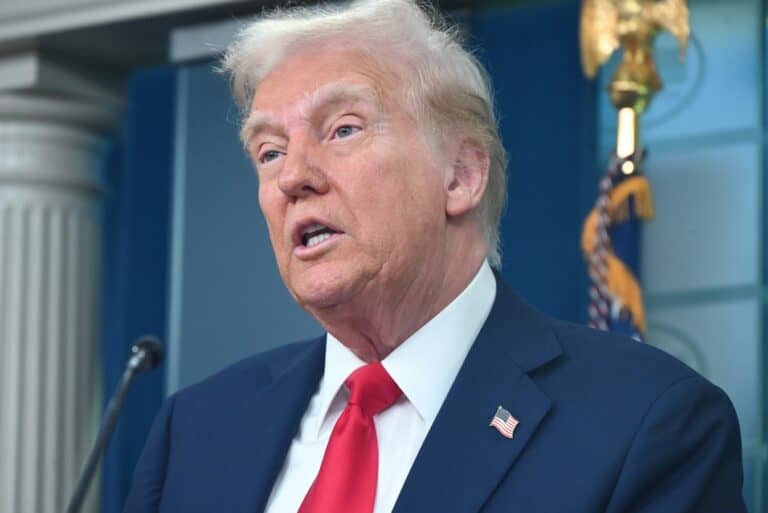
Trump Pushes Plan to Boost Home Prices While Promising Lower Mortgage Rates

President Donald Trump said he wants to push housing prices higher rather than lower, even as affordability remains a growing concern for millions of Americans. During a Jan. 29 Cabinet meeting, Trump outlined his vision for the housing market, arguing that rising home values help homeowners build wealth and financial security. His comments come as his administration rolls out multiple housing-related policies aimed at expanding homeownership opportunities.
Trump’s Strategy: Easier Home Buying Through Lower Interest Rates

Trump said his approach to improving housing access focuses on lowering mortgage interest rates rather than reducing housing costs. He indicated that his upcoming selection to lead the Federal Reserve would play a key role in this strategy by potentially supporting lower borrowing costs. According to Trump, cheaper financing could make homes more attainable even if property values continue to climb.
“I don’t want to drive housing prices down. I want to drive housing prices up for people that own their homes,” Trump said. “And they can be assured that’s what’s going to happen.”
Protecting Homeowners’ Wealth

Trump emphasized that his housing strategy is centered on protecting current homeowners and preserving property values. He framed homeownership as a major source of wealth creation for American families and suggested lowering prices could undermine that financial stability.
“Existing housing, people that own their homes, we’re going to keep them wealthy,” Trump said. “We’re going to keep those prices up. We’re not going to destroy the value of their homes so that somebody who didn’t work very hard can buy a home.
“We’re going to make it easier to buy,” the president added. “We’re going to get interest rates down. But I want to protect the people who, for the first time in their lives, feel good about themselves. They feel like, you know, that they’re wealthy people.”
Administration Policies Target Housing Affordability

Despite his comments about rising home prices, Trump has introduced several policies aimed at addressing affordability concerns. On Jan. 20, he signed an executive order banning institutional investors from purchasing single-family homes, arguing that large investment firms have reduced supply for individual buyers. The administration has also been purchasing mortgage-backed securities in an effort to push mortgage rates lower.
Housing Prices Continue to Climb

Recent data shows that housing prices remain elevated across much of the country. Housing prices rose in November 0.6% compared with the previous month, according to the U.S. Federal Housing Finance Agency’s latest report released Jan. 27. Meanwhile, Redfin reported that the national median home price reached a record $433,000 in November 2025. Zillow forecasts housing prices will rise another 1.9% in 2026.
Affordability Challenges Persist for Buyers

Even as home values have climbed, wage growth has struggled to keep pace after adjusting for inflation. This imbalance has pushed homeownership out of reach for many Americans, particularly first-time buyers. The housing market is also widely viewed as stagnant due to a persistent national housing shortage, especially for lower-priced homes.
Trump Rejects 401(k) Down Payment Proposal

Trump has also distanced himself from proposals aimed at expanding homeownership through retirement savings. Last week, he said he opposes a plan supported by his economic team that would allow Americans to use funds from their 401(k) retirement accounts to cover home down payments. The proposal had been pitched as a way to help younger Americans overcome high upfront housing costs.
Trump Nominates Kevin Warsh to Lead the Federal Reserve

Trump recently announced Kevin Warsh as his nominee to become the next chairman of the Federal Reserve. For more than a year, Trump has criticized current Fed Chair Jerome Powell for resisting calls to aggressively lower interest rates. Powell’s term is scheduled to end in May, potentially paving the way for a leadership shift that could influence mortgage and borrowing costs.
Democrats Criticize Trump’s Housing Comments
Trump’s remarks about driving housing prices higher quickly sparked criticism from Democratic lawmakers. Many argued that rising prices could worsen affordability challenges for aspiring homeowners.
“Are you trying to buy your first home? Trump wants your prices to go up,” Sen. Tammy Duckworth (D-Ill.) wrote on the social platform X. “But sure Donald, keep saying affordability is a hoax.”
Lawmakers Point to Economic Pressures on Buyers
Other Democrats highlighted broader economic pressures they believe are worsening housing affordability. Rep. Jason Crow (D-Colo.) criticized the administration’s policies, suggesting trade measures may be adding to housing costs.
“Millions of hardworking folks can’t afford to buy—and the President’s tariffs are making it even more expensive,” Crow wrote.
Rep. Suzan DelBene (D-Wash.) also pushed back on Trump’s housing vision, warning that rising home prices could further strain families.
“Millions of families are struggling to afford a roof over their heads & Trump’s response is to increase the price of housing. He doesn’t care about making your life more affordable.”
Housing Costs Have Surged Since the Pandemic

Housing affordability has become a central political and economic issue following sharp price increases over the past several years. According to Redfin data, the median home sale price reached $429,000 in December, marking an increase of more than 28 percent compared with December 2020. Rising mortgage rates and limited housing supply have further complicated the market for prospective buyers.
Housing Expected to Remain a Key Political Issue

The debate over housing affordability is expected to intensify as the midterm elections approach later this year. Trump has framed his policies as protecting homeowners and building wealth, while critics argue the strategy could leave first-time buyers struggling to enter the market. The competing perspectives underscore the challenges policymakers face in balancing rising home values with accessibility for future homeowners.
Like Financial Freedom Countdown content? Be sure to follow us!
‘Too Big to Save’: Big Short Investor Michael Burry Issues Dire Warning on AI Mania

Michael Burry, the investor made famous by The Big Short, is sounding one of his starkest alarms yet; this time on artificial intelligence. Burry says the AI boom has all the hallmarks of a historic bubble and warns that when it bursts, the damage could ripple through markets and the broader economy in ways policymakers won’t be able to stop.
‘Too Big to Save’: Big Short Investor Michael Burry Issues Dire Warning on AI Mania
Trump Hints at Letting Homeowners Write Off Their Houses to Level the Playing Field With Corporations

President Trump is teasing a potentially sweeping change to the tax code that could affect millions of American homeowners: allowing depreciation deductions on primary residences. The idea, floated during a high-profile appearance in Davos, comes as housing costs dominate voter concerns ahead of the November midterm elections and as the White House rolls out a broader slate of unconventional housing policies.
Did you find this article helpful? We’d love to hear your thoughts! Leave a comment with the box on the left-hand side of the screen and share your thoughts.
Also, do you want to stay up-to-date on our latest content?
1. Follow us by clicking the [+ Follow] button above,
2. Give the article a Thumbs Up on the top-left side of the screen.
3. And lastly, if you think this information would benefit your friends and family, don’t hesitate to share it with them!

John Dealbreuin came from a third world country to the US with only $1,000 not knowing anyone; guided by an immigrant dream. In 12 years, he achieved his retirement number.
He started Financial Freedom Countdown to help everyone think differently about their financial challenges and live their best lives. John resides in the San Francisco Bay Area enjoying nature trails and weight training.
Here are his recommended tools
Personal Capital: This is a free tool John uses to track his net worth on a regular basis and as a retirement planner. It also alerts him wrt hidden fees and has a budget tracker included.
Platforms like Yieldstreet provide investment options in art, legal, real estate, structured notes, venture capital, etc. They also have fixed-income portfolios spread across multiple asset classes with a single investment with low minimums of $10,000.