Democratic-led states sue Trump administration over student loan caps for nurses and healthcare degrees

A coalition of Democratic-led states and municipal governments has filed a federal lawsuit against the Trump administration, seeking to block a Department of Education rule that sharply limits federal student loan access for students pursuing certain advanced healthcare and professional degrees.
The lawsuit, filed in the U.S. District Court for the District of Maryland, argues that the administration unlawfully narrowed the definition of a “professional degree” when implementing changes tied to the One Big Beautiful Bill Act. Plaintiffs contend the rule will make it harder for students in fields such as nursing, physical therapy, speech-language pathology, occupational therapy and physician assistant programs to afford graduate education.
The coalition is asking the court to strike down the rule before the new loan caps take effect on July 1, 2026.
One Big Beautiful Bill Act created new borrowing caps

The legal dispute stems from H.R. 1, also known as the One Big Beautiful Bill Act, which President Donald Trump signed into law in July 2025.
The legislation imposed major new borrowing limits for graduate students. Under the law, most graduate students are capped at borrowing $20,500 annually and $100,000 overall in federal student loans. Students classified as pursuing “professional degrees” are allowed to borrow up to $50,000 annually with a $200,000 lifetime cap.
Before the law’s passage, graduate students were generally able to borrow up to the full cost of attendance for their programs through federal loans.
While the law itself established the caps, the lawsuit centers on how the Department of Education interpreted which degree programs qualify for the higher “professional” borrowing limits.
States argue Education Department unlawfully narrowed eligibility

According to the complaint, Congress intentionally tied the definition of a professional degree to an existing federal regulation in effect on July 4, 2025. That regulation described professional programs as those requiring advanced academic preparation and professional licensure for entry into a field.
The states argue the Department of Education unlawfully narrowed that definition in a final rule issued on May 1, 2026.
Under the department’s new interpretation, qualifying professional programs generally must be doctoral-level programs requiring at least six years of postsecondary education and fit within a limited group of specific instructional categories.
The lawsuit claims this approach excludes many modern healthcare professions that require advanced degrees and licensure but were not traditionally classified alongside medicine or law decades ago.
Several healthcare-related graduate programs are excluded from the higher borrowing caps under the new rule, including nursing, physical therapy, nurse anesthesia, occupational therapy, physician assistant studies, speech-language pathology and audiology.
The Education Department’s list of qualifying professional programs includes only 11 categories: chiropractic, clinical psychology, dentistry, law, medicine, optometry, osteopathic medicine, pharmacy, podiatry, theology and veterinary medicine.
Plaintiffs argue the exclusions ignore how healthcare education has evolved over time.
The lawsuit notes that the federal regulation used by the department dates back to the 1950s “a time when graduate programs in nursing and other healthcare professions barely existed.”
States warn of healthcare worker shortages

State attorneys general and healthcare advocates argue the new borrowing limits could worsen existing shortages of healthcare professionals, especially in underserved and rural communities.
“Higher education is expensive, and our health care system is already under immense strain,” New York Attorney General Letitia James said in a statement. “This rule will shut talented people out of critical professions and leave communities with fewer health care providers they desperately need.”
The American Nurses Association also sharply criticized the rule after it was finalized.
“This Department of Education has chosen to make it harder for nurses to advance their education and their careers,” American Nurses Association president Jennifer Mensik Kennedy said in a statement.
She added: “Make no mistake, this is not a technicality or a footnote. This rule will be felt in real communities, for example, in rural areas where nurse practitioners, midwives, and nurse anesthesiologists are often the only providers of core care services.”
Universities warn students may face large funding gaps

The complaint argues the lower loan limits could create major financial shortfalls for students attending costly graduate healthcare programs.
One example highlighted in the lawsuit is the University of Maryland School of Nursing’s entry-level Master of Science in Nursing program, where annual in-state tuition and fees reportedly total more than $77,000.
Under the new rule, students in that program would qualify only for the lower graduate borrowing limit of $20,500 instead of the $50,000 cap for professional degrees. The lawsuit says that could leave students with an annual funding gap of roughly $29,500.
Plaintiffs warn that students may be forced to abandon their programs, reduce enrollment or turn to private loans carrying significantly higher interest rates.
In a February fact sheet, the American Association of Colleges of Nursing warned nursing students “could be forced to seek high-interest private loans or abandon advanced practice education.”
Education Department says caps will lower college costs

The Trump administration has defended the rule and the broader student loan caps as necessary reforms aimed at reducing tuition inflation and limiting excessive borrowing.
Under Secretary of Education Nicholas Kent accused Democratic officials of prioritizing university finances over affordability for students.
“Clearly, these Democratic governors and attorneys general are more concerned about institutions’ bottom-line rather than American students and families’ ability to access affordable postsecondary education,” Kent said in a statement.
Education Secretary Linda McMahon has also argued that most advanced nursing degrees should still fall within or near the new loan limits and that undergraduate nursing programs will remain unaffected.
“It is our overall goal to bring down the cost of college and education,” McMahon told lawmakers during a recent House education committee hearing. “And I do think that, relative to the shortages we’re having, if we can bring down the cost for nurses in schools, we can get more students to apply.”
Critics question whether colleges will actually lower tuition

Supporters of the rule say stricter loan caps could pressure colleges and universities to reduce tuition costs after decades of rising education expenses.
But critics remain skeptical that schools will lower prices quickly enough to prevent disruptions for students pursuing advanced healthcare degrees.
Preston Cooper of the American Enterprise Institute argued concerns may be overstated, saying: “The rhetoric around new loan limits for nursing programs does not match the reality. The new caps will affect only a small number of programs charging exorbitant prices.”
Still, opponents argue that even limited disruptions could have significant consequences in healthcare fields already struggling with staffing shortages.
The bipartisan criticism directed at McMahon during recent congressional hearings underscores the political sensitivity surrounding the issue.
Lawsuit also challenges limits on grandfathered students. The lawsuit additionally targets the department’s interpretation of the law’s grandfathering provision.
Congress exempted students already enrolled and borrowing federal loans before June 30, 2026, from the new borrowing caps for up to three academic years.
However, the Education Department’s rule removes those protections if a student transfers schools or temporarily withdraws before re-enrolling.
Plaintiffs argue that restriction directly conflicts with the statutory language approved by Congress and unlawfully strips protections from current students.
The states say the department’s approach is arbitrary, capricious and inconsistent with federal law.
Broad coalition joins legal challenge
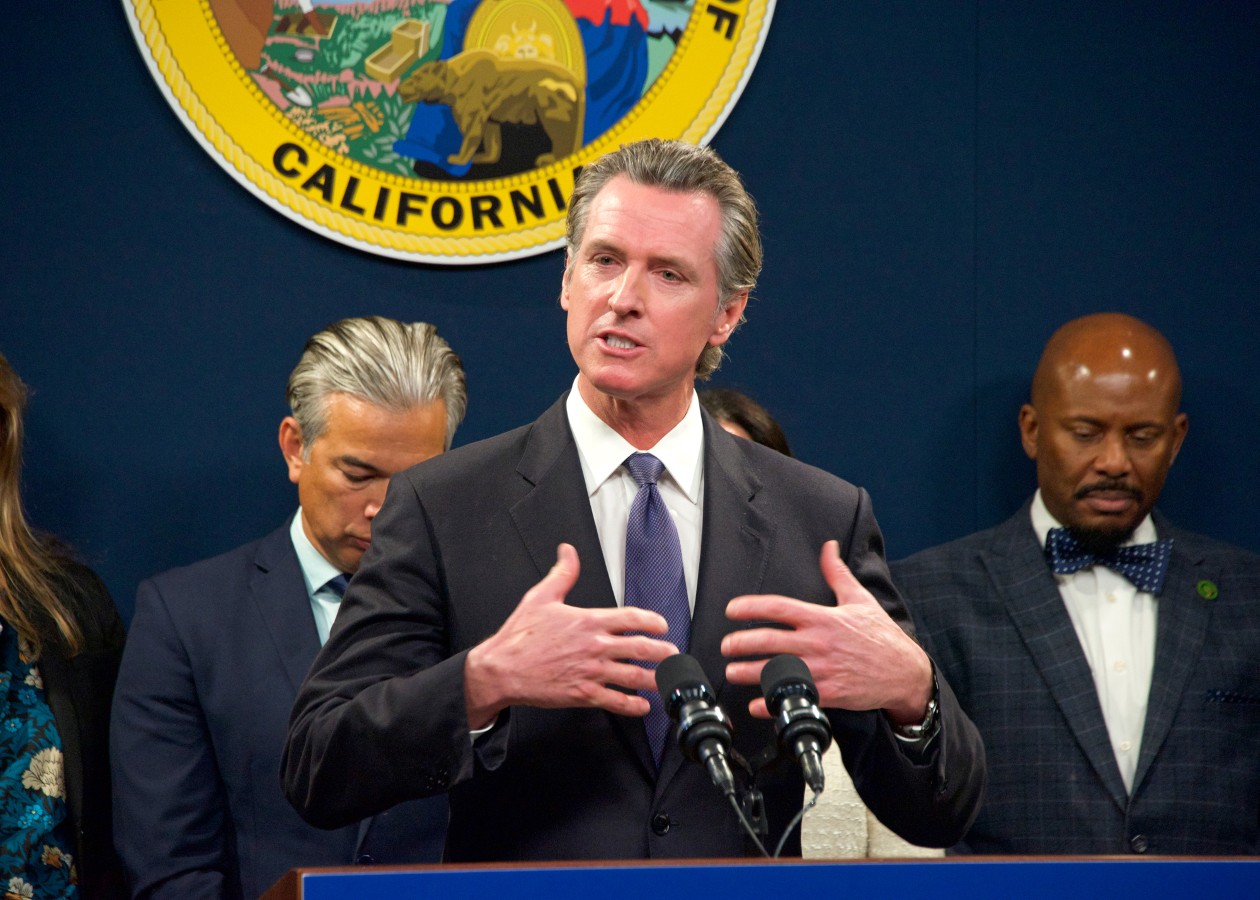
The legal challenge is being led by Maryland Attorney General Anthony G. Brown and New York Attorney General Letitia James.
Other participating states include Arizona, California, Colorado, Connecticut, Delaware, Hawai‘i, Illinois, Maine, Massachusetts, Michigan, Minnesota, Nevada, New Jersey, New Mexico, North Carolina, Oregon, Rhode Island, Vermont, Virginia, Washington and Wisconsin, along with the District of Columbia.
The governors of Kentucky and Pennsylvania also joined the lawsuit as plaintiffs.
“Across the nation, healthcare systems are underwater, with doctors, nurses, and other health professionals stretched to meet the needs of their communities. Nurses, physician assistants, and other health professionals are absolutely vital to keep our healthcare system running,” said California Attorney General Bonta.
“Now, the Trump Administration is threatening to make this crisis even worse by limiting students’ access to the federal student loans that make it possible to pursue the professional degrees needed for critical specialized work. This is not only illegal — it further strains an already strained system and threatens to reduce Californians’ access to medical care. We’ll see the President in court.”
The defendants are the U.S. Department of Education and Education Secretary Linda McMahon.
Court battle could shape future of graduate borrowing

The lawsuit represents one of the most significant legal challenges so far to the Trump administration’s implementation of the One Big Beautiful Bill Act’s education provisions.
If the states succeed, the court could block enforcement of the rule before the July 1 effective date and require the department to rewrite its interpretation of professional degree eligibility.
If the administration prevails, students pursuing many advanced healthcare degrees may soon face significantly lower federal borrowing limits, potentially reshaping enrollment patterns across graduate healthcare education programs nationwide.
Like Financial Freedom Countdown content? Be sure to follow us!
11 reasons you should claim Social Security early

Deciding when to claim Social Security is often about maximizing your benefit. Financial planners usually advise delaying your claim for as long as possible to secure the highest monthly payment. Your benefit is based on your lifetime earnings, with a full payout available at your full retirement age (FRA), which is currently between 66 and 67 depending on your birth year. Claiming before FRA results in a permanent reduction in your monthly benefit, while waiting beyond FRA leads to a permanent increase. However, the decision isn’t solely about maximizing the monthly check. Personal factors such as health, family circumstances, and financial needs can play a significant role in determining the right time to claim.
11 Reasons You Should Claim Social Security Early

Did you find this article helpful? We’d love to hear your thoughts! Leave a comment with the box on the left-hand side of the screen and share your thoughts.
Also, do you want to stay up-to-date on our latest content?
1. Follow us by clicking the [+ Follow] button above,
2. Give the article a Thumbs Up on the top-left side of the screen.
3. And lastly, if you think this information would benefit your friends and family, don’t hesitate to share it with them!

John Dealbreuin came from a third world country to the US with only $1,000 not knowing anyone; guided by an immigrant dream. In 12 years, he achieved his retirement number.
He started Financial Freedom Countdown to help everyone think differently about their financial challenges and live their best lives. John resides in the San Francisco Bay Area enjoying nature trails and weight training.
Here are his recommended tools
Personal Capital: This is a free tool John uses to track his net worth on a regular basis and as a retirement planner. It also alerts him wrt hidden fees and has a budget tracker included.
Platforms like Yieldstreet provide investment options in art, legal, real estate, structured notes, venture capital, etc. They also have fixed-income portfolios spread across multiple asset classes with a single investment with low minimums of $10,000.