Hochul pleads for wealthy New Yorkers to return from red states as Mamdani pushes higher taxes

New York Gov. Kathy Hochul is urging wealthy residents who have relocated out of state to return and help stabilize the Empire State’s tax base. Speaking at a recent forum, she argued that high-net-worth individuals are critical to funding the state’s social programs and public services.
“Maybe the first step should be to go down to Palm Beach and see who we can bring back home because our tax base has been eroded,” the Democratic governor said.
Hochul acknowledged that New York is increasingly competing with states offering lower taxes on corporations and individuals. She noted that remote work has accelerated migration trends, allowing high earners to move more easily to states with more favorable business climates.
“I have to look at the fact that we are in competition with other states who have less of a tax burden on their corporations and their individuals,” she said.
Previous rhetoric returns to haunt Hochul

The governor’s recent comments stand in contrast to her rhetoric during the 2022 campaign, when she urged Republicans such as Lee Zeldin to leave the state.
“Trump and Zeldin and Molinaro – just jump on a bus and head down to Florida where you belong. OK? Get out of town. Because you don’t represent our values,” Hochul said at the time.
Reliance on wealthy taxpayers underscores fiscal reality

New York’s dependence on top earners has long been a defining feature of its tax system. The top 1% of taxpayers contribute roughly 46% of personal income tax revenue, making their migration patterns especially consequential for state finances.
This dynamic has intensified debates over whether higher taxes risk driving away key contributors or whether increased levies are necessary to sustain social programs.
Tensions grow with Mayor Zohran Mamdani over tax hikes
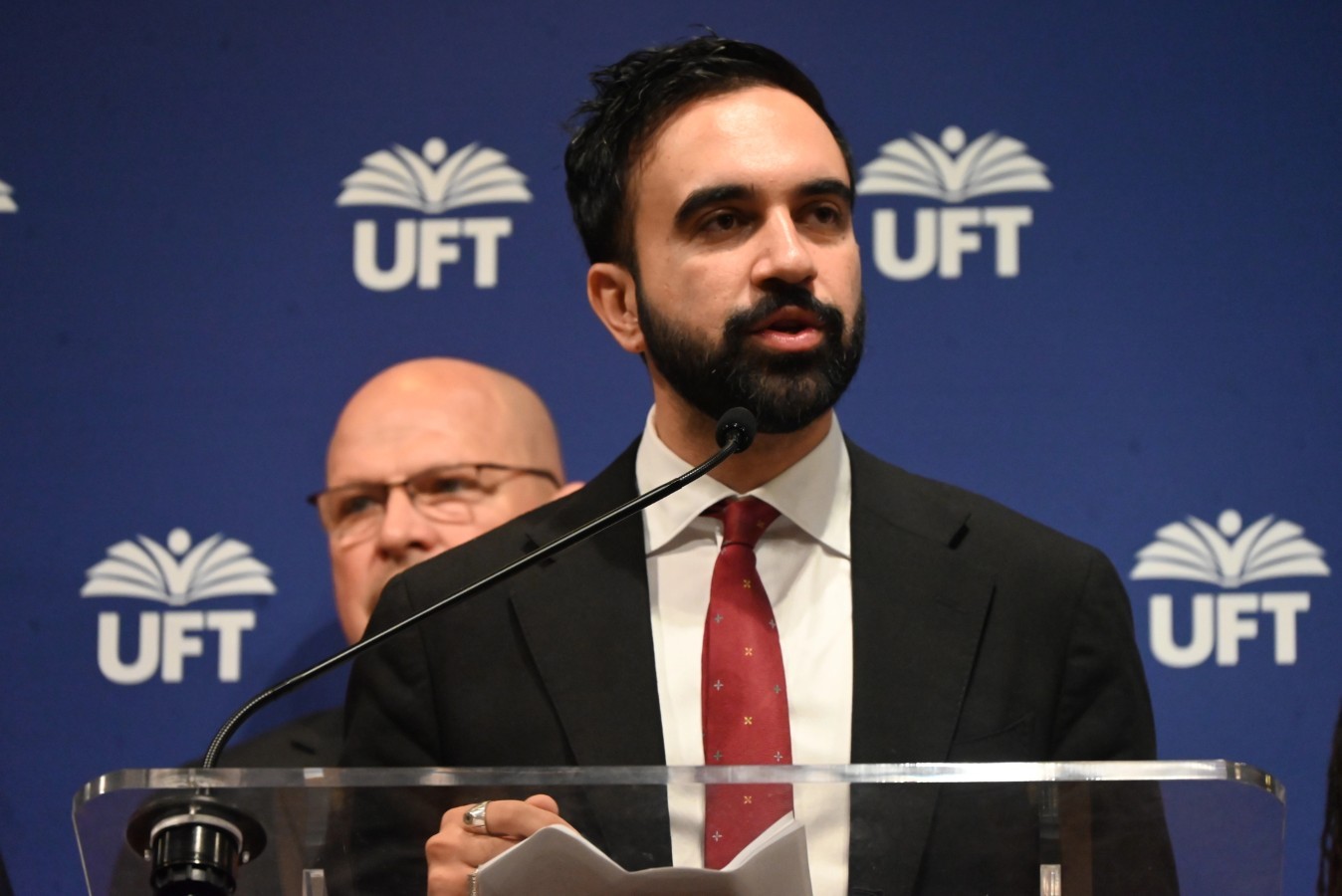
The governor’s appeal comes amid mounting pressure from New York City Mayor Zohran Mamdani and progressive lawmakers to raise income taxes on the wealthy. Mamdani and his allies have backed proposals such as an additional 2% citywide income tax on residents earning more than $1 million.
The mayor has argued that increased revenue is needed to fund his policy agenda and help close a reported $5.4 billion budget gap facing New York City.
Patriotic Millionaires enter the debate
Hochul also took aim at advocacy groups such as Patriotic Millionaires, which have supported higher taxes on top earners. The organization has promoted proposals to lower the estate tax threshold and increase levies on affluent households.
The governor suggested that while some wealthy residents have remained in New York and continued paying taxes, attracting those who have left could be more effective than raising rates further.
Budget pressures shape policy decisions
New York State has faced its own multibillion-dollar budget challenges in recent years. According to Hochul’s office, strong performance on Wall Street helped patch gaps as bonuses rose sharply in 2025, boosting tax receipts.
Despite fiscal pressures, the governor has proposed a record-high $263 billion state budget that includes billions in additional funding for programs such as child care and aid to New York City.
“We have to be smart about this, but we can fund what we want to fund with what we already are taking in,” Hochul said.
If approved, Hochul’s budget would mark roughly $54 billion in additional state spending since she took office in 2021; an increase of about 20%. Critics argue that the expansion reflects a broader pattern of rising expenditures that could further strain taxpayers.
Republican leaders say such growth risks worsening affordability concerns and accelerating out-migration among high earners and businesses.
IRS migration data reveals migration from Blue to Red states
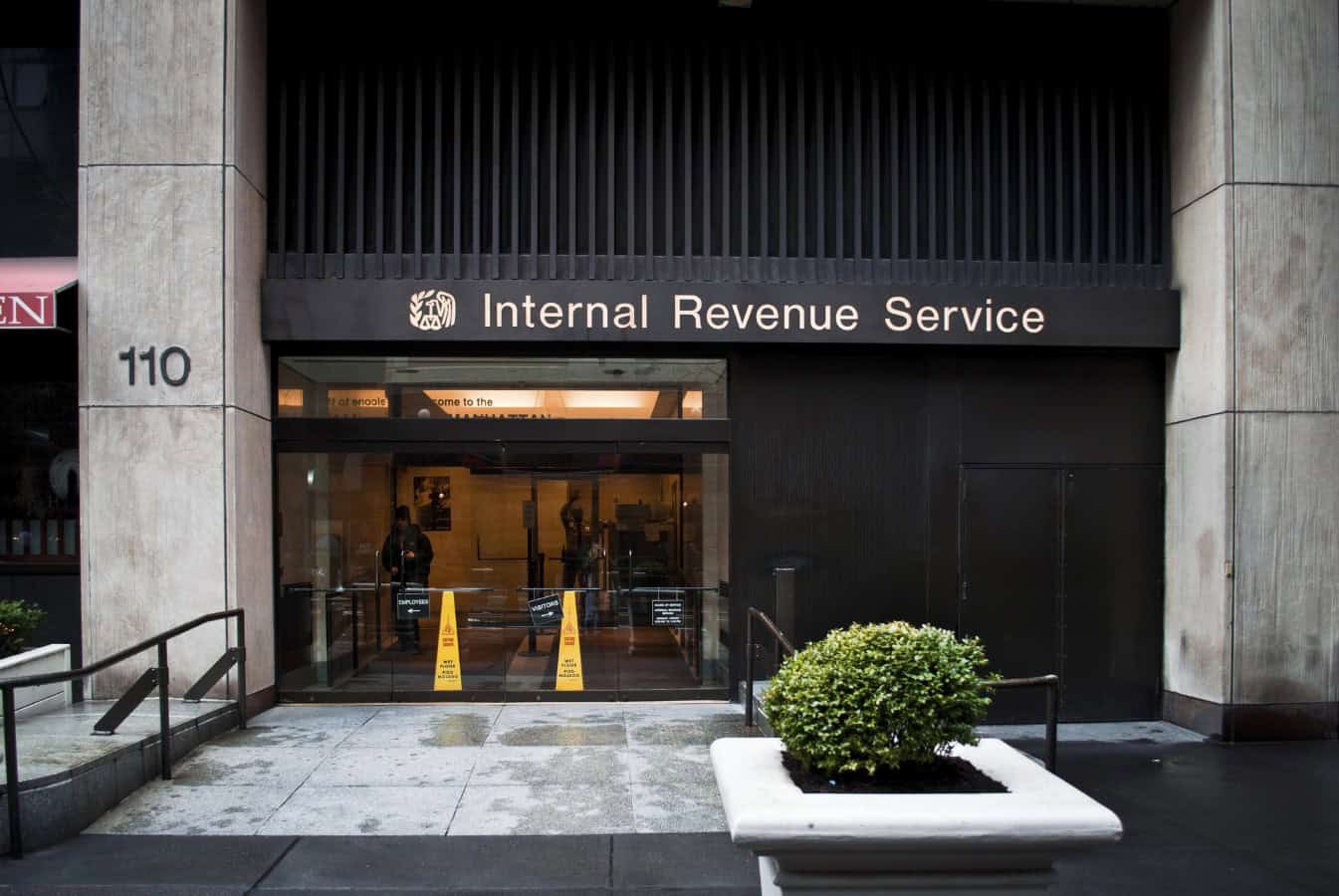
Newly released 2022–2023 migration figures from the Internal Revenue Service highlight a sweeping reshuffle of residents and income across the U.S., with significant implications for state budgets, housing demand, and long-term economic competitiveness.
Lower-tax states are emerging as clear beneficiaries of the trend. Florida gained a net 113,494 residents, including 50,485 high earners, translating into an eye-catching $20.7 billion influx in income; more than $17 billion of which came from top-earning households alone. Texas followed closely, adding 111,079 net new residents and $5.3 billion in additional income.
At the same time, high-tax coastal states experienced steep outflows. California recorded the nation’s largest population loss, with 205,788 net departures; including 37,777 high earners; who collectively took $13 billion in income with them, $7.6 billion from top earners alone. New York also posted heavy losses, shedding 161,963 residents and $10.6 billion in income. Combined, the two states saw nearly 368,000 people and $23.6 billion in annual income relocate elsewhere in just one year; a shift that underscores growing concerns about shrinking tax bases.
Republicans seize on migration trends

Former Dutchess County executive Marc Molinaro criticized Hochul’s appeal, saying the governor is now confronting the consequences of policies that have made New York less affordable.
“It’s awfully rich of her,” Molinaro said. “I’m glad she is acknowledging that the problems she has created have made New York so unaffordable so as to have to beg people to come back from Florida.”
Nassau County Executive Bruce Blakeman, who is running for governor, said Hochul’s new approach highlights broader economic challenges in the state.
“Kathy Hochul finally discovered what New Yorkers already know,” he said in a statement. “When you raise taxes, drive up the cost of living, make it harder to do business, and try to destroy families’ savings, people leave.”
Blakeman has proposed a plan that includes major middle-class tax cuts, property tax reductions, and efforts to lower energy costs.
Residency enforcement reflects the stakes

State tax authorities have developed detailed rules to determine residency status for taxpayers who split time between New York and other states. These include multi-factor tests examining living arrangements, time spent in the state, and even the location of personal items deemed “near and dear.”
Between 2010 and 2017, New York conducted thousands of non-residency audits and reportedly collected about $1 billion from individuals who had attempted to claim residence elsewhere.
2026 and 2028 election looms over policy debate

With Hochul facing re-election later this year, the clash over taxes, spending, and migration is likely to remain central to New York’s political landscape. The governor has emphasized affordability initiatives and spending discipline as potential solutions, while opponents argue that tax reductions and regulatory reforms are needed to retain residents.
As competition from lower-tax states intensifies, the outcome of these policy battles could shape the future of New York’s economy and its ability to fund expansive public programs.
On a national level, the wealth tax debate will determine the Democratic Presidential nominee and also the 2028 elections.
Like Financial Freedom Countdown content? Be sure to follow us!
14 essential strategies to maximize your Social Security and avoid costly mistakes
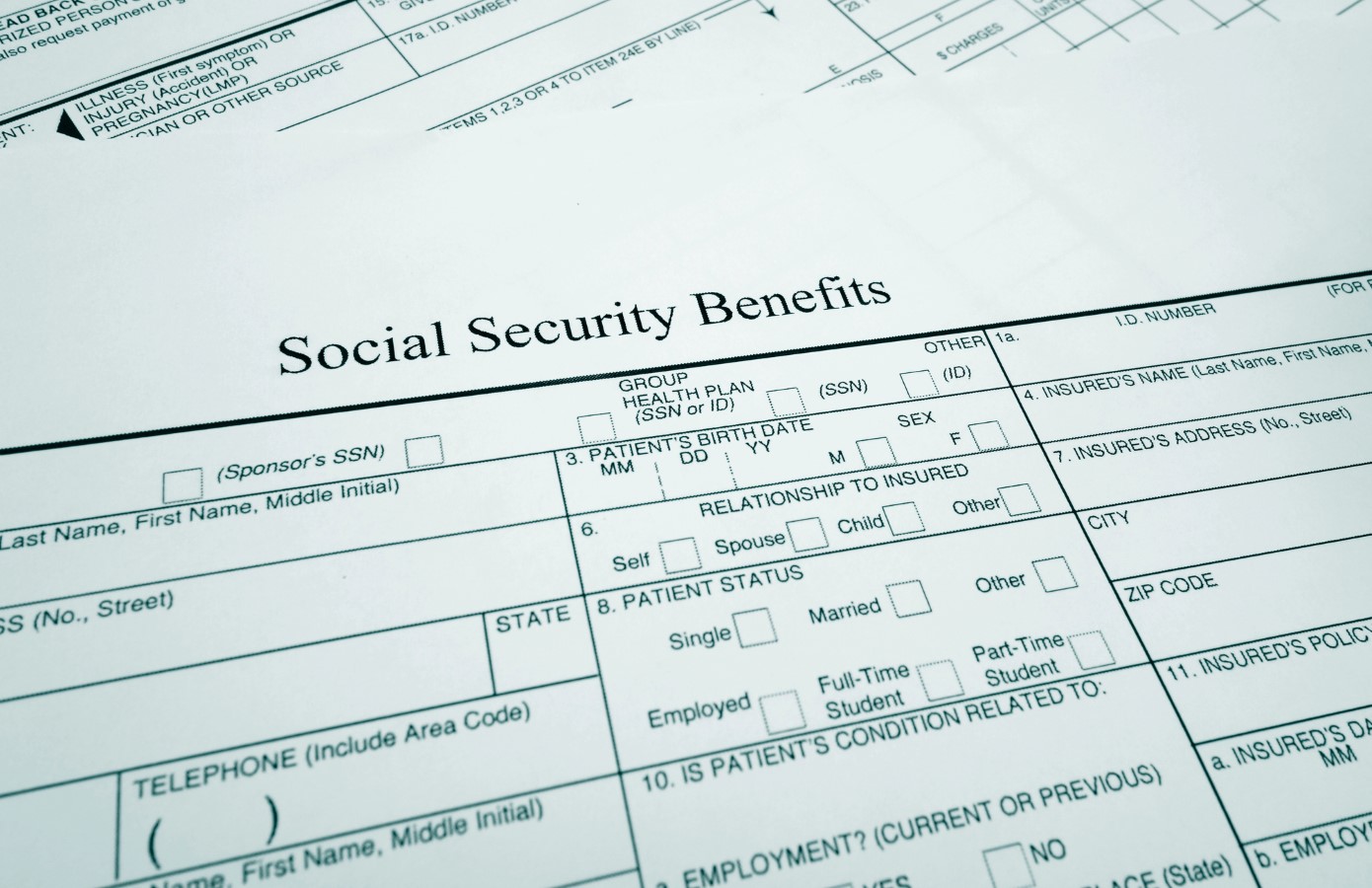
Social Security is a vital lifeline for many seniors, providing crucial income support during retirement. With inflation at its highest in four decades, Social Security’s inflation-adjusted benefits offer protection against rising costs.
Rising interest rates have disrupted many retirement portfolios, causing bond fund values to plummet. In this volatile financial landscape, Social Security can stabilize a typical stock-bond retirement portfolio. By implementing smart strategies, retirees can maximize their Social Security benefits and ensure a more secure financial future.
14 Essential Strategies to Maximize Your Social Security and Avoid Costly Mistakes
11 reasons you should claim Social Security early

Deciding when to claim Social Security is often about maximizing your benefit. Financial planners usually advise delaying your claim for as long as possible to secure the highest monthly payment. Your benefit is based on your lifetime earnings, with a full payout available at your full retirement age (FRA), which is currently between 66 and 67 depending on your birth year. Claiming before FRA results in a permanent reduction in your monthly benefit, while waiting beyond FRA leads to a permanent increase. However, the decision isn’t solely about maximizing the monthly check. Personal factors such as health, family circumstances, and financial needs can play a significant role in determining the right time to claim.
11 Reasons You Should Claim Social Security Early

Did you find this article helpful? We’d love to hear your thoughts! Leave a comment with the box on the left-hand side of the screen and share your thoughts.
Also, do you want to stay up-to-date on our latest content?
1. Follow us by clicking the [+ Follow] button above,
2. Give the article a Thumbs Up on the top-left side of the screen.
3. And lastly, if you think this information would benefit your friends and family, don’t hesitate to share it with them!

John Dealbreuin came from a third world country to the US with only $1,000 not knowing anyone; guided by an immigrant dream. In 12 years, he achieved his retirement number.
He started Financial Freedom Countdown to help everyone think differently about their financial challenges and live their best lives. John resides in the San Francisco Bay Area enjoying nature trails and weight training.
Here are his recommended tools
Personal Capital: This is a free tool John uses to track his net worth on a regular basis and as a retirement planner. It also alerts him wrt hidden fees and has a budget tracker included.
Platforms like Yieldstreet provide investment options in art, legal, real estate, structured notes, venture capital, etc. They also have fixed-income portfolios spread across multiple asset classes with a single investment with low minimums of $10,000.