Inflation hits 3.8% as GDP slows and CNN poll shows voters turning on Trump over rising costs

The U.S. economy grew more slowly in the first quarter of 2026 than previously estimated, as weaker consumer spending, softer inventory investment and rising inflation complicated the White House’s economic messaging and added pressure on American households.
The Commerce Department’s Bureau of Economic Analysis said Thursday that gross domestic product increased at a 1.6% annualized rate in the January-through-March period, revised down from the earlier estimate of 2.0%. Economists surveyed had expected no revision.
The weaker reading follows a sluggish 0.5% growth pace in the fourth quarter of 2025, raising concerns that the economy is losing momentum as inflation accelerates and the Iran war drives up energy costs.
The downward revision reflected softer inventory investment and weaker consumer spending than initially estimated. Consumer spending, which accounts for more than two-thirds of the U.S. economy, was revised lower to a 1.4% growth pace from the previously reported 1.6%.
Economists said the downgrade suggests that the economy entered the second quarter on weaker footing than expected. Growth in business investment remained strong, however, with spending on equipment rising at a 17.2% annualized pace.
Final sales to private domestic purchasers, a key measure of underlying demand that excludes trade, inventories and government spending, increased at a 2.4% pace, slightly below the earlier estimate of 2.5%.
Artificial intelligence spending remains a key growth driver

Despite softer overall growth, economists noted that artificial intelligence-related investment continues to support economic activity.
Business spending on technology and equipment remained one of the strongest components of the GDP report, helping offset weakness in consumer activity and inventory accumulation.
At the same time, profits from current production rose at a sharply slower pace of $40.4 billion during the quarter, down from a $246.9 billion increase in the previous quarter, signaling that companies are facing mounting cost pressures.
Inflation reaches highest level in nearly three years

Separate data released Thursday showed inflation accelerated further in April, underscoring the challenges facing consumers and Federal Reserve policymakers.
The personal consumption expenditures price index, the Fed’s preferred inflation gauge, increased 0.4% for the month and rose 3.8% from a year earlier, the highest annual reading since May 2023.
Core PCE inflation, which excludes food and energy prices, rose 0.2% for the month and 3.3% annually, matching economists’ expectations.
The increase in headline inflation was fueled largely by higher gasoline prices tied to the geopolitical conflict, which has pushed energy costs sharply higher in recent months. Economists increasingly point to the conflict as a major factor behind rising inflation and slowing economic momentum.
Gasoline prices surged 5.5% in April, helping drive a 0.7% jump in goods prices. Housing and utilities costs also climbed 0.6%, while food services and accommodation prices rose 0.5%.
Federal Reserve officials have warned that persistent energy inflation could keep borrowing costs elevated longer than previously expected.
Earlier this year, policymakers had projected one interest rate cut in 2026, but traders are now increasingly pricing in the possibility of a rate hike later this year.
Kevin Warsh faces difficult first inflation test as Fed chair
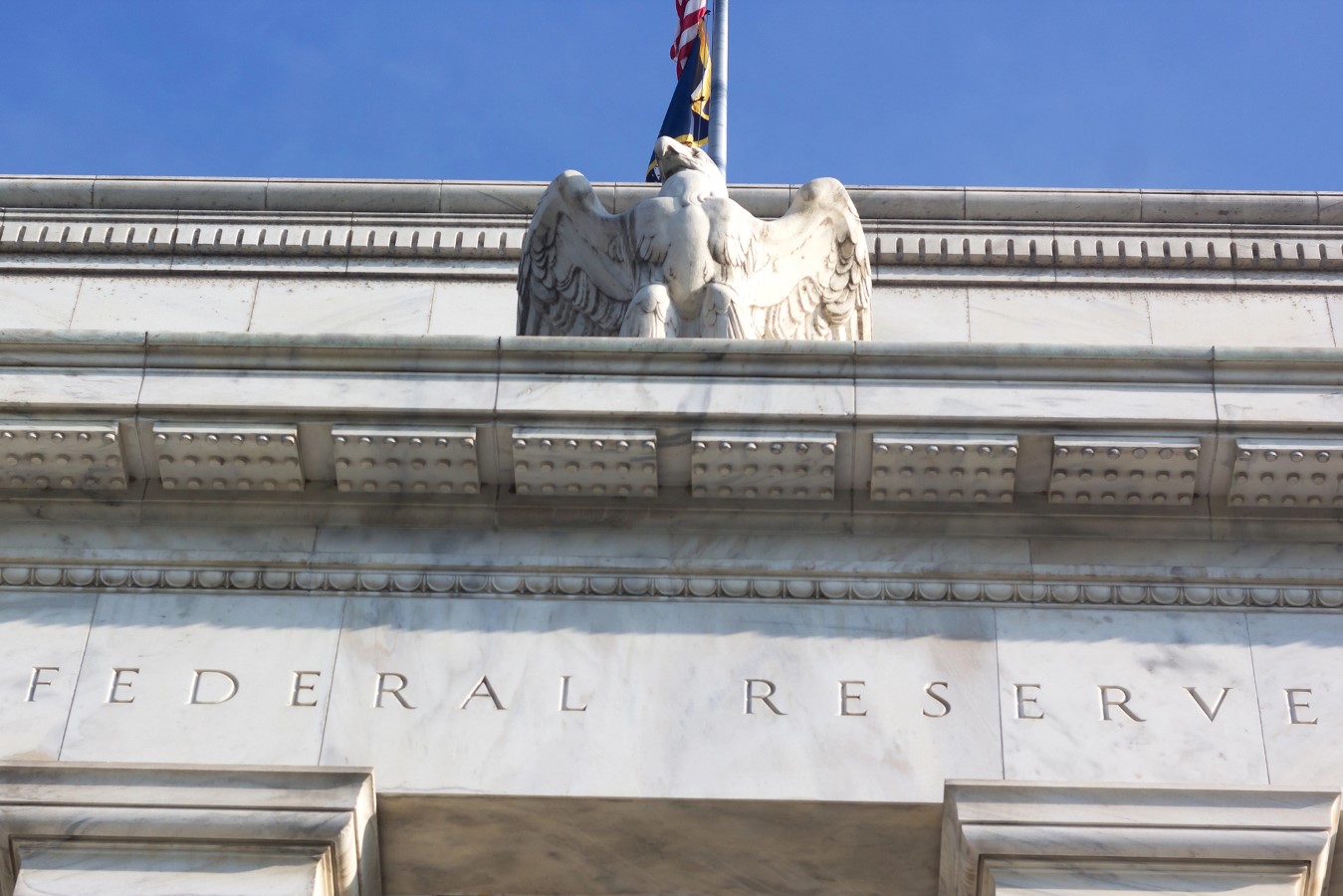
The April inflation report marked the first major economic test for new Federal Reserve Chair Kevin Warsh.
Warsh has previously suggested that interest rates could eventually move lower, but the latest inflation data may complicate that path as price pressures intensify.
“The first inflation report under new Federal Reserve chief Kevin Warsh shows consumer prices in April were at their highest level in almost three years,” the report noted.
Some economists now believe the Fed could remain on hold through much of 2026. According to CME FedWatch data, traders currently see a growing probability of a rate increase at the Federal Reserve’s December meeting.
Labor market and manufacturing data offer mixed signals. Additional economic reports released Thursday painted a mixed picture of the broader economy.
Initial jobless claims increased to 215,000 for the week ended May 23, slightly above economists’ expectations.
At the same time, orders for durable goods surged 7.9% in April, far exceeding forecasts. Excluding transportation, durable goods orders rose 1.1%.
Economists said the data suggests portions of the manufacturing sector remain resilient even as consumer demand weakens.
White House adjusts economic messaging after GDP downgrade

The GDP revision forced quick adjustments from Trump administration officials who had promoted stronger growth figures earlier in the week.
During a Cabinet meeting Wednesday, Treasury Secretary Scott Bessent said, “Real GDP has risen 2.7% over the past four quarters,” while citing an Atlanta Fed GDPNow estimate of 4.3% growth for the current quarter.
One day later, after the revised GDP figures were released, Bessent updated his remarks.
“We’ve had sustained and resilient GDP growth: real GDP has risen 2.6% over the past four quarters,” Bessent said, adding that “Atlanta Fed’s GDP now predicts 3.8% for this quarter.”
The White House has continued to argue that the economy remains fundamentally healthy despite weaker growth readings and elevated inflation.
The weaker GDP report also renewed scrutiny of the administration’s earlier promises of significantly faster economic growth.
Commerce Secretary Howard Lutnick recently said “the $30 trillion US economy can grow 4%, 5%, and under President Trump, you’re going to see it grow 6%.”
President Donald Trump repeatedly argued during the campaign and after returning to office that his economic agenda would produce sustained GDP growth between 4% and 6%.
However, real GDP growth during Trump’s second term so far has averaged closer to 2.5% between the first quarter of 2025 and the first quarter of 2026.
The weaker growth readings come as inflation pressures intensify and borrowing costs remain elevated.
Household finances show signs of growing stress

The latest economic data also highlighted increasing financial strain on U.S. households.
Personal income growth slowed to 2.5% annually, below the pace of inflation, meaning many consumers are losing purchasing power as prices rise faster than wages.
The personal savings rate fell to 2.6% in April from 3.6% in March, its lowest level since June 2022, suggesting households are dipping into savings to maintain spending.
“Inflation is at a three-year high, and personal savings have cratered to one of the lowest levels in the past 20 years,” said Heather Long, chief economist at Navy Federal Credit Union.
“Many Americans are spending more than the income they have coming in. This is not sustainable, especially for lower-income and middle-class households.”
Consumer spending still increased 0.5% in April, matching forecasts, but much of that gain reflected higher prices rather than stronger demand.
Adjusted for inflation, spending rose just 0.1%, down from 0.3% in the prior month.
“Rising prices are really taking a bite out of consumption, and the decline in the savings rate shows consumers are dipping into savings to make ends meet,” said Ellen Zentner, chief economic strategist for Morgan Stanley Wealth Management.
Economists warned that if inflation remains elevated, consumers may eventually pull back spending more aggressively later this year.
Inflation concerns increasingly weigh on Trump politically
The latest inflation data is also becoming a growing political challenge for the Trump administration.
On CNN, senior data correspondent Harry Enten pointed to polling showing a sharp deterioration in Trump’s approval ratings on inflation following the conflict in the Middle East.
“Trump voters have turned on Trump when it comes to inflation!” Enten said during a Thursday segment discussing new polling data.
According to Enten, Trump’s net approval rating on inflation among his own voters dropped more than 40 points over the past three months as rising prices increasingly hit household budgets.
The worsening inflation outlook, combined with slower economic growth, could become a central economic and political issue heading into the midterms.
Like Financial Freedom Countdown content? Be sure to follow us!
14 essential strategies to maximize your Social Security and avoid costly mistakes
Social Security is a vital lifeline for many seniors, providing crucial income support during retirement. With inflation at its highest in four decades, Social Security’s inflation-adjusted benefits offer protection against rising costs.
Rising interest rates have disrupted many retirement portfolios, causing bond fund values to plummet. In this volatile financial landscape, Social Security can stabilize a typical stock-bond retirement portfolio. By implementing smart strategies, retirees can maximize their Social Security benefits and ensure a more secure financial future.
14 Essential Strategies to Maximize Your Social Security and Avoid Costly Mistakes
11 reasons you should claim Social Security early

Deciding when to claim Social Security is often about maximizing your benefit. Financial planners usually advise delaying your claim for as long as possible to secure the highest monthly payment. Your benefit is based on your lifetime earnings, with a full payout available at your full retirement age (FRA), which is currently between 66 and 67 depending on your birth year. Claiming before FRA results in a permanent reduction in your monthly benefit, while waiting beyond FRA leads to a permanent increase. However, the decision isn’t solely about maximizing the monthly check. Personal factors such as health, family circumstances, and financial needs can play a significant role in determining the right time to claim.
11 Reasons You Should Claim Social Security Early
Did you find this article helpful? We’d love to hear your thoughts! Leave a comment with the box on the left-hand side of the screen and share your thoughts.
Also, do you want to stay up-to-date on our latest content?
1. Follow us by clicking the [+ Follow] button above,
2. Give the article a Thumbs Up on the top-left side of the screen.
3. And lastly, if you think this information would benefit your friends and family, don’t hesitate to share it with them!

John Dealbreuin came from a third world country to the US with only $1,000 not knowing anyone; guided by an immigrant dream. In 12 years, he achieved his retirement number.
He started Financial Freedom Countdown to help everyone think differently about their financial challenges and live their best lives. John resides in the San Francisco Bay Area enjoying nature trails and weight training.
Here are his recommended tools
Personal Capital: This is a free tool John uses to track his net worth on a regular basis and as a retirement planner. It also alerts him wrt hidden fees and has a budget tracker included.
Platforms like Yieldstreet provide investment options in art, legal, real estate, structured notes, venture capital, etc. They also have fixed-income portfolios spread across multiple asset classes with a single investment with low minimums of $10,000.