
IRS says average tax refunds rise to $2,290; higher than last year due to Trump’s tax law

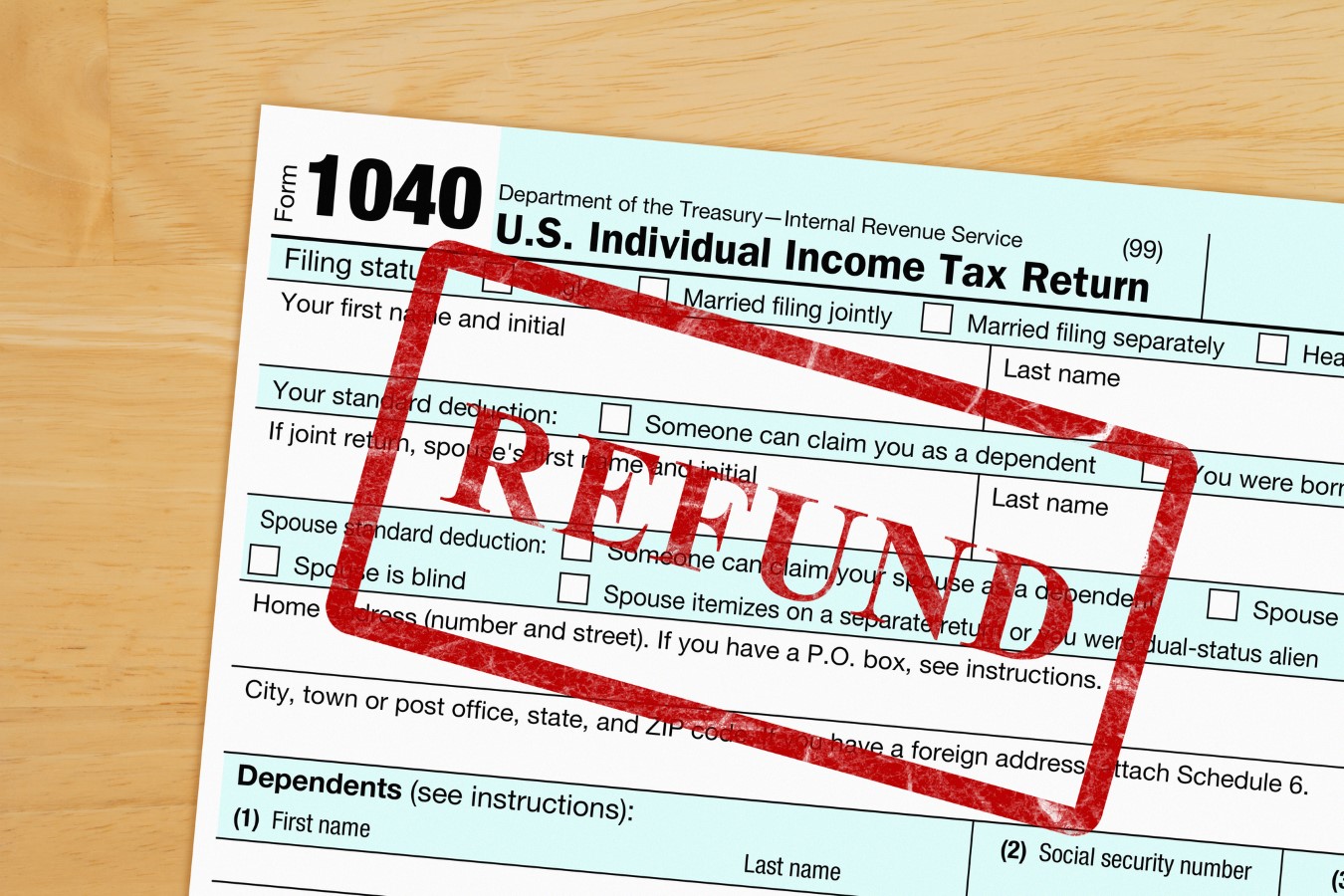
Early figures from the Internal Revenue Service indicate that Americans are receiving larger tax refunds compared with the same point last year. The average refund currently stands at $2,290, reflecting an increase of nearly 11%.
Americans filing their returns under President Trump’s One Big Beautiful Bill were expecting larger refunds due to new deductions and expanded child tax credits.
“Average refund amounts are strong,” the IRS said in an explanation of the data. The agency added that refund totals are expected to grow further as more returns are processed, especially those claiming key credits like the earned-income tax credit and child tax credit.
The IRS also noted it “continues to see a strong filing season with refunds continuing to reach taxpayers as planned.”
New tax law may be influencing refund sizes
Treasury Secretary Scott Bessent cites even larger increase
Scott Bessent said in a CNBC interview that average refunds were up 22%, though he did not specify the comparison period. His estimate suggests that refund growth could be even stronger than the IRS’s early snapshot indicates.
In an post last month on X, Bessent said, “Thanks to President Trump’s One Big Beautiful Bill, millions of Americans may see the largest tax refunds of their lives in 2026. And as withholdings are adjusted, millions will take home bigger paychecks every month this year. The President wants to get this money into the hands of the American people as soon as possible”
What Is the One Big Beautiful Bill Act?

Signed into law by President Trump in July 2025, the One Big Beautiful Bill Act is a sweeping spending and tax package that introduced broad-based tax cuts for individuals and families.
Crucially, many of these tax changes apply retroactively to the beginning of 2025, setting the stage for larger refunds when taxpayers file their returns in 2026.
Why Refunds Are Bigger Instead of Paychecks

Normally, tax cuts show up gradually as higher take-home pay. That didn’t happen this time.
Because the IRS did not update withholding tables after the OBBBA became law, most employers continued withholding taxes at pre-cut levels. The result? Workers effectively overpaid taxes throughout 2025 and will get that money back in one lump sum.
Filing season still in early stages

The IRS emphasized that the current numbers are preliminary. The data reflects only about 14% of the roughly 164 million tax returns expected by the April 15 deadline. As more filings come in, average refund figures may shift significantly.
On average, refunds could increase by up to $1,000, though actual amounts will vary based on income, family size, and deductions.
Seven Tax Cuts Fueling Larger Refunds

Seven major tax changes under the OBBBA could boost refunds, including:
An increased child tax credit
A higher standard deduction
A larger SALT deduction cap
New or expanded deductions for seniors
Deductions for auto loan interest
Expanded exclusions for tip income
New deductions for overtime pay
Together, these provisions significantly reduce tax liability for many households.
Tip Income Gets a Break

Under the new tax law, tip income will be deductible for tax years 2025 through 2028, whether or not you itemize your deductions.
This deduction applies to qualified tips; cash or credit card tips, earned in jobs the IRS identifies as customarily receiving tips as of December 31, 2024.
The Treasury Department published the official list of eligible occupations by October 2, 2025.
The maximum deduction is $25,000 per year.
For self-employed workers, the deduction cannot exceed the net income from the business where the tips were earned.
To claim it, taxpayers must include their Social Security Number on their return and file jointly if married.
The deduction gradually phases out for those with a modified adjusted gross income (MAGI) above $150,000 for single filers and $300,000 for joint filers.
No Tax On Overtime Pay

Unlike tips, overtime pay did not previously have separate reporting lines on Form W-2 because regular wages and overtime were taxed the same.
Under the new law, workers can claim a deduction for qualified overtime pay of $12,500 for singles and $25,000 for married couples filing jointly.
Like the tip deduction, this is a temporary deduction for tax years 2025 through 2028 and applies whether or not you itemize.
For this rule, overtime compensation is defined as the amount above your regular rate of pay; essentially the “half” portion of time-and-a-half pay. Only this extra portion qualifies for the deduction.
Taxpayers will use the new Schedule 1-A to claim recently enacted tax deductions, such as no tax on tips, no tax on overtime, no tax on car loan interest and/or the enhanced deduction for seniors
New Senior Deduction

Under the One Big Beautiful Bill Act (OBBBA), seniors age 65 and older can claim a new, temporary $6,000 deduction starting in 2025, which expires after 2028.
This deduction is available whether you take the standard deduction or itemize your deductions.
It serves as a substitute for Trump’s “no tax on Social Security” promise, as there is no separate provision for Social Security.
The deduction applies to taxpayers who are 65 or older by the last day of the tax year.
It is in addition to the current senior standard deduction and can be claimed by all eligible seniors, regardless of itemizing.
For married couples where both spouses qualify, the deduction doubles to $12,000.
Taxpayers must include their Social Security Number on the return and file jointly if married.
The deduction gradually phases out for those with a modified adjusted gross income (MAGI) above $75,000 for single filers or $150,000 for joint filers.
Auto Loan Interest Deduction

A temporary deduction allows taxpayers to deduct interest on qualified auto loans from 2025 through 2028.
It applies to personal use vehicles on a loan originated after 2024 with final assembly in America.
The deduction phases out for MAGI above $100,000 (single) or $200,000 (joint filers).
Retroactive application to January 1, 2025, provides relief to households paying higher auto loan interest.
Increased State and Local Tax (SALT) Deduction

OBBBA raises the SALT deduction limits for taxpayers paying high state and local taxes from $10,000 to $40,000. This cap is also scheduled to increase by 1% each year from 2026 to 2029.
Effective 2025–2028, more of your state income, property, and sales taxes can reduce federal taxable income.
Phase-outs start at $500,000 MAGI.
Residents of high-tax states stand to benefit most, with retroactive effect for 2025.
Permanent Increase in the Standard Deduction

The standard deduction is permanently increased under OBBBA: $15,750 for singles and $31,500 for married couples filing jointly in 2025, indexed annually for inflation.
This permanent boost simplifies filing for millions, reduces taxable income across the board, and complements temporary deductions for tips, overtime, and seniors.
Permanent Boost to the Child Tax Credit

The child tax credit is permanently raised to $2,200 per child. The credit will be adjusted annually for inflation starting in 2026.
Phase-outs apply at $200,000 MAGI for singles and $400,000 MAGI for joint filers. Fully refundable, it ensures low- and middle-income families receive the maximum benefit, further increasing expected refunds.
Who Benefits the Most From the Refund Surge?

Households with multiple workers, children, or qualifying deductions stand to gain the most.
Middle-income families are expected to see particularly noticeable increases, especially those who qualify for the enhanced child tax credit or standard deduction.
Not everyone will receive a massive refund, but millions could see checks larger than anything they’ve received before.
Economists watch refunds for economic impact

The Trump administration is openly predicting the largest tax refund cycle in U.S. history during the spring 2026 filing season, driven by the combination of retroactive tax cuts and unchanged withholding rates.
Refunds are often the largest single payment many households receive annually. With expectations of higher refunds in 2026, economists and investors are closely monitoring whether the extra cash will translate into increased consumer spending and broader economic activity.
What Taxpayers Should Do Now

While the refunds may be welcome, experts caution that large refunds mean taxpayers effectively gave the government an interest-free loan. Going forward, workers may want to review and adjust their withholdings to better align with the new tax law.
Taxpayers will use the new Schedule 1-A to claim recently enacted tax deductions, such as no tax on tips, no tax on overtime, no tax on car loan interest and/or the enhanced deduction for seniors.
For now, though, millions of Americans can look forward to a rare surprise: a tax season that actually feels like a windfall.
Like Financial Freedom Countdown content? Be sure to follow us!

Did you find this article helpful? We’d love to hear your thoughts! Leave a comment with the box on the left-hand side of the screen and share your thoughts.
Also, do you want to stay up-to-date on our latest content?
1. Follow us by clicking the [+ Follow] button above,
2. Give the article a Thumbs Up on the top-left side of the screen.
3. And lastly, if you think this information would benefit your friends and family, don’t hesitate to share it with them!

John Dealbreuin came from a third world country to the US with only $1,000 not knowing anyone; guided by an immigrant dream. In 12 years, he achieved his retirement number.
He started Financial Freedom Countdown to help everyone think differently about their financial challenges and live their best lives. John resides in the San Francisco Bay Area enjoying nature trails and weight training.
Here are his recommended tools
Personal Capital: This is a free tool John uses to track his net worth on a regular basis and as a retirement planner. It also alerts him wrt hidden fees and has a budget tracker included.
Platforms like Yieldstreet provide investment options in art, legal, real estate, structured notes, venture capital, etc. They also have fixed-income portfolios spread across multiple asset classes with a single investment with low minimums of $10,000.