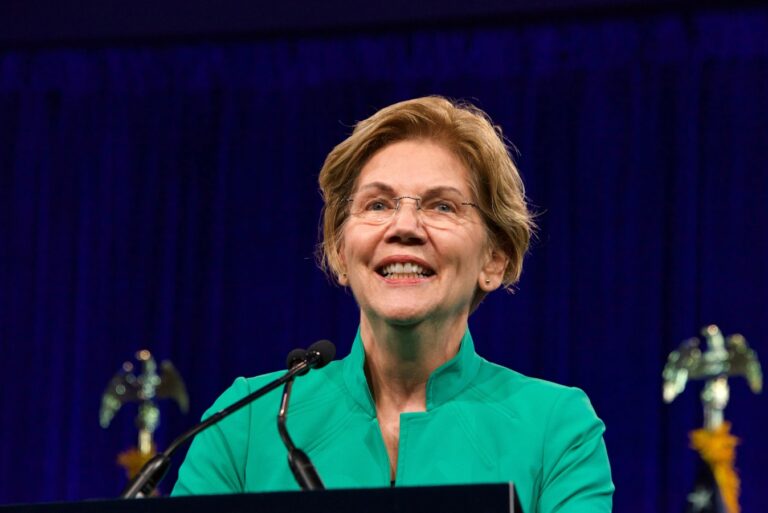
Trump backs $1.5 trillion Cassidy Social Security plan while Warren and Sanders push higher taxes on the rich

President Donald Trump is backing an ambitious Social Security proposal from Republican Sen. Bill Cassidy of Louisiana that would borrow $1.5 trillion and invest the money in the stock market to help finance retirement benefits. Cassidy says the strategy could cover as much as 70% of Social Security’s projected financing shortfall without requiring immediate benefit cuts or permanent payroll tax increases.
But Cassidy’s approach faces competing proposals from Democrats, including Sen. Elizabeth Warren’s bipartisan effort with Republican Sen. Bernie Moreno to eliminate the Social Security payroll tax cap and Sen. Bernie Sanders’ plan to tax income above $250,000 while increasing benefits by $2,400 annually. Both Democratic approaches would require higher contributions from wealthy Americans, although they differ in their proposed tax structures and benefit changes.
The debate also raises a fundamental question about Social Security: Should higher-income Americans receive retirement benefits proportionate to every additional dollar they contribute, or should they pay more to help finance benefits for lower-income retirees? With Democrats preparing to take control of Congress in January 2027, the competing proposals could shape the next major fight over the retirement program.
Social Security faces a 2032 funding deadline

Social Security’s financial challenges provide the backdrop for Cassidy’s proposal. The 2026 Social Security Trustees Report projects that the Old-Age and Survivors Insurance (OASI) Trust Fund, which pays retirement and survivor benefits, will exhaust its reserves in the fourth quarter of 2032.
That does not mean Social Security would stop collecting payroll taxes or immediately stop sending checks. Workers and employers would continue contributing payroll taxes, but the program would no longer have sufficient reserves to pay all scheduled retirement benefits.
The Social Security Administration estimates that continuing income would cover approximately 78% of scheduled OASI benefits after the trust fund’s depletion. That translates into a potential 22% reduction if Congress does not change the law.
The combined retirement and disability trust funds have a somewhat later projected depletion date of 2034, when approximately 83% of scheduled benefits would remain payable.
For millions of Americans approaching retirement, the prospect of reduced benefits makes the financing debate increasingly urgent. It also creates political pressure on lawmakers to find a solution that does not place the entire burden on retirees, workers or future taxpayers.
Cassidy proposes borrowing $1.5 trillion to invest in the stock market

Cassidy’s proposal would establish a separate investment fund to help finance Social Security. The federal government would borrow $1.5 trillion over five years and place the money into the fund, where it would be invested in stocks and potentially other higher-return investments.
Rather than immediately using the investment proceeds to pay monthly Social Security benefits, the fund would be allowed to grow over several decades. Meanwhile, Social Security could borrow money to continue paying scheduled benefits when its regular tax revenue and trust fund reserves were insufficient.
The investment fund would eventually be expected to generate enough money to offset a substantial portion of that borrowing.
Cassidy has described the strategy as a way to use the long-term growth of the American economy to help meet future retirement obligations. He argues that the government should not rely exclusively on payroll taxes and relatively low-yield Treasury securities when it could potentially earn higher returns through diversified investments.
The proposal is not an individual retirement account or a plan to transfer workers’ existing Social Security accounts into private investment portfolios. It would create a government investment vehicle separate from the existing Social Security trust funds.
On 23rd November, Senator Cassidy posted on X, “If anyone does not like my plan, I welcome them to propose their own. Is it politically viable? If it is, why hasn’t it passed in the last two decades? Those who oppose my plan argue that the only real solutions are to cut benefits by 28% or raise taxes by more than 14%. If that’s your position, then tell the American people what your solution is and explain how you plan to get it passed. You can’t convince people you have a politically viable solution when you don’t. And you shouldn’t mislead them into thinking you do.”
Cassidy says the investment fund could cover up to 70% of Social Security’s shortfall

Cassidy has repeatedly emphasized that the investment strategy could address as much as 70% of Social Security’s projected financing gap.
During his November 15 appearance on CBS’s Face the Nation, Cassidy explained the central idea to host Margaret Brennan:
“We borrow 1.5 trillion dollars, we put it in an investment fund separate from Social Security trust fund, put it into the broader economy, and allow it to grow over six decades. At which point it pays for up to 70 percent of what we need to cover the debt for Social Security.”
Cassidy has also discussed allowing the investment fund to grow for approximately 70 to 75 years. The idea is that investment returns would eventually help repay the money borrowed to maintain scheduled Social Security payments.
He argues that the strategy could substantially reduce the need for politically unpopular measures such as benefit cuts or broad payroll tax increases.
On November 23rd, Senator Cassidy posted on X, “For those who don’t like my plan, what’s your alternative? The options I hear are cutting benefits by the required 28% or significantly raising taxes. These are NOT politically viable options. My plan addresses up to 70% of the shortfall. If you have a way to cover the rest without an investment fund, put it out there. And show the American people how you plan to get it passed. We need a solution that can actually pass and become law.”
However, the 70% figure is a projection, not a guaranteed outcome. The fund’s success would depend on stock market performance, borrowing costs, the size of Social Security’s financing shortfall and the government’s ability to manage the investment structure over several decades.
Even Cassidy acknowledges that additional adjustments could be necessary to address the remaining financing gap.
Trump has reportedly committed to supporting Cassidy’s proposal

Trump’s reported support could give Cassidy’s proposal a significant political boost.
During his November 15 Face the Nation interview, Cassidy said the president had personally committed to supporting Social Security legislation.
Cassidy said:
“the president actually has- has given me personal commitment that he would support it, and his administration has been very helpful.”
A November 23 report by The Washington Sun added another development, reporting that Trump instructed the Treasury Department to assist Cassidy’s effort to overhaul Social Security financing.
That suggests the administration is willing to explore the proposal, although there is an important distinction between Cassidy’s account of Trump’s personal commitment and a detailed public endorsement by Trump himself. The White House has not publicly released a comprehensive policy explanation establishing that it has formally adopted every element of the plan.
For Trump, the proposal offers an opportunity to demonstrate that Republicans are attempting to address Social Security’s long-term financing problems without immediately cutting retirees’ benefits.
However, it also creates a potential political vulnerability. Borrowing $1.5 trillion to invest in the stock market could become controversial if investment returns disappoint or federal debt rises substantially.
Cassidy points to the railroad retirement system as a successful precedent

One of Cassidy’s strongest arguments is that the federal government has previously used a similar investment strategy to help finance another retirement program.
He frequently points to the Federal Railroad Retirement system, which received an investment fund following legislation enacted during the George W. Bush administration.
The railroad retirement system faced demographic challenges, with an increasing number of retirees relative to active workers. Congress responded by establishing an investment structure that allowed certain retirement assets to be invested beyond traditional Treasury securities.
Cassidy argues that the resulting investment returns helped stabilize the system without requiring the kind of permanent tax increases or benefit reductions that might otherwise have been necessary.
During his November 10 Senate speech, he said: “As it turns out, 20 years later, the market has done so well that that fund is paying all the benefits.”
Senator Cassidy also posted on X, “Some people act like my investment fund is a new, untested idea. It isn’t. It uses the same approach to address a shortfall in the Federal Railroad Retirement Fund. It worked. Benefits are being paid, and the fund is firmly in the black, even with more retirees and fewer workers contributing. Why wouldn’t we look at doing the same for Social Security?”
However, the comparison has limitations. The railroad retirement system is much smaller than Social Security, and its financing structure and exposure to federal borrowing differ. The fact that an investment strategy has worked in one retirement system does not establish that it would generate sufficient returns to address Social Security’s much larger financing gap.
Warren and Republican Bernie Moreno want to eliminate the Social Security payroll tax cap

Sen. Elizabeth Warren (D-Mass.) has advanced a bipartisan alternative with Republican Sen. Bernie Moreno (R-Ohio). Their proposal would eliminate the annual cap on earnings subject to Social Security payroll taxes.
For 2026, the taxable maximum is $184,500. Workers pay 6.2% of covered wages, and employers pay another 6.2%, up to that threshold. Earnings above it are generally exempt from Social Security payroll taxes.
Warren and Moreno want to change that arrangement so that higher-income Americans contribute on more of their earnings.
In a June 23, 2026, joint opinion article in The New York Times, the senators estimated that eliminating the cap could inject approximately $3 trillion into Social Security over 10 years.
They argue that the current system allows wealthy Americans to pay Social Security taxes on a smaller percentage of their total earnings than ordinary workers.
Warren reiterated the proposal at an August 5 Senate Finance Committee hearing, saying:
“Congress has a choice to make: either we can decide to protect the top 6% of all earners in America and let the Social Security trust fund get into trouble, cut benefits for seniors, throw more seniors into poverty, or we can decide that everybody pays the same share, and protect Social Security forever into the future,”
The proposal is significant because it has attracted support from a Republican senator, demonstrating that raising taxes on higher earners is not exclusively a Democratic position.
However, Warren and Moreno’s public proposal does not yet provide a complete legislative formula explaining how newly taxed earnings above the existing cap would affect individual retirement benefits. Their joint opinion article says they want to safeguard Social Security’s earned-benefit structure, making the eventual treatment of those additional contributions an important issue to watch.
Sanders wants to tax income above $250,000 and increase Social Security benefits by $2,400
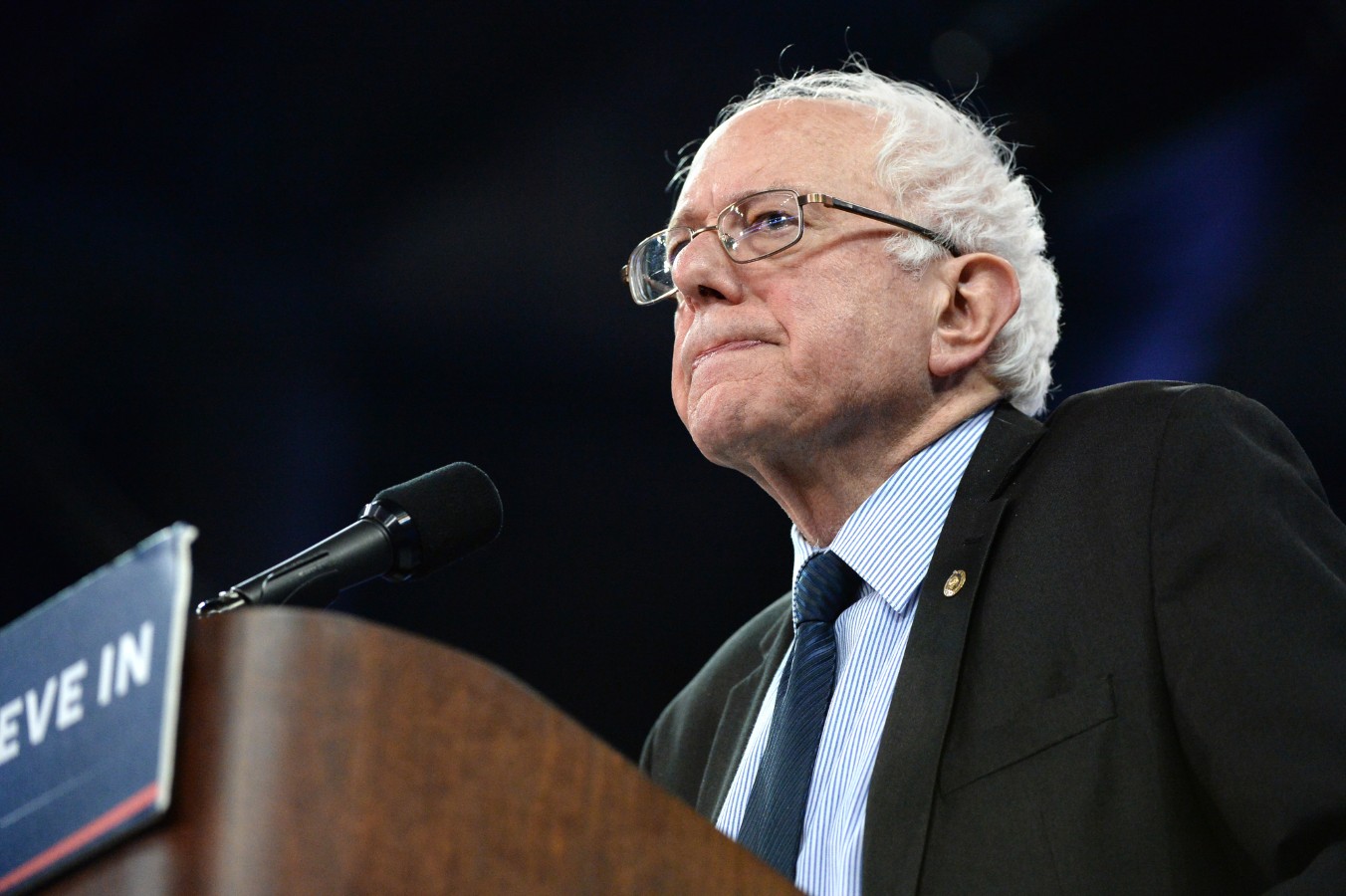
Sen. Bernie Sanders (I-Vt.) has proposed a more expansive approach through the Social Security Expansion Act, introduced with Warren and other lawmakers.
The legislation would apply Social Security payroll taxes to earnings above $250,000, increase benefits by $2,400 annually and expand cost-of-living adjustments using the Consumer Price Index for the Elderly (CPI-E).
The proposal would also strengthen minimum benefits for lifetime low earners and expand certain benefits for children.
Sanders argues that the legislation would make Social Security solvent for 75 years without raising taxes on the approximately 91% of households earning $250,000 or less.
Unlike Cassidy’s investment fund, Sanders’ approach relies on additional tax revenue rather than borrowing money to invest in financial markets.
The legislation also includes provisions to tax investment gains, broadening the sources of revenue available to Social Security.
On August 4, Sanders urged Senate Democrats to oppose the bipartisan PROMISE Act unless it included protections against benefit cuts, increases in the retirement age and privatization.
He argued that Democrats should instead support his legislation to increase contributions from wealthy Americans while expanding benefits.
Warren and Sanders would increase the redistribution from high earners to other retirees

An important difference between the investment approach and the Warren-Sanders proposals concerns the relationship between what Americans contribute and what they receive in retirement.
Social Security already has a progressive benefit formula. Lower-income workers generally receive a higher percentage of their previous earnings in retirement than higher-income workers.
Warren and Moreno’s proposal would increase contributions from wealthy workers by removing the payroll tax cap. Sanders’ proposal would impose additional taxes on income above $250,000, including investment income, while increasing benefits across the program.
The additional taxes would not necessarily translate into proportionately larger retirement benefits for the high earners paying them.
In Sanders’ legislation, for example, the new taxes on earnings above $250,000 are not accompanied by a corresponding increase in the benefit formula for those additional earnings. Instead, the bill provides broader benefit increases, including a $2,400 annual increase and changes to cost-of-living adjustments.
Warren and Moreno’s public proposal has not yet specified a complete formula for additional benefit credits on earnings above the existing taxable maximum. If those newly taxed earnings do not generate corresponding additional benefits, the effect would similarly be to redistribute more resources from high earners toward the broader beneficiary population.
In practical terms, higher-income Americans would help subsidize benefits for lower- and middle-income retirees without receiving equivalent additional benefits for every dollar contributed.
Supporters argue that this is justified because wealthy Americans have greater financial capacity and Social Security needs additional revenue to preserve benefits. They also contend that the existing system already redistributes income through its progressive benefit formula.
Critics argue that expanding this arrangement could weaken the connection between contributions and benefits that has traditionally helped define Social Security as an earned-benefit insurance program.
The Tax Foundation has raised this concern, arguing that eliminating the taxable maximum without providing additional benefit credits would change the relationship between what workers pay and what they receive.
Democrats are challenging Cassidy’s approach

Democratic opposition to Cassidy’s investment strategy is becoming more visible as the party prepares to take control of Congress.
Rep. John Larson (D-Conn.), the House Social Security Subcommittee’s ranking member, responded directly to Cassidy’s proposal on November 19. Larson argued that Democrats have an alternative that would expand benefits while requiring wealthy Americans to contribute more.
“Democrats have a plan that will actually fix Social Security—comprehensively enhancing benefits for the first time in more than 50 years and extending solvency. It is paid for by making the wealthy finally pay their fair share, not risking Americans’ hard-earned benefits by handing them over to Wall Street,” Larson said.
Larson’s Social Security 2100 Act would eliminate the payroll tax cap and impose a net investment income tax on income above $400,000. It also includes benefit enhancements and changes to cost-of-living adjustments.
House Democratic Leader Hakeem Jeffries joined Larson and other Democratic lawmakers in calling for Social Security to be protected and strengthened through higher contributions from wealthy Americans in June 2026. Larson has also explicitly connected the incoming Democratic leadership under Jeffries to the party’s Social Security agenda.
Senate Democratic Leader Chuck Schumer (D-N.Y.) has repeatedly defended Social Security against proposed benefit cuts. In August, he said: “Millions of Americans have paid into Social Security their whole lives, and now Republicans want to pull the rug out from under them. Senate Democrats will not let it happen.”
However, Schumer’s public criticism of potential cuts does not amount to an endorsement of a specific financing plan.
Cassidy’s plan has potential advantages but also significant financial risks

Cassidy’s proposal offers a different approach to Social Security financing, but its potential benefits must be weighed against the risks of borrowing and investing such a large amount of federal money.
Potential advantages include:
– Avoiding immediate benefit cuts by providing a separate source of financing for scheduled payments.
– Limiting the need for permanent payroll tax increases if investment returns are sufficiently strong.
– Taking advantage of long-term stock market growth over several decades.
– Building on the federal railroad retirement investment system as an existing government precedent.
– Preserving the existing benefit formula rather than introducing a new system of individual retirement accounts.
Potential disadvantages include:
– Stock market losses could reduce the investment fund’s assets and leave the government with substantial debt.
– Higher federal borrowing could increase interest rates and financing costs.
– The government could become a major shareholder in private companies, raising questions about political influence over investment decisions.
– Investment returns may fall short of the assumptions used to justify the proposal.
– The strategy could require additional borrowing and policy changes even if the investment fund performs reasonably well.
The Committee for a Responsible Federal Budget (CRFB) published a particularly critical analysis on November 24, drawing on research from Boston College’s Center for Retirement Research.
CRFB estimated that even under higher-return assumptions, the investment fund could cover less than half of Social Security’s financing shortfall in its median simulation. Under lower-return assumptions, it could cover less than one-tenth.
The organization also estimated that the proposal could authorize approximately $150 trillion in additional inflation-adjusted borrowing over 75 years using Congressional Budget Office projections. Using the Social Security trustees’ projections, its estimate rises to approximately $195 trillion.
These figures represent cumulative borrowing over several decades, not an immediate addition of $150 trillion or $195 trillion to the national debt. Nevertheless, they illustrate the scale of the potential fiscal exposure.
The CRFB analysis also found that even with an assumed 6.5% annual real investment return, only about 30% of its simulations produced enough money to cover all the borrowing authorized under the proposal.
Democrats’ incoming congressional majority could determine what happens next

The political timing of Cassidy’s proposal is particularly important because Democrats won control of both chambers of Congress in the November 2026 midterm elections and are preparing to take office in January 2027.
That creates a different legislative environment from the one Cassidy has faced while Republicans controlled both chambers.
Cassidy has been especially critical of Senate Finance Committee ranking member Ron Wyden (D-Ore.) for not agreeing to hearings and a markup on Social Security legislation before the end of the year.
Cassidy has also worked with Democratic Sen. Dick Durbin (D-Ill.) on the bipartisan Protecting Retirement Opportunities and Maintaining Income Security for Everyone (PROMISE) Act.
The PROMISE Act is important because it is separate from Cassidy’s $1.5 trillion investment proposal. It establishes a congressional process for considering Social Security reforms rather than requiring lawmakers to adopt Cassidy’s specific investment strategy.
Durbin has described it as a bipartisan effort to bring transparency and debate to the issue. Sanders, however, has warned Democrats that the process could open the door to benefit cuts or privatization if adequate safeguards are not included.
Cassidy is also facing a deadline of his own. He is leaving the Senate at the end of December, giving him limited time to secure action before the next Congress takes office.
Democrats could agree to examine the investment strategy while demanding additional safeguards, a different financing structure or a combination of tax and benefit reforms. They could also prioritize their own proposals, including the Social Security 2100 Act and Sanders’ Social Security Expansion Act.
Ultimately, the debate is not simply about whether Republicans and Democrats agree that Social Security needs attention. It is about who should bear the cost, whether wealthy Americans should pay more without receiving proportionately higher benefits, and how much financial risk taxpayers should accept to preserve the program.
With the retirement trust fund projected to run short of reserves in 2032, the incoming Congress will have to decide whether Cassidy’s investment strategy, higher taxes on wealthy Americans or a combination of the two offers a sustainable path forward.
Like Financial Freedom Countdown content? Be sure to follow us!

Did you find this article helpful? We’d love to hear your thoughts! Leave a comment with the box on the left-hand side of the screen and share your thoughts.
Also, do you want to stay up-to-date on our latest content?
1. Follow us by clicking the [+ Follow] button above,
2. Give the article a Thumbs Up on the top-left side of the screen.
3. And lastly, if you think this information would benefit your friends and family, don’t hesitate to share it with them!

John Dealbreuin came from a third world country to the US with only $1,000 not knowing anyone; guided by an immigrant dream. In 12 years, he achieved his retirement number.
He started Financial Freedom Countdown to help everyone think differently about their financial challenges and live their best lives. John resides in the San Francisco Bay Area enjoying nature trails and weight training.
Here are his recommended tools
Personal Capital: This is a free tool John uses to track his net worth on a regular basis and as a retirement planner. It also alerts him wrt hidden fees and has a budget tracker included.
Platforms like Yieldstreet provide investment options in art, legal, real estate, structured notes, venture capital, etc. They also have fixed-income portfolios spread across multiple asset classes with a single investment with low minimums of $10,000.