
AOC backs Medicare at 50 as Democrats prepare new health care push under incoming congressional majority
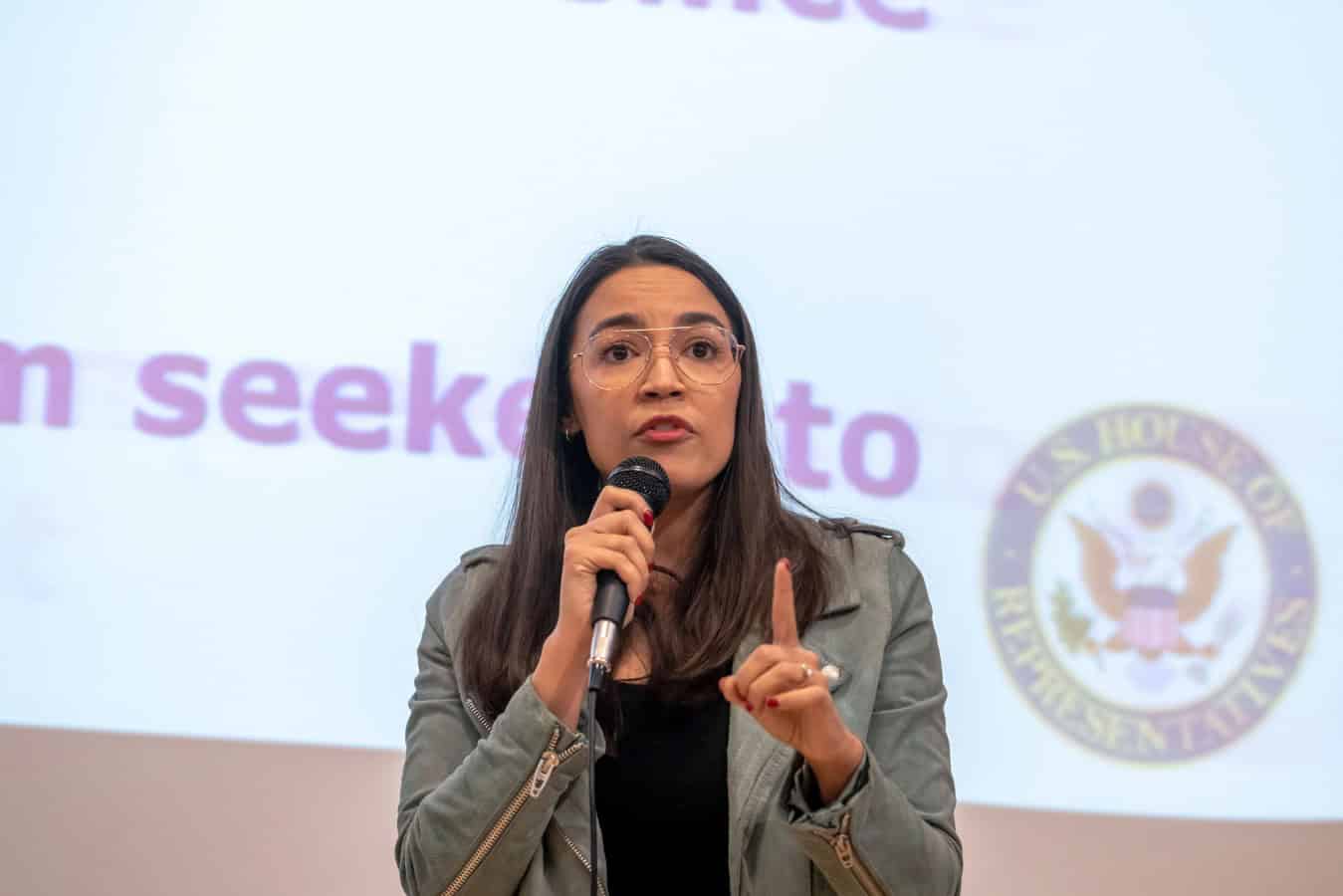
Democrats are renewing their push to expand Medicare to Americans approaching retirement, with Rep. Alexandria Ocasio-Cortez (D-N.Y.) backing a new House proposal that would lower the program’s eligibility age to 50. The legislation comes alongside a separate Senate effort led by Sen. Tammy Baldwin (D-Wis.), who introduced the Medicare at 50 Act to let Americans ages 50 to 64 voluntarily buy into the federal health insurance program.
The proposals could gain new attention when Democrats take control of both chambers of Congress in January 2027, following their victories in the November midterm elections. House Democratic leader Hakeem Jeffries has also endorsed lowering Medicare’s eligibility age, while Sen. Bernie Sanders (I-Vt.) is pushing a broader expansion that would initially lower the age to 55 and add dental, vision and hearing coverage.
The renewed debate comes as older Americans face higher health insurance premiums following the expiration of enhanced Affordable Care Act (ACA) subsidies. But the proposals differ in scope, financing and eligibility, and Republicans have previously raised concerns about the federal costs and potential effects on private insurance.
AOC backs a new House bill to lower Medicare eligibility to 50

Ocasio-Cortez is among the Democratic lawmakers backing the Improving Medicare Coverage Act, H.R. 10875, introduced by Rep. Pramila Jayapal (D-Wash.) on Oct. 22, 2026.
The legislation would lower the Medicare eligibility age from 65 to 50 while making additional changes to prescription drug assistance and health coverage. Ocasio-Cortez is one of more than 40 Democratic cosponsors, joining prominent lawmakers including Ro Khanna (D-Calif.), Rashida Tlaib (D-Mich.), Maxine Waters (D-Calif.), Debbie Dingell (D-Mich.) and Greg Casar (D-Texas).
Jayapal has described the proposal as a way to help people who leave the workforce before 65 or struggle to afford private coverage while waiting to qualify for Medicare.
“Lowering the Medicare eligibility age will be life-saving for the millions of Americans who are waiting an additional 15 years to be able to afford to see a doctor,” said Rep. Jayapal.
She also argued that expanding Medicare would provide an alternative for Americans affected by recent health care policy changes.
The House legislation is separate from Baldwin’s Senate bill. Although both target Americans beginning at age 50, they take different legislative approaches to expanding coverage.
Tammy Baldwin introduces the Medicare at 50 Act in the Senate

Baldwin introduced the Medicare at 50 Act, S. 5700, on Nov. 10, 2026, with nine Democratic Senate colleagues as original cosponsors.
The legislation would create a voluntary Medicare buy-in option for Americans ages 50 to 64 who would otherwise qualify for Medicare at 65. It would give them another insurance choice before reaching the traditional eligibility age.
The original cosponsors include Sens. Richard Blumenthal (D-Conn.), Jeff Merkley (D-Ore.), Chris Van Hollen (D-Md.), Jack Reed (D-R.I.), Tammy Duckworth (D-Ill.), Andy Kim (D-N.J.), Cory Booker (D-N.J.), Ed Markey (D-Mass.) and Kirsten Gillibrand (D-N.Y.).
Baldwin said the proposal responds to the financial pressures facing older Americans who struggle to maintain health coverage before retirement.
“Wisconsin families sent an unmistakable message last Tuesday: they are struggling to make ends meet and afford the skyrocketing cost of health care. So, I am taking this head-on,” said Senator Baldwin.
She added that many people in their 50s and early 60s face a difficult choice between paying for expensive insurance and going without coverage.
Baldwin’s office estimates that the proposal could give more than 58 million Americans between 50 and 64 another coverage option. That figure represents the potential population offered an additional choice, not an estimate of how many would actually enroll.
Medicare at 50 would cover hospital care, doctors and prescription drugs

Under Baldwin’s proposal, eligible participants would receive Medicare Parts A, B and D benefits and protections.
These components cover different aspects of health care:
Part A: Hospital insurance, including qualifying inpatient hospital stays and certain skilled nursing facility care.
Part B: Medical insurance covering physician services, outpatient care, preventive services and other eligible medical expenses.
Part D: Prescription drug coverage.
Participants would also be able to choose Medicare Advantage plans that include qualifying prescription drug coverage. These privately administered plans provide an alternative to traditional Medicare.
The bill also addresses access to Medicare supplemental insurance, commonly known as Medigap. It would provide guaranteed-issue protections for eligible participants when they first enroll and when they subsequently re-enroll, subject to the legislation’s provisions.
The coverage would not be free simply because it is offered through Medicare. Participants would pay monthly premiums, and applicable deductibles, copayments and coinsurance would remain important considerations.
ACA subsidies could help reduce the cost of buying into Medicare

One of the most significant provisions of Baldwin’s legislation is its treatment of Affordable Care Act financial assistance.
Eligible participants would receive financial assistance substantially similar to what they would have qualified for through an ACA Marketplace plan. This includes premium tax credits to reduce monthly insurance costs and cost-sharing reductions to help with deductibles, copayments and coinsurance.
The federal government would transfer the equivalent of qualifying assistance into a newly established Medicare Buy-In Trust Fund. The amount would be calculated using factors including an enrollee’s income, age, geographic location and other health care spending considerations.
This provision could be particularly important for people who purchase their own insurance rather than receiving coverage through an employer.
For example, a 58-year-old self-employed worker who currently receives ACA premium tax credits could potentially apply comparable assistance toward the Medicare buy-in instead.
The bill also prevents states from transferring Medicaid beneficiaries ages 50 to 64 into the new program simply to shift their health care costs to the federal government. People otherwise eligible for qualifying Medicaid coverage generally would not be allowed to enroll through this buy-in provision.

The legislation does not promise that participants would pay the same premiums as current Medicare beneficiaries.
Instead, the Health and Human Services secretary would calculate premiums based on the estimated average per-person cost of providing Parts A, B and D benefits, including applicable administrative expenses. The calculation would also account for Medicare Advantage and prescription drug coverage where applicable.
Participants choosing more expensive Medicare Advantage or prescription drug plans could pay additional premiums.
The bill would establish a separate Medicare Buy-In Trust Fund to receive participant premiums and federal transfers for eligible financial assistance. It also directs the government to implement the program without reducing benefits for existing Medicare beneficiaries or negatively affecting the existing Medicare trust funds.
The legislation includes $500 million in annual appropriations beginning in fiscal 2027 for outreach and enrollment grants. These funds would help states and nonprofit organizations educate eligible Americans and assist with enrollment.
If enacted, coverage would begin no earlier than Jan. 1 of the first calendar year starting at least one year after enactment.

The proposals arrive as Americans approaching retirement face mounting health insurance expenses.
The expiration of enhanced ACA premium tax credits at the end of 2025 increased costs for many Marketplace enrollees in 2026. Older adults have been particularly exposed because insurers generally charge higher premiums as people age.
According to KFF’s February 2026 analysis, a 60-year-old earning $65,000 could pay approximately $10,389 more annually for health insurance after the enhanced subsidies expired, equivalent to about $865 a month.
KFF also found that adults ages 50 to 64 account for a disproportionately large share of people purchasing their own coverage who earn more than 400% of the federal poverty level. These individuals lost access to the enhanced subsidies that had previously made coverage more affordable.
A separate KFF analysis published in May 2026 found that average monthly premium payments among Marketplace enrollees increased 58%, from $113 to $178, while average deductibles rose 37%, or $1,027, to $3,786.
These pressures affect people who retire early, become self-employed, lose employer-sponsored coverage or leave their jobs before becoming eligible for Medicare.
Bernie Sanders wants Medicare eligibility lowered to 55, while Warren previously backed age 50

The Medicare expansion debate is also gaining support from other prominent Democratic politicians, although they do not all agree on how far to go.
Sanders is pushing a broader proposal that would initially lower Medicare eligibility from 65 to 55, expand benefits to include dental, vision and hearing coverage, and eventually move toward Medicare for All.
In November 2026, Sanders argued that Democrats could advance the initial expansion through budget reconciliation rather than relying on Republican support to overcome a Senate filibuster.
“All of this can be accomplished with 51 votes in the Senate, through the reconciliation process,” Sanders said.
His proposal is different from Baldwin’s. Sanders is advocating a broader, multistage health care expansion, while Baldwin’s bill would let people ages 50 to 64 voluntarily purchase Medicare coverage.
Sanders has also described the age-based expansion as an initial step toward universal coverage. The distinction matters because the two proposals could become part of a broader debate among Democrats about whether to pursue incremental Medicare expansion or a more comprehensive single-payer system.
Warren also has a history of supporting the age-50 threshold. During the November 2019 Democratic presidential debate, she outlined a health care transition plan that included lowering Medicare eligibility to 50.
“I want to lower the age of Medicare to 50 and expand Medicare coverage to include vision and dental and long-term care,” Warren said.
Her campaign also told The Washington Post in 2020 that she supported allowing Americans ages 50 to 64 to buy into Medicare.
These earlier positions show that lowering the Medicare age has been part of the Democratic health care debate for years, although Warren and Sanders have generally approached the issue within broader health care reform plans.
Hakeem Jeffries also backs lowering the Medicare eligibility age
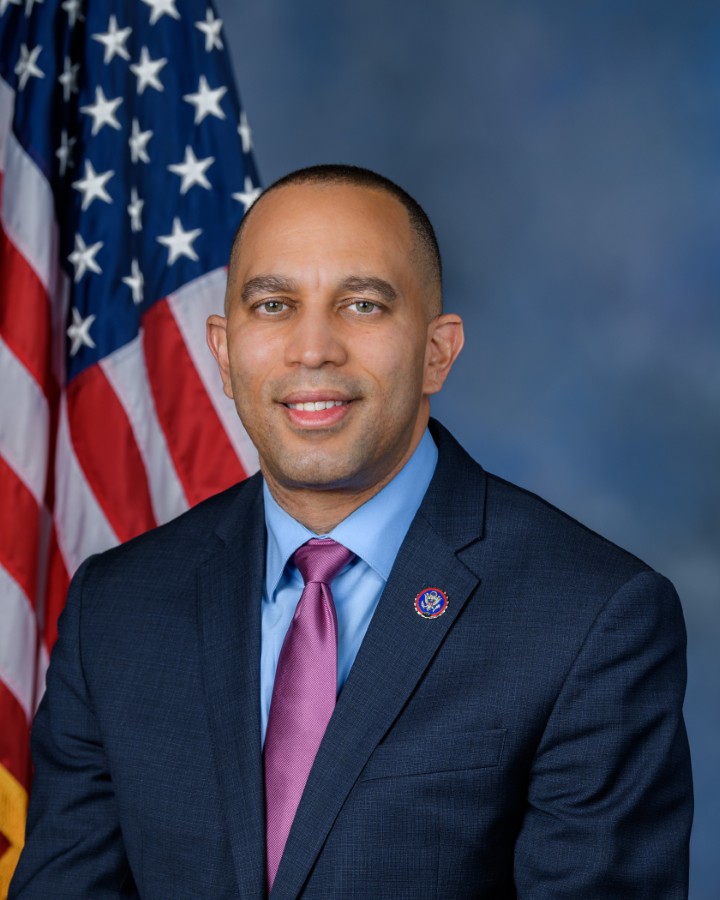
Another important development is that House Democratic leader Hakeem Jeffries (D-N.Y.) has endorsed lowering Medicare’s eligibility age as part of the party’s health care agenda for the incoming Congress.
During a Nov. 17 press conference, Jeffries called for Democrats to expand Medicare coverage to include additional benefits and cover children.
“We should lower the age of Medicare eligibility. We should expand coverage to include vision, hearing, and dental. And we should cover all the kids in the United States of America,” Jeffries said.
He did not specify whether he supports lowering the eligibility age to 50 or 55, and he has not introduced a separate bill establishing those details.
Nevertheless, his statement is significant because it suggests that Medicare expansion is gaining attention beyond the progressive wing of the Democratic Party.
Jeffries has also left open the possibility of using budget reconciliation to advance health care legislation. That process can allow qualifying budget-related provisions to pass the Senate with a simple majority rather than the usual 60 votes.
Sanders has welcomed Jeffries’ position, describing it as progress toward the initial stages of his broader Medicare expansion proposal.
However, support for lowering the eligibility age does not necessarily mean that every Democratic lawmaker endorses Medicare for All. There are still differences within the party over the scope, financing and timing of health care reform.

Although Democrats argue that expanding Medicare could improve affordability, the proposal faces several economic and political questions.
Republicans have previously opposed lowering Medicare’s eligibility age, citing concerns about federal spending and the effects on private insurance.
In May 2022, Rep. Jason Smith (R-Mo.), then the top Republican on the House Budget Committee, criticized a Democratic proposal to lower Medicare eligibility to 60.
“Lowering the eligibility age to 60 would threaten the hard-earned benefits of current and future seniors,” Smith said.
Republican lawmakers also pointed to Congressional Budget Office estimates of additional federal spending and potential changes in private insurance coverage.
That criticism concerned an earlier proposal, not Baldwin’s current Medicare at 50 Act. No specific Republican response to S. 5700 had been reported when the legislation was introduced.
Independent research also suggests that expanding Medicare could have mixed consequences for consumers.
A 2019 RAND Corporation study modeled a Medicare buy-in for Americans ages 50 to 64. Its main scenario estimated that approximately 6 million people would enroll.
The researchers found that the program could offer more affordable coverage to older adults because Medicare generally has lower administrative expenses and provider payment rates than private insurance.
However, RAND also found that premiums in the remaining ACA individual insurance market could increase. Some healthier older adults who currently help balance the private insurance risk pool could move to Medicare, leaving a smaller and potentially more expensive group of enrollees behind.
This finding challenges the assumption that moving older Americans into Medicare would automatically lower private insurance premiums for everyone else.
There is also a broader financing question. The 2026 Medicare Trustees Report projects that the Hospital Insurance Trust Fund, which finances Part A, will be depleted in the second quarter of 2033. At that point, continuing income would cover an estimated 89% of scheduled Part A costs.
Baldwin’s legislation includes protections intended to prevent the buy-in from negatively affecting the existing Medicare trust funds. However, lawmakers would still need to examine the program’s overall federal budget impact and determine whether its premium structure would be sustainable.
Democrats could revisit Medicare at 50 when they take control of Congress in January

The 2026 midterm elections have created a new political opportunity for Democrats to pursue Medicare expansion.
The Associated Press declared Democrats the winners of both chambers of Congress. The party will take control of the House and Senate when the 120th Congress convenes in January 2027, while President Donald Trump will remain in the White House.
That shift could give the Medicare at 50 Act and the separate House proposal a better chance of receiving committee hearings and floor consideration.
If Baldwin’s legislation does not advance before the current Congress ends, lawmakers could reintroduce it in the new Congress. Jayapal’s House proposal could also receive additional attention under Democratic leadership.
However, controlling Congress does not automatically mean Democrats can enact the legislation.
The Senate’s 60-vote threshold for overcoming a filibuster remains an obstacle to ordinary legislation. Budget reconciliation could offer an alternative for qualifying provisions, but lawmakers would have to meet the applicable budget rules.
Trump would also have to sign any legislation that reaches his desk. His administration’s position on the specific Medicare at 50 proposal will therefore be important to its prospects.
For now, the two age-50 bills, Sanders’ age-55 proposal and Jeffries’ broader health care agenda show that Democrats are preparing to make health care affordability a major issue in the next Congress.
For Americans between 50 and 64, the outcome could determine whether Medicare becomes an additional insurance option before the traditional eligibility age of 65. But until Congress passes a bill and the president signs it, existing Medicare eligibility rules remain unchanged.
Like Financial Freedom Countdown content? Be sure to follow us!

Did you find this article helpful? We’d love to hear your thoughts! Leave a comment with the box on the left-hand side of the screen and share your thoughts.
Also, do you want to stay up-to-date on our latest content?
1. Follow us by clicking the [+ Follow] button above,
2. Give the article a Thumbs Up on the top-left side of the screen.
3. And lastly, if you think this information would benefit your friends and family, don’t hesitate to share it with them!

John Dealbreuin came from a third world country to the US with only $1,000 not knowing anyone; guided by an immigrant dream. In 12 years, he achieved his retirement number.
He started Financial Freedom Countdown to help everyone think differently about their financial challenges and live their best lives. John resides in the San Francisco Bay Area enjoying nature trails and weight training.
Here are his recommended tools
Personal Capital: This is a free tool John uses to track his net worth on a regular basis and as a retirement planner. It also alerts him wrt hidden fees and has a budget tracker included.
Platforms like Yieldstreet provide investment options in art, legal, real estate, structured notes, venture capital, etc. They also have fixed-income portfolios spread across multiple asset classes with a single investment with low minimums of $10,000.