Trump’s ‘Big Beautiful Bill’ Just Changed Health Savings Accounts; What Millions Can Now Claim
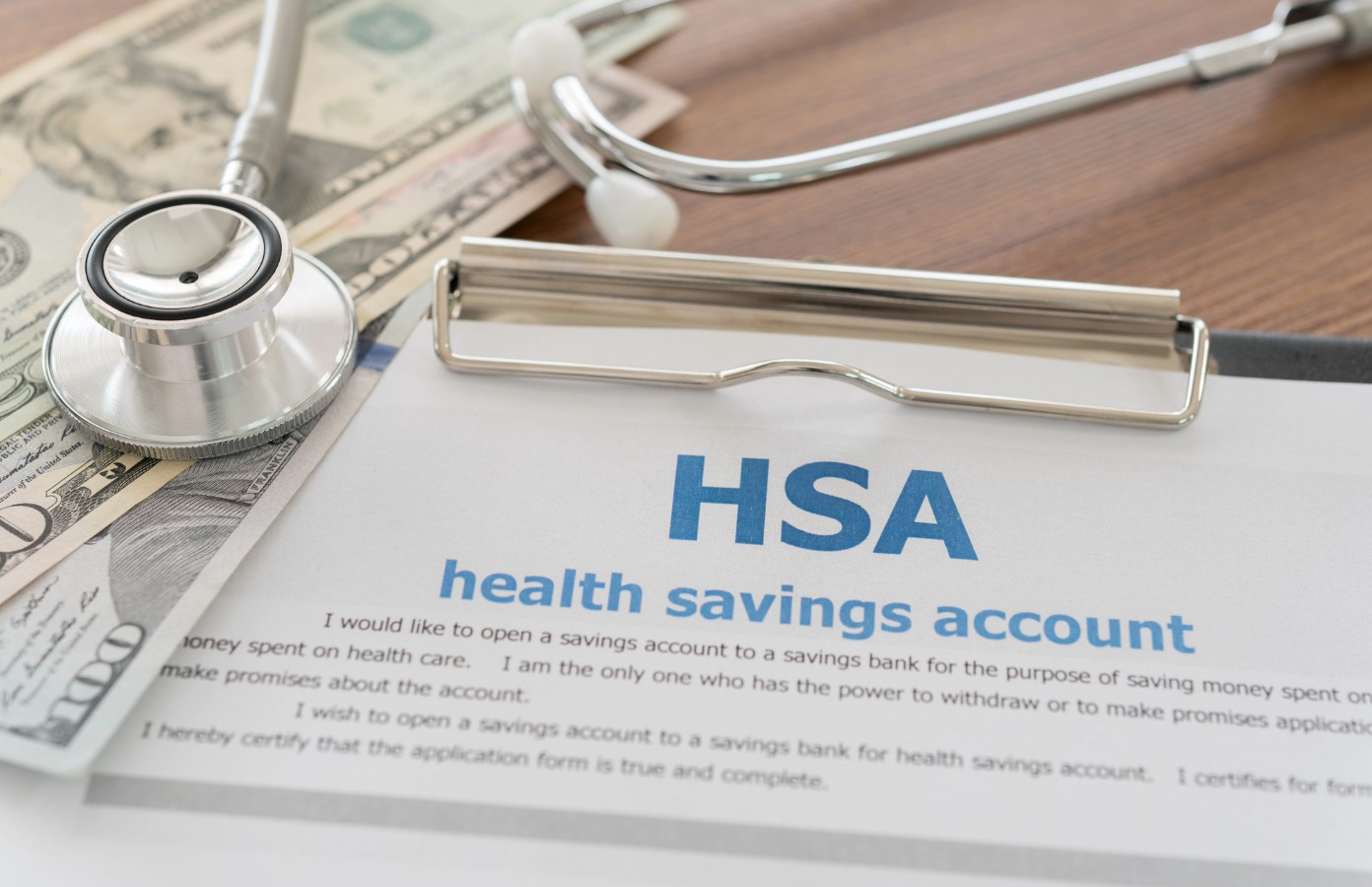
The Trump administration has rolled out new details on Health Savings Accounts (HSAs) following the passage of the so-called “Big Beautiful Bill,” expanding who can use these powerful tax-advantaged savings tools.
The changes could allow millions more Americans to lower their taxable income, earn interest on medical savings, and keep unused funds year after year.
Health Savings Accounts Explained: Why They Matter

Health Savings Accounts allow eligible Americans to set aside pre-tax dollars to pay for qualified medical expenses such as deductibles, copayments, and coinsurance.
Contributions reduce taxable income, and any unused funds roll over indefinitely, making HSAs a rare mix of short-term health coverage and long-term savings.
Unlike flexible spending accounts, there is no “use it or lose it” rule.
Health Savings Accounts Popular With Employees

Many employers that offered high-deductible health plans also offered health savings accounts. And some employers will even put in money each month to your health savings account.
Even if your employer did not offer an HSA, but you have an HDHP, you could open your own health savings account.
The HSA is your account. It is your money, not your employers. If your employer contributes money to the HSA account, it is your money. And if your employer doesn’t contribute money, you are able to add money to your HSA each payday.
You are in control of the HSA account and decide how much you want to contribute to the account, though it cannot exceed the maximum amount each year according to Internal Revenue Service guidelines.
If you have an HSA through your job, you can set up automatic contributions to be taken directly from your paycheck. That makes it easy to save money in the account. With the account, you will receive a debit card and possibly checks to be used for qualified medical expenses.
Where an HSA differs from a flexible savings account, the unused funds in your HSA account roll over from year to year. So, if you have $1,500 in your account and use $500 for a qualified medical expense this year, $1,000 will roll over into next year. You don’t lose what you don’t use this year.
When you reach 65 years or older and enroll in Medicare, you can no longer contribute to the HSA account. But the money in the HSA account is still yours to use on HSA-qualified medical expenses for out-of-pocket medical expenses.
One catch is that if you use this money on non-eligible medical expenses, you will have to pay income tax on that amount. If you’re under 65, you will also pay a 20% penalty.
HSA funds can cover copays, coinsurance, deductibles, and everything mentioned above that count as eligible medical expenses.
HSA funds usually cannot be used to pay for insurance premiums. But, you can use HSA money to pay for health coverage you bought under COBRA, also known as health care continuation coverage. You can also use the HSA funds to pay health insurance premiums if you get unemployment payments.
If you are on Medicare, you can use your health savings account funds to pay premiums for Part B and Part D Medicare coverage. If you are 65 or older, you can use your HSA funds to pay the premiums for employer-sponsored health care, if available.
Investments in the Health Savings Account

You can invest the money you have in your HSA.
Investing in the account is a great way to help the HSA grow more than just your contributions. And this is one of the best ways to save for future medical costs.
Your HSA is your account for your medical money to be spent on medical needs today and in the future. The HSA is like an individual retirement account or brokerage account since money can be invested.
Tax Advantages of a Health Savings Account
There are numerous tax advantages when using an HSA. The triple tax advantage is the main advantage that includes:
Tax-free contributions: Account holders will contribute pre-tax dollars through deductions from the paychecks. Any contributions you make to the HSA could be tax-deductible. That helps to reduce your taxable income.
Tax-free growth: All interest or earnings like dividends from the HSA account grows tax-free.
Tax-free withdrawals: This allows everyone to pay for their qualified medical expenses tax-free.
Unlike an individual retirement account (IRA) or a 401(k), the money doesn’t have to be taken out by a certain age. The fact that this money is in a tax-advantaged account and grows tax-free makes it better compared to an IRA because you don’t have to withdraw it by a certain age.
Several providers like Lively or Fidelity offer HSA accounts. If you have an existing HSA account, you can roll over or transfer your existing HSA to them.
The Big Beautiful Bill Expands Who Can Open an HSA

The newly passed legislation significantly expands the share of Americans who can open and contribute to HSAs.
According to a Dec. 9 release from the Treasury Department and the IRS, people enrolled in certain health plans previously excluded from HSA eligibility will now qualify.
This marks one of the largest HSA eligibility expansions in years.
Bronze and Catastrophic Plans Are Now HSA-Compatible

Starting in 2026, bronze and catastrophic health plans will officially be considered HSA-compatible; even if they don’t meet the traditional definition of a high-deductible health plan (HDHP).
Previously, many Americans enrolled in these lower-premium plans were locked out of HSAs. That barrier is now gone.
What Bronze and Catastrophic Plans Actually Cover

Bronze plans generally come with the lowest monthly premiums available on the market but higher out-of-pocket costs when care is needed, according to HealthCare.gov.
Catastrophic plans feature even lower premiums but the highest out-of-pocket costs, covering at least three primary care visits per year before the deductible is met. These plans are designed primarily to protect against major accidents or serious illnesses.
Under the new law, both types now pair with HSAs.
Telehealth Coverage Change Becomes Permanent

The legislation also makes permanent a popular pandemic-era rule: people can receive telehealth and other remote care services before meeting their deductible without losing HSA eligibility.
This removes a longstanding conflict between accessing convenient care and preserving tax-advantaged savings.
Direct Primary Care Subscribers Also Gain Eligibility

Beginning next year, individuals enrolled in certain direct primary care arrangements may contribute to an HSA, provided they otherwise meet eligibility rules.
This change reflects the growing role of alternative healthcare models that emphasize predictable monthly fees and direct access to physicians.
Contribution Limits Still Apply; But There’s No Minimum

While HSAs come with annual contribution limits set by the IRS, there is no minimum required to open or fund an account. Even small contributions can reduce taxable income, and balances roll over year after year while earning interest.
For long-term planners, HSAs can effectively function as a secondary retirement savings vehicle for healthcare costs.
Millions Already Use HSAs; And That Number Is Likely to Grow

As of 2024, roughly 60 million Americans already had an HSA. With the expanded eligibility under the Big Beautiful Bill, that number is expected to rise as more workers and families gain access based on the IRS guidance.
For households facing higher out-of-pocket healthcare costs, the new rules may offer a meaningful way to offset expenses while lowering taxes.
Like Financial Freedom Countdown content? Be sure to follow us!
Gen Z Would Cut Current Retirees’ Social Security Before Raising Taxes; A Generational Reckoning Is Here
Social Security supports the majority of American workers, retirees, and families. Yet as the program barrels toward a funding shortfall, a stark generational divide is emerging. Younger Americans; especially Gen Z, are increasingly unwilling to pay higher taxes to preserve benefits they’re not confident they’ll ever receive.
Forgotten IRS Retirement Rule Is Costing Americans $1.7 Billion a Year and It’s Still Catching Retirees Off Guard

Missing a required minimum distribution (RMD) might sound like a minor paperwork error. But new research from Vanguard shows it’s anything but small: investors who failed to take required withdrawals in 2024 triggered an estimated $1.7 billion in IRS penalties, with the biggest mistakes concentrated among people with the smallest retirement accounts. Here’s what the data reveals; and what retirees can do to avoid an expensive oversight.

Did you find this article helpful? We’d love to hear your thoughts! Leave a comment with the box on the left-hand side of the screen and share your thoughts.
Also, do you want to stay up-to-date on our latest content?
1. Follow us by clicking the [+ Follow] button above,
2. Give the article a Thumbs Up on the top-left side of the screen.
3. And lastly, if you think this information would benefit your friends and family, don’t hesitate to share it with them!

John Dealbreuin came from a third world country to the US with only $1,000 not knowing anyone; guided by an immigrant dream. In 12 years, he achieved his retirement number.
He started Financial Freedom Countdown to help everyone think differently about their financial challenges and live their best lives. John resides in the San Francisco Bay Area enjoying nature trails and weight training.
Here are his recommended tools
Personal Capital: This is a free tool John uses to track his net worth on a regular basis and as a retirement planner. It also alerts him wrt hidden fees and has a budget tracker included.
Platforms like Yieldstreet provide investment options in art, legal, real estate, structured notes, venture capital, etc. They also have fixed-income portfolios spread across multiple asset classes with a single investment with low minimums of $10,000.