
Americans file fewer unemployment claims as job openings hit highest level in nearly a year

The number of Americans filing for unemployment benefits declined last week, signaling continued resilience in the U.S. labor market even as inflation remains elevated and policymakers weigh the impact of higher prices on economic growth.
According to the U.S. Department of Labor, initial jobless claims fell by 4,000 to 226,000 for the week ending June 13. The figure was broadly in line with economists’ expectations and reinforced evidence that layoffs remain historically low despite ongoing economic uncertainty.
The Labor Department reported that new applications for unemployment benefits decreased to 226,000 from a revised 230,000 the previous week. Economists surveyed by FactSet and Reuters had expected approximately 225,000 claims.
Initial claims are widely viewed as one of the most timely indicators of labor market conditions because they closely track layoffs. The latest reading suggests employers are continuing to hold on to workers even as businesses navigate inflation pressures and geopolitical uncertainty.
Layoffs remain historically low

While weekly claims have drifted toward the upper end of their 190,000 to 230,000 range this year, layoffs remain subdued by historical standards.
The low level of layoffs has helped keep the unemployment rate at 4.3% for three consecutive months. Labor market stability has been a key factor supporting consumer spending and overall economic growth despite challenges that emerged during 2025.
Analysts note that some seasonal fluctuations can affect claims data during the summer months, when certain states allow non-teaching school employees to seek unemployment benefits during extended breaks.
Recent employment reports suggest hiring activity has strengthened considerably compared with much of 2025.
U.S. employers added 172,000 jobs in May, and the economy has averaged 188,000 monthly job gains over the past three months. That marks the strongest three-month hiring performance since early 2024 and represents a notable improvement from last year, when monthly job growth frequently fell below 200,000.
Part of that strength may stem from employers choosing to retain workers rather than implement layoffs, helping sustain payroll growth even as hiring remains selective in some sectors.
Job openings climb to highest level in nearly a year

Demand for workers also appears to be improving.
Job openings rose to 7.6 million in April, up from 6.9 million in March and the highest level since May 2024. The increase suggests many employers continue to seek workers despite concerns about inflation, tariffs, and broader economic uncertainty.
A higher number of available positions can provide opportunities for job seekers and often serves as a sign that businesses remain confident enough to expand staffing levels.
Although layoffs remain low, other labor market indicators show some challenges beneath the surface.
Continuing claims, which measure the number of people already receiving unemployment benefits, increased by 24,000 to 1.81 million for the week ending June 6. That figure came in slightly above economists’ expectations.
The rise in continuing claims may indicate that unemployed workers are taking longer to find new jobs, even as overall labor market conditions remain relatively healthy.
Government data released earlier this month showed that the median duration of unemployment rose to 11.6 weeks in May, up from 11.0 weeks in April.
That marks the longest average stretch of joblessness since November 2021 and suggests that while layoffs are limited, many job seekers are facing a more competitive hiring environment.
Economists have noted that policy uncertainty and changing business conditions may be making employers more cautious when adding new workers.
Federal Reserve sees labor market as stable
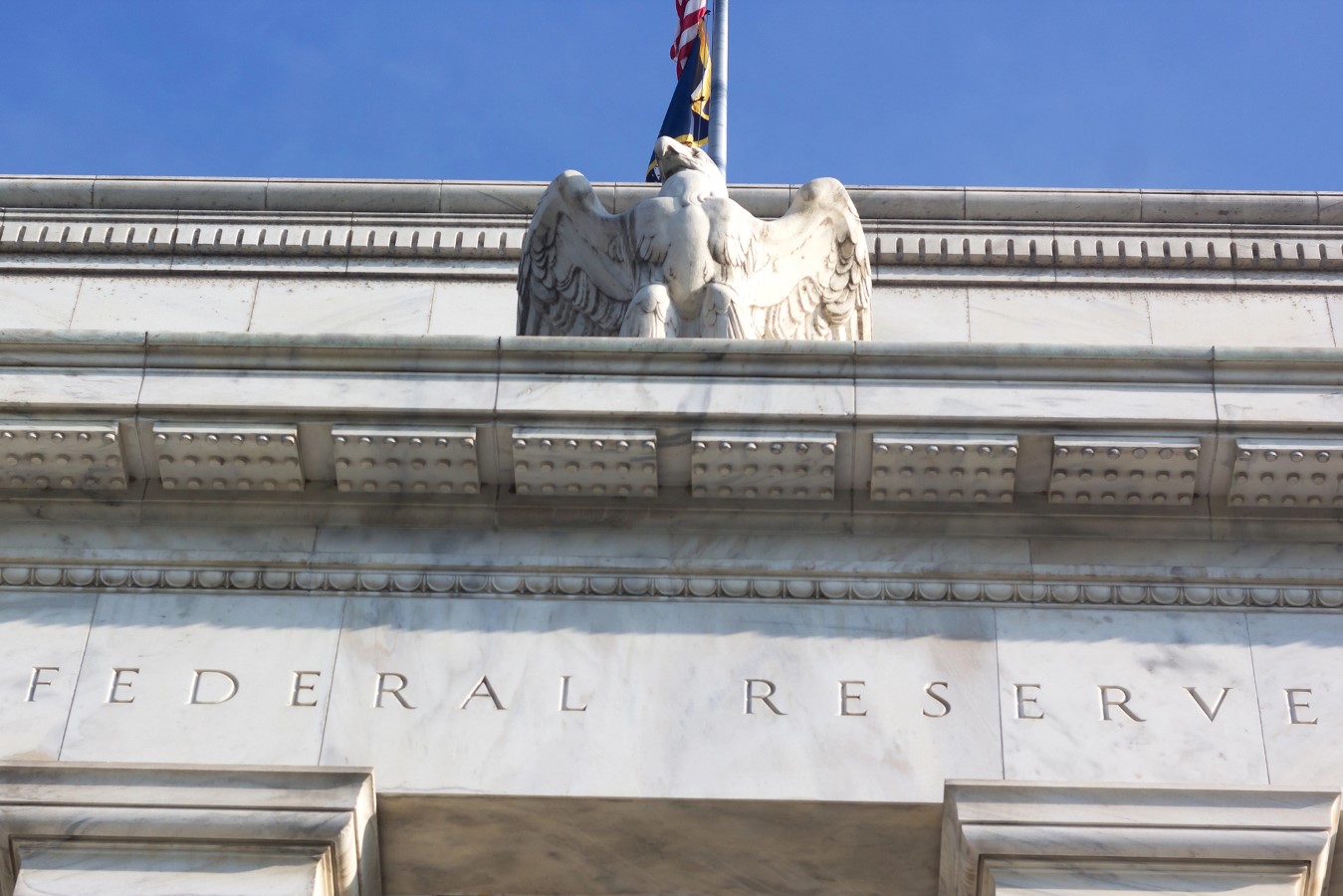
The latest labor market data arrived one day after the Federal Reserve left its benchmark interest rate unchanged at a range of 3.50% to 3.75%.
Federal Reserve Chair Kevin Warsh expressed confidence in labor market conditions while discussing the central bank’s outlook.
Warsh told reporters members of the policy-setting committee “thought that the labor markets were stable,” and “there were some people around the committee who thought that it was trending better than that.”
He added, “I’d say the jobs data has been moving in a good direction.”
The comments suggest policymakers continue to view employment conditions as supportive of economic growth even as inflation remains a concern.
Inflation pressures remain a key risk

The encouraging labor market data comes as consumers continue to face elevated prices.
Government data showed that consumer inflation reached 4.2% in May, the highest level in three years. Rising gasoline prices played a major role in the increase after disruptions to oil markets pushed fuel costs higher.
Higher inflation can weigh on both households and businesses by reducing purchasing power and increasing operating costs, potentially slowing hiring and investment decisions over time.
Energy prices have begun moving in a more favorable direction after a recent agreement between the United States and Iran helped reopen the Strait of Hormuz and restore oil market flows.
Average gasoline prices have fallen below $4 per gallon nationwide after previously reaching four-year highs. Lower fuel costs could provide some relief for consumers and businesses that were facing higher transportation and operating expenses.
Economists generally view easing energy costs as a positive development that could help moderate inflation in the months ahead.
Retail sales show consumers are still spending

Consumer spending remains a major source of support for the economy.
Retail sales increased 0.9% in May, exceeding economists’ expectations for a 0.5% gain. The increase followed a revised 0.4% rise in April.
Some of the spending growth reflected higher gasoline prices, but tax refunds and strong stock market performance also helped support household purchases.
Core retail sales, which exclude automobiles, gasoline, building materials, and food services, rose 0.7%, indicating that spending remained relatively broad-based across the economy.
Economic growth outlook remains positive

Consumer spending accounts for more than two-thirds of U.S. economic activity, making retail sales and employment data critical indicators of future growth.
The economy expanded at a 1.6% annualized pace during the first quarter, while the Atlanta Federal Reserve’s GDP tracker currently estimates growth of 2.8% in the second quarter.
With layoffs remaining low, hiring improving, job openings increasing, and consumer spending continuing to grow, the latest data suggest the U.S. economy has regained momentum after a weaker period in 2025.
Even so, policymakers and businesses will continue monitoring inflation, energy prices, and labor market trends to determine whether the recent improvement can be sustained through the remainder of the year.
Like Financial Freedom Countdown content? Be sure to follow us!
14 essential strategies to maximize your Social Security and avoid costly mistakes

Social Security is a vital lifeline for many seniors, providing crucial income support during retirement. With inflation at its highest in four decades, Social Security’s inflation-adjusted benefits offer protection against rising costs.
Rising interest rates have disrupted many retirement portfolios, causing bond fund values to plummet. In this volatile financial landscape, Social Security can stabilize a typical stock-bond retirement portfolio. By implementing smart strategies, retirees can maximize their Social Security benefits and ensure a more secure financial future.
14 Essential Strategies to Maximize Your Social Security and Avoid Costly Mistakes
11 reasons you should claim Social Security early

Deciding when to claim Social Security is often about maximizing your benefit. Financial planners usually advise delaying your claim for as long as possible to secure the highest monthly payment. Your benefit is based on your lifetime earnings, with a full payout available at your full retirement age (FRA), which is currently between 66 and 67 depending on your birth year. Claiming before FRA results in a permanent reduction in your monthly benefit, while waiting beyond FRA leads to a permanent increase. However, the decision isn’t solely about maximizing the monthly check. Personal factors such as health, family circumstances, and financial needs can play a significant role in determining the right time to claim.
11 Reasons You Should Claim Social Security Early

Did you find this article helpful? We’d love to hear your thoughts! Leave a comment with the box on the left-hand side of the screen and share your thoughts.
Also, do you want to stay up-to-date on our latest content?
1. Follow us by clicking the [+ Follow] button above,
2. Give the article a Thumbs Up on the top-left side of the screen.
3. And lastly, if you think this information would benefit your friends and family, don’t hesitate to share it with them!

John Dealbreuin came from a third world country to the US with only $1,000 not knowing anyone; guided by an immigrant dream. In 12 years, he achieved his retirement number.
He started Financial Freedom Countdown to help everyone think differently about their financial challenges and live their best lives. John resides in the San Francisco Bay Area enjoying nature trails and weight training.
Here are his recommended tools
Personal Capital: This is a free tool John uses to track his net worth on a regular basis and as a retirement planner. It also alerts him wrt hidden fees and has a budget tracker included.
Platforms like Yieldstreet provide investment options in art, legal, real estate, structured notes, venture capital, etc. They also have fixed-income portfolios spread across multiple asset classes with a single investment with low minimums of $10,000.