California Democrat Ro Khanna calls for $1,700 checks as Democrats prepare to take control of Congress in January
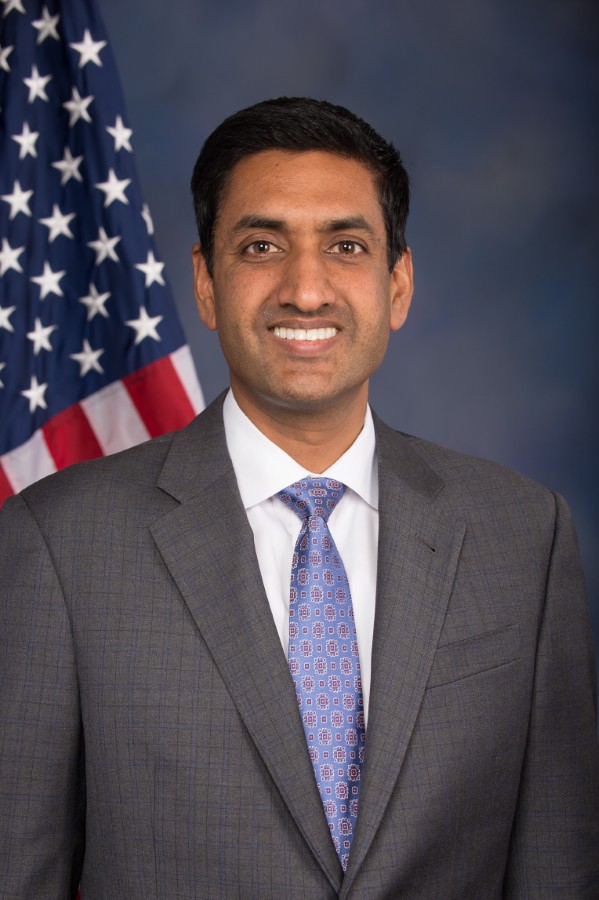
California Democratic Rep. Ro Khanna is calling for $1,700 checks for American families to offset higher household expenses resulting from the Middle East conflict, urging Democrats to approve the payments during the first week of January and put the proposal on President Donald Trump’s desk.
The Silicon Valley congressman wants Democrats to use their newly won control of both chambers of Congress to deliver the payments when the new congressional session begins in January 2027. His proposal would provide direct financial relief for families facing higher gasoline, food and electricity bills, although the details of a potential payment program have yet to be established.
The proposal also fits into Khanna’s broader economic agenda. He has joined Sen. Bernie Sanders in proposing a $3,000 payment for eligible Americans financed through a federal billionaire wealth tax, campaigned for a similar tax in California and continues advocating for Medicare for All.
His growing national profile comes as allies organize a draft campaign encouraging him to seek the 2028 Democratic presidential nomination.
Khanna calls for $1,700 checks as Democrats prepare to take congressional control
Khanna announced his latest proposal in a November 16 post on X, calling on Democrats to use their new congressional majority to deliver payments to American families.
He wrote:
“I want to give every American family a $1700 check to make them whole for the war in Iran.
Democrats have a chance to deliver. The first week in January, the House and Senate must pass a refund check to Americans. Let’s put it on Trump’s desk.”
In the accompanying video, Khanna explained that the payments would help cover higher household expenses.
“This is to cover their higher gas prices, their higher food prices, their higher electricity bills.”
The timing is significant because Democrats won control of both the House and Senate in the November 3 midterm elections.
Khanna is urging lawmakers to act during the first week of the new Congress rather than wait for a longer legislative process. However, his announcement does not include a complete legislative framework. Eligibility requirements, payment distribution rules and the total funding needed have not been established for the specific $1,700 proposal.
The checks are therefore a proposal, not an approved federal benefit. Congress would still need to pass legislation, and Trump would have to sign it for the payments to become law.
An earlier refund bill offers a possible funding mechanism
Khanna’s latest announcement follows an earlier legislative effort to compensate American taxpayers for the economic consequences of the Middle East conflict.
In September, he introduced the “Illegal War Refund Act, H.R. 10498”, alongside Democratic Reps. Chuy García, Bonnie Watson Coleman, Val Hoyle and Pramila Jayapal.
The legislation would require the federal government to calculate the economic costs borne by American taxpayers, including higher fuel and food prices, interest rates and inflation.
It would then transfer an equivalent amount from certain Defense Department accounts to the Treasury Department for distribution to eligible U.S. tax filers and their dependents. Military personnel accounts, military construction and the Defense Health Program would be exempt from the proposed funding transfers.
Khanna’s office cited Moody’s Analytics Chief Economist Mark Zandi, who estimated that the economic impact amounted to approximately $230 billion, or $1,760 per American household. That estimate provides context for the congressman’s latest $1,700 figure.
There is an important distinction between the two proposals. H.R. 10498 does not establish a fixed $1,700 payment. Instead, it uses a formula based on the economic costs calculated by the government. Khanna’s November 16 announcement specifically calls for $1,700 checks.
The earlier bill was referred to the House Ways and Means and Appropriations committees and has not advanced to a floor vote. It remains separate from the new payment proposal, which Khanna wants Democrats to pursue in January.
Higher energy and food costs provide the economic backdrop

Khanna is framing the proposed checks as compensation for higher living expenses, particularly gasoline, food and electricity.
The economic consequences of the Middle East conflict have extended beyond military spending. Disruptions to energy transportation routes have affected oil markets, while higher fuel and fertilizer costs can put additional pressure on transportation, agriculture and grocery prices.
The Strait of Hormuz, a critical shipping passage for global energy supplies, has been a particular source of concern. Disruptions there can affect oil prices and increase uncertainty for businesses and consumers.
The Pentagon’s estimated military costs are another part of the financial picture, but they should not be confused with the economic losses households experience through higher prices.
Khanna’s September legislation attempted to account for both direct and indirect costs by requiring the government to calculate the broader economic impact. His latest announcement instead emphasizes a straightforward payment amount that families could receive.
The proposal raises questions about how Congress would finance the payments. If lawmakers use the funding mechanism in H.R. 10498, they would need to determine which Defense Department accounts could be reduced and how the economic costs would be calculated. If they pursue a different approach, they would need to identify another funding source.
Khanna and Sanders want a 5% annual billionaire wealth tax to fund $3,000 payments
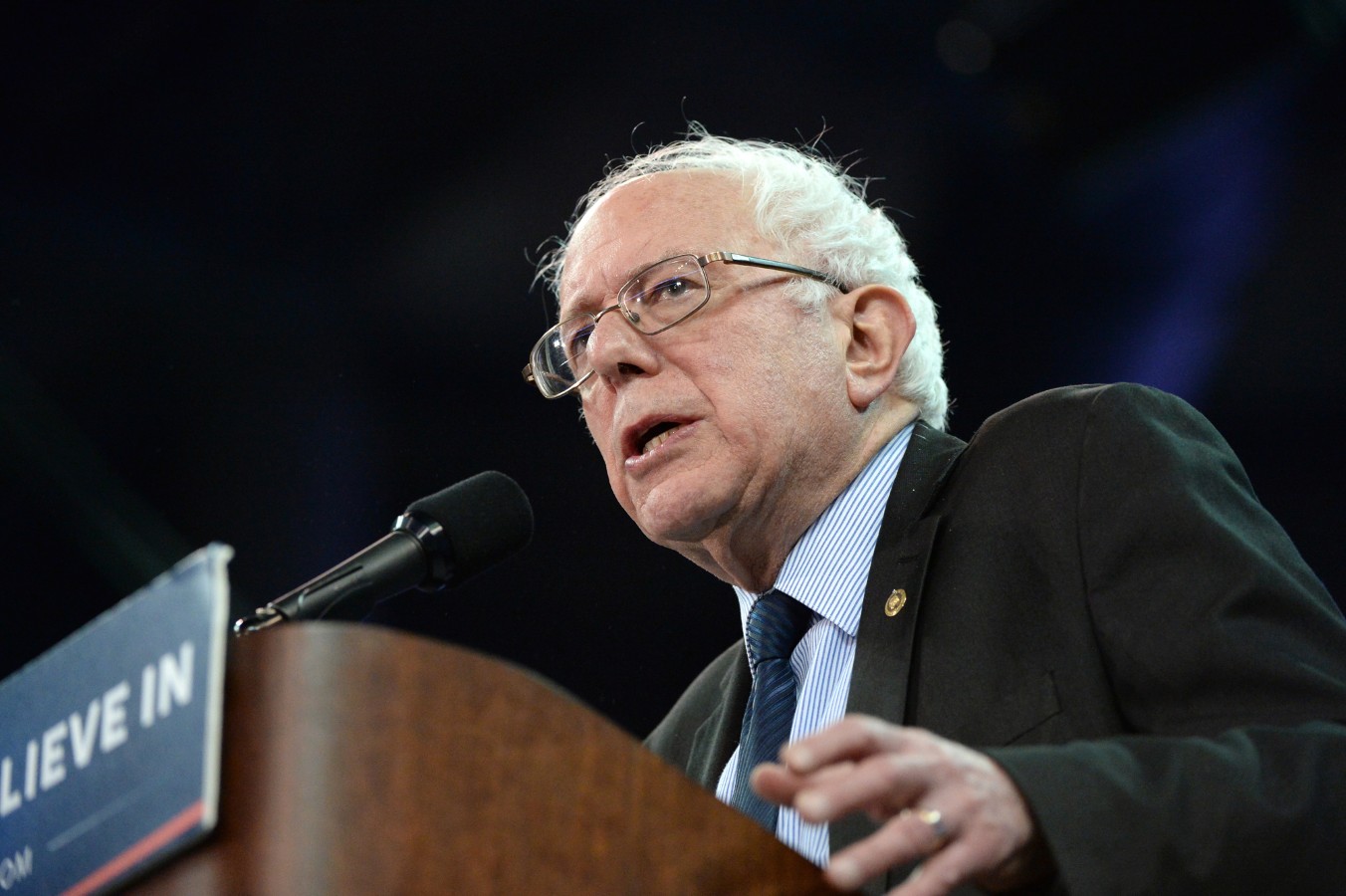
The $1,700 proposal is not Khanna’s first attempt to put direct payments into the hands of American households. In March 2026, he joined Sanders in introducing a much broader proposal that would provide $3,000 to every eligible individual, including children, through a federal tax on billionaire wealth.
Their Make Billionaires Pay Their Fair Share Act would establish an annual 5% wealth tax on Americans with net worths exceeding $1 billion.
According to the lawmakers, the proposal would apply to 938 billionaires and generate an estimated $4.4 trillion over 10 years. In its first year, the legislation would provide $3,000 to every man, woman and child in households earning $150,000 or less. A qualifying family of four could therefore receive $12,000.
The legislation would also use the revenue to expand Medicare coverage to include dental, vision and hearing services, invest in affordable housing, expand childcare assistance and increase public school teacher salaries.
The distinction between the two payment proposals is important. Khanna’s latest $1,700 announcement is framed as a family refund tied to higher household costs. The Sanders-Khanna legislation, by contrast, proposes a $3,000 first-year payment per eligible household member, funded through a separate wealth-tax system.
Neither proposal has become law. The $3,000 payments would depend on Congress approving the proposed wealth tax, while the $1,700 checks would require a separate legislative effort.
California’s billionaire-tax defeat has not ended Khanna’s campaign

Khanna’s national wealth-tax proposal follows his high-profile campaign for California’s Proposition 40, which sought to impose a one-time 5% tax on the wealth of billionaires residing in the state.
The measure was intended primarily to help fund healthcare programs following federal funding reductions. It became one of the most divisive economic issues in California’s 2026 election, splitting Democrats, including Gov. Gavin Newsom and other prominent party figures.
Newsom opposed the proposal, arguing that wealthy residents could relocate and reduce the state’s tax revenue. Khanna took the opposite position, campaigning alongside Sanders and challenging opponents to defend the concentration of wealth among billionaires.
California voters ultimately rejected Proposition 40, with approximately 53% voting against it and 47% supporting it.
Khanna, however, had already signaled that he would not abandon the effort. At a November 3 press conference, he said:
“I’m proud of our efforts wherever we end up. I am going to be right there, first in line supporting this in the next election cycle if it doesn’t pass this one.”
His statement specifically points to another attempt in the 2028 election cycle.
The national legislation he introduced with Sanders offers a separate route to pursue the same broader objective: taxing billionaire wealth rather than relying exclusively on a California ballot initiative.
Khanna’s possible 2028 presidential campaign is gaining momentum
Khanna’s economic proposals are also gaining attention as Democrats consider potential contenders for the 2028 presidential nomination.
On November 5, The Washington Post reported that former Democratic Rep. Jamaal Bowman and progressive activist Nomiki Konst were organizing a draft campaign called “Run Ro” to encourage Khanna to run for president.
The effort reflects growing interest among progressive activists in elevating Khanna’s economic platform, particularly his support for taxing billionaire wealth, expanding healthcare coverage and providing direct financial assistance to working families.
Khanna has acknowledged that he is considering a presidential campaign. In an October interview with The Washington Post, he said he planned to decide by the end of 2026 whether to pursue the Democratic nomination, although he might not announce his decision publicly until later.
NBC News also reported that Khanna welcomed the draft effort, saying he was honored that people were encouraging him to run on a platform of Medicare for All, ending foreign conflicts and taxing billionaires.
He added that whether he would run or support another candidate was a decision he would make with his family after the holidays.
The political implications are significant. His proposals for $1,700 family checks and $3,000 individual payments offer a concrete economic message that could resonate with voters concerned about household expenses, healthcare and wealth inequality.
Medicare for All completes Khanna’s broader economic platform

Direct payments and billionaire taxation are not the only major proposals Khanna is promoting as he considers his national political future.
He has continued advocating for Medicare for All, arguing that Democrats should pursue universal healthcare rather than a more limited public insurance option.
On November 13, Khanna told reporters that Democrats should hold a congressional vote on Medicare for All, alongside votes on other foreign-policy priorities. He reiterated that position as Democrats prepared to take control of Congress.
His position puts him closer to Sanders and the progressive wing of the Democratic Party on healthcare policy, rather than Democrats who favor expanding existing Affordable Care Act coverage without replacing the current insurance structure.
Khanna has also described his economic vision as a new social contract, with billionaire taxation helping finance universal healthcare, childcare and other public investments. In an August interview with NPR, he said he was seriously considering a 2028 presidential campaign and argued that Democrats needed a more ambitious economic agenda.
Together, the proposals form a broader economic platform: direct payments to families, higher taxes on billionaire wealth, expanded public healthcare and greater federal investment in housing and childcare.
Whether Khanna ultimately enters the 2028 presidential race remains undecided. But his latest refund proposal, his continued push for a national wealth tax and the organizing effort around a possible campaign suggest that he is seeking to establish a recognizable economic platform well before the next presidential election.
For now, the immediate test is whether Democrats will take up his $1,700 proposal during their first week in control of Congress in January and whether Trump will agree to sign it.
Like Financial Freedom Countdown content? Be sure to follow us!

Did you find this article helpful? We’d love to hear your thoughts! Leave a comment with the box on the left-hand side of the screen and share your thoughts.
Also, do you want to stay up-to-date on our latest content?
1. Follow us by clicking the [+ Follow] button above,
2. Give the article a Thumbs Up on the top-left side of the screen.
3. And lastly, if you think this information would benefit your friends and family, don’t hesitate to share it with them!

John Dealbreuin came from a third world country to the US with only $1,000 not knowing anyone; guided by an immigrant dream. In 12 years, he achieved his retirement number.
He started Financial Freedom Countdown to help everyone think differently about their financial challenges and live their best lives. John resides in the San Francisco Bay Area enjoying nature trails and weight training.
Here are his recommended tools
Personal Capital: This is a free tool John uses to track his net worth on a regular basis and as a retirement planner. It also alerts him wrt hidden fees and has a budget tracker included.
Platforms like Yieldstreet provide investment options in art, legal, real estate, structured notes, venture capital, etc. They also have fixed-income portfolios spread across multiple asset classes with a single investment with low minimums of $10,000.