Appeals court temporarily reinstates Trump’s 10% global tariffs during legal fight

A federal appeals court on Tuesday temporarily paused a lower court ruling that had struck down President Donald Trump’s 10% global tariffs, allowing the levies to remain in effect while the administration challenges the decision. The order from the U.S. Court of Appeals for the Federal Circuit keeps tariffs imposed under Section 122 of the Trade Act of 1974 in place for now, marking the latest twist in an escalating legal battle over Trump’s trade agenda.
The appeals court issued an administrative stay and set an expedited briefing schedule as the Trump administration argues that immediately lifting the tariffs could disrupt ongoing trade negotiations and unleash a wave of refund litigation from importers. Importers will continue paying the 10% tariffs while the appeal moves forward.
The U.S. Court of Appeals for the Federal Circuit temporarily halted a decision from the U.S. Court of International Trade that had declared Trump’s 10% global tariffs unlawful.
The administrative stay keeps the tariffs active during the appeals process and gives both sides time to submit additional legal arguments under an accelerated schedule.
The ruling comes months after the U.S. Supreme Court struck down a separate Trump tariff program that relied on emergency powers under the International Emergency Economic Powers Act.

Last week, the U.S. Court of International Trade ruled 2-1 that Trump exceeded his authority under Section 122 of the Trade Act of 1974 when imposing the tariffs earlier this year.
The court found that the administration failed to demonstrate the type of balance-of-payments crisis required under the law to justify temporary across-the-board tariffs.
One judge dissented, arguing it was premature to fully side with the plaintiffs at that stage of the case.
Tariffs were imposed after Supreme Court setback
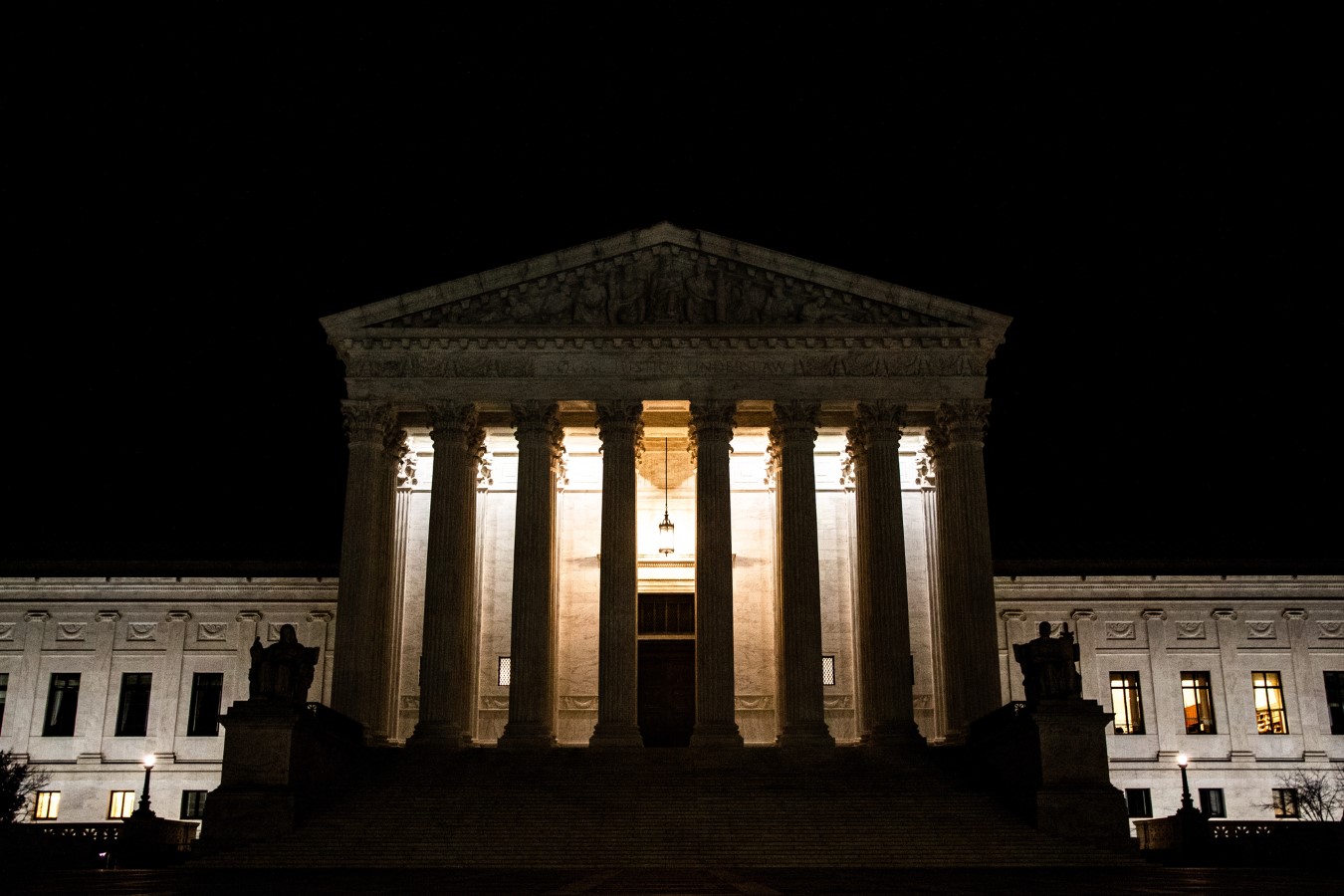
Trump announced the 10% global tariff plan on the same day the Supreme Court invalidated another major tariff initiative. That earlier program had relied on the 1977 International Emergency Economic Powers Act to justify sweeping import duties.
The Supreme Court ruled that Trump’s use of emergency powers to enact broad tariffs was unconstitutional, significantly limiting the administration’s ability to use executive authority to reshape trade relationships.
Trump’s February tariff order applied broadly to imports entering the United States, but several categories were exempted.
Excluded products included beef, tomatoes, oranges, pharmaceuticals, passenger vehicles, and some critical minerals. Goods covered under the U.S.-Mexico-Canada trade agreement also were not subject to the additional 10% levy.
Those exemptions reflected attempts by the administration to shield certain industries and strategic supply chains from higher import costs while still applying pressure on foreign trade partners.
Small businesses challenged the new tariffs in court, arguing the administration was attempting to sidestep the Supreme Court’s earlier ruling by turning to a different statute.
Among the plaintiffs were Florida-based toy company Basic Fun! and New York spice importer Burlap & Barrel. The businesses argued the tariffs created financial uncertainty and disrupted global supply chains that many American companies rely upon.
Although 24 states joined the legal challenge, the court ruled that most of the states lacked legal standing to sue. As a result, the decision only blocked enforcement of the tariffs for Basic Fun!, Burlap & Barrel, and Washington state.
The limited scope of the ruling leaves open the possibility that tariffs could remain in effect for other importers unless additional legal action succeeds.
The court’s decision was not unanimous. One judge dissented, arguing it was premature to grant victory to the business plaintiffs at this stage of the litigation.
The split decision highlights continuing disagreement over how broadly presidential trade powers can be interpreted during periods of economic stress.
Trump administration defended tariffs using trade deficit data
The Trump administration argued that the U.S. faced a serious balance-of-payments problem because of a $1.2 trillion annual goods trade deficit and a current account deficit equal to roughly 4% of GDP.
Administration officials claimed the tariffs were necessary to stabilize America’s economic position and strengthen domestic manufacturing competitiveness. The Justice Department argued that immediately removing the tariffs would undermine ongoing trade negotiations with foreign partners.
However, economists and trade lawyers questioned whether the nation faced the type of immediate financial crisis required under the Trade Act.
Critics of the tariffs argued the United States was not on the verge of a balance-of-payments emergency or a rapid collapse of the dollar.
Trade experts said the administration’s interpretation of the law stretched far beyond how Section 122 historically has been used. That legal vulnerability became a central issue in the court’s ruling.
Businesses and Democratic-led states challenged the tariffs

The lawsuits were brought by small businesses and Democratic-led states that argued Trump unlawfully expanded presidential tariff powers.
Among the plaintiffs were Washington state, Oregon, Florida-based toy company Basic Fun!, and New York spice importer Burlap & Barrel.
The challengers argued the administration was attempting to sidestep the Supreme Court’s earlier ruling by relying on a different statute to continue imposing broad tariffs.
The Court of International Trade had limited its ruling primarily to the plaintiffs that successfully demonstrated legal standing.
As a result, the earlier decision blocked tariff enforcement for specific importers and Washington state, rather than eliminating the tariffs nationwide.
The appeals court’s temporary stay now keeps the levies in place for those importers as well while the litigation continues.
Trump signaled he will continue pursuing tariffs
Trump has indicated he will continue pursuing aggressive tariff policies despite repeated legal setbacks.
“Nothing surprises me with the courts. Nothing surprises me,” Trump said May 7 when asked about the court decision. “So we always do it a different way. We get one ruling and we do it a different way.”
The remarks indicate the administration may seek alternative legal pathways to continue imposing trade barriers.
Tariffs have become one of the defining features of Trump’s second-term economic platform. The president has repeatedly argued that import duties are necessary to secure better trade deals, protect U.S. industries, and reduce dependence on foreign manufacturing.
Trump has also used tariffs as leverage in broader geopolitical and economic negotiations with major trading partners.
The latest ruling raises fresh questions about how much authority future presidents will have to impose sweeping tariffs without congressional approval.
Like Financial Freedom Countdown content? Be sure to follow us!

Medicare beneficiaries could see their Part B premiums nearly double over the next decade, according to a new report from the Senate Joint Economic Committee, adding fresh pressure to retirees already coping with inflation and rising medical bills. The warning comes as Medicare Part B premiums, Medigap supplemental plan costs, and other out-of-pocket expenses continue climbing faster than many Social Security cost-of-living adjustments, reducing the real value of monthly retirement checks for millions of Americans.
New Senate report warns Medicare premiums could double by 2035, squeezing Social Security checks
Medicare Advantage changes could cut extra benefits but speed up care approvals for millions under new bill

Medicare Advantage could be headed for one of its biggest shakeups in years as lawmakers push a bipartisan reform bill while insurers warn that popular extra benefits may be reduced next year. The combination of stricter oversight in Washington and tighter insurer budgets could affect tens of millions of older Americans who rely on private Medicare plans. The proposed Medicare Advantage Improvement Act of 2026 would increase consumer protections, shorten prior authorization timelines, and limit plan practices that critics say delay care. At the same time, insurers including Humana have signaled that lower-than-expected government payment increases may force cuts to supplemental benefits in 2027.

Did you find this article helpful? We’d love to hear your thoughts! Leave a comment with the box on the left-hand side of the screen and share your thoughts.
Also, do you want to stay up-to-date on our latest content?
1. Follow us by clicking the [+ Follow] button above,
2. Give the article a Thumbs Up on the top-left side of the screen.
3. And lastly, if you think this information would benefit your friends and family, don’t hesitate to share it with them!

John Dealbreuin came from a third world country to the US with only $1,000 not knowing anyone; guided by an immigrant dream. In 12 years, he achieved his retirement number.
He started Financial Freedom Countdown to help everyone think differently about their financial challenges and live their best lives. John resides in the San Francisco Bay Area enjoying nature trails and weight training.
Here are his recommended tools
Personal Capital: This is a free tool John uses to track his net worth on a regular basis and as a retirement planner. It also alerts him wrt hidden fees and has a budget tracker included.
Platforms like Yieldstreet provide investment options in art, legal, real estate, structured notes, venture capital, etc. They also have fixed-income portfolios spread across multiple asset classes with a single investment with low minimums of $10,000.