San Francisco Democrats defy state party on local billionaire tax but unite behind federal wealth levy

The San Francisco Democratic Party voted 17-4 to oppose California’s upcoming billionaire tax proposal, breaking rank with the California Democratic Party, which narrowly endorsed the state ballot measure earlier in the month.
The decision by the San Francisco Democratic County Central Committee (DCCC) underscores a deepening rift within California politics over how to address income inequality and fund state services without triggering capital flight.
San Francisco Democrats buck state party line to oppose Proposition 40

The San Francisco Democratic Party made the rare decision to defy the state party platform by voting overwhelmingly against Proposition 40. The local chapter paved the way for the stance two months prior when it amended its bylaws to permit divergence from the California Democratic Party’s endorsement on statewide ballot measures. Previously, the local committee habitually mirrored state party decisions on statewide candidates and propositions.
Following the vote, local party leadership signaled a transition toward active campaign efforts for November. “After tonight, we will be moving into full-blown campaigning mode for our endorsed candidates and campaigns,” said Nancy Tung, the chair of the San Francisco Democratic Party.
The vote inside the DCCC fell along defined progressive and moderate lines. Opponents expressed significant concern that taxing ultra-wealthy residents at the state level would incentivize high earners to relocate, harming California’s overall tax base.
“[My union is] particularly disturbed, because we feel it sets up an uneven playing field for California,” said Patrick Boileau, a DCCC member and the political director of the Operating Engineers Local 3. “The billionaires that are going to be taxed with this measure also have the ability to vote with their feet and move out of California.” Supervisor Matt Dorsey put it bluntly: “This is terrible public policy.”
As per Mission Local, Lanier Coles, a DCCC member who was diagnosed with a chronic neurological disorder at 28 and had trouble getting healthcare coverage, said she opposed Prop. 40 because it is not “a long-term viable solution to provide affordable healthcare.” She argued that when Democrats win Congress and the White House, they will “pass enduring legislation” to fund and expand the Affordable Care Act and tackle federal tax reform to address inequalities. “That is how we will get to a place where more Americans, more working-class people will have access to healthcare for the long term,” she said.
Her remarks drew immediate pushback from audience members. “They’ll be dead,” quipped a Prop. 40 supporter in the audience. “That’s why you lost to Trump twice,” added another.
Following its rejection of Proposition 40, the San Francisco DCCC unanimously passed a non-binding resolution urging the adoption of a federal wealth tax. Proponents argued that a nationwide structure prevents individual states or cities from being economically disadvantaged by localized tax flight.
“This is something that we can actually do that will make an impact on income inequality in this country,” said Eric Kingsbury, who introduced the measure with Emma Hare. “I ask that all of you join me in pushing for this tax that would be actually workable, viable, and not something that would hurt the economy of one city or county or state.”
However, critics within the party dismissed the resolution as a symbolic gesture. “It is a resolution. It doesn’t have to go anywhere,” said Hene Kelly, 84, the regional director of the California Democratic Party. “We’ll work on it for years and years and years. I would like to have something before my 85th birthday and this won’t do it for me.” Nguyen added: “Let’s just be honest with ourselves: The resolution is just basically shouting into the void and may or may not go anywhere. Prop. 40 will be at the voters in November.”
How Proposition 40 aims to fill a massive Medi-Cal budget hole

Proposition 40, sponsored by the healthcare labor union Service Employees International Union-United Healthcare Workers West (SEIU-UHW), proposes a one-time 5 percent wealth tax on roughly 200 California residents whose net worth exceeded $1 billion as of January 1, 2026, according to CalMatters.
Proponents project the measure could generate tens of billions of dollars. The vast majority of the revenue is earmarked for state healthcare programs; specifically to patch a projected $30 billion hole in Medi-Cal stemming from federal budget cuts under President Donald Trump’s “Big Beautiful Bill”; with remaining funds allocated toward public education and food assistance.
Supporters on the DCCC insisted that immediate action is necessary to maintain critical safety-net services. “California needs this money now,” said Michael Nguyen, a progressive DCCC member. “There are reasonable questions here around implementation, long-term revenue projections, but those questions cannot become an excuse for doing nothing.” Gordon Mar, another committee member, agreed: “The bottom line is Prop. 40 is the only proposal before voters and on the table, more generally, that approaches the scale of this crisis.”
Labor leaders criticized the local committee’s rejection of the measure. Suzanne Jimenez, chief of staff at SEIU-UHW, called the local party’s vote to oppose Prop. 40 “shameful.” “They have put the interests of a few hundred billionaires ahead of the healthcare needs of their fellow Californians,” Jimenez wrote in a statement.
Medi-Cal serves approximately 14.8 million total California residents. Low-income U.S. citizens and lawful permanent residents (LPRs) account for 13.2 million enrollees (89.2%), while undocumented residents account for 1.6 million enrollees (10.8%). Out of the ~$150 billion annual budget, ~$141.5 billion supports citizens and LPRs through joint federal-state funding, while ~$8.5 billion covers undocumented residents.
While statutory eligibility remains intact for citizens and LPRs, federal spending reductions for these groups occur through new 80-hour monthly work requirements, six-month eligibility redeterminations, and federal matching caps, which the Congressional Budget Office (CBO) projects will cause coverage losses for millions of low-income citizens and LPRs due to administrative disenrollments, as documented by KFF.
Because federal law (8 U.S.C. § 1611) prohibits federal Medicaid funds from paying for full-scope care for undocumented immigrants, California pays the full $8.5 billion annual cost entirely out of its state General Fund, as outlined by the California Department of Health Care Services.
Revenue generated by Proposition 40 flows into California’s general Healthcare Reserve Account. Because the state General Fund pays both the state’s required Medicaid match for citizens and LPRs alongside 100 percent of the $8.5 billion cost for undocumented residents, Proposition 40 funds enter a shared state pool that supports both obligations.
Concerns over wealth flight and economic ripple effects

While the nonpartisan California Legislative Analyst’s Office projects that Proposition 40 would bring in temporary windfalls spread over several years, it also cautioned that behavioral shifts and out-migration could reduce ongoing state income tax collections by up to $1 billion annually, according to Ballotpedia.
Several high-profile tech figures reportedly relocated outside California ahead of the January 1 residency snapshot. Opponents argue that losing high-net-worth individuals permanently undermines the state’s progressive income tax structure, which relies heavily on top earners for general fund revenue.
Gavin Newsom rejects state wealth tax while offering federal alternatives
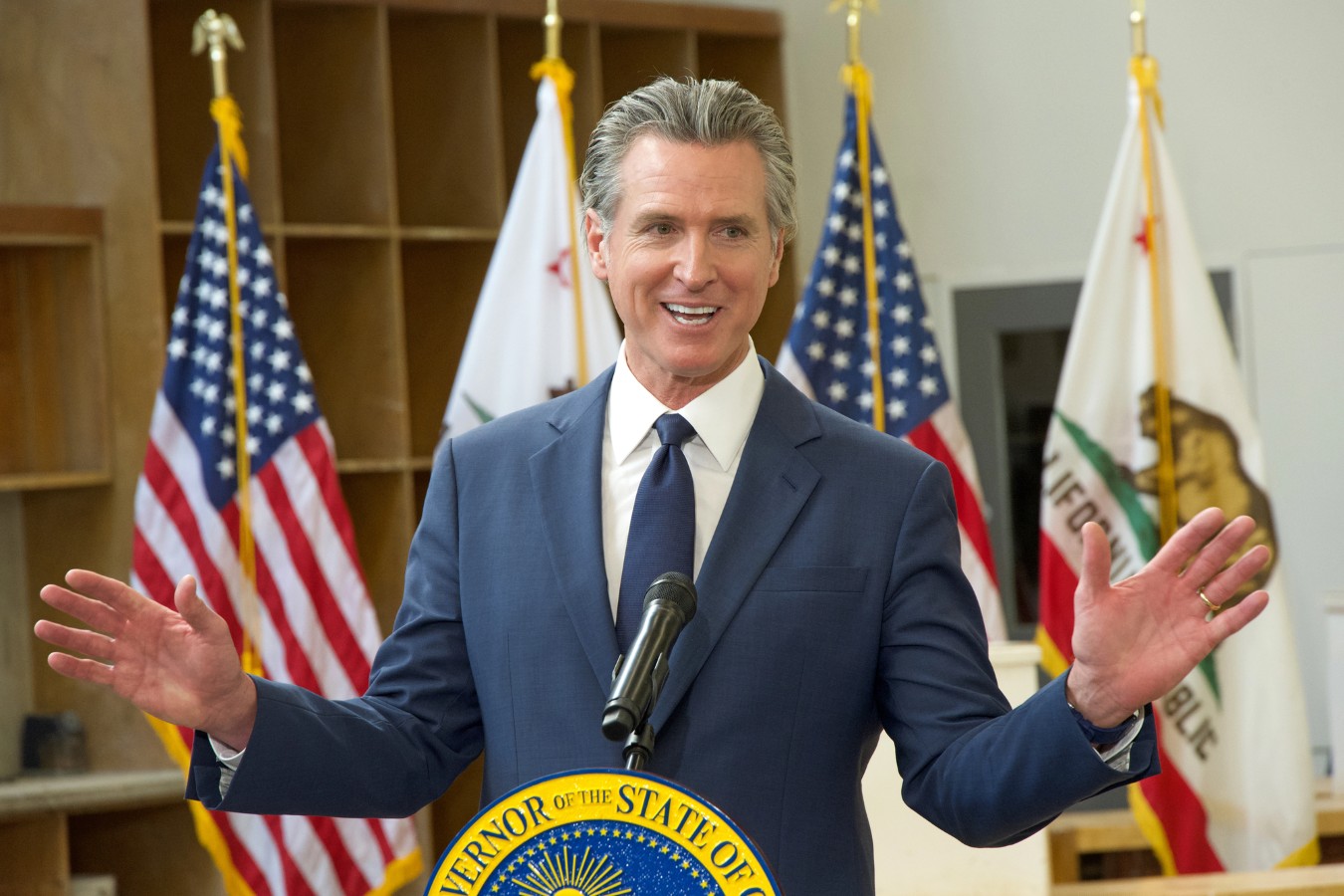
California Governor Gavin Newsom has consistently opposed state-level wealth tax initiatives, including Proposition 40. Newsom stated that the state wealth tax proposal “makes no sense” and is “really damaging to the state.” When SEIU-UHW offered to withdraw Proposition 40 in exchange for a smaller 2 percent state wealth tax enacted by the Legislature, Newsom rejected the compromise.
Instead, Newsom advocates for federal tax reform to address wealth disparity. His national platform includes reversing the 2017 federal tax cuts, establishing a minimum tax rate for individuals earning over $100 million, closing tax loopholes that permit borrowing against unrealized capital gains, and creating federal mechanisms to capture wealth generated by artificial intelligence.
Bernie Sanders champions both state and national billionaire taxes
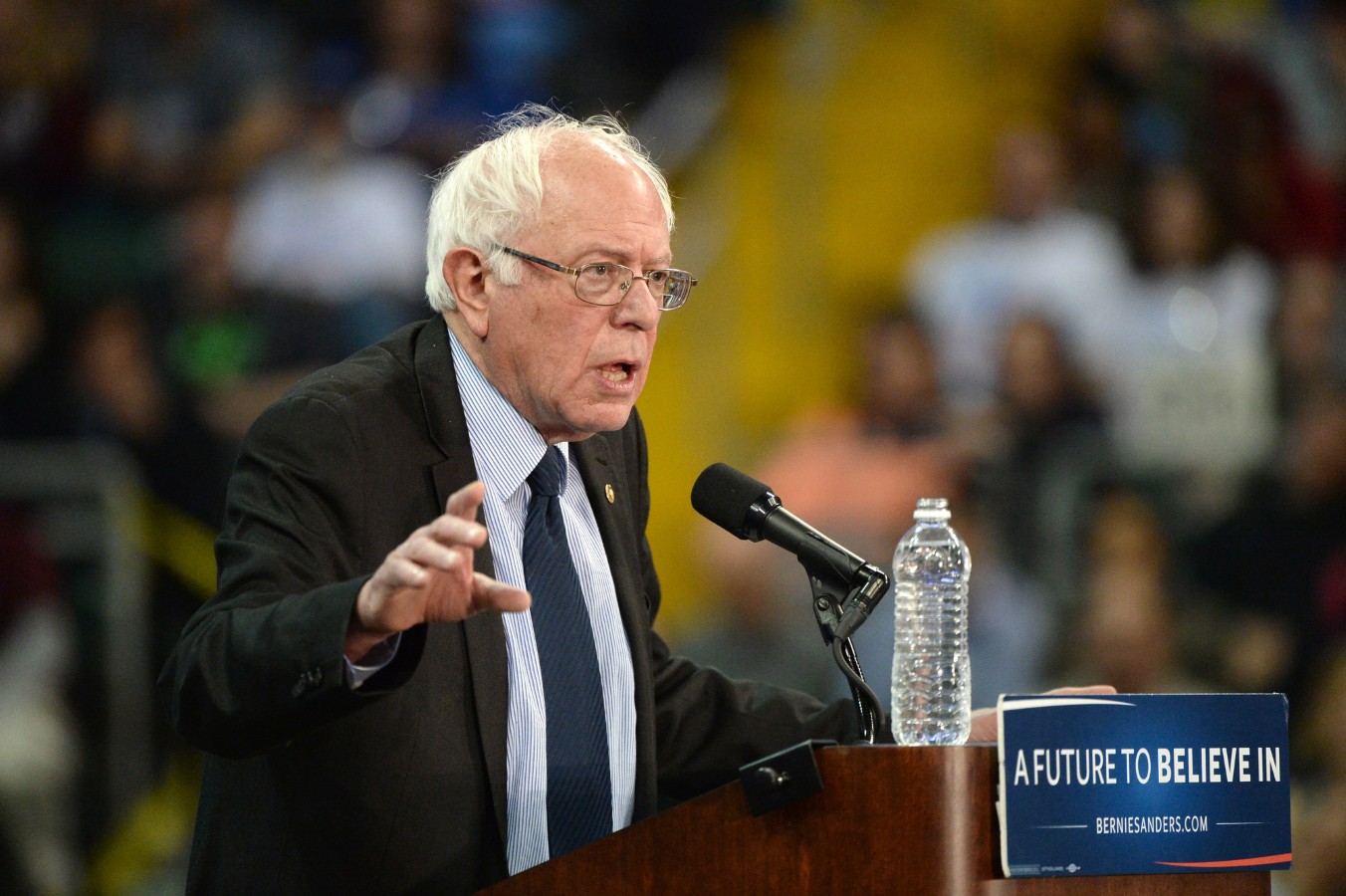
U.S. Senator Bernie Sanders stands firmly in favor of state and federal wealth taxes. Sanders endorsed California’s Proposition 40, arguing that ultra-wealthy individuals must contribute to state social safety nets and healthcare programs.
On the national stage, Sanders co-authored the “Make Billionaires Pay Their Fair Share Act” alongside Representative Ro Khanna. The federal legislation proposes an annual 5 percent wealth tax on households with net worths exceeding $1 billion. To prevent international tax avoidance, the bill incorporates strict enforcement provisions, including a 60 percent exit tax on billionaires who attempt to renounce their U.S. citizenship.
Representative Ro Khanna, who represents Silicon Valley, has taken a distinct stance from many tech-industry leaders in his district by vocally supporting Proposition 40. Khanna maintains that targeting extreme wealth inequality is essential for maintaining social stability and public infrastructure.
In Congress, Khanna partnered with Bernie Sanders to champion the federal “Make Billionaires Pay Their Fair Share Act.” His stance on wealth taxes at both state and federal levels has drawn significant pushback from venture capitalists and tech founders in his district, some of whom funded primary challengers against him.
Nancy Pelosi supported San Francisco’s local executive tax measure that failed at the polls
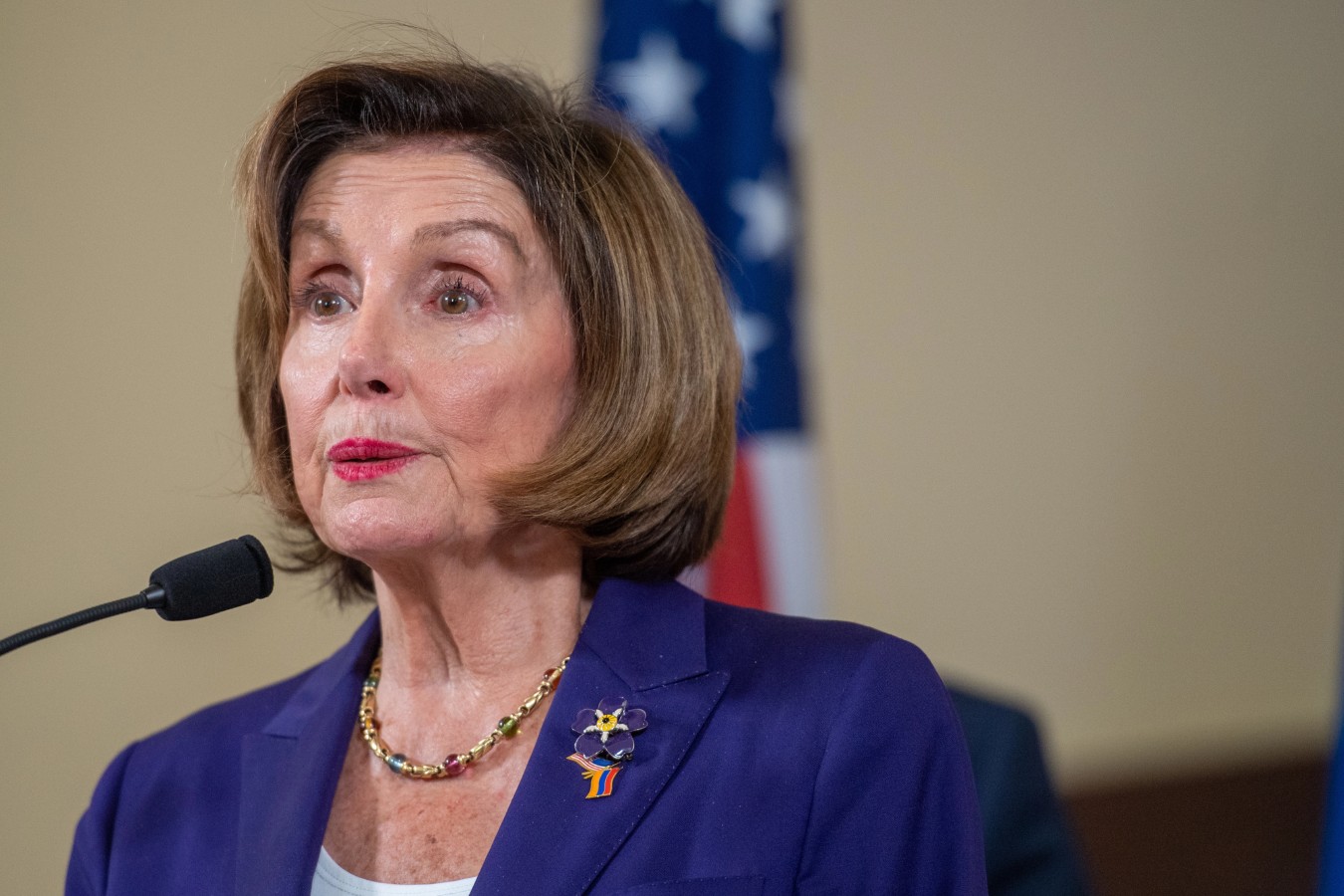
Former House Speaker Nancy Pelosi, who represents San Francisco, backed local tax reform by endorsing San Francisco Proposition D (the Overpaid CEO Tax initiative), as documented by Ballotpedia. The local ballot measure sought to increase tax rates on large corporations whose highest-paid executive earned more than 100 times the median salary of their workers to fund municipal healthcare and public services.
Despite high-profile endorsements from Pelosi, Bernie Sanders, and local labor organizations, Proposition D failed at the polls in the June 2026 municipal election, receiving 47.18 percent of the vote compared to 52.82 percent in opposition, according to official election records. Opponents, led by local business groups, successfully argued that the tax would drive major employers out of San Francisco.
A unified call for a national wealth tax shapes the road to 2028

While California Democrats remain sharply divided over state-level initiatives like Proposition 40; where fears of intra-state tax flight split local moderates, Governor Newsom, and progressive champions like Bernie Sanders and Ro Khanna; there is overwhelming consensus across all factions in favor of a federal wealth tax.
From the San Francisco DCCC’s unanimous resolution to Newsom’s executive tax proposals and the Sanders-Khanna federal bill, California party leaders broadly agree that tax reform must happen at the national level to be effective.
This shared advocacy carries political implications that extend well beyond the upcoming midterms. By establishing federal wealth redistribution as a unified baseline demand, California Democrats are helping set the policy agenda for the 2028 presidential election cycle, ensuring that national wealth taxes and corporate reform will remain central to the presidential platform.
Like Financial Freedom Countdown content? Be sure to follow us!
14 essential strategies to maximize your Social Security and avoid costly mistakes

Social Security is a vital lifeline for many seniors, providing crucial income support during retirement. With inflation at its highest in four decades, Social Security’s inflation-adjusted benefits offer protection against rising costs.
Rising interest rates have disrupted many retirement portfolios, causing bond fund values to plummet. In this volatile financial landscape, Social Security can stabilize a typical stock-bond retirement portfolio. By implementing smart strategies, retirees can maximize their Social Security benefits and ensure a more secure financial future.
14 Essential Strategies to Maximize Your Social Security and Avoid Costly Mistakes

Did you find this article helpful? We’d love to hear your thoughts! Leave a comment with the box on the left-hand side of the screen and share your thoughts.
Also, do you want to stay up-to-date on our latest content?
1. Follow us by clicking the [+ Follow] button above,
2. Give the article a Thumbs Up on the top-left side of the screen.
3. And lastly, if you think this information would benefit your friends and family, don’t hesitate to share it with them!

John Dealbreuin came from a third world country to the US with only $1,000 not knowing anyone; guided by an immigrant dream. In 12 years, he achieved his retirement number.
He started Financial Freedom Countdown to help everyone think differently about their financial challenges and live their best lives. John resides in the San Francisco Bay Area enjoying nature trails and weight training.
Here are his recommended tools
Personal Capital: This is a free tool John uses to track his net worth on a regular basis and as a retirement planner. It also alerts him wrt hidden fees and has a budget tracker included.
Platforms like Yieldstreet provide investment options in art, legal, real estate, structured notes, venture capital, etc. They also have fixed-income portfolios spread across multiple asset classes with a single investment with low minimums of $10,000.