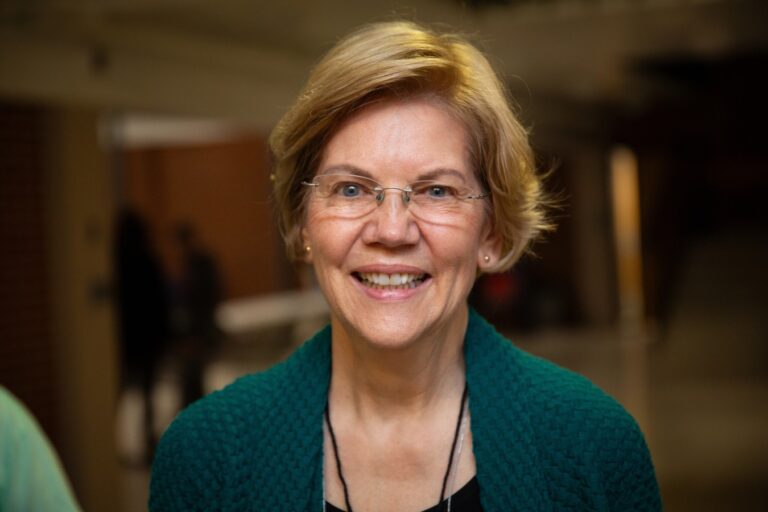
Elizabeth Warren and Alexandria Ocasio-Cortez want to make child care free for millions of U.S. families by taxing the rich

“It’s about time we pass universal child care.” With those words posted publicly today on X, U.S. Senator Elizabeth Warren (D-Mass.) reignited a national debate on the soaring cost of early childhood care in America. The statement underscores a renewed legislative push by Senate and House progressives to transform child care from a burdensome out-of-pocket expense into a guaranteed public good for families across the country.
The timing of Warren’s rallying cry coincides with a major shift in the legislative leadership of the Child Care for Every Community Act. Following former Representative Mikie Sherrill (D-N.J.) stepping down to become the Governor of New Jersey, Representative Alexandria Ocasio-Cortez (D-N.Y.) has officially signed on as the new House co-lead alongside Senator Warren. Together, the duo brings prominent progressive backing to the bill in both chambers of Congress.
“Right now, working families are drowning under child care costs that just keep going up. In the wealthiest country on the planet, we can’t keep treating affordable, high-quality child care like a luxury reserved only for the richest Americans,” said Senator Warren. “Fixing the affordability crisis in this country means delivering universal child care, and Rep. Ocasio-Cortez is exactly who I want by my side in the fight to get that done.”
Capping expenses for families with $10-a-day child care

At the core of the Child Care for Every Community Act is a direct intervention in the price parents pay for care. Under the proposal, half of all families nationwide would pay no more than $10 a day for child care services, while all other participating families would see their total expenses capped based on a sliding income scale.
For lower-income households; specifically those earning under 200% of the federal poverty line; care would be provided entirely free of charge.
“The cost of childcare is a heavy burden on millions of American families. Across the country, parents are faced with impossible choices — forced to either pay their rent, put food on the table, or pay for childcare. In the wealthiest country in the world, families should be free from this financial strain. That is why I am proud to lead the Child Care for Every Community Act, a comprehensive bill that will ensure half of families nationwide would pay no more than $10 a day for childcare and cap childcare costs for all families,” said Representative Ocasio-Cortez. “When only the wealthy can afford peace of mind for their children, we’ve turned childhood itself into a privilege, not a promise. It is time that we give all families the quality, affordable childcare that they deserve.”
How the Ultra-Millionaire Tax pays for universal child care

A primary question surrounding universal child care is how to finance such an expansive federal commitment. Senator Warren’s solution lies in her flagship tax policy: the Ultra-Millionaire Tax.
The tax proposal levies a 2% annual tax on the net worth of households and trusts valued between $50 million and $1 billion, along with a surtax on fortunes exceeding $1 billion. Economists project that taxing the top 0.05% of wealthy households would generate between $2.75 trillion and $3.75 trillion in revenue over ten years. Independent analyses, including estimates by Moody’s Analytics, project that universal child care would cost roughly $700 billion over a decade. Because the revenue raised from the Ultra-Millionaire Tax far exceeds this price tag, the child care proposal is completely deficit-neutral, requiring less than a quarter of the tax’s total yield.
Rather than creating an unproven administrative structure, the legislation builds upon success stories within existing federal institutions. Specifically, the Child Care for Every Community Act models its framework on the U.S. Department of Defense military child care program and federal Head Start guidelines.
Under this model, the federal government covers the majority of facility operating expenses while partnering directly with local sponsors; such as cities, school districts, counties, tribal organizations, and local non-profits. These local entities manage the facilities while adhering to strict national standards for safety and early childhood education.
A history of Senator Elizabeth Warren’s child care policy proposals

Senator Warren’s advocacy for child care is deeply rooted in her political career and personal history. During her 2020 presidential campaign, she unveiled her landmark Universal Child Care and Early Learning Act, making early education a centerpiece of her economic platform.
Warren often roots her policy push in her personal experience as a young working mother with two children, Amelia and Alex. While teaching law school in Houston, she nearly had to resign when her babysitter unexpectedly quit; a crisis only averted when her 78-year-old Aunt Bee moved in to help with caregiving. Warren has frequently noted that most American families do not have an “Aunt Bee” to step in, making public, systemic support essential.
Throughout her legislative efforts, Senator Warren has consistently framed early childhood care not as a personal family expense, but as a core component of overall economic productivity.
In her public messaging, Warren has repeatedly stated:
“Just like our roads and bridges, child care is critical infrastructure.”
By providing dependable care options, the legislation allows parents; particularly women, who disproportionately exit the labor market due to caregiving duties; to remain employed, pursue higher education, or re-enter the workforce, thereby strengthening macroeconomic growth.
Guaranteeing higher wages for early childhood educators

In addition to reducing costs for parents, the proposal targets the chronic low pay that plagues the early childhood workforce. Despite performing crucial developmental work, child care providers remain among the lowest-paid workers in the country, leading to high turnover and facility closures.
The bill requires federally supported child care providers to pay early childhood educators wages and benefits parity with local public school teachers who have similar qualifications. As Warren has emphasized:
“I’m going to keep fighting for universal child care and higher wages for every child care worker in America.”
Pushing back against federal cuts and state funding freezes

The renewed push for the Child Care for Every Community Act comes amidst intense political debate over federal family assistance. Congressional progressives have voiced strong opposition to efforts aimed at restricting social safety net funding, including recent actions by the Trump administration to freeze federal funds for child care and family assistance across five states over unproven claims of potential fraud and misuse of taxpayer dollars.
Proponents of the legislation argue that freezing or cutting these funds exacerbates the affordability crisis facing working parents and threatens the financial stability of local community providers.
The legislative path ahead for child care reform in Congress

With Representative Ocasio-Cortez leading the effort in the House and Senator Warren spearheading the push in the Senate, progressives are working to mobilize a wide coalition of labor unions, family advocates, and early education organizations.
As inflation and everyday living costs remain top priorities for voters nationwide, supporters of the Child Care for Every Community Act contend that capping child care costs and funding it through targeted wealth taxes offers a concrete solution to lower household expenses and expand economic opportunity across the nation.
Although the passage of any legislation is unlikely; the free childcare proposal could be a rallying cry for the midterms and the 2028 Presidential elections.
Like Financial Freedom Countdown content? Be sure to follow us!
14 essential strategies to maximize your Social Security and avoid costly mistakes

Social Security is a vital lifeline for many seniors, providing crucial income support during retirement. With inflation at its highest in four decades, Social Security’s inflation-adjusted benefits offer protection against rising costs.
Rising interest rates have disrupted many retirement portfolios, causing bond fund values to plummet. In this volatile financial landscape, Social Security can stabilize a typical stock-bond retirement portfolio. By implementing smart strategies, retirees can maximize their Social Security benefits and ensure a more secure financial future.
14 Essential Strategies to Maximize Your Social Security and Avoid Costly Mistakes
11 reasons you should claim Social Security early

Deciding when to claim Social Security is often about maximizing your benefit. Financial planners usually advise delaying your claim for as long as possible to secure the highest monthly payment. Your benefit is based on your lifetime earnings, with a full payout available at your full retirement age (FRA), which is currently between 66 and 67 depending on your birth year. Claiming before FRA results in a permanent reduction in your monthly benefit, while waiting beyond FRA leads to a permanent increase. However, the decision isn’t solely about maximizing the monthly check. Personal factors such as health, family circumstances, and financial needs can play a significant role in determining the right time to claim.
11 Reasons You Should Claim Social Security Early

Did you find this article helpful? We’d love to hear your thoughts! Leave a comment with the box on the left-hand side of the screen and share your thoughts.
Also, do you want to stay up-to-date on our latest content?
1. Follow us by clicking the [+ Follow] button above,
2. Give the article a Thumbs Up on the top-left side of the screen.
3. And lastly, if you think this information would benefit your friends and family, don’t hesitate to share it with them!

John Dealbreuin came from a third world country to the US with only $1,000 not knowing anyone; guided by an immigrant dream. In 12 years, he achieved his retirement number.
He started Financial Freedom Countdown to help everyone think differently about their financial challenges and live their best lives. John resides in the San Francisco Bay Area enjoying nature trails and weight training.
Here are his recommended tools
Personal Capital: This is a free tool John uses to track his net worth on a regular basis and as a retirement planner. It also alerts him wrt hidden fees and has a budget tracker included.
Platforms like Yieldstreet provide investment options in art, legal, real estate, structured notes, venture capital, etc. They also have fixed-income portfolios spread across multiple asset classes with a single investment with low minimums of $10,000.