Trump administration races to replace Supreme Court-blocked tariffs before July 24 deadline
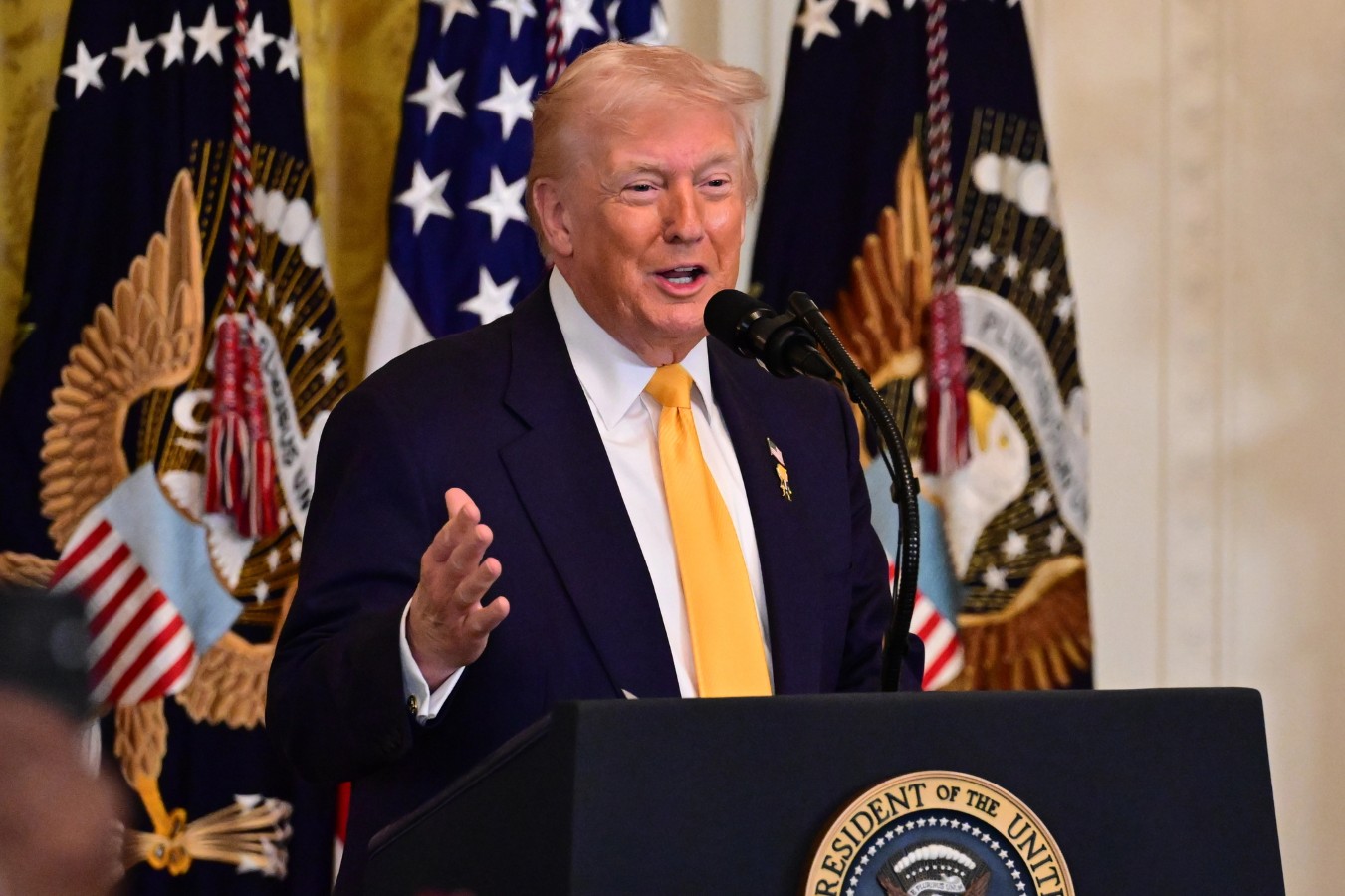
President Donald Trump’s administration is racing to rebuild its global tariff framework before a key legal deadline, turning to a different section of U.S. trade law after the Supreme Court struck down the sweeping tariffs that had generated tens of billions of dollars in government revenue.
With temporary tariffs set to expire on July 24, administration officials are accelerating new investigations under Section 301 of the Trade Act of 1974, beginning with a fresh 25% tariff on many Brazilian imports and laying the groundwork for additional duties on dozens of countries in the coming weeks.
Supreme Court ruling upended Trump’s tariff strategy
The administration’s current push follows a major legal setback earlier this year when the Supreme Court ruled that Trump could not rely on the International Emergency Economic Powers Act (IEEPA) to impose broad global tariffs.
Trump had used the emergency powers law to levy double-digit tariffs on imports from nearly every country, arguing that America’s longstanding trade deficits constituted a national emergency. The ruling invalidated that legal justification and forced the government to refund billions of dollars to importers that had already paid the duties.
The decision temporarily transformed tariffs from a major source of federal revenue into a financial liability for the Treasury as refund payments accelerated.
Tariff revenue has swung from windfall to Treasury drain
Before the court ruling, import taxes had become one of the federal government’s fastest-growing revenue sources.
Treasury collections from tariffs peaked at more than $31.4 billion in October before beginning a sharp decline after the Supreme Court’s decision. Revenue fell to roughly $22 billion in both March and April before turning negative as refund payments exceeded new collections.
Treasury recorded a $42 million shortfall in May followed by a massive $25.6 billion loss in June as refund checks were issued. According to Treasury data, approximately $71 billion has already been refunded, with roughly $166 billion expected to be repaid overall.
Economists say the unexpected reversal has significantly weakened one of the administration’s central arguments for broad tariffs.
July 24 deadline creates urgency
Following the Supreme Court ruling, Trump quickly imposed a temporary 10% global tariff under Section 122 of the Trade Act of 1974.
However, that authority only allows tariffs to remain in effect for 150 days. Unless Congress extends the measure; a prospect viewed as unlikely ahead of the Nov. 3 midterm elections; the temporary tariffs will expire on July 24.
That deadline has intensified efforts inside the administration to replace the expiring tariffs with measures backed by more durable legal authority.
Section 301 offers a more permanent legal pathway
Rather than relying on emergency powers, the administration is increasingly using Section 301 of the Trade Act of 1974.
Unlike Section 122, Section 301 authorizes tariffs after the U.S. Trade Representative investigates whether foreign countries engage in “unjustifiable,” “unreasonable” or “discriminatory” trade practices.
The process requires investigations, public comments and hearings before tariffs can be imposed, making it slower but generally more legally durable. Once implemented, Section 301 tariffs can remain in place for four years and can later be renewed.
The same authority formed the legal basis for Trump’s tariffs on hundreds of billions of dollars of Chinese imports during his first administration, many of which survived court challenges.
Brazil becomes the first major test case followed by Canada

The administration’s new strategy officially begins with Brazil.
On Wednesday, the Office of the U.S. Trade Representative announced 25% tariffs on many Brazilian imports effective July 22 after completing a yearlong Section 301 investigation into what officials described as unfair Brazilian trade practices.
The tariffs exclude numerous products; including oil and gas, coffee, oranges, certain beef products and other goods; where officials concluded tariffs could create domestic supply shortages or broader economic disruptions.
Trade Representative Jamieson Greer said negotiations with Brazil had failed to resolve concerns involving digital trade, market access and other issues.
The move also continues a broader dispute between Washington and Brasília that intensified after Trump previously targeted Brazil over the prosecution of former President Jair Bolsonaro.
The Trump administration on July 20 announced 50% tariffs on many Canadian imports. President Trump said he is using Section 338 of the Tariff Act of 1930 to impose the tariffs in response to what the administration calls discriminatory Canadian trade practices against the United States, particularly its auto industry. The tariffs are scheduled to take effect on Aug. 19, but Canadian Prime Minister Mark Carney has signaled he is open to negotiations, so the final rate and scope could still change.
The tariffs will primarily impact goods flowing into the United States from Canada’s auto, alcohol and dairy industries. Oil, natural gas, critical minerals and other Canadian products are exempt.
Dozens more countries could soon face new tariffs

Brazil appears to be only the beginning.
The administration is advancing another major Section 301 investigation focused on countries it says have failed to prevent imports made with forced labor.
The proposal covers approximately 60 countries responsible for about 99% of U.S. imports. Under the current proposal, 16 countries; including the European Union and Canada; would face 10% tariffs, while another 44 countries, including China, would receive 12.5% duties.
Public comments are still being reviewed before final implementation.
A separate Section 301 investigation examining excess industrial capacity in 16 major trading partners; including China, Japan and the European Union; could lead to another wave of tariffs later this year.
Although Canada is the United States’ second-largest trading partner, those exemptions limit this round of tariffs’ impact to about 5% of the $382 billion in Canadian imports to the United States recorded in 2025.
Trade experts expect the administration to beat the deadline
Many trade attorneys believe the administration will successfully transition from temporary Section 122 tariffs to permanent Section 301 duties before the July 24 deadline.
Many believe officials are moving as quickly as legally possible to complete the required investigations and procedural steps before the July 24 deadline, with additional tariffs tied to the overproduction investigation expected in the coming months, potentially after the midterm elections.
Businesses remain concerned about ongoing uncertainty
While Section 301 may provide a stronger legal foundation, businesses say uncertainty remains a significant challenge.
Importers have already experienced one round of tariff collections followed by large government refunds after the Supreme Court ruling. Some worry they could face a similar scenario if future Section 301 tariffs are challenged in court.
Businesses remain concerned that prolonged legal battles could once again create uncertainty over whether tariffs will ultimately remain in place. There is concern that companies could pay tariffs for months or even years, only to face another round of government refunds if courts later strike the duties down. Continued uncertainty over trade policy is also viewed as a significant obstacle to long-term business planning and investment decisions.
Economists warn tariffs may still face legal and economic hurdles

Some economists argue that the administration’s new legal strategy may prove more durable than its previous reliance on emergency powers, but it is unlikely to escape court scrutiny entirely.
While Section 301 tariffs have historically proven more legally durable than those imposed under emergency powers, some analysts caution that using the law to effectively establish broad or near-universal tariffs would likely invite fresh legal challenges because it has not previously been used on that scale.
Some economists also question whether tariffs will ultimately generate the level of government revenue originally envisioned. Instead of becoming a major source of federal income, tariff collections could remain under pressure during the second half of the year as refund payments continue and new duties are phased in.
Additional tariffs could increase consumer prices and make it more difficult for the Federal Reserve to lower interest rates, while continued reliance on executive trade powers could become increasingly important if Congress becomes more politically divided after the midterm elections.
Like Financial Freedom Countdown content? Be sure to follow us!
Social Security COLA forecast for 2027 drops after new inflation data, but benefits could still rise more than this year

Millions of Americans who rely on Social Security could still receive one of the largest Cost-of-Living Adjustments (COLA) in recent years in 2027, even after a new inflation report prompted analysts to lower their forecasts. The latest projections suggest beneficiaries could receive an increase in the mid-3% range beginning in January 2027. While that is lower than some earlier estimates, it would still be noticeably higher than the 2.8% COLA that took effect in 2026.
Did you find this article helpful? We’d love to hear your thoughts! Leave a comment with the box on the left-hand side of the screen and share your thoughts.
Also, do you want to stay up-to-date on our latest content?
1. Follow us by clicking the [+ Follow] button above,
2. Give the article a Thumbs Up on the top-left side of the screen.
3. And lastly, if you think this information would benefit your friends and family, don’t hesitate to share it with them!

John Dealbreuin came from a third world country to the US with only $1,000 not knowing anyone; guided by an immigrant dream. In 12 years, he achieved his retirement number.
He started Financial Freedom Countdown to help everyone think differently about their financial challenges and live their best lives. John resides in the San Francisco Bay Area enjoying nature trails and weight training.
Here are his recommended tools
Personal Capital: This is a free tool John uses to track his net worth on a regular basis and as a retirement planner. It also alerts him wrt hidden fees and has a budget tracker included.
Platforms like Yieldstreet provide investment options in art, legal, real estate, structured notes, venture capital, etc. They also have fixed-income portfolios spread across multiple asset classes with a single investment with low minimums of $10,000.