
AOC calls for breaking up Big Tech after Apple raises MacBook and iPad prices by up to $200

Apple’s recent decision to raise prices on several MacBook and iPad models has reignited debate over the growing influence of the technology industry’s largest companies. Rep. Alexandria Ocasio-Cortez said the increases highlight broader concerns about market concentration, consumer costs, and the impact of artificial intelligence on the economy.
The New York Democrat argued that policymakers should pursue stronger antitrust enforcement and additional consumer protections after Apple cited a global memory chip shortage as the reason for higher prices.
Apple increased prices on a range of MacBook and iPad models last week, with some devices rising by $200 or more. According to the company, Mac prices increased roughly 15% to 20%, while iPad prices climbed approximately 15% to 25%.
The company attributed the increases to a shortage of memory chips, saying the higher component costs made the changes necessary.
“Unfortunately, price increases are unavoidable,” outgoing Apple CEO Tim Cook told the Wall Street Journal.
AI data centers are driving demand for memory chips

Industry analysts largely believe the current memory chip shortage stems from the rapid expansion of artificial intelligence infrastructure.
As technology companies build more data centers to power AI models, demand for memory chips has surged, tightening global supply and raising prices for manufacturers that depend on those components.
Some analysts have referred to the situation as “RAM-ageddon,” reflecting the sharp increase in demand for memory used in AI computing.
Ocasio-Cortez says consumers are paying for AI expansion

Ocasio-Cortez argued that ordinary consumers are now bearing the financial burden of the AI boom through higher prices on everyday electronics.
“Now [the price] to buy laptops, computers, iPads, electronics in general will go up, because the data centers are sucking up all of our own industrial supply, and so we’re paying in a lot of ways, we are subsidizing the development of a lot of data centers,” Ocasio-Cortez (D-NY) contended.
She suggested that the growing competition for semiconductor supplies is affecting products well beyond the AI industry.
Congresswoman renews calls to break up Big Tech

The higher prices also prompted Ocasio-Cortez to renew her longstanding criticism of the nation’s largest technology companies.
“We need to break up a lot of these companies that are far, far too big, and we need to be instituting consumer protections for people,” the New York Democrat told Fox News.
She argued that large technology firms have accumulated too much economic and political influence.
Ocasio-Cortez said she believes stronger antitrust enforcement should accompany broader consumer safeguards.
“The problem that we have is that these big companies, they think they are governments, they want to be governments, they want to have totally unchecked power,” she later added. “I believe that we need to pursue antitrust, and we also need to give some more protections for consumers.”
Her comments reflect a broader push among some lawmakers to increase federal scrutiny of dominant technology companies.
Big Tech faces criticism beyond rising prices

In addition to criticizing Apple’s price increases, Ocasio-Cortez pointed to wider concerns surrounding the technology sector.
She faulted major technology companies for conducting large-scale layoffs in recent months while simultaneously expanding investments in artificial intelligence. She also argued that growing demand from AI data centers is contributing to higher energy costs for consumers and could threaten jobs as automation expands.
Lawmakers debate whether the CHIPS Act anticipated the AI boom

During the interview, Ocasio-Cortez was asked whether Congress should consider legislation similar to the CHIPS Act, which devoted billions of dollars to boosting domestic semiconductor manufacturing.
She argued that lawmakers could not have anticipated the explosive growth of AI when the legislation was drafted.
“The CHIPS Act was passed before we saw this huge development in AI, so the CHIPS Act was really passed before data centers were a thing, so it wasn’t designed to anticipate the huge amount of supply that these centers are sucking up,” the congresswoman explained.
The congresswoman has increasingly focused on the rapid expansion of AI infrastructure as lawmakers weigh its economic and environmental impacts.
She has previously argued that the growth of large data centers raises concerns ranging from electricity consumption to industrial supply constraints, issues that have become more prominent as AI adoption accelerates.
Ocasio-Cortez and Bernie Sanders back limits on AI data centers

Ocasio-Cortez has also supported legislation aimed directly at slowing the expansion of AI infrastructure.
She has joined Sen. Bernie Sanders (I-Vt.) in backing legislation that would impose a moratorium on the development of new AI data centers, arguing that policymakers should first address the technology’s broader economic, labor, and environmental consequences before allowing continued rapid expansion.
Apple’s price increases have become one of the latest examples cited in the broader debate over AI’s economic effects. While technology companies continue investing billions of dollars in AI infrastructure, lawmakers remain divided over whether additional regulation, expanded semiconductor production, or stronger antitrust enforcement offers the best path forward.
With memory chip demand expected to remain elevated, analysts say the pressure on consumer electronics pricing could continue even after current supply shortages ease.
Like Financial Freedom Countdown content? Be sure to follow us!
14 essential strategies to maximize your Social Security and avoid costly mistakes
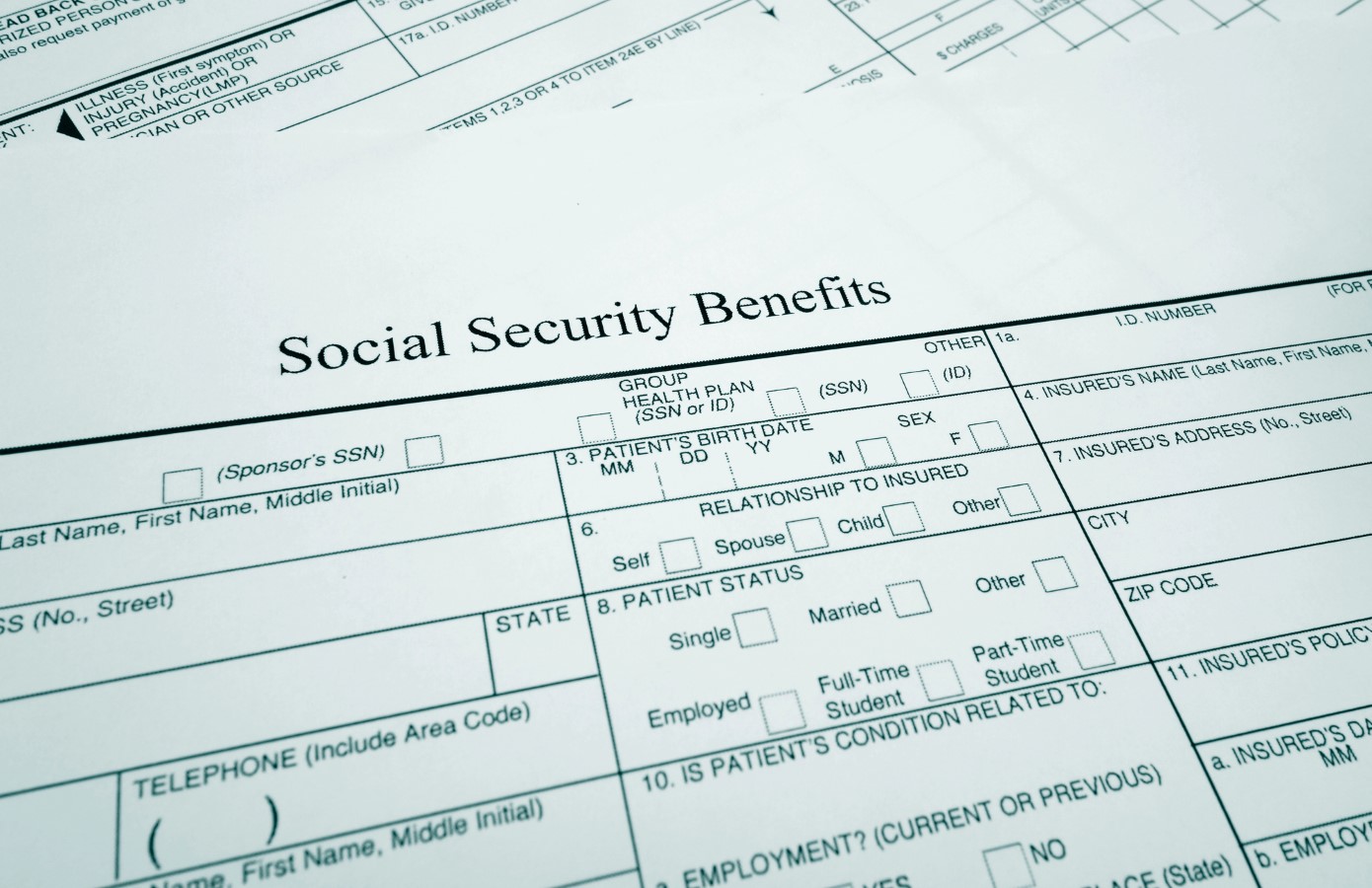
Social Security is a vital lifeline for many seniors, providing crucial income support during retirement. With inflation at its highest in four decades, Social Security’s inflation-adjusted benefits offer protection against rising costs.
Rising interest rates have disrupted many retirement portfolios, causing bond fund values to plummet. In this volatile financial landscape, Social Security can stabilize a typical stock-bond retirement portfolio. By implementing smart strategies, retirees can maximize their Social Security benefits and ensure a more secure financial future.
14 Essential Strategies to Maximize Your Social Security and Avoid Costly Mistakes
11 reasons you should claim Social Security early

Deciding when to claim Social Security is often about maximizing your benefit. Financial planners usually advise delaying your claim for as long as possible to secure the highest monthly payment. Your benefit is based on your lifetime earnings, with a full payout available at your full retirement age (FRA), which is currently between 66 and 67 depending on your birth year. Claiming before FRA results in a permanent reduction in your monthly benefit, while waiting beyond FRA leads to a permanent increase. However, the decision isn’t solely about maximizing the monthly check. Personal factors such as health, family circumstances, and financial needs can play a significant role in determining the right time to claim.
11 Reasons You Should Claim Social Security Early

Did you find this article helpful? We’d love to hear your thoughts! Leave a comment with the box on the left-hand side of the screen and share your thoughts.
Also, do you want to stay up-to-date on our latest content?
1. Follow us by clicking the [+ Follow] button above,
2. Give the article a Thumbs Up on the top-left side of the screen.
3. And lastly, if you think this information would benefit your friends and family, don’t hesitate to share it with them!

John Dealbreuin came from a third world country to the US with only $1,000 not knowing anyone; guided by an immigrant dream. In 12 years, he achieved his retirement number.
He started Financial Freedom Countdown to help everyone think differently about their financial challenges and live their best lives. John resides in the San Francisco Bay Area enjoying nature trails and weight training.
Here are his recommended tools
Personal Capital: This is a free tool John uses to track his net worth on a regular basis and as a retirement planner. It also alerts him wrt hidden fees and has a budget tracker included.
Platforms like Yieldstreet provide investment options in art, legal, real estate, structured notes, venture capital, etc. They also have fixed-income portfolios spread across multiple asset classes with a single investment with low minimums of $10,000.