
AOC dares Trump to put an AI data center at Mar-a-Lago after his “backward and poor” remark

The explosive expansion of artificial intelligence (AI) infrastructure across North America has sparked an intense political and environmental debate over land use, electricity rates, and resource allocation. As tech giants scramble to construct massive server facilities to power generative AI applications, the physical burden on local communities has become a major flashpoint. The debate reached a new level when Representative Alexandria Ocasio-Cortez (AOC) fired back at former President Donald Trump’s aggressive push for data center development, suggesting that one should be built directly at his private Mar-a-Lago estate in Palm Beach, Florida.
Representative Alexandria Ocasio-Cortez publicly challenged Donald Trump’s advocacy for unchecked data center growth by suggesting his Mar-a-Lago club host a facility. Her comments came in response to Trump’s declaration that towns rejecting server farms risk economic decline. By suggesting Mar-a-Lago as a potential site, Ocasio-Cortez aimed to highlight the disruption, noise, and massive utility strain that host communities experience in their own backyards.
The exchange highlights a growing divide over how technological infrastructure affects everyday Americans. While tech developers argue that rapid facility construction is essential to winning the global AI race, critics maintain that local residents bear an unfair share of the physical and financial consequences.
Trump warns opposing data centers leaves communities backwards and poor

Donald Trump has emerged as one of the most prominent political champions of the AI infrastructure boom, warning local municipalities against resisting new server developments. Writing on Truth Social, Trump argued that embracing data centers is vital for local prosperity and warned that rejecting them carries steep economic penalties, according to The Washington Post.
“The only reason that communities throughout the U.S.A. should not want Data Centers is if they want to end up being backwards and poor. If they want to be successful and rich, with far lower taxes and jobs all over the place, let Data Reign,” Trump wrote.
He cautioned that stalling development would hand a strategic advantage to international rivals, adding, “If we kill the Golden Goose, you will only have yourselves to blame. China could not be happier with this anti Data Center movement.”
Trump’s recent comments align with previous statements regarding energy demand and grid capacity. During his State of the Union address, Trump acknowledged public anxieties over potential spikes in home energy costs caused by power-hungry facility builds.
“Many Americans are also concerned that energy demand from AI data centers could unfairly drive up their electric utility bills,” Trump stated during his address. To address these concerns, he introduced a “new ratepayer protection pledge,” proposing that major technology firms build or supply their own dedicated power generation facilities alongside new server campuses to avoid overloading municipal energy grids.
JD Vance addresses rising electricity costs and power grid pressures

Vice President JD Vance has also weighed in on the issue, offering a more nuanced perspective on why local communities frequently resist server farm proposals. Vance acknowledged that escalating monthly electricity bills remain the primary driver behind public pushback across the country, as noted by The Washington Post.
“I think probably 99% of the backlash to data centers has come in areas where building a data center means higher utility and higher electricity for the people on the ground,” Vance noted. He suggested that if tech firms actively supply energy back into local grids rather than depleting regional capacity, community opposition would drop substantially.
Despite growing public pushback, several prominent politicians actively support data center expansion, viewing it as essential to maintaining American technological leadership and economic competitiveness.
In addition to Trump, leaders like North Dakota Governor Doug Burgum and former U.S. Secretary of Commerce Gina Raimondo have consistently championed energy and tech infrastructure investments to ensure the U.S. stays ahead in global innovation.
Proponents argue that shutting out server farms forfeits crucial tax revenues and high-tech capital investments. They emphasize that strategic partnerships between energy producers and tech companies can generate sustainable local revenue streams without sacrificing domestic grid stability.
Bipartisan opposition rises across Democratic and Republican states

Resistance to data center developments has expanded beyond traditional party lines, uniting both conservative and progressive elected officials. According to an Annenberg survey conducted by the University of Pennsylvania, opposition to local data center construction stands at 69 percent among Democrats, 54 percent among Republicans, and 53 percent among independents, as highlighted in reporting by The Economic Times.
In New York, Democratic lawmakers instituted a statewide moratorium on new facilities, while federal Democrats introduced moratorium legislation in Congress. On the Republican side, Texas Governor Greg Abbott paused several projects to evaluate energy grid reliability, while state-level conservative leaders in Georgia, Wisconsin, Arizona, and Pennsylvania have increasingly sided with residents protesting rising power bills, noise pollution, and water depletion.
Rep. Tim Burchett, R-Tennessee, pushed back on Trump’s characterization, telling reporters, “I guess I’m backwards and poor.” Burchett said communities should have more say over whether projects move forward and suggested companies look at military installations instead of residential areas. “We need more local control. We should have brought everybody to the table,” Burchett said.
Loudoun County and Prince William County face environmental strains

The real-world impacts of data center concentration are vividly illustrated in Northern Virginia, home to “Data Center Alley.” An analysis by the Loudoun Climate Project details how hosting over 30 million square feet of operational server space has created significant trade-offs for local residents. While data centers contribute heavily to local commercial tax revenue, residents face increased utility transmission lines, diesel backup generator emissions, and significant water consumption required to cool processing hardware.
As capacity in Loudoun County neared its limit, developers expanded into neighboring Prince William County, triggering fierce community pushback. A study by the Roosevelt Institute points out that rural residents and conservationists in Prince William County have strongly opposed projects near historical battlefields and natural reserves due to concerns over high-voltage power lines, industrial noise, and potential drinking water depletion.
Quincy and Ellendale illustrate the positive tax benefits for small towns

Conversely, several rural American towns have experienced major economic turnarounds by welcoming server facilities. According to coverage in The Washington Post, Quincy, Washington; a town of roughly 8,500 residents housing around 30 data centers; now sees these facilities fund 57 percent of the municipal property tax base, helping finance a new hospital, high school, and public library.
Similarly, in Ellendale, North Dakota, local leaders leveraged data center developments to rescue the municipality from economic stagnation. After welcoming infrastructure investments, Ellendale’s annual sales tax receipts surged from $400,000 to $3.5 million, providing essential capital to repair public infrastructure and stabilize local government services.
Balancing artificial intelligence demands with local energy grids

As the federal government and state regulators navigate the future of artificial intelligence, the debate over data centers underscores a fundamental policy challenge: balancing technological competition against community resource preservation. With global AI energy demands expected to consume an unprecedented share of new electrical capacity by 2030, finding an equilibrium between corporate tech needs and local utility costs will remain a central political challenge for leaders across both parties.
Like Financial Freedom Countdown content? Be sure to follow us!
14 essential strategies to maximize your Social Security and avoid costly mistakes
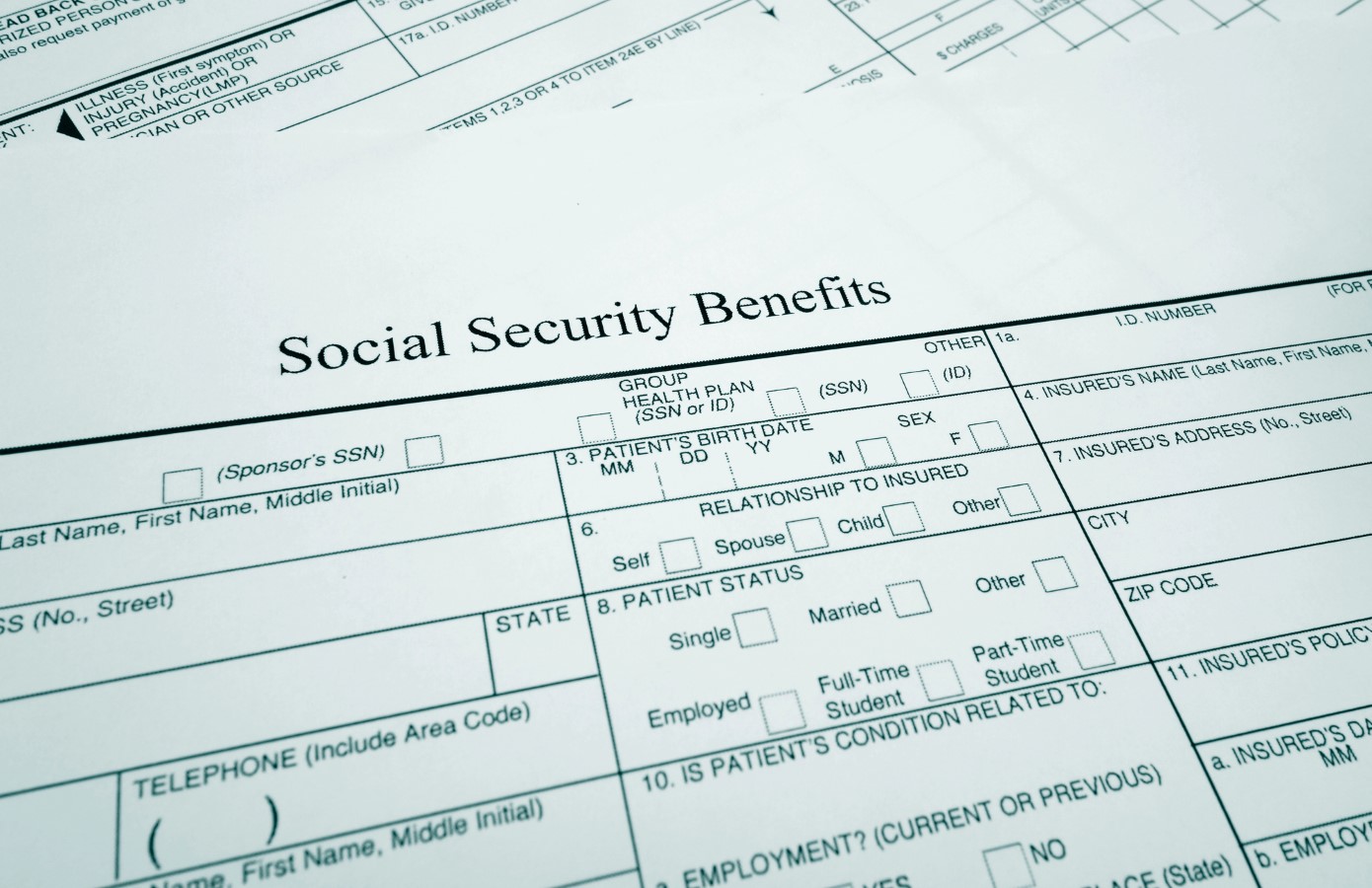
Social Security is a vital lifeline for many seniors, providing crucial income support during retirement. With inflation at its highest in four decades, Social Security’s inflation-adjusted benefits offer protection against rising costs.
Rising interest rates have disrupted many retirement portfolios, causing bond fund values to plummet. In this volatile financial landscape, Social Security can stabilize a typical stock-bond retirement portfolio. By implementing smart strategies, retirees can maximize their Social Security benefits and ensure a more secure financial future.
14 Essential Strategies to Maximize Your Social Security and Avoid Costly Mistakes
11 reasons you should claim Social Security early

Deciding when to claim Social Security is often about maximizing your benefit. Financial planners usually advise delaying your claim for as long as possible to secure the highest monthly payment. Your benefit is based on your lifetime earnings, with a full payout available at your full retirement age (FRA), which is currently between 66 and 67 depending on your birth year. Claiming before FRA results in a permanent reduction in your monthly benefit, while waiting beyond FRA leads to a permanent increase. However, the decision isn’t solely about maximizing the monthly check. Personal factors such as health, family circumstances, and financial needs can play a significant role in determining the right time to claim.
11 Reasons You Should Claim Social Security Early

Did you find this article helpful? We’d love to hear your thoughts! Leave a comment with the box on the left-hand side of the screen and share your thoughts.
Also, do you want to stay up-to-date on our latest content?
1. Follow us by clicking the [+ Follow] button above,
2. Give the article a Thumbs Up on the top-left side of the screen.
3. And lastly, if you think this information would benefit your friends and family, don’t hesitate to share it with them!

John Dealbreuin came from a third world country to the US with only $1,000 not knowing anyone; guided by an immigrant dream. In 12 years, he achieved his retirement number.
He started Financial Freedom Countdown to help everyone think differently about their financial challenges and live their best lives. John resides in the San Francisco Bay Area enjoying nature trails and weight training.
Here are his recommended tools
Personal Capital: This is a free tool John uses to track his net worth on a regular basis and as a retirement planner. It also alerts him wrt hidden fees and has a budget tracker included.
Platforms like Yieldstreet provide investment options in art, legal, real estate, structured notes, venture capital, etc. They also have fixed-income portfolios spread across multiple asset classes with a single investment with low minimums of $10,000.