Ray Dalio warns U.S. debt is at a tipping point as soaring Treasury yields shatter CBO models
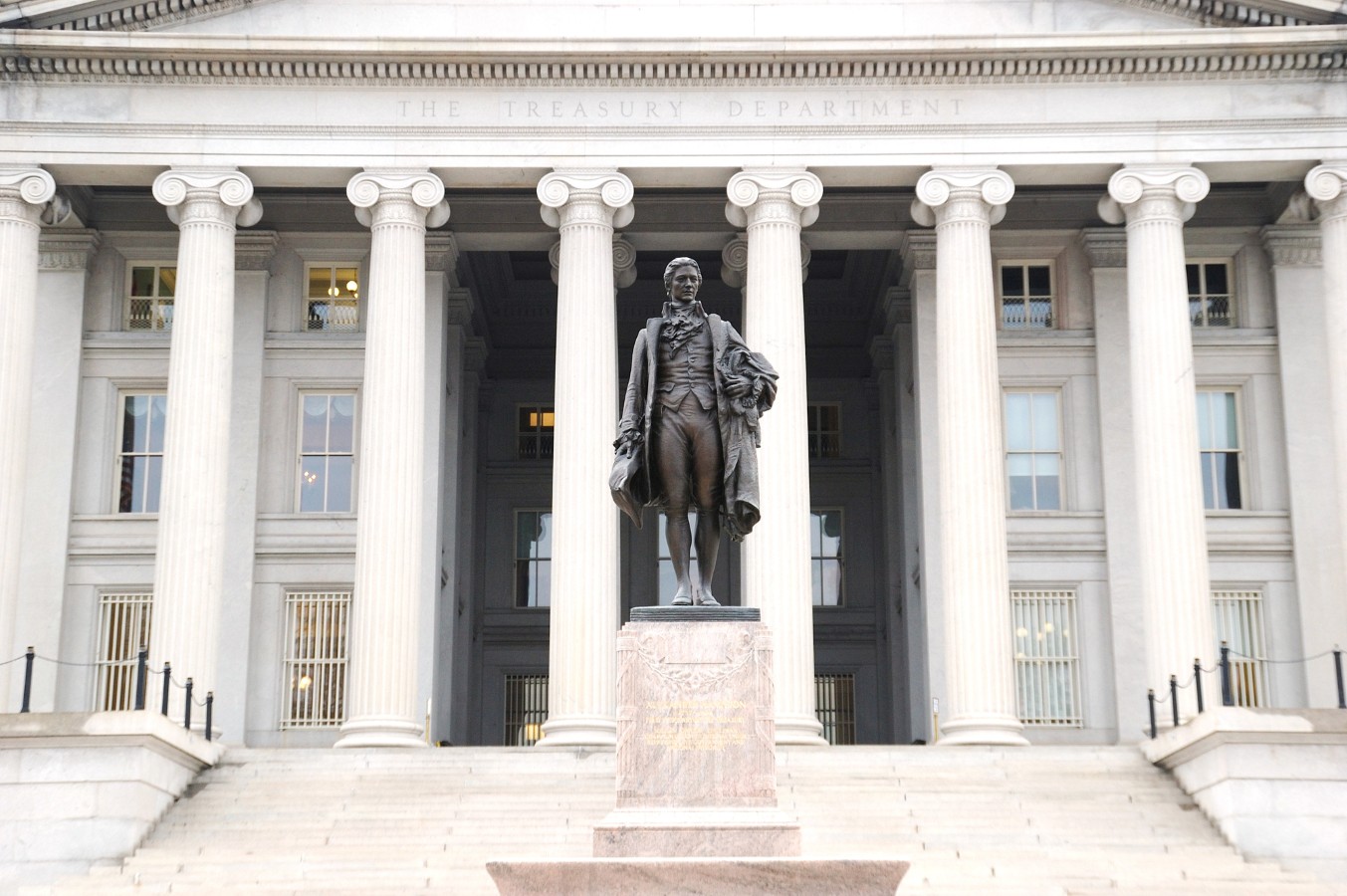
The benchmark 10-year U.S. Treasury yield recently topped 5%, reaching its highest level since 2007 and completely outstripping long-term economic forecasts. According to baseline projections issued by the Congressional Budget Office (CBO), the benchmark yield was expected to remain significantly lower; forecasting 4.1% this year, 4.2% in 2027, hovering around 4.3% from 2028 to 2031, and creeping up to 4.4% between 2032 and 2036. The rapid surge of a full percentage point in the 10-year yield, alongside a half-point gain over two months, has forced analysts to reconsider baseline fiscal models across the board.
Several immediate macroeconomic forces are driving this sudden yield escalation. An unexpected surge in oil prices and heightened inflation expectations following geopolitical conflict in Iran have elevated market yields. Furthermore, the broader U.S. economy has continued to run hotter than anticipated, supported by a tight labor market that suggests yields are normalizing away from post-crisis historic lows. However, fundamental fiscal challenges; most notably the accumulated $40 trillion national debt burden and ongoing $2 trillion annual budget deficits; continue to exert structural upward pressure on federal borrowing costs.
Global capital demands and foreign central bank sales amplify yield spikes

Beyond domestic fiscal dynamics, international pressures and private-sector capital demands are shifting the sovereign debt landscape. Heavily indebted foreign governments and tech hyperscalers investing aggressively in artificial intelligence infrastructure are actively competing for investor capital. To successfully draw sufficient demand at government bond auctions, the U.S. Treasury Department must offer increasingly attractive yields.
Additionally, key foreign stakeholders like Japan; the largest foreign holder of U.S. debt; have been reducing their Treasury holdings, adding further sell pressure while climate disasters and trade tensions continue to be priced into long-term Treasury yields.
Federal net interest outlays threaten to surpass Medicare and Social Security

The financial consequences of higher yields on government obligation servicing are profound. Analysis from the Committee for a Responsible Federal Budget (CFRB) indicates that if Treasury yields remain more than 80 basis points above baseline projections, the federal government will be paying $2.7 trillion annually in net interest costs by the end of the decade. At that level, national debt servicing would exceed annual federal expenditures for Medicare or Social Security retirement benefits. CFRB President Maya MacGuineas highlighted the grave risks of this trend, warning, “The real threat is the debt spiral. If interest begets debt, and debt begets interest, eventually debt will spin out of control. A fiscal crisis, once unthinkable, is now a distinct possibility.”
The rapid deterioration of bond market dynamics has begun unnerving experts who previously downplayed national debt risks. Market veteran Ed Yardeni, who famously coined the term “bond vigilantes,” previously viewed yields between 4% and 5% as consistent with a robust economy and saw no signs of bond market revolt over the summer. However, Yardeni recently signaled a sharp change in perspective, writing in a note, “We will worry about a debt crisis when the bond market worries about a debt crisis,” and adding, “We are starting to worry now that the 10-year US Treasury bond yield may be on the verge of breaking out above 5.00%.” Similarly, Jared Bernstein, former chair of the Council of Economic Advisers during the Biden administration and a long-time skeptic of fiscal austerity, admitted that escalating debt math has altered his perspective. Noting that while he cannot predict the exact timing of a crisis, “even though I can’t tell you the day and time when the fire will ignite, I can tell you that we’re getting closer. And doing so at a rate that even this nonalarmist finds alarming.”
Treasury Secretary Scott Bessent expands bond buybacks to support liquidity

In response to rising bond market volatility and long-term yield spikes, U.S. Treasury Secretary Scott Bessent announced a major expansion of debt buyback operations through the U.S. Department of the Treasury. The Treasury doubled the maximum size of its long-end liquidity support buyback operations from $2 billion to at least $4 billion per operation for longer-dated nominal coupon securities. Senior Treasury officials confirmed the plan would be partially funded through the department’s General Account to support market liquidity. However, long-term yields; including the 30-year yield approaching 5.34%; experienced only temporary relief before rebounding higher. Stephen Coltman, head of macro at 21Shares, noted, “The size of the Treasury purchases announced so far by Bessent are trivial in comparison to the size of the overall market, but the [signaling] effect was very powerful,” revealing that policymakers are increasingly forced to intervene in sovereign debt mechanics.
Addressing the federal budget deficit to bring it down from its current 6% level to a manageable target of 3% of Gross Domestic Product (GDP) will require coordinated fiscal and monetary reform. As highlighted in Moomoo Financial News, Dalio outlined a three-pronged approach: policymakers must simultaneously cut spending, raise tax revenues, and lower interest rates to reduce government debt financing costs. However, he warned against relying on artificial Federal Reserve bond purchases, which lead to monetary debasement and higher inflation. While Treasury Secretary Scott Bessent asserted that federal deficits likely peaked under President Donald Trump’s administration and signaled intent to find hundreds of billions in budget cuts, economists emphasize that structural entitlements and climbing debt interest will require broader structural consensus.
Ray Dalio warns U.S. fiscal trajectory has reached a critical tipping point

Prominent investor Ray Dalio, founder of Bridgewater Associates, expressed deep skepticism regarding the sustainability of current federal financial operations in a detailed report covered by Seeking Alpha. Dalio observed that official efforts to shore up market liquidity through bond buybacks highlight structural weakness rather than strength, given the Treasury’s inherently limited capacity to repurchase debt.
In a post on LinkedIn, Dalio emphasized, “The government’s financial condition is at an inflection point,” cautioning that “If this is not dealt with now, the debts will build up to levels where they can’t be managed without great trauma”. Drawing an explicit corporate finance analogy, Dalio noted that if the U.S. government were viewed as a company, its annual debt-related obligations; including maturing principal refinancing ($10 trillion) and interest ($1 trillion); total approximately $11 trillion, equivalent to roughly 200% of its annual revenue ($5.5 trillion). Dalio warned that a broader debt crisis could materialize within one to five years, estimating a likely timeframe of around three years.
Investors pivot to gold and Bitcoin as the debasement trade gathers momentum

As concerns over federal debt accumulation and government interventions mount, financial markets are witnessing a distinct return of the “debasement trade.” Investors seeking protection against currency devaluation and fiscal volatility have driven gold on track for its best monthly performance since 1999 and pushed Bitcoin to touch $80,000.
Renowned investor John Arnold pointed to market sentiment on X, noting that recent market moves are “all part of the debasement trade” as “Markets are saying something”. Deutsche Bank analyst Michael Hsueh observed, “We see the Treasury policy change as underlining the gold constructive view,” while Dalio recommended that investors reduce debt holdings and allocate 10% to 15% of their portfolios to gold alongside a small allocation in Bitcoin to preserve capital outside sovereign paper control.
Escalating risk of an uncontrolled U.S. debt spiral
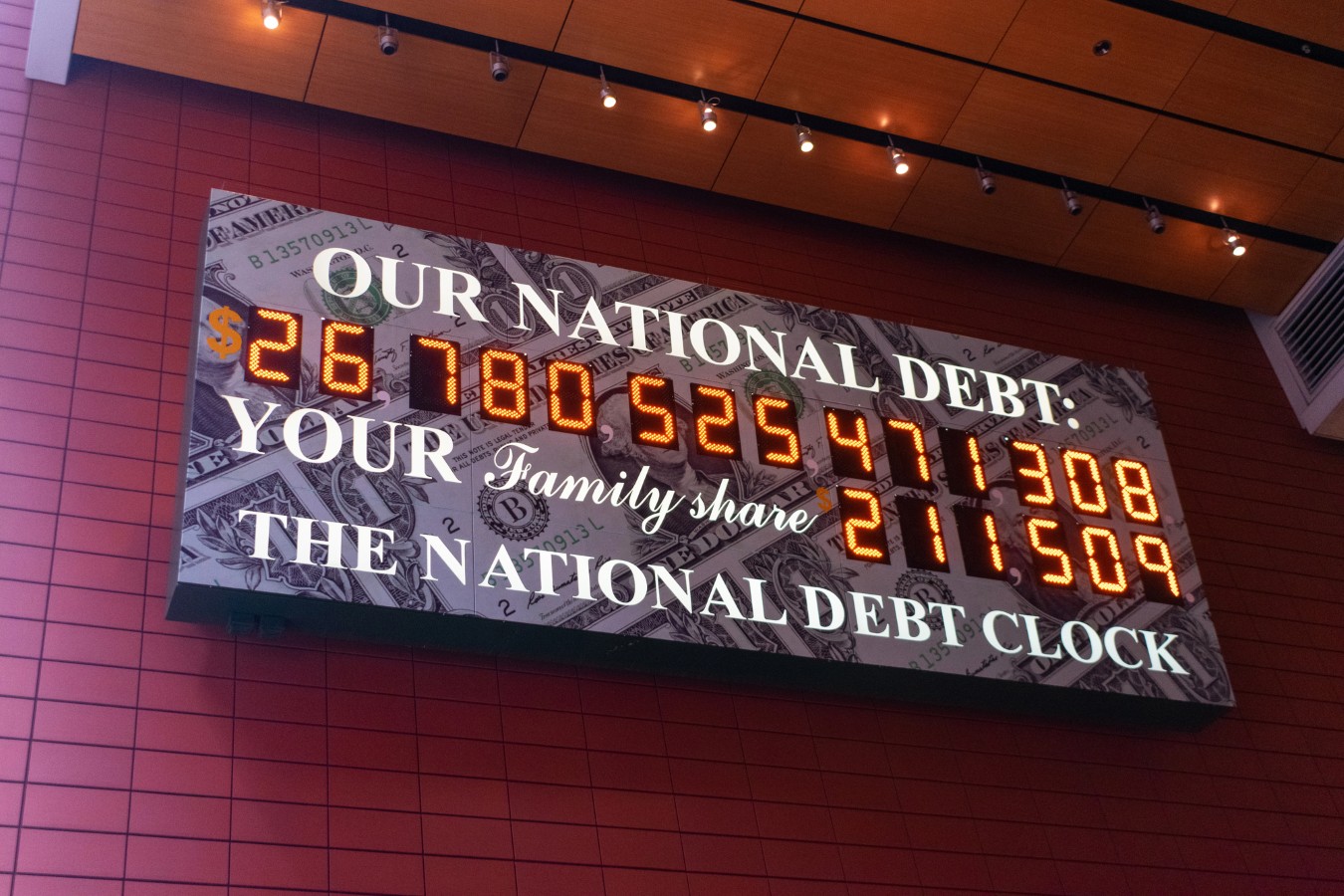
The convergence of record federal debt, elevated long-term interest rates, and shrinking international demand creates a compounding risk environment for the U.S. economy. When annual interest obligations expand faster than tax receipts, the federal government is forced to issue additional debt simply to settle existing interest, triggering a dangerous feedback loop. As market participant Shah pointedly warned regarding fiscal delay, “Households may ultimately pay for policymakers’ unwillingness to fix the roof whilst the sun is shining.” Unless lawmakers act decisively to address structural deficits, the market shifts once considered distant projections may rapidly evolve into an imminent systemic crisis.
Like Financial Freedom Countdown content? Be sure to follow us!
14 essential strategies to maximize your Social Security and avoid costly mistakes

Social Security is a vital lifeline for many seniors, providing crucial income support during retirement. With inflation at its highest in four decades, Social Security’s inflation-adjusted benefits offer protection against rising costs.
Rising interest rates have disrupted many retirement portfolios, causing bond fund values to plummet. In this volatile financial landscape, Social Security can stabilize a typical stock-bond retirement portfolio. By implementing smart strategies, retirees can maximize their Social Security benefits and ensure a more secure financial future.
14 Essential Strategies to Maximize Your Social Security and Avoid Costly Mistakes

Did you find this article helpful? We’d love to hear your thoughts! Leave a comment with the box on the left-hand side of the screen and share your thoughts.
Also, do you want to stay up-to-date on our latest content?
1. Follow us by clicking the [+ Follow] button above,
2. Give the article a Thumbs Up on the top-left side of the screen.
3. And lastly, if you think this information would benefit your friends and family, don’t hesitate to share it with them!

John Dealbreuin came from a third world country to the US with only $1,000 not knowing anyone; guided by an immigrant dream. In 12 years, he achieved his retirement number.
He started Financial Freedom Countdown to help everyone think differently about their financial challenges and live their best lives. John resides in the San Francisco Bay Area enjoying nature trails and weight training.
Here are his recommended tools
Personal Capital: This is a free tool John uses to track his net worth on a regular basis and as a retirement planner. It also alerts him wrt hidden fees and has a budget tracker included.
Platforms like Yieldstreet provide investment options in art, legal, real estate, structured notes, venture capital, etc. They also have fixed-income portfolios spread across multiple asset classes with a single investment with low minimums of $10,000.