
California voters approve Proposition 42, protecting retirement savings and dealing a blow to Bernie Sanders’ billionaire tax push

California voters have approved Proposition 42, a constitutional amendment protecting personal property and financial assets from certain new state taxes, dealing a setback to Sen. Bernie Sanders’ campaign for a billionaire wealth tax. The November 2026 vote marks a significant development in the national debate over whether wealthy Americans should pay more to finance public services.
The measure’s supporters presented it as a way to protect retirement savings, investments and personal assets from future taxation. Opponents argued that it would make it harder for California to tax billionaires and raise money to address healthcare funding reductions. The debate drew prominent figures from both sides, including Gov. Gavin Newsom and Sanders, who campaigned in California for the competing wealth-tax proposal.
The implications extend beyond the state. Rep. Ro Khanna has indicated that he wants to revive the billionaire-tax effort in 2028, while Sanders and Khanna have also pursued a federal wealth-tax proposal. California’s vote therefore represents a setback for one state-level approach, but it does not settle the wider debate over taxing extreme wealth.
California voters approve Proposition 42 after contentious tax campaign

California voters approved Proposition 42 in the November 3, 2026, general election, with the Associated Press calling the race on November 13. The measure received approximately 51.2% of the vote, compared with 48.7% opposed.
The outcome gives the state a new constitutional restriction on its ability to impose taxes based on ownership or control of personal property, including financial assets. It also limits the Legislature’s ability to enact certain retroactive taxes.
The proposition became part of a much larger political battle over how California should respond to federal healthcare funding reductions and whether its wealthiest residents should contribute more to support public services.
Although supporters emphasized retirement security and protection against double taxation, opponents focused on the measure’s potential to prevent the proposed billionaire wealth tax from taking effect. The competing arguments turned Proposition 42 into a high-profile test of California voters’ attitudes toward taxation, wealth inequality and the state’s future revenue needs.
What Proposition 42 changes about California’s tax laws

Proposition 42 amends the California Constitution to prohibit new state taxes based on the ownership or control of personal property. That category includes financial assets, investment accounts, business interests, intellectual property and retirement accounts.
The measure also restricts new taxes that apply retroactively to a taxpayer’s previous conduct, activities or status. Generally, lawmakers cannot introduce a new tax and then apply it to a period before the tax’s effective date, subject to limited exceptions.
The restrictions apply to taxes enacted or taking effect on or after January 1, 2026. Existing taxes are not automatically eliminated by the amendment.
Importantly, Proposition 42 does not prohibit ordinary income taxes on dividends, interest or realized capital gains. It addresses taxes based on owning personal assets, rather than taxes on income generated by those assets.
The measure also excludes real estate from its definition of personal property for this purpose. Existing property taxes on homes and land therefore remain in place.
How Proposition 42 affects retirement savings and investments

One of the central arguments for Proposition 42 was that Californians should not face additional taxes simply because they have accumulated wealth in retirement or savings accounts.
The constitutional amendment prohibits new state taxes imposed on the ownership or control of financial assets, including retirement accounts, investment holdings and personal savings. That protection potentially benefits workers who have spent decades contributing to retirement plans, including teachers, firefighters, police officers, small-business owners and retirees.
Supporters argued that allowing the government to tax the value of those holdings would undermine financial planning and potentially penalize people for saving rather than spending.
The campaign’s argument also emphasized the importance of predictable rules for people planning their retirement. It maintained that residents should not have to worry about lawmakers introducing new taxes on assets they accumulated over many years.
However, there is an important distinction: the competing Proposition 40 billionaire tax generally exempted ordinary retirement accounts and pensions, with a limited exception for Roth IRAs exceeding $10 million. Proposition 42’s retirement protections therefore extend beyond simply defeating that particular billionaire-tax proposal.
Supporters say the measure prevents double taxation, while opponents dispute the argument
Supporters argued that California’s previous constitutional framework left residents vulnerable to taxes on assets accumulated from income that had already been taxed.
Under their argument, a worker earns a paycheck, pays income taxes and invests part of the remaining money in a retirement account. If the state subsequently imposes a tax on ownership or control of those assets, the same accumulated wealth could effectively face another layer of taxation.
Chris Hannan, president of the State Building and Construction Trades Council of California, emphasized the measure’s potential benefits for union members and small-business owners.
“Prop. 42 protects Californians’ savings and retirement. Whether it’s a union member’s hard-earned pension or a small business owner’s IRA, new taxes on retirement shouldn’t stand between people and the security they’ve planned for.”
Opponents challenged the campaign’s characterization, arguing that Proposition 42 was presented as a broad retirement-savings protection measure even though its most consequential political effect was preventing new taxes on accumulated wealth.
Proposition 40 already exempted qualified pensions and traditional individual retirement accounts from its proposed wealth tax. Roth IRAs and similar Roth accounts were also exempt, but balances exceeding $10 million in aggregate could be taxable under the measure as per Section 50303(c)(7)(B) of Prop 40. The two sides were therefore arguing not only about retirement security but also about whether California should retain the ability to tax billionaire wealth.
Proposition 40’s defeat prevents California’s proposed 5% billionaire tax

Proposition 42’s passage cannot be separated from the defeat of Proposition 40, the competing billionaire wealth-tax initiative.
Proposition 40 proposed a one-time 5% tax on the net worth of California residents with at least $1 billion in covered assets as of January 1, 2026. The proposal was designed to raise tens of billions of dollars over several years.
Under the measure, 90% of the revenue would have gone toward healthcare services, while the remaining 10% would have supported education and food assistance. The proposal was promoted as a way to help California address healthcare funding reductions associated with federal legislation.
The tax would have covered assets such as stocks, businesses, securities, art collections and intellectual property. Real estate and most pensions and retirement accounts were excluded.
Proposition 40 failed to receive majority support, with approximately 52.1% voting against it and 47.9% supporting it.
The defeat means California will not collect the proposed one-time billionaire tax. Proposition 42 adds a separate constitutional restriction, making it more difficult for lawmakers or future ballot campaigns to introduce similar taxes on personal property and financial assets.
The California Legislative Analyst’s Office analysis of Proposition 40 estimated that the measure could generate tens of billions of dollars in temporary revenue, while also potentially reducing state income-tax collections by less than $1 billion annually if some billionaires left California.
Firefighters, labor groups and business organizations divided over Proposition 42

The institutional endorsements revealed an unusual political coalition.
Supporters included the California Professional Firefighters, the Peace Officers Research Association of California and the State Building and Construction Trades Council of California. These organizations argued that retirement savings and personal assets deserved protection regardless of a resident’s income or political affiliation.
Gov. Gavin Newsom also endorsed Proposition 42, aligning himself with the campaign against new taxes on personal assets.
The opposition included SEIU-United Healthcare Workers West and the California Democratic Party. The labor union argued that the proposition would undermine efforts to finance healthcare services by preventing California from taxing the accumulated wealth of billionaires.
The divide was particularly striking because some labor organizations supported Proposition 40 as a way to replace federal healthcare funding reductions, while other labor and public-safety organizations backed Proposition 42 as a safeguard against future taxation of personal assets.
The California Secretary of State’s official voter guide provides the arguments for and against Proposition 42, including the institutional endorsements and campaign positions.
The result showed that the debate was not a straightforward partisan contest. It reflected competing priorities among unions, public-sector organizations, business groups, wealthy donors and progressive political leaders.
Bernie Sanders’ California campaign takes a setback as Khanna vows to try again in 2028

One of the most recognizable figures opposing Proposition 42 was Bernie Sanders, the independent senator from Vermont.
Sanders had no California state office or direct role in the state’s government, but he became an active participant in the campaign for Proposition 40. He traveled to California, held rallies and urged voters to support the measure as a way to address wealth inequality and protect healthcare services.
His involvement was particularly notable because the dispute exposed divisions among prominent Democrats. Sanders argued that California could demonstrate how taxing extreme wealth could help finance essential public services, while Newsom maintained that a state-level wealth tax could damage California’s economic competitiveness.
The defeat of Proposition 40 has not ended the campaign. Rep. Ro Khanna, a California Democrat representing parts of Silicon Valley, indicated that he intends to support another effort in 2028 if the billionaire tax fails in 2026.
“I’m proud of our efforts wherever we end up,” Khanna said at a Tuesday night press conference. “I am going to be right there, first in line supporting this in the next election cycle if it doesn’t pass this one.”
Khanna’s statement signals that supporters could return to California voters with another wealth-tax proposal. However, Proposition 42 has created a new constitutional obstacle that any future initiative would have to address.
The amendment is not necessarily permanent. Voters could approve a subsequent constitutional amendment reversing or changing its restrictions, but that would require another statewide ballot campaign.
Khanna’s position also demonstrates that the California result is not the end of the political debate. The effort to tax billionaire wealth is increasingly becoming part of a broader national Democratic discussion.
Bernie Sanders and Ro Khanna are pursuing a national billionaire wealth tax
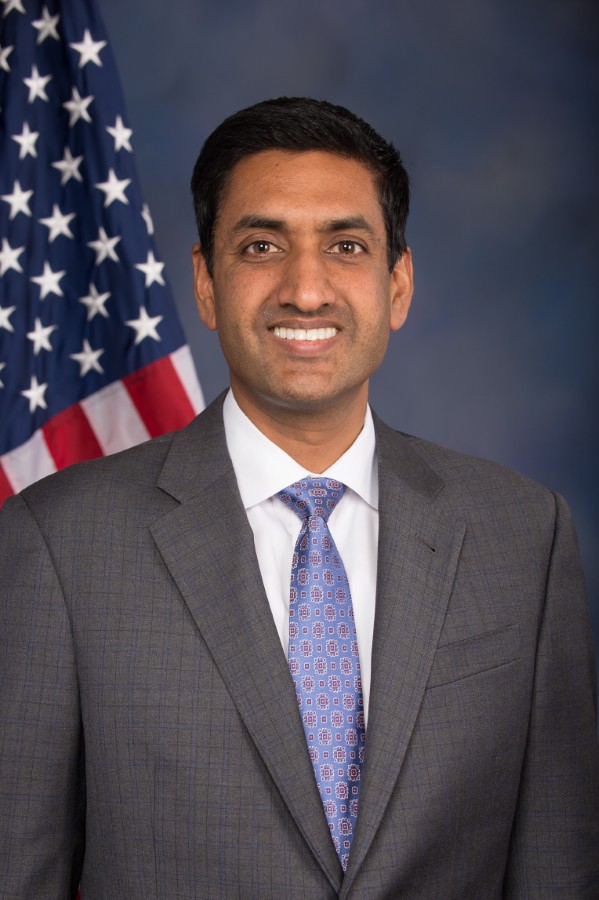
The California wealth-tax fight is part of a broader national effort to increase taxes on America’s wealthiest individuals.
In March 2026, Sanders and Khanna introduced the Make Billionaires Pay Their Fair Share Act, proposing a 5% annual wealth tax on the country’s billionaires.
According to the lawmakers, the legislation would cover approximately 938 billionaires with a combined estimated net worth of $8.2 trillion. The sponsors projected that the tax could generate $4.4 trillion over 10 years.
The proposal would also provide a $3,000 direct payment to every individual in households earning $150,000 or less during its first year, equivalent to $12,000 for a family of four.
The lawmakers proposed directing additional revenue toward reversing federal healthcare funding reductions, expanding Medicare benefits, building affordable housing, supporting childcare and increasing public-school teacher salaries.
Unlike California’s Proposition 40, which proposed a one-time 5% tax on qualifying billionaire wealth, the Sanders-Khanna legislation would establish an annual federal wealth tax.
A national approach could address one concern raised by opponents of state-level wealth taxes: the possibility that billionaires might relocate to another state to avoid the tax. However, the federal proposal faces its own legislative hurdles and has not become law.
The distinction is important for California voters. Proposition 42 restricts new state taxes on personal property, but it does not prevent Congress from considering a federal wealth tax.
The March 2 announcement from Sanders’ Senate office provides the proposed legislation’s details and the sponsors’ revenue estimates.
Newsom favors a national wealth tax as California’s debate continues
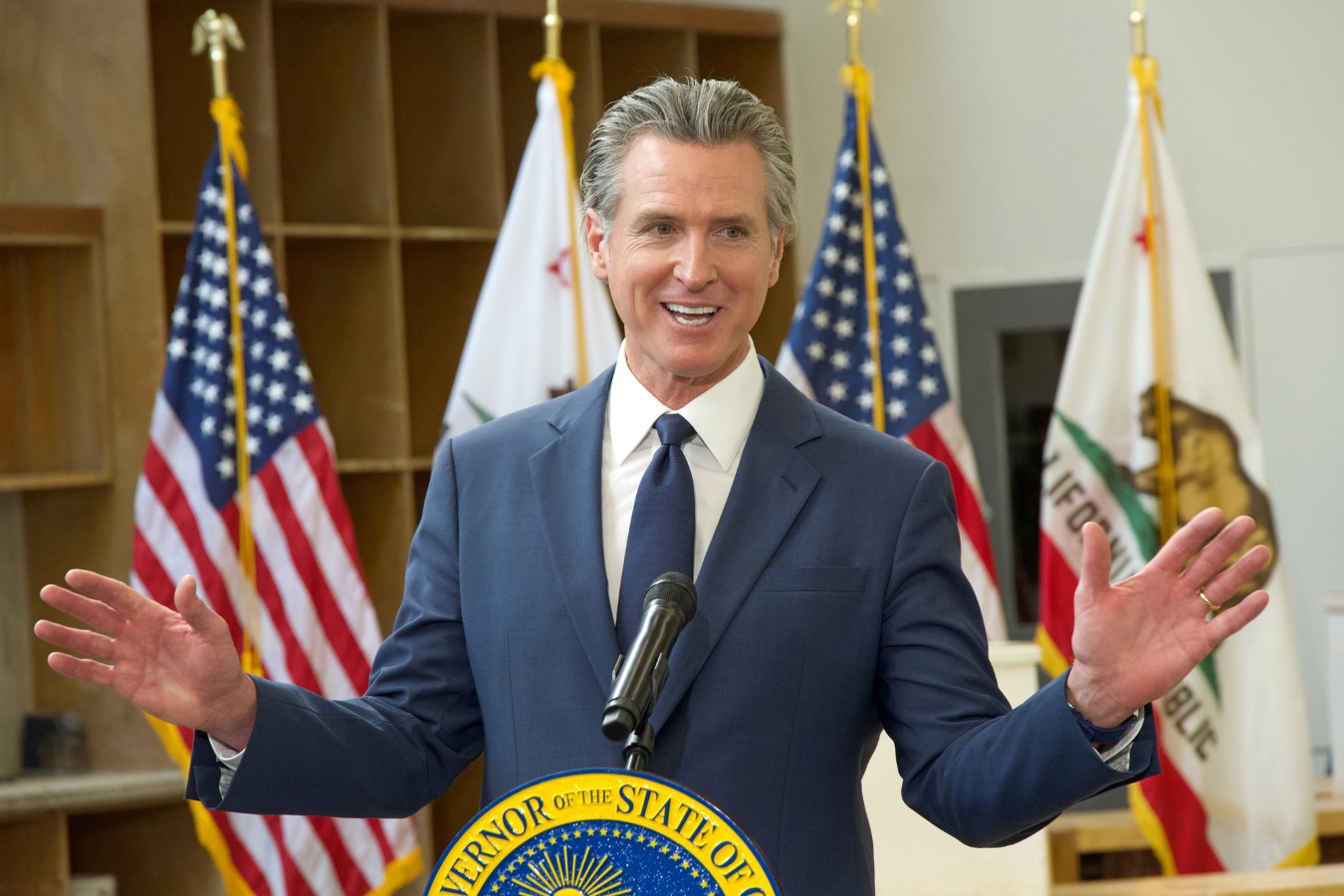
Newsom’s position adds another dimension to the Democratic disagreement over wealth taxation.
Although he opposed Proposition 40 and endorsed Proposition 42, Newsom has argued that the country needs a national approach to taxing extreme wealth rather than relying on individual states to impose their own asset taxes.
In June 2026, he proposed a national minimum tax on individuals with net worth exceeding $100 million. He also called for restrictions on wealthy individuals borrowing against appreciated stock portfolios to finance their lifestyles without realizing taxable gains.
His position puts him between two competing approaches. Sanders and Khanna support a specific 5% annual wealth tax on billionaires, while Newsom has advocated a broader national minimum-tax framework with a lower wealth threshold.
Newsom has argued that a state-by-state approach could encourage wealthy residents to move their assets or residences elsewhere, potentially reducing the tax revenue California already collects.
His proposal also highlights the political challenge facing Democrats: there is growing support among some party leaders for making billionaires contribute more, but significant disagreements remain over how to structure the tax and whether it should be imposed at the state or federal level.
Proposition 42 creates a new obstacle for California’s future tax plans

Proposition 42 does not immediately eliminate existing state revenue or cut funding for healthcare, schools or public safety. Instead, it limits the state’s ability to introduce certain new taxes on personal property and financial assets.
The Legislative Analyst’s Office warned that the measure could result in lower tax revenue in the future, although the amount is difficult to estimate because it depends on the types of taxes lawmakers might otherwise have proposed.
Another concern involves the restrictions on retroactive taxation. California has historically been able to enact certain taxes and apply them to an earlier point in the same tax year. That practice can help prevent taxpayers from changing their behavior in anticipation of a new tax.
Proposition 42 limits that flexibility, potentially making it harder for lawmakers to collect revenue quickly when responding to future budget problems.
Supporters counter that the state retains numerous other revenue options, including corporate income taxes, sales taxes and taxes on business transactions. They also argue that protecting personal savings and investment assets provides greater certainty for California residents.
For healthcare advocates, however, the defeat of Proposition 40 leaves a substantial funding question unanswered, particularly as federal healthcare reductions put additional pressure on state budgets.
The Legislative Analyst’s Office’s Proposition 42 analysis explains the potential fiscal consequences and restrictions on future taxation.
California’s November vote therefore settles one major question: the proposed one-time billionaire tax will not take effect, and new constitutional protections against certain asset taxes are now in place. But the larger debate over who should pay for public services, how to protect retirement savings and whether billionaires should face higher taxes is likely to continue into the 2028 election cycle and beyond.
Like Financial Freedom Countdown content? Be sure to follow us!

Did you find this article helpful? We’d love to hear your thoughts! Leave a comment with the box on the left-hand side of the screen and share your thoughts.
Also, do you want to stay up-to-date on our latest content?
1. Follow us by clicking the [+ Follow] button above,
2. Give the article a Thumbs Up on the top-left side of the screen.
3. And lastly, if you think this information would benefit your friends and family, don’t hesitate to share it with them!

John Dealbreuin came from a third world country to the US with only $1,000 not knowing anyone; guided by an immigrant dream. In 12 years, he achieved his retirement number.
He started Financial Freedom Countdown to help everyone think differently about their financial challenges and live their best lives. John resides in the San Francisco Bay Area enjoying nature trails and weight training.
Here are his recommended tools
Personal Capital: This is a free tool John uses to track his net worth on a regular basis and as a retirement planner. It also alerts him wrt hidden fees and has a budget tracker included.
Platforms like Yieldstreet provide investment options in art, legal, real estate, structured notes, venture capital, etc. They also have fixed-income portfolios spread across multiple asset classes with a single investment with low minimums of $10,000.