Trump economy beats forecasts with 115,000 new jobs despite oil shock

The U.S. economy added 115,000 jobs in April, far surpassing economists’ expectations of roughly 65,000 new positions and signaling continued labor market resilience despite mounting economic pressure from the Iran war and soaring energy prices. The unemployment rate held steady at 4.3%, remaining historically low even as hiring cooled from March’s revised gain of 185,000 jobs.
The stronger-than-expected report offered a boost to President Donald Trump and Republican policymakers ahead of the midterm elections, especially after months of concerns that economic uncertainty and high borrowing costs were weakening the labor market.
The April jobs report arrived against the backdrop of one of the largest global energy disruptions in modern history.
That disruption sent average U.S. gasoline prices above $4.50 per gallon nationwide and prompted economists to downgrade forecasts for both global and American economic growth. Yet the labor market has so far avoided significant fallout from the energy shock.
Healthcare remains the engine of U.S. hiring
Healthcare continued to dominate hiring gains in April, reflecting the long-term demographic pressures of an aging American population. The sector added 37,000 jobs during the month and has created roughly 456,000 positions over the past year.
Healthcare and social assistance together accounted for some of the strongest labor market gains, reinforcing a trend that economists say has helped stabilize overall employment during an otherwise uneven recovery.
Transportation and warehousing added 30,000 jobs in April, while retailers added nearly 22,000 positions. Leisure and hospitality employers also continued hiring, adding another 14,000 jobs.
While consumer-facing industries showed resilience, other parts of the economy continued to weaken. Manufacturing lost 2,000 jobs in April and has shed roughly 66,000 positions over the past year despite Trump’s efforts to revive factory employment through protectionist trade policies.
The tech-heavy information sector lost another 13,000 jobs in April, extending a prolonged decline in white-collar employment. Financial activities also cut 11,000 jobs, while government payrolls fell by 8,000.
Economists say the office economy remains under significant pressure even as broader labor conditions improve.
Information-sector payrolls have now fallen to their lowest level since March 2021, erasing four years of gains and marking one of the longest peacetime declines in modern labor data.
Artificial intelligence investments are not translating into hiring. The continued decline in tech employment comes even as major corporations pour hundreds of billions of dollars into artificial intelligence infrastructure.
Google, Amazon, Microsoft and Meta have collectively committed an estimated $725 billion toward AI-related infrastructure projects this year alone. Yet many of the sectors tied to data processing, telecom and cloud infrastructure continue to eliminate jobs.
Some economists caution against directly attributing the losses to AI adoption, arguing that many companies are still correcting for aggressive hiring. However, the divergence between booming tech profits and falling tech payrolls has become increasingly difficult to ignore.
Wage growth remains steady but inflation risks are rising
Average hourly earnings rose 0.2% in April and were up 3.6% compared with a year earlier. For now, wage growth remains slightly above inflation, helping consumers maintain spending power despite elevated gasoline prices.
However, economists expect inflation pressures to intensify in coming months. The upcoming Consumer Price Index report is projected to show annual inflation accelerating to 3.9% in April from 3.3% in March, driven largely by energy costs linked to the Iran conflict.
“The headline numbers on the US economy and on the labor market look better than they obviously feel to the overwhelming majority of both consumers and workers,” KPMG chief economist Diane Swonk said. “There’s a lack of churn in the labor market, a sort of suspended animation that is not healthy.”
Consumer spending is being supported by tax refunds
One factor helping sustain hiring has been stronger consumer spending fueled by large tax refund checks tied to Trump’s tax legislation passed last year.
Those refunds have temporarily boosted household finances, giving consumers more flexibility to continue spending despite inflation concerns. Businesses, in turn, have maintained hiring plans in response to relatively stable demand.
Economists warn, however, that the support may prove temporary if inflation accelerates further and erodes purchasing power later this year.
Labor market trends show uneven recovery after weak 2025
The April report marked the second consecutive month of stronger job gains following a difficult 2025, when employers created an average of just 9,700 jobs per month; the weakest pace outside a recession since 2002.
Hiring this year has been volatile. Employers added 160,000 jobs in January, cut 156,000 in February, then rebounded with gains of 185,000 in March and 115,000 in April.
When smoothing out those swings, average monthly job growth in 2026 stands near 76,000 jobs per month; an improvement over last year.
Demographics and immigration changes are reshaping employment. Economists say structural shifts in the labor force are helping keep unemployment low even with slower hiring. Baby Boomer retirements, tighter immigration policies and increased technology adoption have reduced the number of workers actively competing for jobs.
That dynamic means the labor market can appear stable even during periods of relatively weak hiring compared with historical standards.
Political battle over the economy intensifies ahead of midterms
The stronger labor report quickly became a political flashpoint as both parties attempted to frame the state of the economy ahead of November’s elections.
“The April jobs report smashing expectations thanks to robust private-sector growth is yet another sign that the American economy remains on a solid trajectory under President Trump,” White House Senior Deputy Press Secretary Kush Desai wrote on X.
Kevin Hassett, director of the White House National Economic Council, called the report “absolutely blockbuster numbers” during a Fox News interview.
Democrats, meanwhile, argued the headline figures mask deeper economic anxiety tied to inflation and affordability concerns.
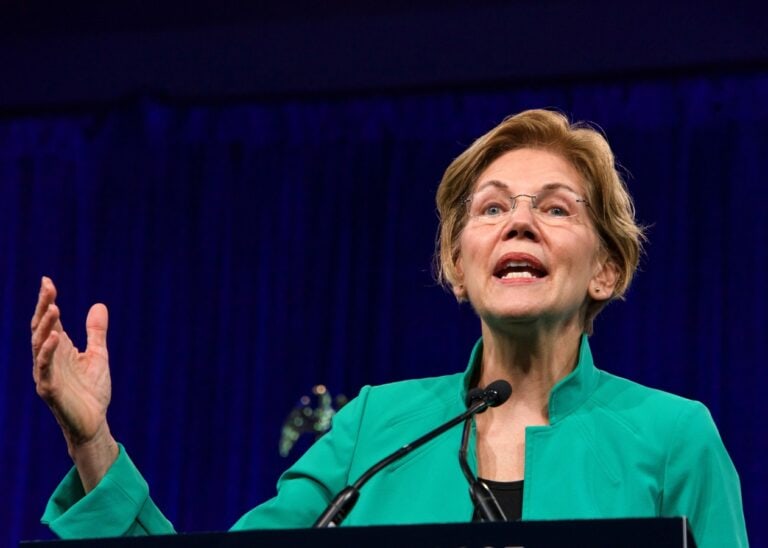
“Under Donald Trump, Americans have seen months of stalled growth, falling job openings, and growing long-term unemployment,” Sen. Elizabeth Warren said Friday. “And with … raising prices on everything from gas to groceries, your paychecks could start to fall behind.”
Strong jobs data complicates hopes for Federal Reserve rate cuts
The unexpectedly strong hiring numbers also complicated expectations that the Federal Reserve could soon lower interest rates.
Many Fed officials have expressed concern that persistent inflation, worsened by higher energy costs, could require rates to remain elevated for longer than previously expected.
“The labor market is not booming, but it is proving harder to break than many feared,” said Olu Sonola, head of U.S. economics at Fitch Ratings. “If unemployment stays this stable, the Fed’s attention shifts back to inflation.”
Financial markets sharply reduced expectations for rate cuts following the report. Some economists now believe the Fed may not lower rates until 2027 if inflation continues to accelerate.
Chicago Fed President Austan Goolsbee described the labor market as “stable without being good” and said policymakers remain focused on determining whether the current oil shock will prove temporary or create more lasting inflationary pressures.
Like Financial Freedom Countdown content? Be sure to follow us!

John Dealbreuin came from a third world country to the US with only $1,000 not knowing anyone; guided by an immigrant dream. In 12 years, he achieved his retirement number.
He started Financial Freedom Countdown to help everyone think differently about their financial challenges and live their best lives. John resides in the San Francisco Bay Area enjoying nature trails and weight training.
Here are his recommended tools
Personal Capital: This is a free tool John uses to track his net worth on a regular basis and as a retirement planner. It also alerts him wrt hidden fees and has a budget tracker included.
Platforms like Yieldstreet provide investment options in art, legal, real estate, structured notes, venture capital, etc. They also have fixed-income portfolios spread across multiple asset classes with a single investment with low minimums of $10,000.