
Trump Moves to Freeze Wall Street Out of Single-Family Homes in High-Stakes Housing Shakeup

President Trump signed a sweeping executive order Tuesday aimed at curbing Wall Street’s role in the single-family housing market, arguing that institutional investors are crowding out American families and pushing rents higher. The move sets up a major policy fight over affordability, federal authority, and how much blame large investors really bear for today’s housing crunch.
What the Executive Order Does — and What It Doesn’t

The order, titled “Stopping Wall Street from Competing with Main Street Homebuyers,” directs federal agencies to draft new restrictions or revise existing rules governing institutional purchases of single-family homes within 60 days. While it signals a tougher stance, it does not itself impose an outright national ban.
“To preserve the supply of single-family homes for American families and increase the paths to homeownership, it is the policy of my Administration that large institutional investors should not buy single-family homes that could otherwise be purchased by families,” Trump wrote in the order.
Trump’s Core Argument: Homes Should Go to Families

In the order, Trump writes that preserving the supply of single-family homes for American families is a core policy goal of his administration. He argues that large institutional investors should not be allowed to buy homes that could otherwise be purchased by owner-occupants trying to build long-term stability.
DOJ and FTC Ordered to Scrutinize Investor Behavior

Trump instructed the Justice Department and the Federal Trade Commission to review large-scale acquisitions of single-family homes for potential antitrust violations. Agencies are also told to prioritize enforcement actions against what the order calls “coordinated vacancy and pricing strategies” in local rental markets.
Targeting Rents, Not Just Home Prices

Beyond homeownership, the White House frames the order as a rent-control-by-enforcement strategy. By cracking down on investor practices that allegedly restrict supply or inflate rents, the administration says it can ease pressure in overheated rental markets without imposing direct rent caps.
A Push to Lock the Policy Into Law

The order goes a step further by directing the administration to work with lawmakers on legislation that would codify restrictions on institutional investors. That signals the White House wants the limits to survive future administrations; but it also guarantees a contentious debate on Capitol Hill.
Why Congress Holds the Real Power

Legal experts caution that a nationwide ban on institutional purchases cannot be implemented through executive action alone. An analysis by law experts notes that congressional legislation would be required to establish the statutory authority for such a policy.
Wall Street’s Post-2008 Buying Spree

Large firms like Blackstone, American Homes 4 Rent, and Progress Residential bought thousands of single-family homes after the 2008 financial crisis, snapping up distressed properties and converting them into rentals. That wave of buying reshaped entire neighborhoods in some regions and remains a political flashpoint.
The Surprising National Numbers

Despite their high profile, large institutional investors own only a small slice of the nation’s single-family housing stock. Firms owning 100 or more homes control less than 1% of all single-family houses nationwide, according to the American Enterprise Institute.
Where Wall Street’s Footprint Is Much Bigger

The impact is far more pronounced at the local level. In 22 U.S. counties, institutional investors own between 5% and 10% of the housing stock. These counties are clustered in fast-growing Sun Belt metros such as Dallas, Houston, Atlanta, Phoenix, Jacksonville, Charlotte, Tampa, and Memphis.

When all investors are counted; including small, mom-and-pop landlords; the influence grows sharply. Investors own about 20% of single-family homes overall and accounted for roughly one-third of all home purchases in the second quarter of last year.
A Political and Economic Showdown Ahead

Trump’s order taps into widespread voter frustration over housing affordability, but it also raises questions about effectiveness and unintended consequences. With Congress holding the keys to any lasting ban, the fight over Wall Street’s role in housing is just beginning; and its outcome could reshape the market for years to come.
Like Financial Freedom Countdown content? Be sure to follow us!
2026 State Tax Shake-Up: See How Your Income, Property, and Sales Taxes Will Change
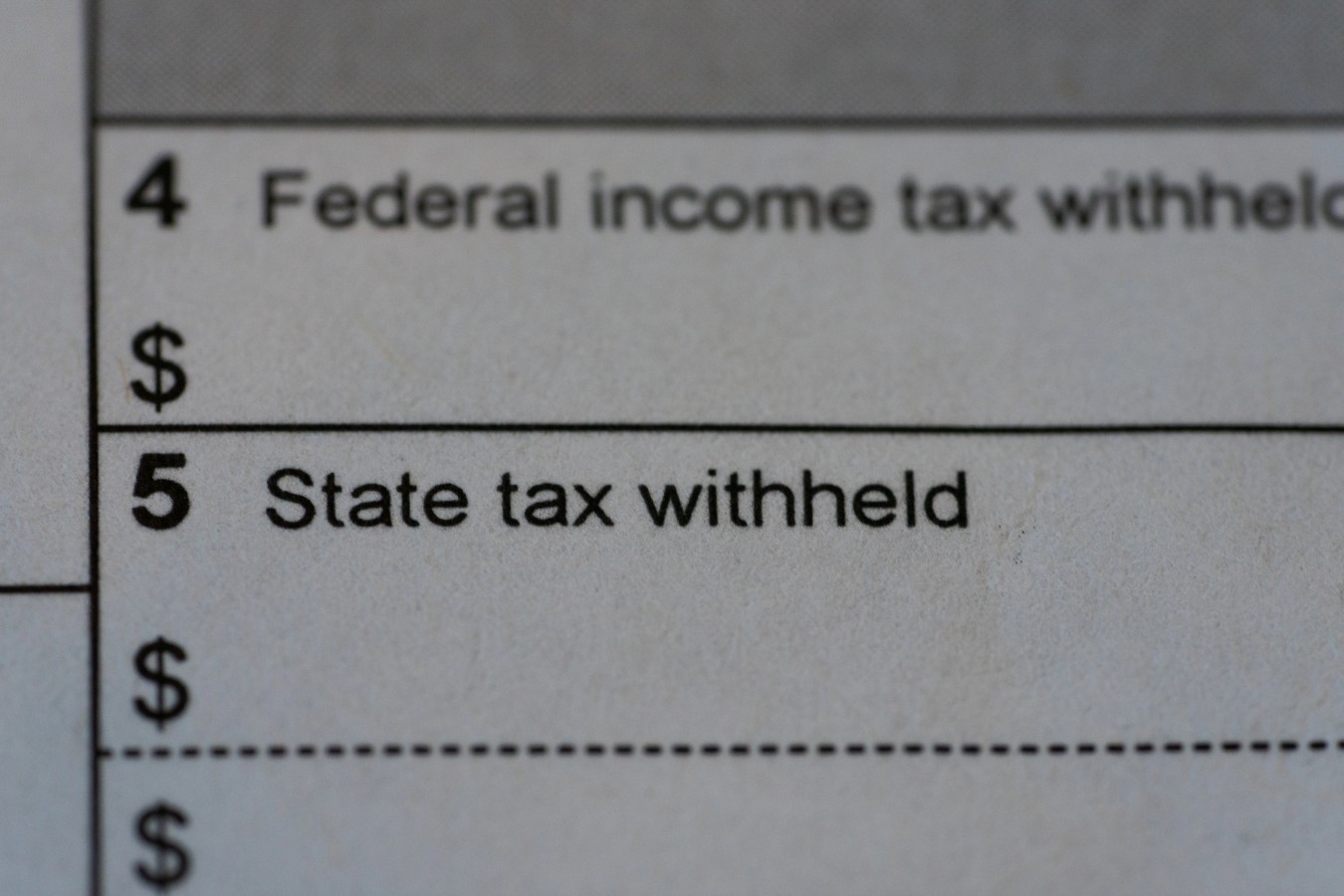
As the calendar flips to 2026, taxpayers across the country will feel the impact of sweeping state tax changes. From income tax cuts and flat-tax expansions to corporate reforms, sales tax overhauls, and property tax relief, 43 states are implementing notable tax changes, most taking effect January 1, 2026. Together, they reveal a clear trend: states are competing harder than ever to attract workers, families, retirees, and businesses. Below are some of the significant changes.
2026 State Tax Shake-Up: See How Your Income, Property, and Sales Taxes Will Change
Don’t Save for Retirement’: Elon Musk Says AI Will Make Money Irrelevant

Elon Musk’s claim that saving for retirement may soon be pointless didn’t come out of nowhere. It’s the latest chapter in a nearly decade-long argument he has been making about artificial intelligence, automation, and the end of scarcity; an idea he has repeated across podcasts, conferences, and social media over the years.
Don’t Save for Retirement’: Elon Musk Says AI Will Make Money Irrelevant

Did you find this article helpful? We’d love to hear your thoughts! Leave a comment with the box on the left-hand side of the screen and share your thoughts.
Also, do you want to stay up-to-date on our latest content?
1. Follow us by clicking the [+ Follow] button above,
2. Give the article a Thumbs Up on the top-left side of the screen.
3. And lastly, if you think this information would benefit your friends and family, don’t hesitate to share it with them!

John Dealbreuin came from a third world country to the US with only $1,000 not knowing anyone; guided by an immigrant dream. In 12 years, he achieved his retirement number.
He started Financial Freedom Countdown to help everyone think differently about their financial challenges and live their best lives. John resides in the San Francisco Bay Area enjoying nature trails and weight training.
Here are his recommended tools
Personal Capital: This is a free tool John uses to track his net worth on a regular basis and as a retirement planner. It also alerts him wrt hidden fees and has a budget tracker included.
Platforms like Yieldstreet provide investment options in art, legal, real estate, structured notes, venture capital, etc. They also have fixed-income portfolios spread across multiple asset classes with a single investment with low minimums of $10,000.