U.S. hiring slows sharply as June jobs report reveals biggest labor force drop in decades

The U.S. labor market lost momentum in June, with hiring slowing far more than expected and revisions revealing that job growth had already been weaker than initially reported. While the unemployment rate edged lower, economists say the decline masks a troubling trend: hundreds of thousands of Americans stopped looking for work altogether.
The mixed report has complicated expectations for the Federal Reserve, while investors weighed whether cooling employment will ease inflation pressures without tipping the economy into a broader slowdown.
Hiring slows sharply in June

U.S. employers added just 57,000 nonfarm payroll jobs in June, well below economists’ expectations for roughly 110,000 new positions. The Labor Department also revised April and May payroll gains downward by a combined 74,000 jobs, reinforcing signs that hiring has been losing momentum over recent months.
Rather than representing a one-month disappointment, the revisions suggest the labor market has been cooling throughout the spring. Economists often view revisions as especially important because they can reveal whether an initially surprising report reflects temporary volatility or a broader trend.
The unemployment rate dipped to 4.2% from 4.3% in May. On the surface, that appeared to signal continued resilience in the labor market.
However, economists said the improvement came largely because fewer Americans were participating in the workforce rather than because employers accelerated hiring. As workers stop searching for jobs, they are no longer counted as unemployed under the government’s methodology.
That dynamic makes the decline in unemployment less encouraging than a typical drop driven by stronger employment growth.
Labor force participation drops to a historic low

One of the report’s most concerning figures was the labor force participation rate, which fell to 61.5%, the lowest level since March 2021. Excluding the lockdown period, it marked the weakest participation rate since 1976.
The labor force shrank by approximately 720,000 people during June, while the number of Americans classified as not participating in the labor force jumped by more than 830,000.
Meanwhile, the household survey showed the number of employed Americans declined by more than 500,000, even as payroll employment still registered modest gains.
Economists say workers leaving the labor force deserve attention. Several economists argued the participation data paints a more concerning picture than the headline unemployment rate.
In comments following the report, Glassdoor Chief Economist Daniel Zhao said the data “put a damper on the fireworks” and left the labor market looking “more fizzle than sparkle,” adding that the unemployment decline was driven by weaker labor force participation rather than stronger hiring.
LPL Financial Chief Economist Jeffrey Roach estimated the latest figures imply roughly 2.5 million additional Americans have left the labor force over the past year, bringing those not participating in the labor force to about 105.8 million. He said that was “most likely due to folks giving up looking for work,” calling it a “concerning trend.”
Prime-age workers also pulled back

While retirements and slower immigration are often cited as reasons for declining workforce participation, June’s data showed weakness extending beyond older workers.
The participation rate among prime-age workers (25 to 54 years old) fell 0.6 percentage point to 83.3%, its lowest level since late 2023.
RBC economist Mike Reid described the decline as a “massive exodus” from the labor force, saying it could reflect both retirements and discouraged workers abandoning their job searches.
Dan North, senior economist for North America at Allianz, argued participation is a more meaningful measure than the unemployment rate, saying, “What’s an important development is the participation rate, and this is a big leg down in one month, and over the past year it’s a pretty big leg down.”
Leisure and hospitality lead June job losses

The June report showed weakness across several industries, with leisure and hospitality losing 61,000 jobs.
According to Zhao, declines were concentrated in accommodation, food services and related businesses, while only limited gains appeared in temporary staffing and some local government positions associated with event staffing.
Not everyone accepted those figures at face value.
Jamie Cox, managing partner at Harris Financial Group, argued the industry data did not align with broader economic activity, saying, “These data are misleading and should be disregarded. There is zero chance leisure and hospitality posts a negative print in the midst of the World Cup.” He predicted future revisions would likely raise the sector’s employment figures.
Wage growth remains firm despite slower hiring. Although hiring weakened, wages continued rising at a pace that could keep inflation concerns alive.
Average hourly earnings increased 3.5% from a year earlier, suggesting employers are still competing for workers even as overall job creation slows.
The combination of softer payroll growth and relatively solid wage gains presents a complicated picture for policymakers attempting to balance employment with inflation.
Federal Reserve faces a more balanced outlook
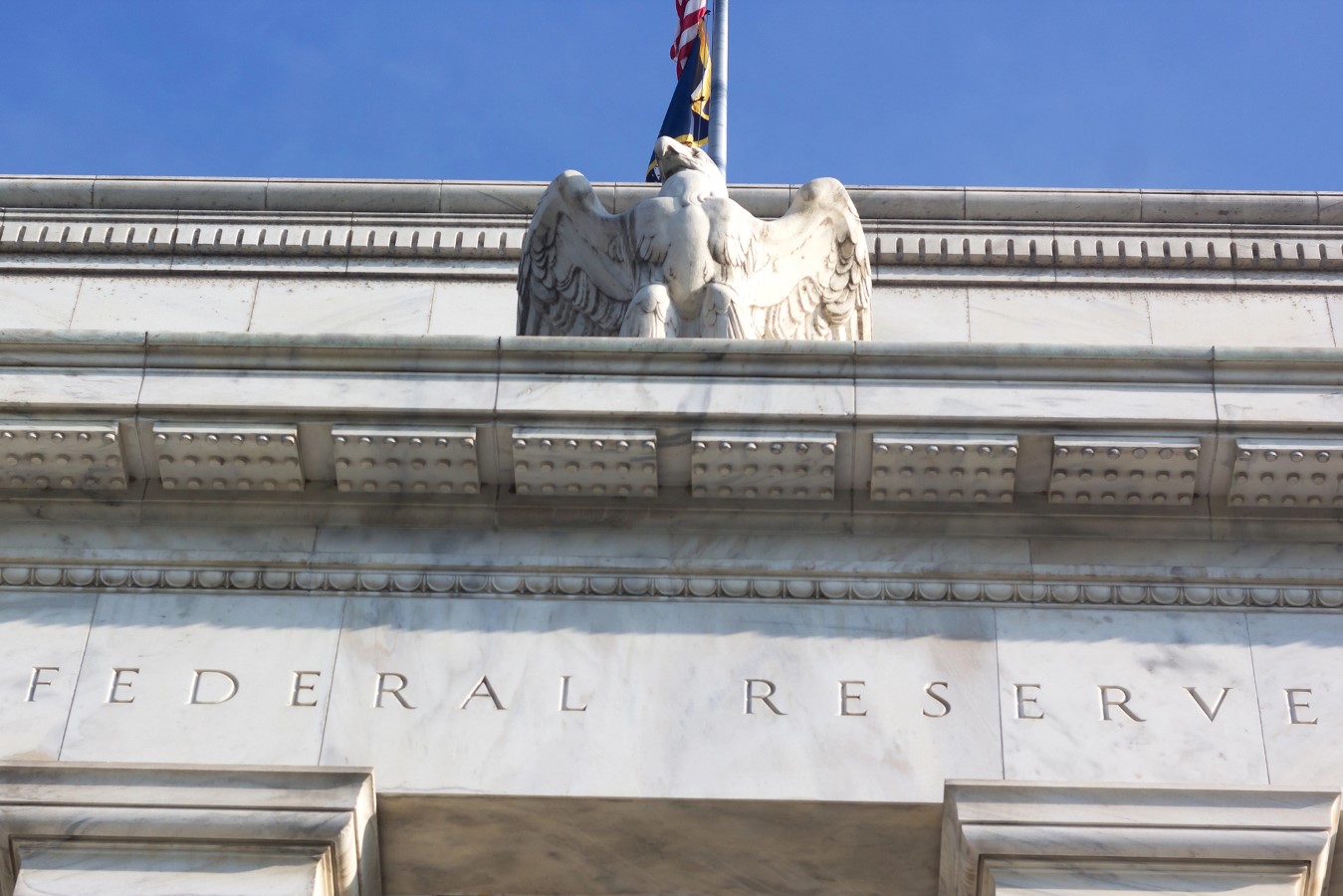
The weaker jobs report may reduce pressure on the Federal Reserve to raise interest rates again in the near term.
Janus Henderson Investors portfolio manager Bradford Smith described payroll growth as “lighter than expected” and noted it was the weakest monthly gain since February, saying the softer labor market and moderating oil-price inflation likely leave the Fed on hold at its next meeting.
Chris Zaccarelli, chief investment officer at Northlight Asset Management, called the report a “stark reversal” after stronger prior months were revised lower.
Lombard Odier Investment Managers’ Florian Ielpo took a more optimistic view, saying, “It’s a beautiful number. It’s the best number we could hope for. It says that the job market is doing fine, but it’s not hot enough to accelerate inflation.”
Market expectations reflected that shift. Following the report, traders modestly reduced expectations for additional Federal Reserve rate increases later this year.
Wall Street delivers a mixed response

Stocks traded unevenly following the jobs report as investors weighed the implications for interest rates and economic growth.
The Dow Jones Industrial Average moved higher and remained on pace for its fourth consecutive weekly gain, while the S&P 500 and Nasdaq Composite traded mixed. Technology shares, particularly semiconductor companies, weighed on the Nasdaq, while healthcare stocks outperformed.
Analysts said investors increasingly see opportunities outside the artificial intelligence sector as markets broaden beyond the technology-driven rally.
Jobless claims continue signaling limited layoffs

Despite weaker hiring, layoffs remain historically low.
Initial applications for unemployment benefits fell by 1,000 to 215,000 during the week ending June 27, below economists’ expectations. The four-week moving average also declined, while continuing claims remained relatively stable at 1.81 million.
Weekly jobless claims have generally stayed between 200,000 and 250,000 since the economy emerged from the pandemic recession, suggesting employers remain reluctant to lay off workers even as hiring slows.
Taken together, June’s employment report suggests the labor market remains resilient but is clearly losing momentum.
Hiring has slowed, prior gains have been revised lower, and labor force participation has dropped to levels not seen outside the pandemic era in decades. At the same time, layoffs remain historically low and wage growth continues to outpace inflation, indicating the economy is cooling rather than contracting.
For Federal Reserve officials, the report provides evidence that labor market conditions are easing without a sharp deterioration. Whether June proves to be a temporary soft patch or the beginning of a broader slowdown will likely depend on whether hiring stabilizes and more Americans return to the workforce in the months ahead.
Like Financial Freedom Countdown content? Be sure to follow us!
14 essential strategies to maximize your Social Security and avoid costly mistakes

Social Security is a vital lifeline for many seniors, providing crucial income support during retirement. With inflation at its highest in four decades, Social Security’s inflation-adjusted benefits offer protection against rising costs.
Rising interest rates have disrupted many retirement portfolios, causing bond fund values to plummet. In this volatile financial landscape, Social Security can stabilize a typical stock-bond retirement portfolio. By implementing smart strategies, retirees can maximize their Social Security benefits and ensure a more secure financial future.
14 Essential Strategies to Maximize Your Social Security and Avoid Costly Mistakes
Did you find this article helpful? We’d love to hear your thoughts! Leave a comment with the box on the left-hand side of the screen and share your thoughts.
Also, do you want to stay up-to-date on our latest content?
1. Follow us by clicking the [+ Follow] button above,
2. Give the article a Thumbs Up on the top-left side of the screen.
3. And lastly, if you think this information would benefit your friends and family, don’t hesitate to share it with them!

John Dealbreuin came from a third world country to the US with only $1,000 not knowing anyone; guided by an immigrant dream. In 12 years, he achieved his retirement number.
He started Financial Freedom Countdown to help everyone think differently about their financial challenges and live their best lives. John resides in the San Francisco Bay Area enjoying nature trails and weight training.
Here are his recommended tools
Personal Capital: This is a free tool John uses to track his net worth on a regular basis and as a retirement planner. It also alerts him wrt hidden fees and has a budget tracker included.
Platforms like Yieldstreet provide investment options in art, legal, real estate, structured notes, venture capital, etc. They also have fixed-income portfolios spread across multiple asset classes with a single investment with low minimums of $10,000.