
Warren says Trump is blocking bipartisan housing bill as millions wait for lower housing costs

For millions of Americans struggling with soaring home prices and high mortgage rates, Congress appeared poised to deliver one of the most significant housing reforms in years. But after the legislation passed both chambers with overwhelming bipartisan support, President Donald Trump unexpectedly announced he would withhold his signature, linking the measure to the SAVE America Act voting bill and leaving its future uncertain.
The House of Representatives voted 358-32 to approve the 21st Century ROAD to Housing Act after the Senate previously passed the legislation by an 85-5 margin.
The unusually broad bipartisan support reflects the growing urgency surrounding America’s housing affordability crisis. Major bipartisan legislation has become increasingly uncommon in Washington, making the measure one of the most notable examples of cross-party cooperation in recent years.
The bill now sits on President Donald Trump’s desk after House Speaker Mike Johnson transmitted it to the White House on June 29, beginning the constitutional 10-day window for presidential action.
Housing affordability has become a nationwide crisis

Lawmakers say the legislation responds to years of worsening affordability that have pushed homeownership beyond the reach of many Americans.
Home sales have remained sluggish since falling to a 30-year low in 2023, while the median U.S. home price remains above $400,000.
According to Redfin, a household now needs to earn nearly $117,000 annually to afford the typical home for sale; roughly $30,000 more than the income earned by the average American household.
The shortage has also delayed homeownership for younger buyers, with the average first-time homebuyer now reaching 40 years old.
America remains millions of homes short

Supporters of the legislation argue that the country’s housing shortage is the central driver behind rising prices.
The United States is estimated to face a shortage of approximately 4.7 million housing units, a gap created over years of underbuilding, supply chain disruptions, rising construction costs and higher borrowing costs.
During House debate, Financial Services Committee Chairman French Hill emphasized the scale of the challenge.
“America is facing a housing supply shortage that’s been years in the making,” Hill said.
Fresh survey data released Tuesday also showed housing demand remains resilient despite affordability challenges, with a majority of Americans saying they would rather buy a home than rent or move in with relatives for the first time since 2023.
Bill aims to speed homebuilding and reduce costs. The legislation contains dozens of provisions intended to encourage residential construction and improve access to affordable housing.
Supporters say it would streamline regulations that frequently delay projects while modernizing banking rules affecting mortgage lending.
Among the most significant provisions are measures that would:
Accelerate or waive certain environmental reviews for qualifying housing developments.
Expand funding for programs that build new housing.
Modernize lending rules to improve mortgage access.
Reduce regulatory barriers that increase construction costs.
Supporters argue these changes could help increase housing supply over time and ease upward pressure on prices.
Investor restrictions become one of the bill’s most debated provisions

One of the bill’s highest-profile sections targets large institutional investors in the single-family housing market.
The provision, titled “Homes Are For People, Not Corporations,” would prohibit investors owning more than 350 single-family homes from acquiring additional houses.
The measure reflects bipartisan concerns that Wall Street firms have reduced opportunities for traditional homebuyers in some markets.
Senator Elizabeth Warren, one of the legislation’s leading Democratic supporters, highlighted the provision after the bill passed.
“This bill helps us demonstrate our commitment to bringing down costs,” Warren said. “We’re not in the majority, but we got in there and fought for 47 different provisions to lower costs for American families and to beat back private equity, and we made it happen.”
Economists question whether the investor ban will lower housing costs

While lawmakers from both parties backed the investor restrictions, several housing economists cautioned that the policy may have only a limited effect on affordability.
Institutional investors own roughly 3% of the nation’s single-family rental market, according to economists.
Rental housing economist Jay Parsons argued that many renters served by institutional landlords are not currently in a position to become homeowners regardless of investor ownership. “People want to identify a boogeyman that can say: ‘Hey, this is the problem, and give me an easy button to solve it right now. It’s an emotionally satisfying answer, even if it’s not a real solution.”
He added: “These are real people, real families, who live in these homes, and the assumption and the narrative is they would be homeowners, if not for the fact that the investors own these houses. The reality is that most of them can’t.”
According to 2026 Amherst Group data, the average single-family renter has a household income of $88,000 and a 650 FICO score, compared with more than $150,000 in income and a 730 FICO score for the average single-family homeowner.
Rental industry warns of unintended consequences
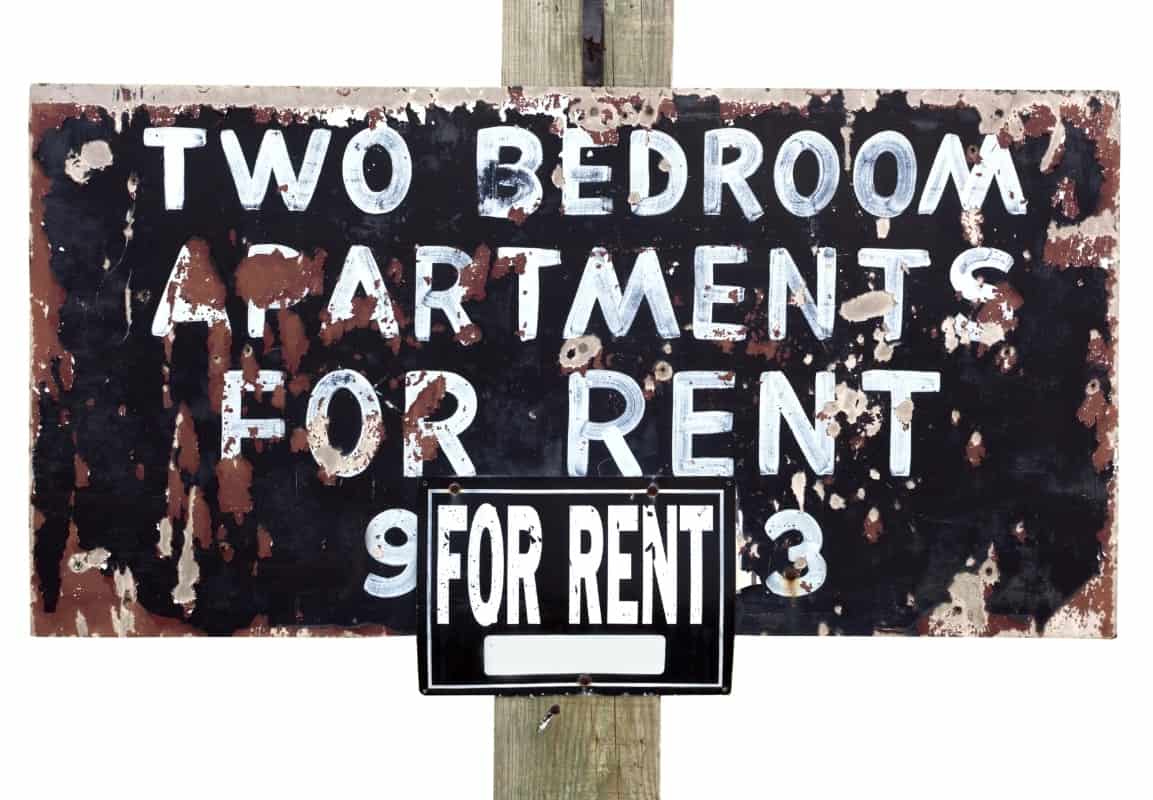
Opponents of the investor restrictions argue the provision could reduce rental housing supply rather than improve affordability.
The National Rental Home Council, whose members include some of the nation’s largest single-family rental companies, warned that limiting institutional ownership could slow construction of rental homes and reduce housing options for lower-income families.
Industry representatives also note there are approximately 1 million fewer single-family rental homes today than a decade ago, while the share of single-family homes used as rentals has gradually declined since 2014, according to a 2025 National Association of Realtors analysis.
Some economists also point to rising mortgage delinquency rates among lower-income borrowers as evidence that many renters still face substantial barriers to homeownership beyond housing supply alone.
Trump pauses signing over SAVE America Act voting legislation

Despite the overwhelming bipartisan support, Trump announced he would not immediately sign the housing bill.
In a Truth Social post, the president argued that Congress should instead prioritize passage of the SAVE America Act, legislation addressing voter identification and mail-in voting.
Trump wrote: “The Elizabeth ‘Pocahontas’ Warren centric housing bill, which is of minor importance compared to lower interest rates, and even FISA, pales in comparison to passing THE SAVE AMERICA ACT.”
He also urged Senate Republicans to consider eliminating the legislative filibuster.
“Get the bad Republicans to approve it or, better yet, Terminate the Filibuster and approve it, AND EVERYTHING ELSE REPUBLICANS HAVE EVER DREAMED OF.”
Trump further warned: “The Dumocrats will do it in hour one, 100%. Republicans will feel very stupid if they don’t do it first. I’ll be watching with tears in my eyes!!!”
Senate Majority Leader John Thune has said Republicans currently do not have enough votes to pass the SAVE America Act.
Warren presses Trump to sign the bill

Since Congress approved the legislation, Warren has repeatedly urged Trump to allow it to become law.
Among her posts on X, she wrote: “We passed a massive, bipartisan bill to lower housing costs and stop private equity from gobbling up homes. But Donald Trump won’t sign it.”
In another post, Warren wrote: “We are in a housing emergency all across this country. Prices are up because we have not built enough housing over the last few decades. We need millions more units in the United States. Why is Trump holding up the bipartisan housing bill?”
She later added: “Tick tock, Mr. President. The American people are waiting for lower housing costs.”
After House Speaker Mike Johnson transmitted the legislation to the White House, Warren continued criticizing the delay, posting: “It’s been a week and the President still hasn’t signed the bipartisan housing bill. Donald Trump does not care if you can afford to buy a house.”
She also highlighted support from Republican officials, writing: “Last week, Congress passed a bipartisan bill to lower housing costs. Now, Trump is refusing to sign it. Listen to the President’s own Republican Party talk about the bill that’s gathering dust on his desk:”
In another message promoting the legislation, Warren said: “Our bipartisan housing bill is a big deal for cities across the county. Just one example: it would reduce the cost of a new manufactured home by up to $10,000. Americans don’t have to time to wait. Republican and Democratic mayors have a united message: let’s get it done!”
What happens next

The housing bill remains on Trump’s desk as the White House weighs whether to sign it while congressional Republicans continue debating the SAVE America Act.
If signed, supporters say the legislation could become one of the most significant bipartisan housing reforms in years by increasing home construction, reducing regulatory barriers and expanding homeownership opportunities.
Critics, however, argue that restricting large institutional investors may do little to improve affordability while reducing the supply of single-family rental homes for households that cannot yet qualify for homeownership.
With the bill still awaiting presidential action, millions of prospective buyers and renters remain watching to see whether the bipartisan agreement ultimately becomes law.
Like Financial Freedom Countdown content? Be sure to follow us!
14 essential strategies to maximize your Social Security and avoid costly mistakes

Social Security is a vital lifeline for many seniors, providing crucial income support during retirement. With inflation at its highest in four decades, Social Security’s inflation-adjusted benefits offer protection against rising costs.
Rising interest rates have disrupted many retirement portfolios, causing bond fund values to plummet. In this volatile financial landscape, Social Security can stabilize a typical stock-bond retirement portfolio. By implementing smart strategies, retirees can maximize their Social Security benefits and ensure a more secure financial future.
14 Essential Strategies to Maximize Your Social Security and Avoid Costly Mistakes
11 reasons you should claim Social Security early

Deciding when to claim Social Security is often about maximizing your benefit. Financial planners usually advise delaying your claim for as long as possible to secure the highest monthly payment. Your benefit is based on your lifetime earnings, with a full payout available at your full retirement age (FRA), which is currently between 66 and 67 depending on your birth year. Claiming before FRA results in a permanent reduction in your monthly benefit, while waiting beyond FRA leads to a permanent increase. However, the decision isn’t solely about maximizing the monthly check. Personal factors such as health, family circumstances, and financial needs can play a significant role in determining the right time to claim.
11 Reasons You Should Claim Social Security Early

Did you find this article helpful? We’d love to hear your thoughts! Leave a comment with the box on the left-hand side of the screen and share your thoughts.
Also, do you want to stay up-to-date on our latest content?
1. Follow us by clicking the [+ Follow] button above,
2. Give the article a Thumbs Up on the top-left side of the screen.
3. And lastly, if you think this information would benefit your friends and family, don’t hesitate to share it with them!

John Dealbreuin came from a third world country to the US with only $1,000 not knowing anyone; guided by an immigrant dream. In 12 years, he achieved his retirement number.
He started Financial Freedom Countdown to help everyone think differently about their financial challenges and live their best lives. John resides in the San Francisco Bay Area enjoying nature trails and weight training.
Here are his recommended tools
Personal Capital: This is a free tool John uses to track his net worth on a regular basis and as a retirement planner. It also alerts him wrt hidden fees and has a budget tracker included.
Platforms like Yieldstreet provide investment options in art, legal, real estate, structured notes, venture capital, etc. They also have fixed-income portfolios spread across multiple asset classes with a single investment with low minimums of $10,000.