
Washington slashes estate tax to stop millionaire exodus, but everyday family homes face a hidden tax trap

In a dramatic legislative turn, Washington State has rewritten its death tax rules once again. After imposing steep estate tax increases last year, lawmakers in Olympia stepped back from the edge of a high-net-worth exodus. Facing urgent warnings from financial planners and tax experts that affluent residents were packing up for low-tax havens, Governor Bob Ferguson signed a major policy reversal into law earlier this year, restoring lower estate tax brackets.
However, this headline-grabbing tax slash comes with a major catch. While multi-millionaires stand to save big under the changes that went into effect last month, subtle tweaks hidden deeper in the legislation mean everyday family estates could actually end up owing more money to the state; leaving many heirs with an unexpected financial hangover.
A dramatic U-turn in Olympia after fears of a millionaire exodus

The decision to roll back rates was driven by fiscal self-preservation. When Washington hiked its top estate tax rate to a nation-leading 35% in 2025, wealthy residents immediately started looking for the exit doors. Tax attorneys reported a sudden surge of clients changing their primary residences to zero-income-tax states like Florida, Texas, or Nevada.
Sen. Jamie Pedersen (D-Seattle), the Senate Majority Leader, acknowledged the growing trend of wealthy taxpayers fleeing the state’s aggressive tax reach: “We do have a lot of anecdotal evidence that people are making a decision to redomicile,”
Fearing that losing these high earners permanently would gut the state’s broader revenue base, lawmakers quickly rallied to reverse course before the exodus hit a tipping point.
Inside Senate Bill 6347 and the tax rollback now in effect

Signed into law on March 24, 2026, Senate Bill 6347 (SB 6347) systematically undoes the steep progressive tax tiers enacted just 12 months earlier. Sponsored by Sen. Claudia Kauffman (D-Kent), the legislation restores the state’s historical tax rate caps while attempting to shield funding for local public schools and civic infrastructure through the Education Legacy Trust Account.
Reflecting on the goals of the legislation, Sen. Claudia Kauffman emphasized the need for a predictable tax code:
“Our tax code should be durable and easy to understand,” Kauffman added: “This legislation brings greater stability to the estate tax while preserving the investments Washington makes in education. It reflects a careful, balanced approach to revenue policy.”
How the 2026 date-of-death rules divide heirs

Because the new rules officially kicked in on July 1, 2026, 2026 has become a split transition year for grieving families. Guidelines from the Washington Department of Revenue establish that an estate’s tax obligation comes down entirely to the decedent’s exact date of death:
For deaths between January 1, 2026 and June 30, 2026: Estates remain governed by the higher 2025 rate framework. These estates receive a $3,076,000 tax-free exemption threshold, but face top marginal tax rates reaching up to 35% on taxable amounts over $9 million.
For deaths on or after July 1, 2026: Estates are evaluated under the newly restored rate structure. Top tax rates drop back down to 20% on amounts over $9 million, but the tax-free exemption drops and freezes at $3,000,000 through at least 2027.
Why ultra-wealthy estates get a massive break as top rates drop to 20%

For ultra-wealthy Washingtonians transferring tens of millions of dollars in generational wealth, SB 6347 offers staggering tax relief. Under the short-lived 2025 law, any taxable estate value exceeding $9 million was hit with a 35% state tax rate. For deaths occurring now, those rates have fallen back to progressive brackets that cap out at 20%:
Up to $1 million: 10%
$1 million to $2 million: 14% (down from 15%)
$2 million to $3 million: 15% (down from 17%)
$3 million to $4 million: 16% (down from 19%)
$4 million to $6 million: 18% (down from 23%)
$6 million to $7 million: 19% (down from 26%)
$7 million to $9 million: 19.5% (down from 30%)
Over $9 million: 20% (down from 35%)
For a $15 million estate containing local business holdings or valuable real estate, this single rate reduction keeps millions of dollars in family hands rather than transferring them to state coffers.
The fine print: A frozen $3 million exemption threshold
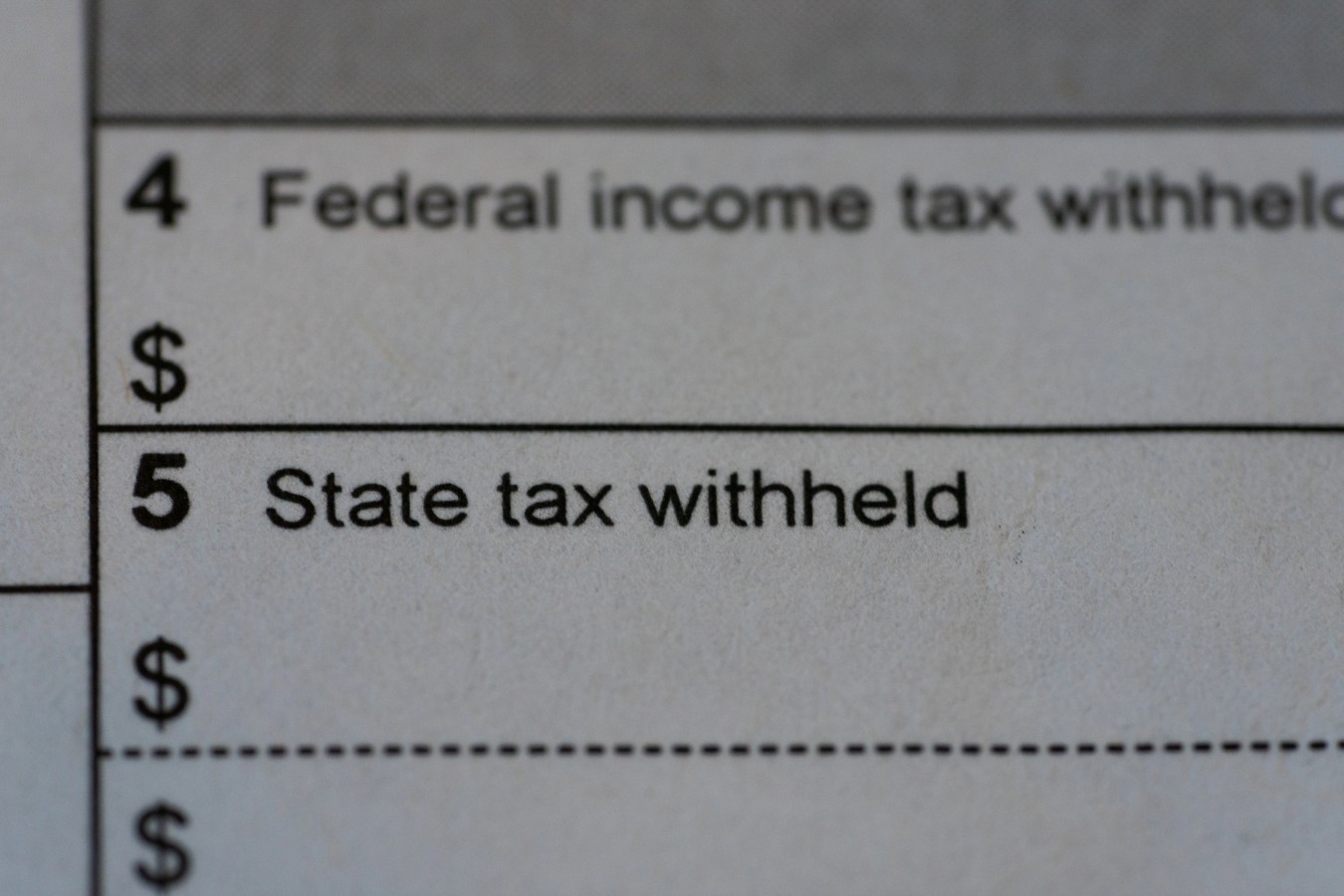
Here is where the story turns upside down for everyday residents. Historically, Washington State adjusted its estate tax exemption annually for inflation, allowing families to keep pace with rising home values and investment gains without falling into a state tax trap.
Under SB 6347, that annual inflation adjustment has been suspended. The state lowered the tax-free exclusion limit to $3,000,000 for deaths occurring on or after July 1, 2026, and locked it at that exact dollar amount through 2027. Because inflation is no longer pushing the exclusion boundary upward, normal real estate gains can quietly drag unsuspecting families into taxable territory.
Why middle-class family homes could trigger higher tax bills

While headlines trumpet a massive tax cut for multi-millionaires, middle-class families in high-cost housing markets across Seattle, Bellevue, and outer suburbs could end up paying a steep price. Decades of booming home equity mean a standard family residence, combined with 401(k) accounts, life insurance, and a small business, can easily push an estate’s total value past $3 million.
Because the tax-free exemption was reduced from $3,076,000 down to $3,000,000, more total estate dollars are suddenly exposed to tax. An analysis by financial planning firm Mercer Advisors reveals that for estates valued between $4 million and $5 million, the extra dollars caught in the tax net outweigh the benefit of lower marginal rates; meaning these families will actually write a bigger check to the state than they would have under the prior rules.
Enter the proposed 9.9% income tax on Washington high earners

Even as estate tax relief arrives for high-net-worth households, state lawmakers are pursuing another revenue stream: a brand-new 9.9% “millionaire tax” on high income.
Designed to apply a flat 9.9% levy on state taxable income exceeding $1 million per household, the proposal does not double the deduction limit for married couples filing jointly. Billed as a way to generate $3.5 billion annually for public schools, child care programs, and small-business relief, critics argue it creates a new “marriage penalty” and sends mixed signals to the state’s top earners.
Estate tax versus inheritance tax: The distinction every family needs to know

In discussions about passing down wealth, people frequently confuse estate taxes with inheritance taxes; but the practical difference matters immensely to beneficiaries:
The Washington Estate Tax: This is a tax levied directly on the estate itself before any assets or property are distributed to heirs. The estate executor files Washington Department of Revenue Form REV 85 0031 and pays the bill out of estate funds.
An Inheritance Tax: This is a tax paid by the beneficiary who receives an inheritance. Washington State has no inheritance tax. If you inherit cash or property in Washington, you do not pay state tax simply for receiving that inheritance.
What this policy pivot means for Washington residents moving forward

Washington’s latest legislative overhaul proves how quickly state tax laws can shift when economic priorities change. While top-tier wealth gets welcome relief from a 35% tax rate, property appreciation continues to push everyday homeowners past the state estate tax threshold.
For families living in high-value housing markets across Washington, keeping tabs on how the state values assets; and monitoring where your family’s net worth stands relative to the frozen $3 million exemption; is no longer just a concern for the mega-rich.
Financial experts recommend consulting certified tax planners to determine the next steps.
Like Financial Freedom Countdown content? Be sure to follow us!
14 essential strategies to maximize your Social Security and avoid costly mistakes

Social Security is a vital lifeline for many seniors, providing crucial income support during retirement. With inflation at its highest in four decades, Social Security’s inflation-adjusted benefits offer protection against rising costs.
Rising interest rates have disrupted many retirement portfolios, causing bond fund values to plummet. In this volatile financial landscape, Social Security can stabilize a typical stock-bond retirement portfolio. By implementing smart strategies, retirees can maximize their Social Security benefits and ensure a more secure financial future.
14 Essential Strategies to Maximize Your Social Security and Avoid Costly Mistakes

Did you find this article helpful? We’d love to hear your thoughts! Leave a comment with the box on the left-hand side of the screen and share your thoughts.
Also, do you want to stay up-to-date on our latest content?
1. Follow us by clicking the [+ Follow] button above,
2. Give the article a Thumbs Up on the top-left side of the screen.
3. And lastly, if you think this information would benefit your friends and family, don’t hesitate to share it with them!

John Dealbreuin came from a third world country to the US with only $1,000 not knowing anyone; guided by an immigrant dream. In 12 years, he achieved his retirement number.
He started Financial Freedom Countdown to help everyone think differently about their financial challenges and live their best lives. John resides in the San Francisco Bay Area enjoying nature trails and weight training.
Here are his recommended tools
Personal Capital: This is a free tool John uses to track his net worth on a regular basis and as a retirement planner. It also alerts him wrt hidden fees and has a budget tracker included.
Platforms like Yieldstreet provide investment options in art, legal, real estate, structured notes, venture capital, etc. They also have fixed-income portfolios spread across multiple asset classes with a single investment with low minimums of $10,000.