
California Democrat Ro Khanna backs Medicare at 50, saying expansion would cost $70 billion less than House defense increase

California Democrat Ro Khanna is backing legislation that would lower the Medicare eligibility age from 65 to 50, arguing that expanding health coverage should take priority over increases in defense spending. The proposal, introduced by Rep. Pramila Jayapal (D-Wash.) and other House Democrats, would also expand assistance with Medicare premiums and prescription drug costs. Khanna says the expansion would cost the federal government an estimated $180 billion annually, or $70 billion less than a defense budget increase he referenced in a post on X. The proposal has not become law, and the cost comparison reflects Khanna’s argument rather than an official budget score for the legislation.
Ro Khanna argues for “health care over warfare”
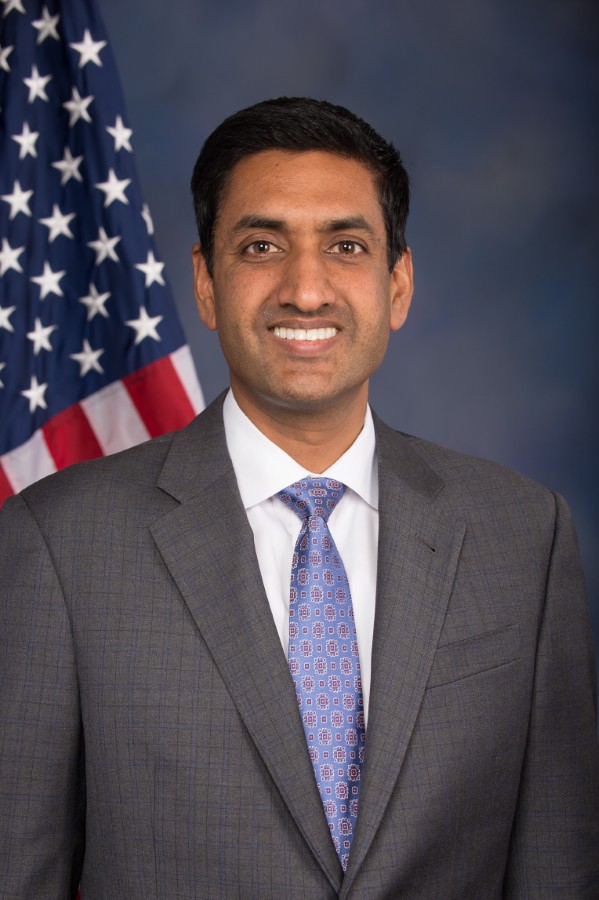
Khanna made his case in a post on X supporting Jayapal’s Improving Medicare Coverage Act. He wrote:
“Lowering the Medicare age to 50 would cost $180 billion a year. That’s $70 billion less than the budget increase the House passed for the Department of War. We could have healthcare over warfare. I’m proud to cosponsor @RepJayapal’s bill to lower the age from 65 to 50. ”
Khanna’s argument frames Medicare expansion as a choice about national spending priorities. Rather than treating health care and military funding as separate debates, he is asking lawmakers to consider whether additional defense spending is justified when millions of Americans struggle to afford medical care.
The comparison is politically striking, but it needs context. The $180 billion figure comes from a Yale research estimate cited by Khanna’s office, while the $70 billion difference is the comparison Khanna makes in his post. Neither figure establishes that Congress could automatically transfer defense funding to Medicare or that the two expenditures have identical budgetary effects.
Jayapal’s bill would lower Medicare eligibility from 65 to 50
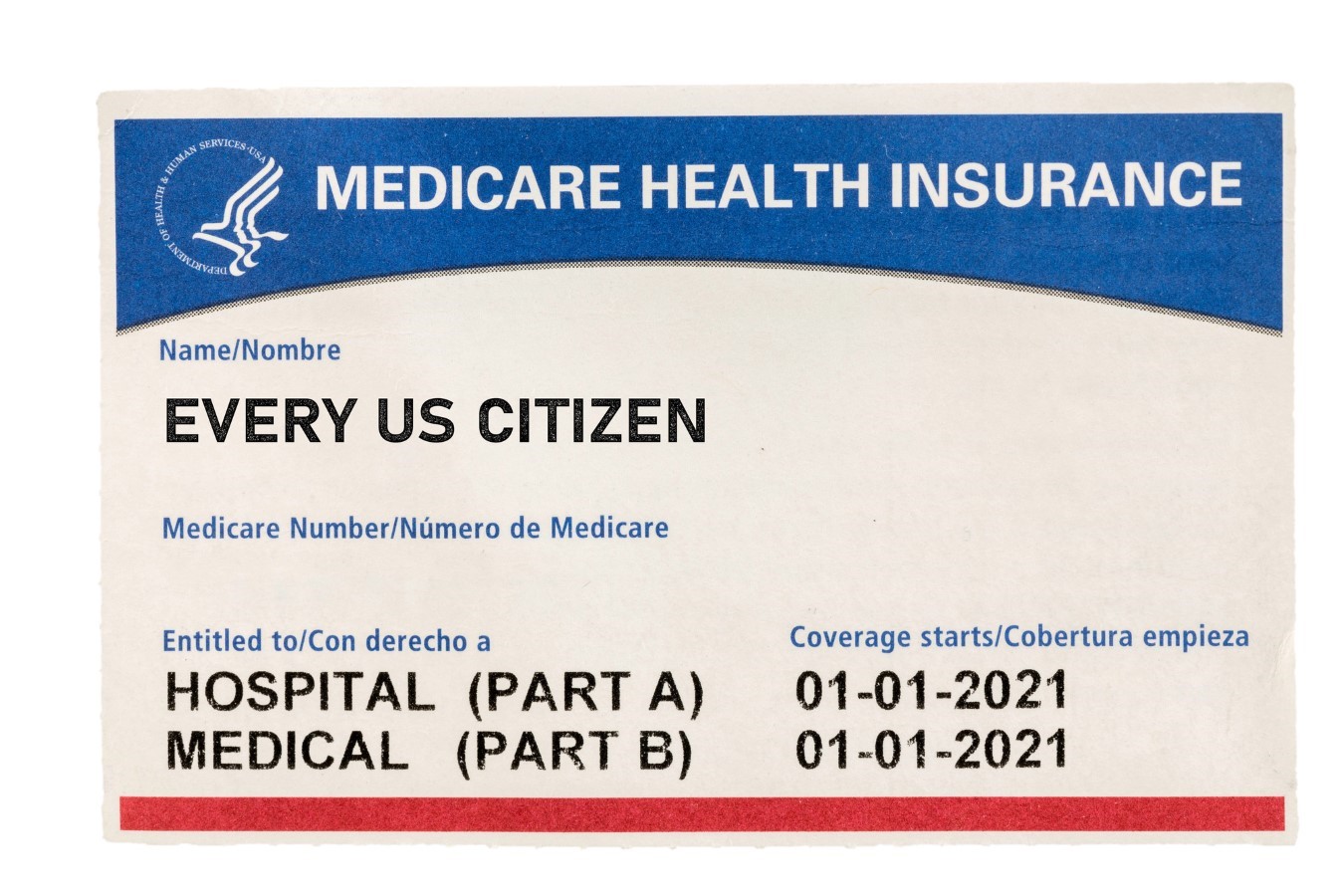
Jayapal introduced the Improving Medicare Coverage Act with Reps. Chris Deluzio (D-Pa.), Debbie Dingell (D-Mich.) and Pat Ryan (D-N.Y.) in October 2026. Khanna is among the legislation’s cosponsors.
The central provision would lower the standard Medicare eligibility age by 15 years. Medicare generally provides coverage beginning at age 65, although certain people with disabilities and people with specific medical conditions can qualify earlier.
Under the proposal, adults beginning at age 50 could become eligible for Medicare under the legislation’s terms. The measure is intended to address coverage gaps for people who leave the workforce before age 65, lose employer-sponsored insurance or cannot afford private coverage.
In a post on X, Rep Jayapal wrote, “Lowering the Medicare eligibility age to 50 would guarantee healthcare to millions of more Americans at a critical age where earlier detection and treatment can make a big difference for patient outcomes. Let’s pass this bill!”
The bill has been referred to the House Energy and Commerce and Ways and Means committees. It has not passed Congress, and the proposed eligibility change is not currently in effect.

The legislation would also change how Medicare assists people with limited incomes. It proposes replacing three existing Medicare Savings Programs; Qualified Medicare Beneficiary, Specified Low-Income Medicare Beneficiary and Qualifying Individual, with a new Medicare Cost Assistance Program.
Under the proposal, eligible individuals with incomes up to 200% of the federal poverty level could receive assistance with specified Medicare Part A premiums and Part B premiums, deductibles and coinsurance.
The bill would also expand prescription drug assistance under Medicare Part D. It would combine the existing Extra Help and Low-Income Subsidy programs, raise the income eligibility threshold from 135% to 200% of the federal poverty level and remove the asset test.
Another provision would preserve marketplace premium tax credit eligibility for individuals earning less than 400% of the federal poverty level who do not qualify for the proposed Medicare assistance program.
These provisions mean the proposal is broader than simply allowing younger Americans to enroll in Medicare. It would also change how some lower-income beneficiaries receive help paying for medical care.
The $180 billion estimate comes from Yale researchers

Khanna’s $180 billion annual cost figure is supported by a Yale School of Public Health analysis cited by his office. The researchers estimated that lowering the Medicare eligibility age to 50 would cost the federal government approximately $180 billion annually after accounting for existing federal health spending, employer-sponsored insurance offsets and premiums paid by beneficiaries.
The estimate is a net federal cost calculation, not a measure of every dollar that would be spent on medical services for newly eligible people. It accounts for the fact that expanding Medicare could shift some health care costs away from other federally supported coverage and employer-sponsored insurance.
The same Yale research examined a broader policy: a single-payer universal health care system similar to Medicare for All. Researchers estimated that such a system could reduce total annual national health expenditures from $5.28 trillion to $4.24 trillion, a projected reduction of $1.04 trillion.
That broader savings estimate should not be confused with the $180 billion annual federal cost estimate for lowering Medicare eligibility to 50. They measure different things under different policy scenarios.
The researchers’ findings provide a basis for Khanna’s argument, but the $180 billion estimate is not an official Congressional Budget Office score for Jayapal’s bill. The final fiscal impact would depend on the legislation’s implementation, enrollment, premiums and other policy details.
Khanna says the proposed Medicare expansion would cost $70 billion less annually than a budget increase the House passed for the DoW, the name used for the Department of Defense under the Trump administration’s renaming initiative.
The comparison is part of a wider congressional debate over military spending. An Associated Press report on the House’s defense policy bill described a $1.15 trillion defense policy measure and reported that Democrats argued total national security spending could approach $1.6 trillion when additional funding for the Middle East conflict and stockpiles was included.
Those figures describe broader defense spending and are not necessarily the same budget measure Khanna used in his post. They should not be substituted for his specific comparison without examining the underlying appropriations and budget calculations.
The key point is that Khanna is using the estimated cost of Medicare expansion to challenge the scale of proposed defense spending. His post makes a political argument about competing priorities; it does not establish that the two programs could be financed through a direct dollar-for-dollar transfer.
A previous Medicare expansion proposal shows why costs matter

The Congressional Budget Office has previously examined a proposal to lower the Medicare eligibility age, although that earlier measure would have reduced the age to 60 rather than 50.
In a May 2022 analysis, the CBO and Joint Committee on Taxation estimated that lowering eligibility to 60 would increase federal budget deficits by $155 billion over the 2026–2031 period.
The estimate reflected higher Medicare spending, partially offset by reductions in other federal health spending and increased revenues. The analysis also projected changes in employer-sponsored insurance and enrollment in Medicare.
That estimate cannot be applied directly to Jayapal’s new proposal because it covers a different eligibility age, policy design and budget period. It nevertheless illustrates why an expansion of Medicare would require a detailed fiscal assessment.
The current bill would extend eligibility to a younger population than the earlier proposal, making its eventual budgetary effects an important issue for lawmakers to examine. An official estimate of the new bill’s costs would provide a more reliable basis for evaluating its effect on federal spending and deficits.
The proposal includes a five-year sunset provision

The bill’s timeline is another important detail. According to the legislative text, most of its provisions would take effect six months after enactment, with certain enrollment rules and transition provisions governing how coverage would begin.
The legislation also includes a sunset provision: five years after the six-month implementation period, the act would be repealed and the laws it amended or repealed would be restored or revived as if the legislation had not been enacted.
In practical terms, the proposal is structured as a temporary five-year policy under its current wording, rather than a permanent expansion of Medicare eligibility. Congress could revisit or change that framework during the legislative process.
This provision is relevant to the debate over the proposal’s costs because a temporary program has a different budget horizon from a permanent eligibility change. Any formal fiscal analysis would need to account for the bill’s actual provisions and implementation schedule.
Readers can review the effective-date and sunset language in the bill’s official text.
Democrats say lowering the age could improve access to care

Jayapal and her cosponsors argue that adults in their 50s and early 60s can face substantial barriers to health coverage before they qualify for Medicare.
In the bill announcement, Jayapal said: “Lowering the Medicare eligibility age will be life-saving for the millions of Americans who are waiting an additional 15 years to be able to afford to see a doctor.”
Supporters point to the importance of preventive care, cancer screenings, prescription drugs and early diagnosis. They also argue that people who leave employment before age 65 may lose access to employer-sponsored insurance while remaining too young for Medicare.
Jayapal’s office cited figures showing that adults aged 55 to 64 made up 11.5% of the uninsured population in the United States in 2024. The office also said lowering the eligibility age could reduce employer health care costs by as much as 43%, although the actual effects would depend on how employers and workers responded to the change.
Those figures are arguments advanced by the bill’s supporters, rather than guarantees of the outcomes that would follow enactment. The proposal’s effects on coverage, premiums, employer costs and federal spending would depend on its implementation.
The bill faces congressional hurdles before Medicare rules could change

Despite Democratic support, the proposal remains at an early stage of the legislative process. Referral to the House Energy and Commerce and Ways and Means committees means lawmakers can review its provisions, but it does not guarantee a committee vote or passage by the full House.
The measure would also need to advance through the Senate and receive presidential approval before becoming law. Its cost, the proposed five-year sunset, and the details of how coverage and assistance would be administered are all potential subjects for further debate.
The legislation’s cosponsors include Khanna and other Democrats who support expanding federal health coverage. Their backing gives the proposal visibility, but the list of cosponsors alone does not establish that it has enough support to pass Congress.
For now, Medicare eligibility remains unchanged. Adults generally must still reach age 65 to qualify based on age, unless they meet existing criteria for earlier eligibility.
Medicare at 50 becomes part of the broader spending debate
Khanna’s support for Jayapal’s bill connects two major policy questions: whether the federal government should expand access to health coverage and how much it should spend on defense.
The proposal would lower Medicare eligibility to 50, broaden assistance with premiums and prescription drugs, and temporarily change several existing health care programs. Yale researchers cited by Khanna estimate that the age expansion would cost the federal government approximately $180 billion annually, while Khanna says that is $70 billion less than a defense spending increase passed by the House.
Those figures help explain the argument behind his “healthcare over warfare” message, but they do not settle the debate over how the expansion should be financed or whether the two spending measures are directly comparable.
The next steps are congressional consideration and a clearer assessment of the bill’s fiscal effects. Until lawmakers act, the proposal remains a Democratic effort to expand Medicare; and a political challenge to the priorities reflected in federal spending.
Like Financial Freedom Countdown content? Be sure to follow us!

Did you find this article helpful? We’d love to hear your thoughts! Leave a comment with the box on the left-hand side of the screen and share your thoughts.
Also, do you want to stay up-to-date on our latest content?
1. Follow us by clicking the [+ Follow] button above,
2. Give the article a Thumbs Up on the top-left side of the screen.
3. And lastly, if you think this information would benefit your friends and family, don’t hesitate to share it with them!

John Dealbreuin came from a third world country to the US with only $1,000 not knowing anyone; guided by an immigrant dream. In 12 years, he achieved his retirement number.
He started Financial Freedom Countdown to help everyone think differently about their financial challenges and live their best lives. John resides in the San Francisco Bay Area enjoying nature trails and weight training.
Here are his recommended tools
Personal Capital: This is a free tool John uses to track his net worth on a regular basis and as a retirement planner. It also alerts him wrt hidden fees and has a budget tracker included.
Platforms like Yieldstreet provide investment options in art, legal, real estate, structured notes, venture capital, etc. They also have fixed-income portfolios spread across multiple asset classes with a single investment with low minimums of $10,000.