
Elizabeth Warren cites Elon Musk warning as she pushes new tax on AI companies

Sen. Elizabeth Warren is calling for a sweeping overhaul of the U.S. tax code aimed at artificial intelligence companies, arguing that Americans should share in AI-driven wealth rather than see its benefits concentrated among a small group of technology firms and billionaires. The Massachusetts Democrat recently pointed to warnings from Elon Musk about AI’s potential impact on employment as she renewed her push for taxes on AI companies, data centers and billionaire wealth.
Warren’s latest comments came in a pair of June 12 posts on X, where she argued that taxing AI could help fund health care, education and job opportunities. She also cited Musk’s prediction that AI could eventually replace a large share of jobs, warning that the technology’s economic gains could otherwise flow disproportionately to wealthy investors and technology executives.
Senator Warren posted on X, “If we tax AI, we can use that money to build a country that works for everyone. Where healthcare is treated as a human right. Where every American is guaranteed a good job. Where education isn’t a privilege reserved for the wealthy. That’s why I’m fighting to tax AI.”
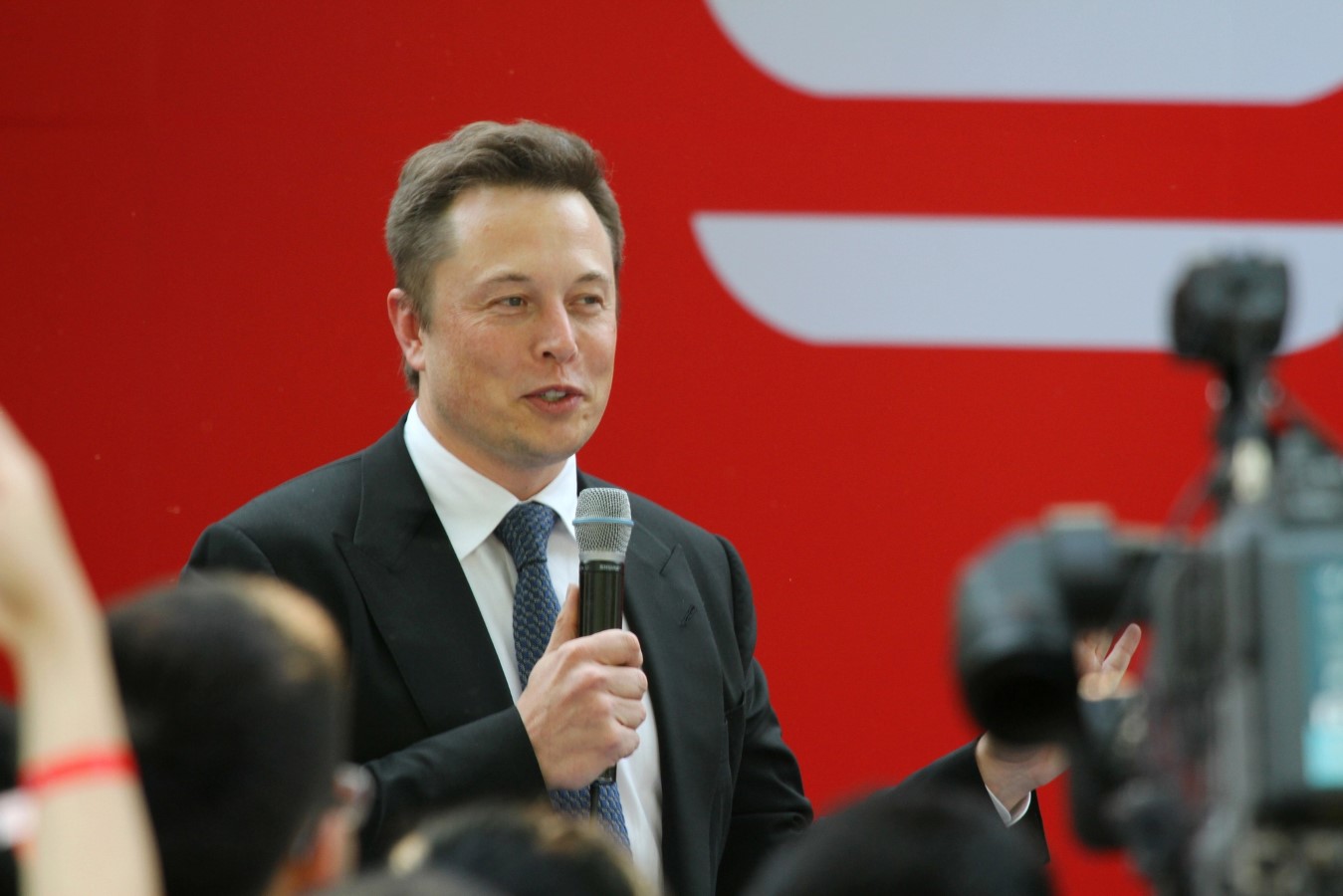
In another post on X, she said, “Elon Musk sees a future where AI replaces HALF of all jobs. If he’s right, our country’s wealth could get sucked up by a handful of billionaires while workers get left behind. We need to tax AI so Americans share in its growth—and Big Tech pays for the disruption it causes.”
The proposal targets AI companies and data centers

Warren’s tweet echo issues she raised in a Time magazine op-ed published on May 27th. The Massachusetts Democrat proposed higher taxes on corporations, a wealth tax targeting billionaires, and direct taxes on AI infrastructure such as data centers. Warren argued that the current tax system encourages companies to replace workers with automation while allowing some of the richest Americans to pay relatively low effective tax rates.
“Building an economy that works for all of us will require multiple policy responses. But it starts by acknowledging: it’s time to tax AI and invest in people,” Warren wrote.
Warren framed AI as a transformative technology that could concentrate economic power among a small group of tech executives and investors unless policymakers intervene.
“Americans are hanging on by their fingernails in an economy that funnels wealth to the ultra-rich and leaves crumbs for working people. AI threatens to supercharge this divide: tech executives have warned that AI could lead to ‘a level of wealth concentration that will break society’ and create a ‘permanent underclass,’” she wrote.
The senator said AI has already contributed to layoffs and restructuring across industries while simultaneously creating new fortunes tied to technology companies and AI startups.
She argued that without changes to tax policy, the economic gains from automation could increasingly flow to corporations and wealthy shareholders rather than workers.
A central part of Warren’s proposal involves directly taxing AI companies and the massive data centers that power AI systems.
“Taxing AI is one way we make sure the winnings from AI benefit all Americans, rather than channeling them only to the wealthy few,” Warren wrote.
She proposed a “reasonable excise tax” on the energy consumed by AI data centers, arguing that communities are already feeling the financial effects of rapidly expanding AI infrastructure.
“The majority of AI data centers are controlled or operated by trillion-dollar companies,” she wrote. “By imposing a reasonable excise tax on the energy used by data centers, families could recoup some of the gains of AI…A well-designed tax would focus on the companies that can afford it and scale with AI’s impact: the bigger the data center, the more they pay.”
Warren also floated the possibility of “even bigger and bolder proposals to tax AI,” though she did not provide additional details about what those policies might include.
Warren links AI growth to rising electricity costs

The senator argued that the growth of AI infrastructure is contributing to higher utility bills in communities located near large data centers.
“AI data centers are jacking up utility bills; for families living near large data centers, electricity costs have skyrocketed by as much as 267% over the past five years,” Warren wrote.
She added that resistance to new data center projects is growing nationwide.
“It’s no surprise that Americans are showing up at town meetings to protest data centers and communities across the country are fighting for data center moratoriums,” she wrote.
Warren said policymakers must address AI’s increasing energy demand while ensuring ordinary families are not burdened with rising costs tied to the technology boom.
Concerns over AI-driven job losses
Warren also warned that AI could dramatically reshape the labor market, particularly as technology executives predict wider adoption of automation tools.
Warren is not alone in raising concerns about AI’s impact on employment. In recent years, several technology leaders, including Elon Musk, have warned that advances in AI could significantly reduce the need for human labor in some occupations. Those concerns have fueled a growing debate over whether governments should rethink tax systems and social safety nets as automation expands.
“Big Tech CEOs say this is only the beginning, predicting that AI will soon automate most white-collar tasks,” she wrote in her op-ed.
While acknowledging that some predictions may be exaggerated, Warren said there is “no denying that AI is already changing the labor market.”
She argued that the impact could be especially severe in the United States because health insurance is often linked to employment.
“And because health care is often tied to a job, an AI wave could cost a family more than a lost paycheck,” Warren wrote.
The senator also cited concerns that enthusiasm surrounding AI could contribute to broader financial instability, warning that some experts believe the rapid expansion of AI investments may be inflating a dangerous economic bubble.
A major theme of Warren’s proposal is her argument that the existing tax system effectively incentivizes automation over hiring workers.
“Right now, companies pay payroll taxes for their workers but get tax breaks for investing in technology—effectively, a tax penalty for hiring human beings and a tax break for buying equipment,” she wrote.
Warren argued that such policies encourage companies to replace employees with AI systems.
“That’s wrong. We need to level the playing field by raising taxes on corporations and capital gains and closing corporate loopholes,” she wrote.
She also pointed to strengthening the minimum tax on large corporations as one potential method for reducing loopholes and increasing tax revenue from major companies.
Wealth tax proposal targets AI billionaires
Warren renewed her long-standing push for a federal wealth tax, arguing that AI-generated fortunes have made the issue even more urgent.
“Some of the wealthiest individuals in America get away with paying lower tax rates than a Boston public school teacher because our system taxes income but not wealth,” she wrote.
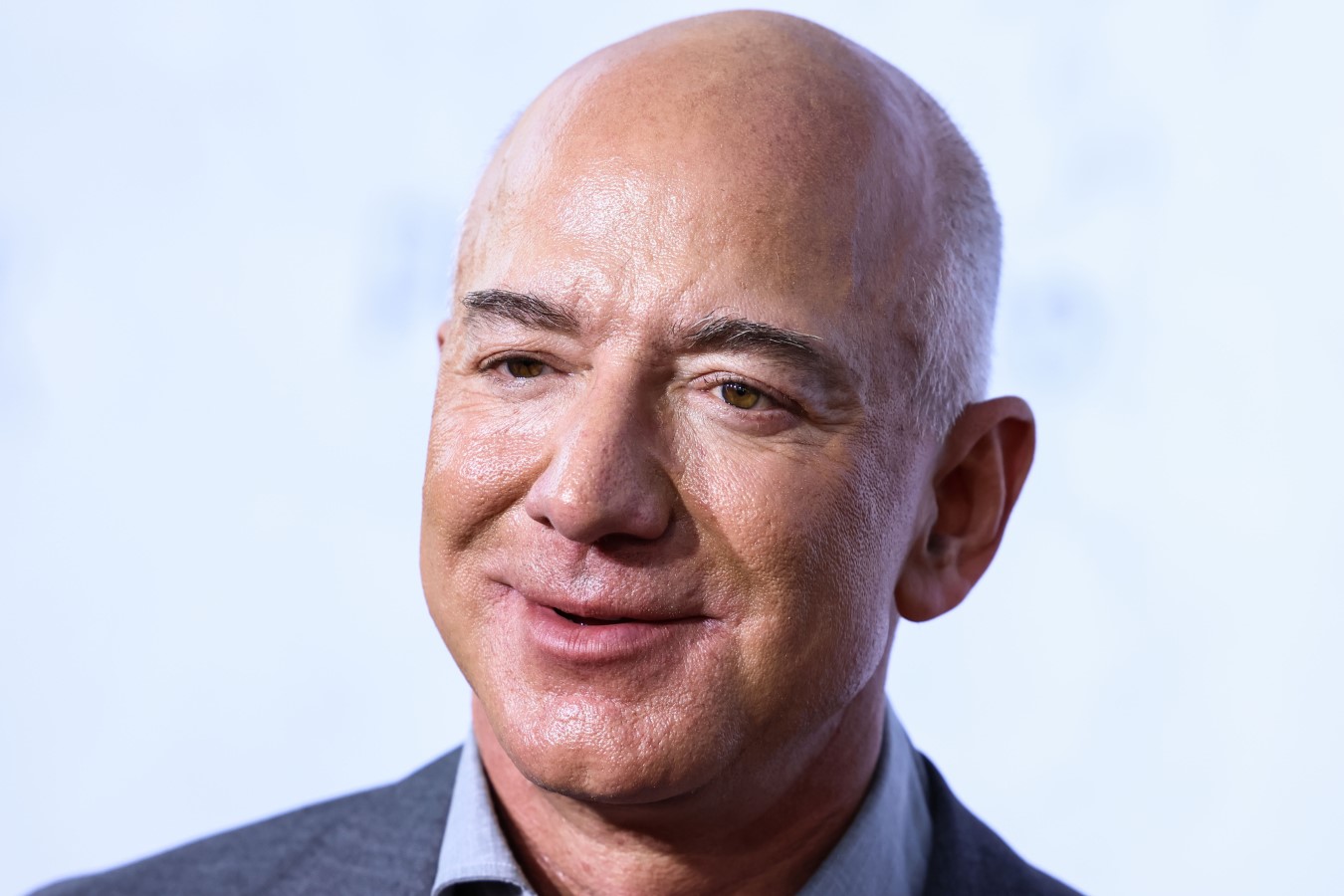
The senator specifically referenced Amazon founder Jeff Bezos and OpenAI CEO Sam Altman in her op-ed.
“If it wasn’t clear before, there’s no question in a world of AI: we need a wealth tax. Jeff Bezos and Sam Altman shouldn’t pay lower tax rates than the workers they fire.”
Warren argued that billionaire wealth tied to stock ownership and valuations allows some tech leaders to avoid paying taxes at rates comparable to ordinary wage earners.
Warren said revenue generated through AI-related taxes could be used to support expanded government programs designed to help workers displaced by automation.
“If millions of people lose their jobs to AI, we’ll need the funds to deliver universal health care so those workers are not bankrupted by a visit to the doctor,” she wrote.
She also called for increased investment in education, apprenticeships, unemployment insurance and job programs.
“If AI transforms the future of work, we’ll need to invest in free education and apprenticeships and a new jobs guarantee so that all Americans have good-paying work,” Warren added.
According to Warren, overhauling the tax code is necessary to create what she described as “a country that works for everyone.”
Warren calls for stronger AI oversight
Beyond taxation, Warren argued that lawmakers must adopt broader safeguards around AI development and deployment.
“Policymakers undoubtedly need to regulate AI and protect against its worst-case harms, like cyber attacks, which could impact our financial system and national security,” she wrote.
She also raised concerns about the financing structures behind AI investments, particularly private credit markets connected to AI deals.
“And we need greater scrutiny of the murky world of private credit that finances a big chunk of AI deals so they don’t topple our economy,” Warren wrote.
The senator framed AI taxation as one part of a wider policy response aimed at addressing economic, financial and national security risks linked to rapid technological change.
Debate over AI taxation continues among economists and lawmakers

Warren’s proposal arrives as economists, lawmakers and technology leaders increasingly debate how governments should adapt tax systems to an AI-driven economy.
Independent Sen. Bernie Sanders and Democratic Sen. Mark Kelly have also supported proposals related to taxing AI or automation.
Dario Amodei, the CEO of Anthropic, has similarly discussed taxes connected to automated labor.
OpenAI CEO Sam Altman has proposed creating a public wealth fund that would give Americans a financial stake in AI-driven economic growth. Altman has also suggested taxes tied to automation because AI could shrink the tax base supporting programs such as Social Security, Medicaid and the Supplemental Nutrition Assistance Program.
A January report from the Brookings Institution noted that governments worldwide are “grappling with how to adapt systems of taxation and public finance for an automated future.”
The report warned that poorly designed taxes could discourage innovation and reduce economic competitiveness.
“Yet without a coherent framework for evaluating these options, we risk implementing policies that could hinder innovation and undermine competitiveness while failing to address the fundamental fiscal challenges ahead,” the report stated.
Brookings researchers also suggested that governments may need to distinguish between productive investments and final AI-driven services when designing future tax systems.
Warren concluded her proposal by arguing that AI’s growth has relied heavily on public resources, scientific research and human creativity, meaning the benefits should not flow exclusively to technology companies and investors.
“AI was trained on human creativity and intelligence, AI was funded in part by federal investments in scientific research, and AI is powered by data centers that are built on American land and use our shared electric grid,” she wrote.
“The American people deserve to share in the success of this technology. And I’m willing to work with anyone to get it done.”
By linking AI taxation to concerns about automation, rising energy demand and wealth concentration, Warren is attempting to broaden the debate beyond regulation alone. Whether Congress embraces any of her proposals remains uncertain, but the Massachusetts senator argues that as AI transforms the economy, Americans should share in the technology’s gains rather than bear its costs.
Like Financial Freedom Countdown content? Be sure to follow us!
Social Security COLA forecast climbs to 4.7% as critics say current formula shortchanges seniors
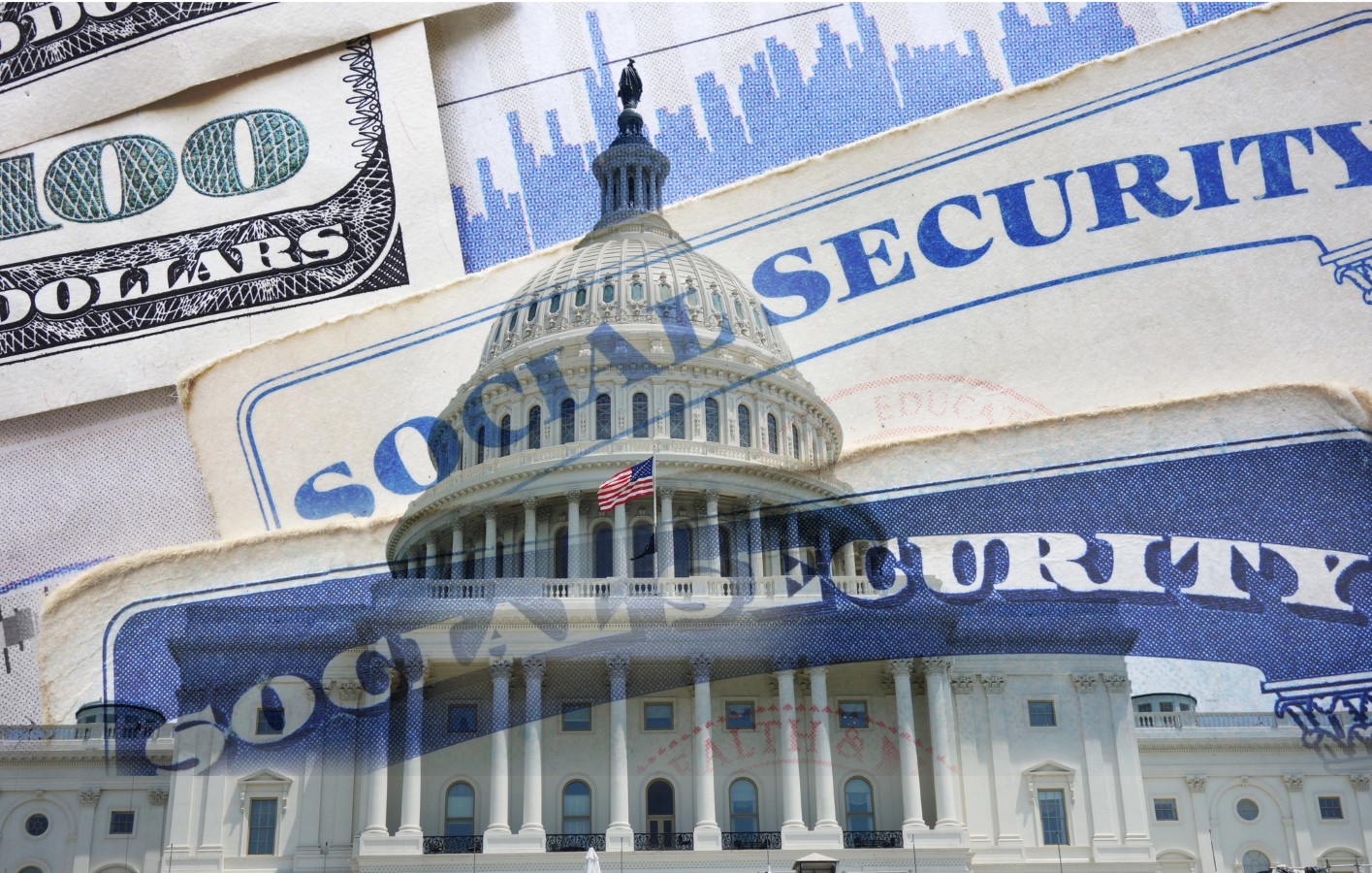
For millions of Americans who rely on Social Security, rising inflation is creating a difficult paradox. Higher prices are increasing projections for next year’s cost-of-living adjustment (COLA), but those larger benefit increases will not arrive until 2027, leaving retirees to absorb higher grocery, housing, and energy costs in the meantime. The latest estimates suggest that Social Security beneficiaries could receive one of the largest COLAs in recent years. However, concerns remain about whether the annual adjustment accurately reflects the spending patterns of older Americans and what larger benefit increases could mean for the long-term health of the program’s trust fund.
Social Security COLA forecast climbs to 4.7% as critics say current formula shortchanges seniors
We are rapidly running out of time: Four senators urge action after Social Security 22% cut confirmed for 2032

Social Security’s latest trustees report has sharpened concerns about the future of America’s largest retirement program, confirming that automatic benefit reductions are now projected within the next decade unless Congress intervenes. The findings have intensified pressure on lawmakers from both parties as voters increasingly demand a plan to preserve benefits and address the program’s long-term financing challenges. According to the newly released Social Security Trustees Report, the Old-Age and Survivors Insurance (OASI) Trust Fund will be able to pay full scheduled benefits only until the fourth quarter of 2032. Once the fund’s reserves are exhausted, ongoing payroll tax revenue would cover just 78% of promised benefits. Under current law, that shortfall would trigger an automatic 22% reduction in benefits for retirees unless Congress enacts changes before the depletion date.

Did you find this article helpful? We’d love to hear your thoughts! Leave a comment with the box on the left-hand side of the screen and share your thoughts.
Also, do you want to stay up-to-date on our latest content?
1. Follow us by clicking the [+ Follow] button above,
2. Give the article a Thumbs Up on the top-left side of the screen.
3. And lastly, if you think this information would benefit your friends and family, don’t hesitate to share it with them!

John Dealbreuin came from a third world country to the US with only $1,000 not knowing anyone; guided by an immigrant dream. In 12 years, he achieved his retirement number.
He started Financial Freedom Countdown to help everyone think differently about their financial challenges and live their best lives. John resides in the San Francisco Bay Area enjoying nature trails and weight training.
Here are his recommended tools
Personal Capital: This is a free tool John uses to track his net worth on a regular basis and as a retirement planner. It also alerts him wrt hidden fees and has a budget tracker included.
Platforms like Yieldstreet provide investment options in art, legal, real estate, structured notes, venture capital, etc. They also have fixed-income portfolios spread across multiple asset classes with a single investment with low minimums of $10,000.