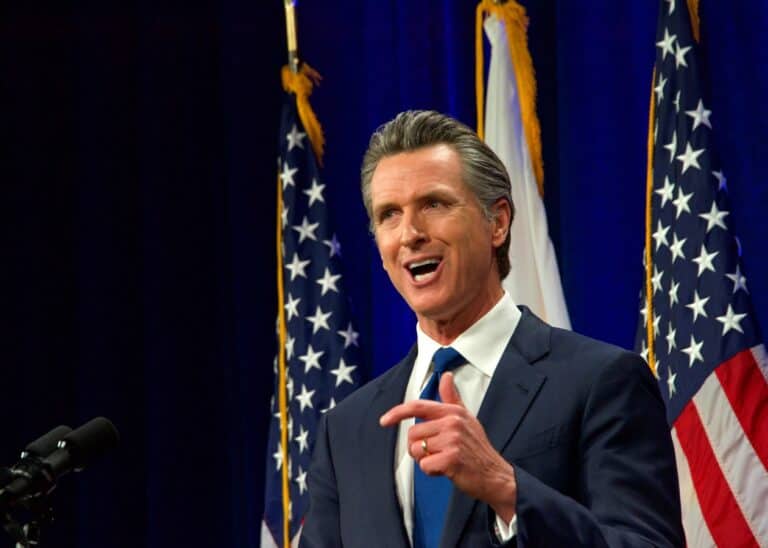
Elizabeth Warren targets BlackRock, Blackstone and KKR over data center deals and energy costs

Sen. Elizabeth Warren is seeking information from four major infrastructure investors about their data center investments, focusing on potential overlaps between electricity supply and demand as concerns grow over rising energy costs and the rapid expansion of artificial intelligence infrastructure.
Warren, a Massachusetts Democrat and ranking member of the Senate Banking Committee, sent letters to BlackRock, Blackstone Group, Brookfield Infrastructure Partners and KKR, requesting information about their data center deals.
The letters do not allege wrongdoing. Instead, they seek to examine how private equity and other large investment firms participate in an industry that is becoming increasingly important to the U.S. economy and electricity grid.
Senate inquiry focuses on data center ownership

Warren is asking the firms to provide information about investments in data center companies, including changes to their financial structures and operations. She also wants details about investments involving other businesses in the data center supply chain.
The inquiry comes as data centers become central to the AI boom, requiring large amounts of electricity to power and cool the servers behind new technologies.
A key focus of the letters is whether investment firms could have ownership interests in both data centers and utilities or other energy-related businesses operating in the same markets.
Warren requested “documentation to show your efforts to mitigate regulatory risks that accompany owning data centers” and “an explanation of how you are ensuring that your significant footprint in both energy supply and demand will not allow you to increase energy costs and exploit American people.”
The questions reflect concerns that companies with interests on both sides of the electricity market could face incentives; or create the appearance of incentives; to influence energy costs.
Private equity’s role draws new scrutiny
Private equity firms have become major players in infrastructure, including power, telecommunications and data centers. Their growing role is attracting attention as investors seek to benefit from the expanding demand for AI computing capacity.
The firms Warren contacted either declined to comment or had not responded.
The inquiry is part of a broader debate over how much influence large investment firms should have over infrastructure that affects consumers and communities.
The political debate comes as electricity prices rise in many parts of the country and utilities prepare for increased demand from data centers.
The extent to which data centers are responsible for higher consumer electricity bills remains disputed. However, their substantial power requirements have made them a frequent target for criticism from residents, consumer advocates and elected officials.
The issue also reflects a broader concern about whether the financial expectations surrounding AI can be sustained. If demand for AI services slows, some investors and policymakers are questioning what could happen to the expensive infrastructure built to support the industry.
Could an AI slowdown create risks for consumers?

One scenario raised in the discussion involves an investment firm owning both a data center and a utility in the same market. If an AI-related data center project struggled or failed because demand declined, critics worry that the utility could potentially seek higher consumer rates to offset losses.
That scenario is not an allegation that such conduct is occurring. It is part of the broader risk Warren’s inquiry appears designed to examine.
Historically, private equity firms manage portfolios through a variety of financial and operational strategies, making it difficult to assume that a particular ownership structure would automatically lead to higher consumer costs. Still, the possibility of overlapping interests is likely to remain a subject of regulatory scrutiny as investment in AI infrastructure expands.
Public opposition to data centers is growing

The debate is no longer limited to Wall Street, Washington or the technology industry. Public opposition to new data centers is spreading across the political spectrum.
A May Gallup poll found that 71% of Americans opposed building a data center in their neighborhood, compared with 53% who opposed a new nuclear power plant.
The figures highlight the growing sensitivity around facilities that can bring jobs and investment but also raise concerns about electricity use, water consumption, noise, light pollution and changes to local communities.
A July survey by independent polling group Public First found that opposition to data centers had increased among voters who supported both major-party presidential candidates in 2024.
In January, voters who said they supported Democratic nominee Kamala Harris were nearly split, with 36% supporting a data center within three miles of their home and 33% opposing one.
By July, 53% of Harris voters said they would oppose such a project, while only 22% said they would support it.
Among voters who supported Republican President Donald Trump, opposition also increased. Thirty-three percent said they would oppose a data center, up from 26% in July, while support fell nine percentage points to 34%.
Data centers become an election-year issue

The growing backlash could become a significant issue in the 2026 midterm elections. More than 200 data centers are being built in dozens of competitive House districts, according to a recent Politico analysis.
That has put politicians in both parties under pressure to address concerns about construction, electricity costs and the effects on nearby residents. Some lawmakers support tighter standards, while others are weighing the economic benefits of AI investment against public opposition.
The issue is also creating unusual political alignments, with opposition emerging among voters who otherwise disagree on technology, regulation and economic policy.
Several governors have already taken action as concerns over data center expansion intensify.
Pennsylvania Gov. Josh Shapiro, a potential Democratic presidential contender in 2028, recently signed an executive order restricting data center development in the state. He described certain developers as “predatory.”
In Texas, Republican Gov. Greg Abbott issued a pause on data center approvals and established standards covering water and electricity use, as well as quality-of-life concerns for nearby residents. Several companies agreed to follow the standards, while Abbott said another company that refused to comply had dropped its project.
New York Gov. Kathy Hochul also issued a moratorium in July on large-scale data center construction. Supporters of AI development have warned that restrictions could threaten construction jobs and slow investment, while some critics argue the measures do not go far enough.
Big Tech tries to change the narrative

Major technology companies; including Google, Meta, Amazon and Microsoft; are among the largest data center builders and are seeking a more favorable environment for continued AI expansion.
The companies have also increased efforts to persuade the public that AI will deliver broad economic benefits. Meta CEO Mark Zuckerberg launched an AI optimism campaign this summer, arguing that the technology could unlock widespread prosperity.
OpenAI has released advertisements portraying AI as a useful tool in everyday life, including examples involving cooking, dating and companionship.
But those efforts face a difficult environment. Online videos and local protests frequently highlight alleged noise, environmental impacts, property disputes and concerns about the technology’s effect on jobs.
In Michigan, residents near a data center operated by Hyperscale Data have complained about persistent noise. A homeowner’s video showing a high-pitched sound allegedly coming from the facility received million of views.
Residents launched a class-action lawsuit last month alleging excessive noise pollution. Hyperscale Data has said it remains “committed to being a good neighbor” and is working to reduce sound levels.
Social media posts have highlighted taking homes through eminent domain to expand power lines supporting data center projects.
Other videos have shown residents protesting projects that would replace local parks.
The political fight over AI infrastructure is just beginning

Warren’s letters underscore how the data center debate is moving beyond questions of technology and investment into issues of market power, consumer protection and infrastructure ownership.
As AI companies and investors commit billions of dollars to new facilities, scrutiny of who owns those assets; and how they interact with utilities and regulators; is likely to increase.
The backlash could also shape the future of AI development in the U.S. While supporters argue that data centers will bring jobs, investment and technological leadership, opponents increasingly question whether the benefits justify the costs to electricity systems and local communities.
For Warren and other policymakers, the challenge will be to determine how to encourage innovation without allowing the rapid expansion of AI infrastructure to create new risks for consumers.
Like Financial Freedom Countdown content? Be sure to follow us!
14 essential strategies to maximize your Social Security and avoid costly mistakes

Social Security is a vital lifeline for many seniors, providing crucial income support during retirement. With inflation at its highest in four decades, Social Security’s inflation-adjusted benefits offer protection against rising costs.
Rising interest rates have disrupted many retirement portfolios, causing bond fund values to plummet. In this volatile financial landscape, Social Security can stabilize a typical stock-bond retirement portfolio. By implementing smart strategies, retirees can maximize their Social Security benefits and ensure a more secure financial future.
14 Essential Strategies to Maximize Your Social Security and Avoid Costly Mistakes
11 reasons you should claim Social Security early

Deciding when to claim Social Security is often about maximizing your benefit. Financial planners usually advise delaying your claim for as long as possible to secure the highest monthly payment. Your benefit is based on your lifetime earnings, with a full payout available at your full retirement age (FRA), which is currently between 66 and 67 depending on your birth year. Claiming before FRA results in a permanent reduction in your monthly benefit, while waiting beyond FRA leads to a permanent increase. However, the decision isn’t solely about maximizing the monthly check. Personal factors such as health, family circumstances, and financial needs can play a significant role in determining the right time to claim.
11 Reasons You Should Claim Social Security Early

Did you find this article helpful? We’d love to hear your thoughts! Leave a comment with the box on the left-hand side of the screen and share your thoughts.
Also, do you want to stay up-to-date on our latest content?
1. Follow us by clicking the [+ Follow] button above,
2. Give the article a Thumbs Up on the top-left side of the screen.
3. And lastly, if you think this information would benefit your friends and family, don’t hesitate to share it with them!

John Dealbreuin came from a third world country to the US with only $1,000 not knowing anyone; guided by an immigrant dream. In 12 years, he achieved his retirement number.
He started Financial Freedom Countdown to help everyone think differently about their financial challenges and live their best lives. John resides in the San Francisco Bay Area enjoying nature trails and weight training.
Here are his recommended tools
Personal Capital: This is a free tool John uses to track his net worth on a regular basis and as a retirement planner. It also alerts him wrt hidden fees and has a budget tracker included.
Platforms like Yieldstreet provide investment options in art, legal, real estate, structured notes, venture capital, etc. They also have fixed-income portfolios spread across multiple asset classes with a single investment with low minimums of $10,000.