
Gavin Newsom defends California tire rules as Steve Hilton vows to shut down agency behind them

California Gov. Gavin Newsom is defending the state’s controversial new tire replacement rules, arguing they will ultimately save drivers money despite warnings from industry groups and Republican critics that the regulations could make replacement tires substantially more expensive.
The rules, approved Monday by the California Energy Commission, will phase out replacement tires that fail to meet new energy-efficiency standards. The regulations are expected to affect roughly 70% of replacement tires currently on the market, setting up a major change for California drivers by 2029.
Speaking at a Bay Area press conference Wednesday, Newsom pushed back against criticism that the regulations would increase the cost of maintaining a vehicle.
“The ROI is pretty good,” Newsom claimed, referring to Democrats’ arguments that the rules, which mandate lower-resistance tires, will translate to cars using less gas or electricity from better mileage.
California officials have pointed to estimates from the California Energy Commission that the new standards could save drivers nearly $1 billion annually in fuel and electricity costs. The argument is that tires requiring less energy to roll will improve vehicle efficiency and reduce the amount drivers spend at the pump or on electricity.
“Back to just facts, save a billion dollars a year in fuel,” Newsom said. “You talk about an affordability agenda, that makes some sense to me.”
The regulations target tire rolling resistance

At the center of the controversy is “rolling resistance,” or the amount of energy required to keep a tire moving along the road.
The California rules are designed to encourage or require tires with lower rolling resistance, which state officials say can improve vehicle efficiency. The standards apply to replacement tires, meaning the policy could affect Californians when they replace worn-out tires rather than when they purchase a new vehicle.
“It’d be wise to take advantage of new, efficient tires, lower your cost at the pump,” Newsom added. “From a consumer perspective, the savings is self-evident, so I think it was a good choice in that respect.”
The state argues that even if more efficient tires cost more initially, drivers could recoup those costs through lower fuel or electricity consumption over time.
The biggest concern from opponents is the upfront price of replacement tires.
The Tire Industry Association has warned that average tire prices could rise from about $81 to as much as $157 under the new requirements. For a driver purchasing four tires at once, that could translate into a difference of more than $300 per vehicle.
Critics argue that the scale of the change could make the transition particularly expensive because roughly 70% of replacement tires currently available could eventually be affected.
The industry has also raised questions about how manufacturers will adapt their product lines, how compliance will be tested and whether smaller tire companies could face additional challenges.
Newsom says the rules were years in the making
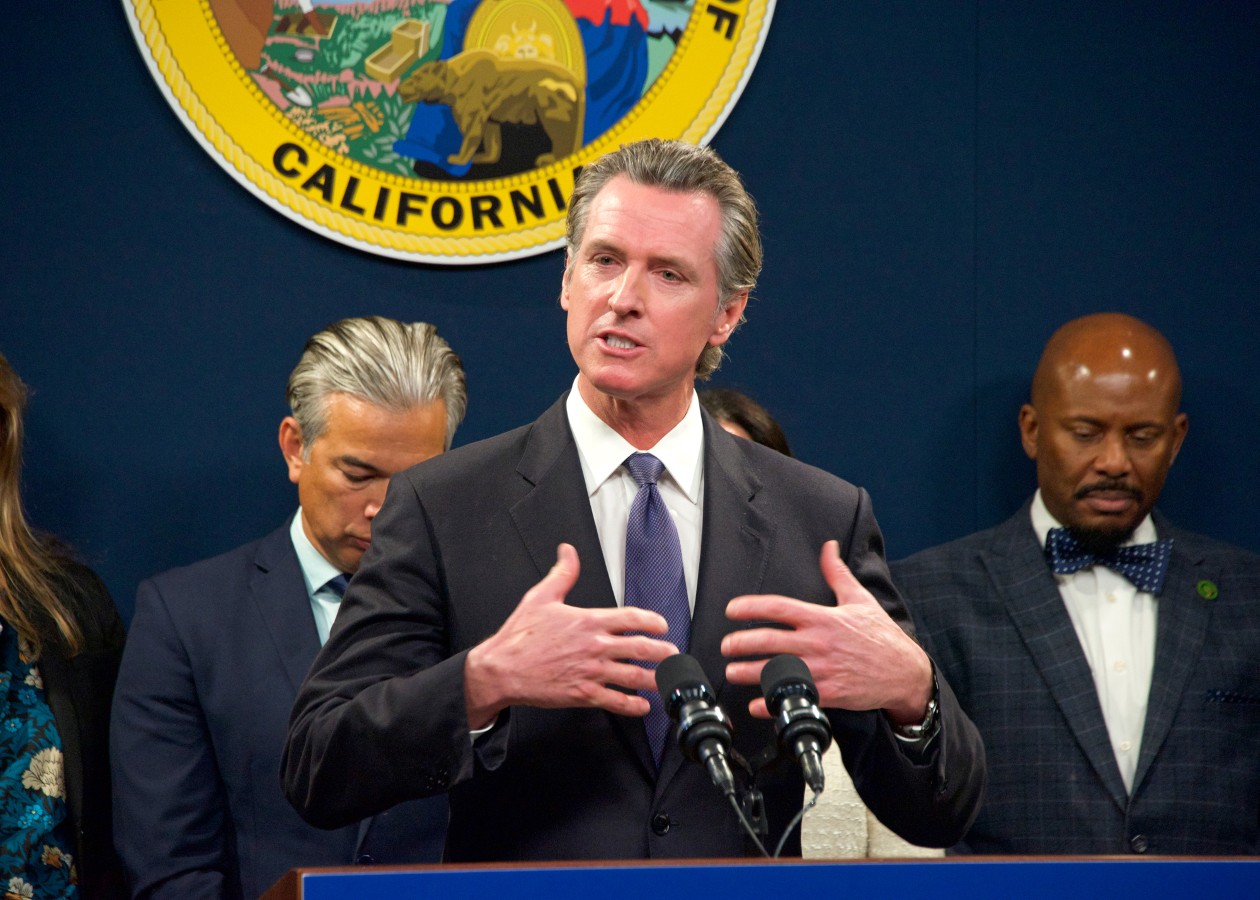
Newsom emphasized that the new standards were not developed overnight.
The governor said the rulemaking process had been underway for years and claimed that nearly all major tire manufacturers supported the effort, apparently excluding Goodyear, which has been one of the industry’s most prominent opponents.
Other manufacturers, including Michelin, did not oppose the rules but expressed concerns about enforcement, testing methods and the possibility that smaller manufacturers could be disadvantaged.
The debate therefore extends beyond the question of whether lower-resistance tires can save energy. It also involves how quickly the tire industry can transition and who ultimately absorbs the costs associated with meeting the new standards.
Republicans accuse Newsom of making affordability worse
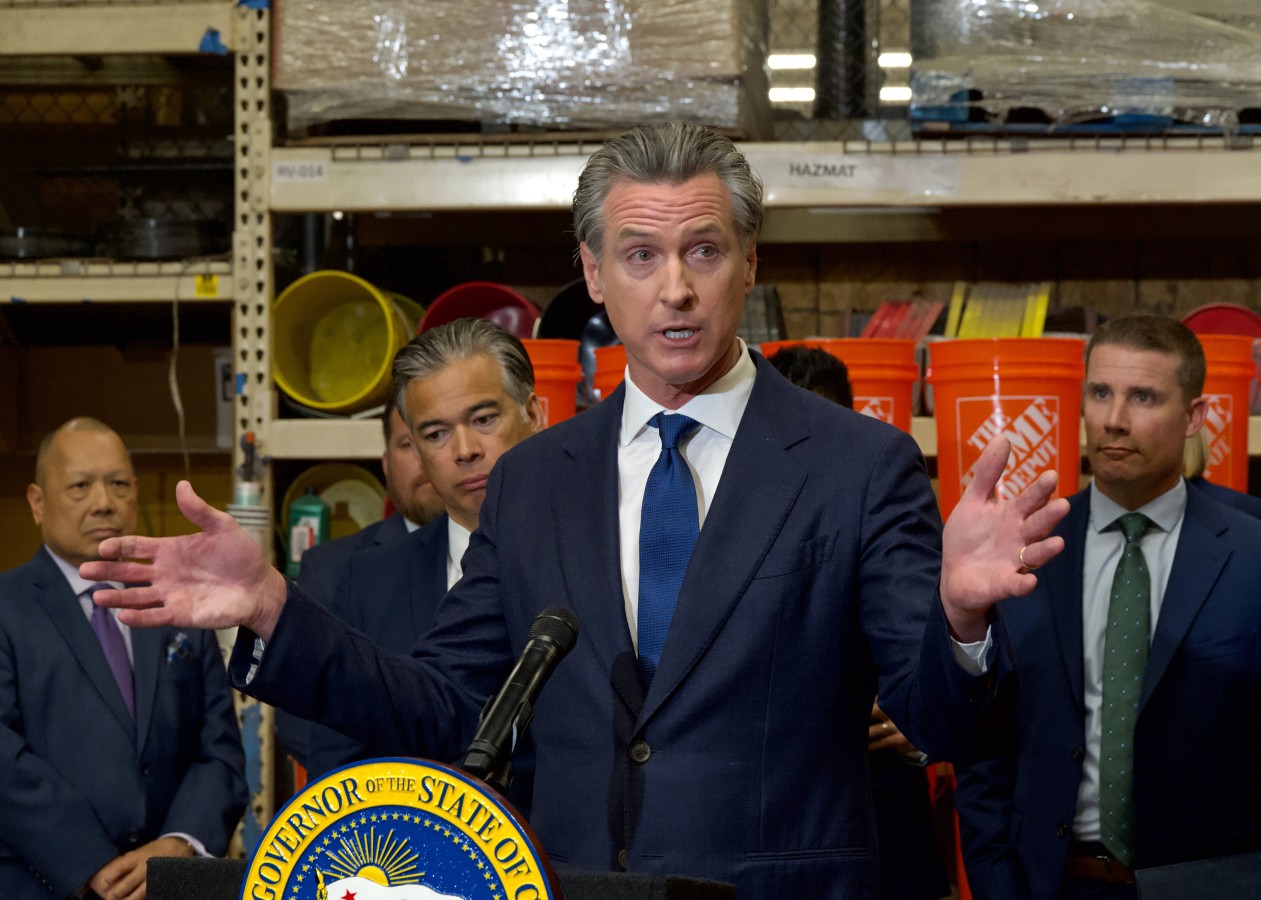
Republicans have sharply criticized Newsom’s affordability argument, saying California drivers are already dealing with elevated transportation costs.
Opponents have argued that the state has not sufficiently addressed other factors contributing to high gasoline prices, including taxes and environmental requirements governing gasoline blends.
Former Los Angeles mayoral candidate Spencer Pratt attacked the broader approach, saying, “See the magic trick? They deliberately make your gas prices more expensive, to compel you to stop driving. Then they use the artificially high cost of fuel to impose further regulations and higher tire costs on you,”
The criticism reflects a broader political fight over California’s environmental policies, with Republicans arguing that regulations intended to reduce emissions can have the unintended consequence of increasing household expenses.
Steve Hilton vows to eliminate the Energy Commission

Republican gubernatorial candidate Steve Hilton has made the tire regulations a major target of his campaign.
At a Sacramento press conference Thursday, Hilton blasted the California Energy Commission and promised to eliminate the agency if elected.
“When I am in office, we are going to have affordable, reliable energy in California that is as green as we can possibly make it. That’s what’s going to happen,” Hilton said.
“Instead of what they’re doing now, which is fake green energy that’s gouging every California family and business.”
Hilton has argued that the tire standards represent regulatory overreach and that the resulting costs could hit families and businesses already struggling with California’s high cost of living.
Hilton also singled out Energy Commissioner Nancy Skinner, who he said played a key role in developing the tire standards.
“We are going to fire the tyrant Nancy Skinner!” Hilton said. “Nancy Skinner is a political hack. She has no business in that seat.”
Skinner was appointed by Newsom last year and previously served as a Democratic state senator representing Berkeley, where she worked on environmental legislation. She is listed as the agency board’s engineer/scientist member.
Skinner has defended the tire rules as part of an effort to make transportation more affordable by reducing energy consumption.
“If we can bring each Californian’s gas cost down just a little bit, then why wouldn’t we?” she had told KCRA.
“We have more regulators and bureaucrats on energy and electricity in California than any other state,” said Hilton, who noted the California Air Resources Board and Public Utilities Commission are other state agencies that also regulate around the issue.
“Enough with all this bureaucracy. We are going to shut it down,” he said.
Such a proposal would likely face resistance from California’s Democrat-controlled legislature. Hilton said he would seek to “defund” the commission by using his line-item veto power to eliminate funding for the agency from the state budget.
Still, Democratic lawmakers could potentially override such a veto.
“Let them make the case for this outrageous waste of money bureaucracy, and let them justify it,” Hilton said. “I’d love to see them try.”
Hilton said he recognizes that California needs reasonable energy regulations, but argued that the state has gone well beyond what is necessary.
“They’ll play every trick in the book to try and stop me bringing common sense to our government and to save money,” Hilton said. “We’ll be prepared. We’ll win because we are right, and the people have had enough of all this nonsense.”
The fight could become a larger test of California’s energy policy

The dispute over replacement tires has quickly expanded into a larger argument about the direction of California’s environmental and energy policies.
Newsom and state regulators maintain that higher-efficiency tires can reduce fuel and electricity consumption enough to produce meaningful savings for consumers. Critics counter that drivers will face higher upfront costs and question whether projected savings will offset those expenses.
The new standards are expected to reshape the replacement-tire market as manufacturers work toward compliance. With the rules targeting a large share of products currently available, the transition could affect millions of California drivers when they eventually need new tires.
For Newsom, the issue also presents a political test: whether California can impose tougher environmental standards while convincing residents that the changes will lower rather than raise their household costs. For opponents such as Hilton, the tire rules provide another example of what they describe as California’s broader affordability and regulatory problems.
Like Financial Freedom Countdown content? Be sure to follow us!
14 essential strategies to maximize your Social Security and avoid costly mistakes

Social Security is a vital lifeline for many seniors, providing crucial income support during retirement. With inflation at its highest in four decades, Social Security’s inflation-adjusted benefits offer protection against rising costs.
Rising interest rates have disrupted many retirement portfolios, causing bond fund values to plummet. In this volatile financial landscape, Social Security can stabilize a typical stock-bond retirement portfolio. By implementing smart strategies, retirees can maximize their Social Security benefits and ensure a more secure financial future.
14 Essential Strategies to Maximize Your Social Security and Avoid Costly Mistakes
11 reasons you should claim Social Security early

Deciding when to claim Social Security is often about maximizing your benefit. Financial planners usually advise delaying your claim for as long as possible to secure the highest monthly payment. Your benefit is based on your lifetime earnings, with a full payout available at your full retirement age (FRA), which is currently between 66 and 67 depending on your birth year. Claiming before FRA results in a permanent reduction in your monthly benefit, while waiting beyond FRA leads to a permanent increase. However, the decision isn’t solely about maximizing the monthly check. Personal factors such as health, family circumstances, and financial needs can play a significant role in determining the right time to claim.
11 Reasons You Should Claim Social Security Early

Did you find this article helpful? We’d love to hear your thoughts! Leave a comment with the box on the left-hand side of the screen and share your thoughts.
Also, do you want to stay up-to-date on our latest content?
1. Follow us by clicking the [+ Follow] button above,
2. Give the article a Thumbs Up on the top-left side of the screen.
3. And lastly, if you think this information would benefit your friends and family, don’t hesitate to share it with them!

John Dealbreuin came from a third world country to the US with only $1,000 not knowing anyone; guided by an immigrant dream. In 12 years, he achieved his retirement number.
He started Financial Freedom Countdown to help everyone think differently about their financial challenges and live their best lives. John resides in the San Francisco Bay Area enjoying nature trails and weight training.
Here are his recommended tools
Personal Capital: This is a free tool John uses to track his net worth on a regular basis and as a retirement planner. It also alerts him wrt hidden fees and has a budget tracker included.
Platforms like Yieldstreet provide investment options in art, legal, real estate, structured notes, venture capital, etc. They also have fixed-income portfolios spread across multiple asset classes with a single investment with low minimums of $10,000.