Sergey Brin crosses $100 million fighting California wealth tax as Mark Cuban and Gavin Newsom oppose Ro Khanna’s plan
Some of Silicon Valley’s most recognizable billionaires are putting millions of dollars behind the campaign to defeat California’s Proposition 40, a ballot measure that would impose a one-time 5% tax on the wealth of people and trusts worth more than $1 billion.
Campaign finance records show Palantir cofounder Peter Thiel, crypto billionaire Chris Larsen, Google cofounder Sergey Brin and longtime venture capitalist John Doerr have all backed political committees opposing the proposal. The fight has intensified as billionaire investors warn the tax could push entrepreneurs, capital and businesses out of California, while supporters argue it would raise roughly $100 billion over five years for health care and other public programs.
The opposition campaign has attracted substantial financial support from some of California’s wealthiest technology and investment figures.
Larsen gave $5 million to Golden State Promise, a committee opposing Proposition 40, while Ripple Labs, the company he cofounded, contributed another $5 million. A separate committee representing teachers, doctors and small businesses received $5 million from Building a Better California, whose leading donors include Brin and Doerr.
Golden State Promise also received $450,000 from the California Business Roundtable Issues PAC. Thiel is among that PAC’s top donors and has contributed $3 million to the organization.
The spending illustrates the enormous financial stakes surrounding a measure that would apply to only a small number of California residents but could generate a historic amount of revenue for the state.
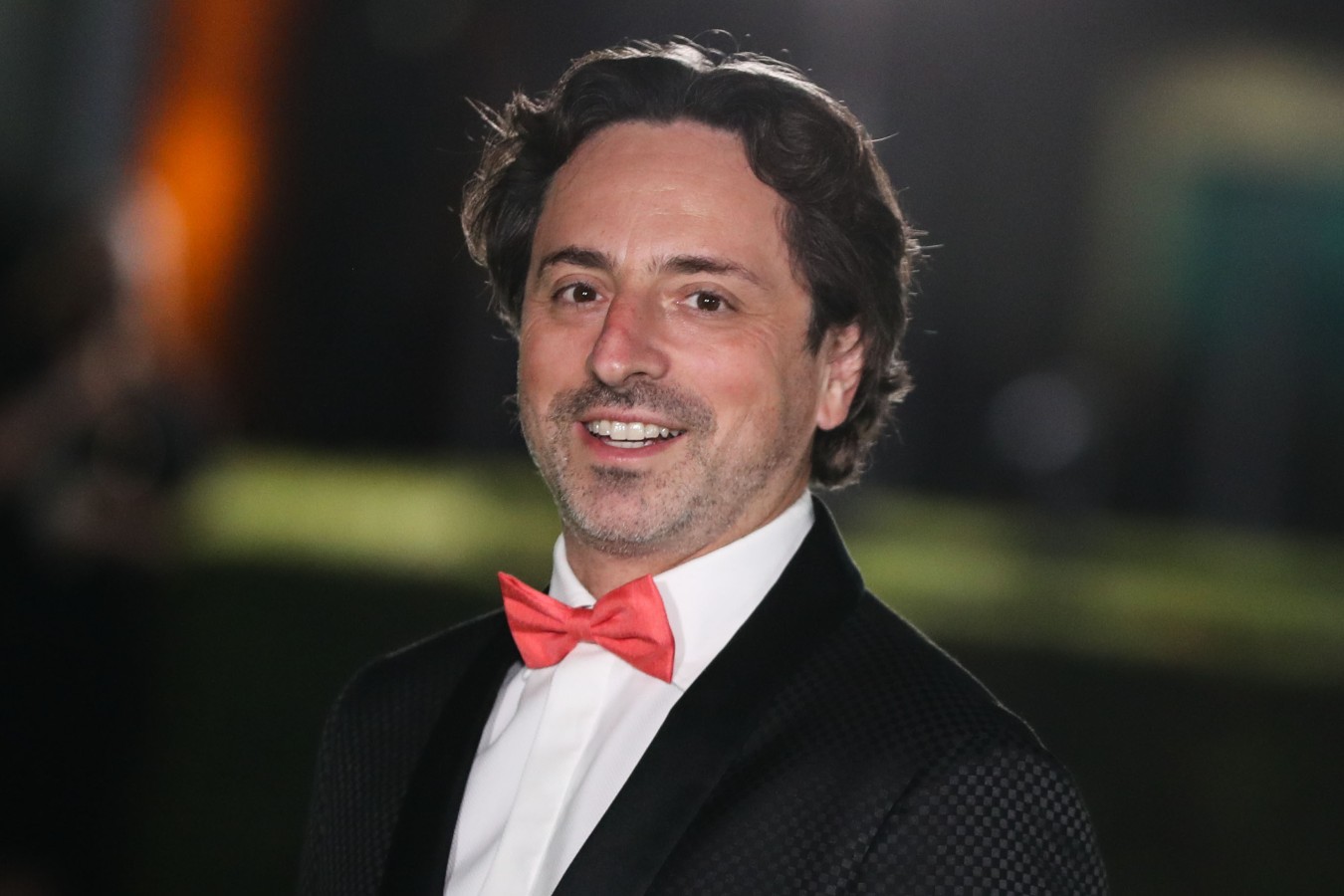
Brin has emerged as one of the largest individual financial opponents of Proposition 40.
According to a recent filing, Brin donated another $20 million to Building a Better California, bringing his total contributions to the organization to $102 million. The group opposes the billionaire tax while supporting other pro-business policies, including measures involving housing and infrastructure affordability.
The potential financial exposure is significant for Brin. With a reported net worth approaching $270 billion, a 5% assessment could result in a tax bill exceeding $13 billion.
Brin has also taken steps that reduce his formal ties to California. State records now list Nevada as his residence, while he reportedly purchased a $51 million home near Miami Beach earlier this year.
Proposition 40 could raise $100 billion for California

Proposition 40 would impose a one-time tax of 5% on the covered wealth of California billionaires. Estimates cited by experts project that the measure could raise approximately $100 billion over five years.
Under the proposal, 90% of the revenue would go toward health care, while the remaining funds would support food assistance and education-related programs, along with administration.
The size of the potential liability becomes clear when looking at individual fortunes. Someone with $1.1 billion in taxable wealth could face a $55 million liability under a 5% assessment.
For billionaires who oppose the measure, defeating Proposition 40 would therefore mean avoiding potentially enormous tax bills while preserving the existing structure of California’s tax system.
Mark Cuban and Ro Khanna clash over startup wealth

The financial campaign has coincided with a highly public dispute between billionaire entrepreneur Mark Cuban and Rep. Ro Khanna, D-Calif., over whether the tax would damage California’s technology industry.
Cuban argues that startup founders can become billionaires on paper because of soaring company valuations without having enough cash to pay a tax based on their net worth.
“They are the definition of cash poor, stock rich.”
Cuban warned that the problem could discourage entrepreneurs from building companies in California and change where investors deploy their money.
“If this passes, only idiot startup founders stay in Cali,” Cuban wrote on X.
He later went further, saying, “I will make NOT being in California a pre requisite for an investment.”
The opposition to Proposition 40 comes as several wealthy individuals have already reduced their connections to California.
Thiel officially cut ties with California in 2025. Brin has moved his residence to Nevada, while Google cofounder Larry Page has shifted several business and nonprofit entities out of California, including his family office, Koop, which was incorporated in Delaware.
Other billionaires reportedly expected to leave or already preparing to leave include Page, Thiel, Don Hankey, former Uber CEO Travis Kalanick and director Steven Spielberg.
The possibility of wealthy residents leaving has become one of the central arguments against Proposition 40. Opponents say the state could lose future income, investment and entrepreneurial activity if its wealthiest residents relocate.
Khanna proposes loans for founders with illiquid wealth

Khanna has argued that the concerns raised by Cuban primarily apply to a smaller group of billionaires whose wealth is tied up in private companies rather than publicly traded securities.
His proposed solution would allow founders to pledge shares in their companies as collateral for a nonrecourse government loan that could be used to pay the tax. Under the concept, the loan could remain outstanding for roughly 10 years.
At the end of that period, the founder could repay the government in cash or the government could take possession of the pledged shares. Because the loan would be nonrecourse, the founder would not personally remain liable if the company failed.
“The government would still collect from the vast majority of billionaires who are not illiquid,” Khanna wrote.
Khanna has also argued that 72% of billionaire wealth is held in public stock, meaning the proposed financing mechanism would primarily address the relatively narrow category of founders whose fortunes are concentrated in private-company holdings.
Cuban strongly rejected the proposed government-backed financing arrangement.
“Ro, that’s insane,” he wrote.
His objection centers on the mechanics of the proposal. California would effectively lend money to a founder, the founder would immediately use that money to pay the state tax, and the state could eventually become an owner of part of a private company if the loan could not be repaid.
Cuban warned that such an arrangement could create uncertainty for private companies and their investors.
“If this passes, only idiot startup founders stay in Cali,” Cuban wrote. “I’ve done it before and will do it again. Dallas. Pittsburgh. Indiana. I will make NOT being in California a prerequisite for an investment.”
Khanna, meanwhile, has argued that the policy is ultimately about requiring billionaires to contribute more toward public services.
“Most say, I promise you, why only 5 percent?” Khanna wrote after challenging Cuban to travel around California and other states to ask Americans how they view a billionaire tax.
Cuban responded: “You don’t understand business Ro.”
Gavin Newsom also opposes the billionaire tax
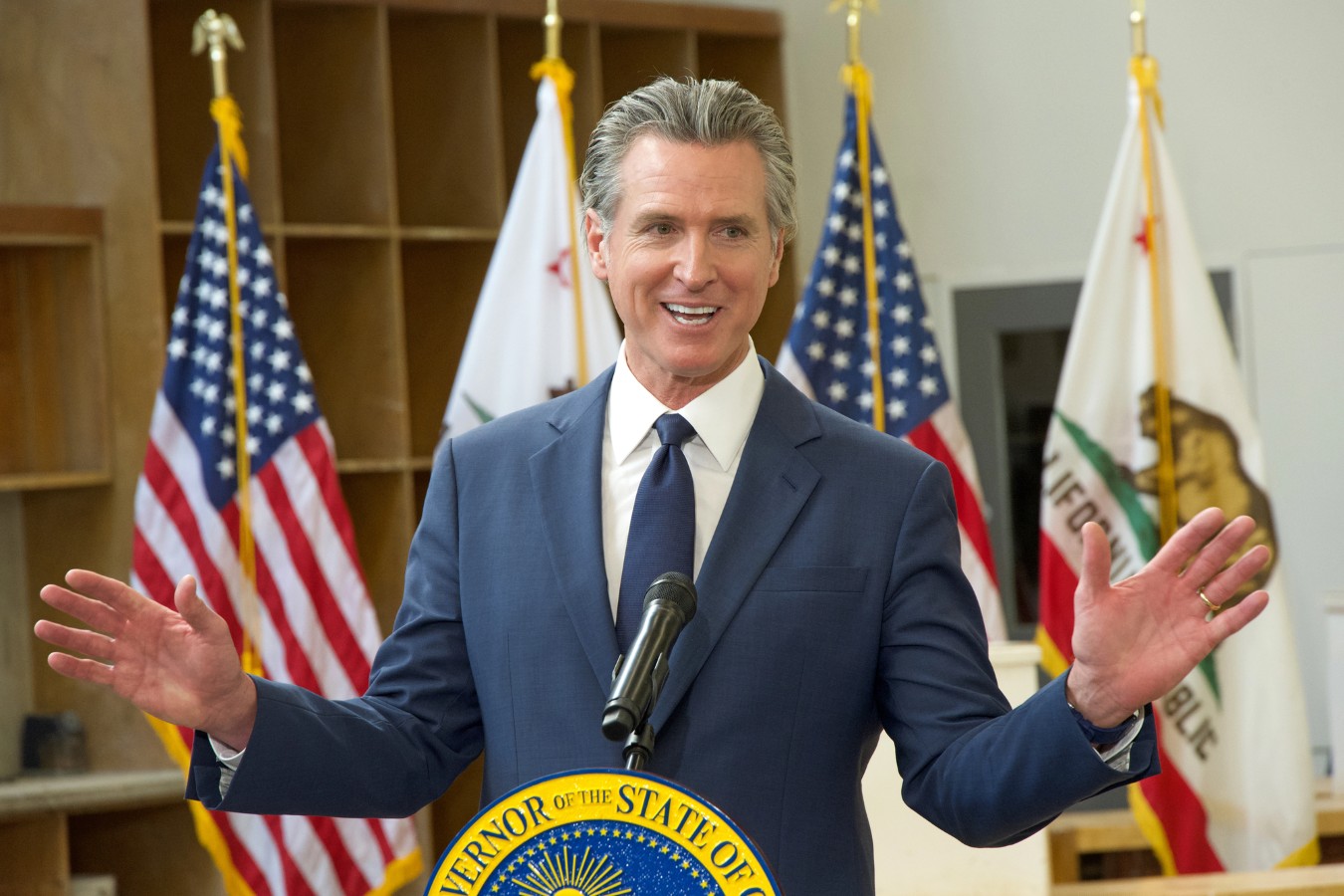
The opposition campaign includes an unusual political alignment. While Proposition 40 has backing from the California Democratic Party and labor groups, Democratic Gov. Gavin Newsom has argued that the measure could ultimately weaken the state’s tax base.
“The fact is it actually will reduce investments in education,” Newsom said. “It will reduce investments in teachers and librarians, childcare. It will reduce investments in firefighting and police.”
Newsom has warned that wealthy residents could respond to the tax by leaving California, potentially reducing the revenue available for public programs.
That argument puts Newsom at odds with supporters such as Khanna, who has made the billionaire tax a central part of his effort to increase funding for health care and other programs.
Researchers dispute how much a billionaire exodus could cost
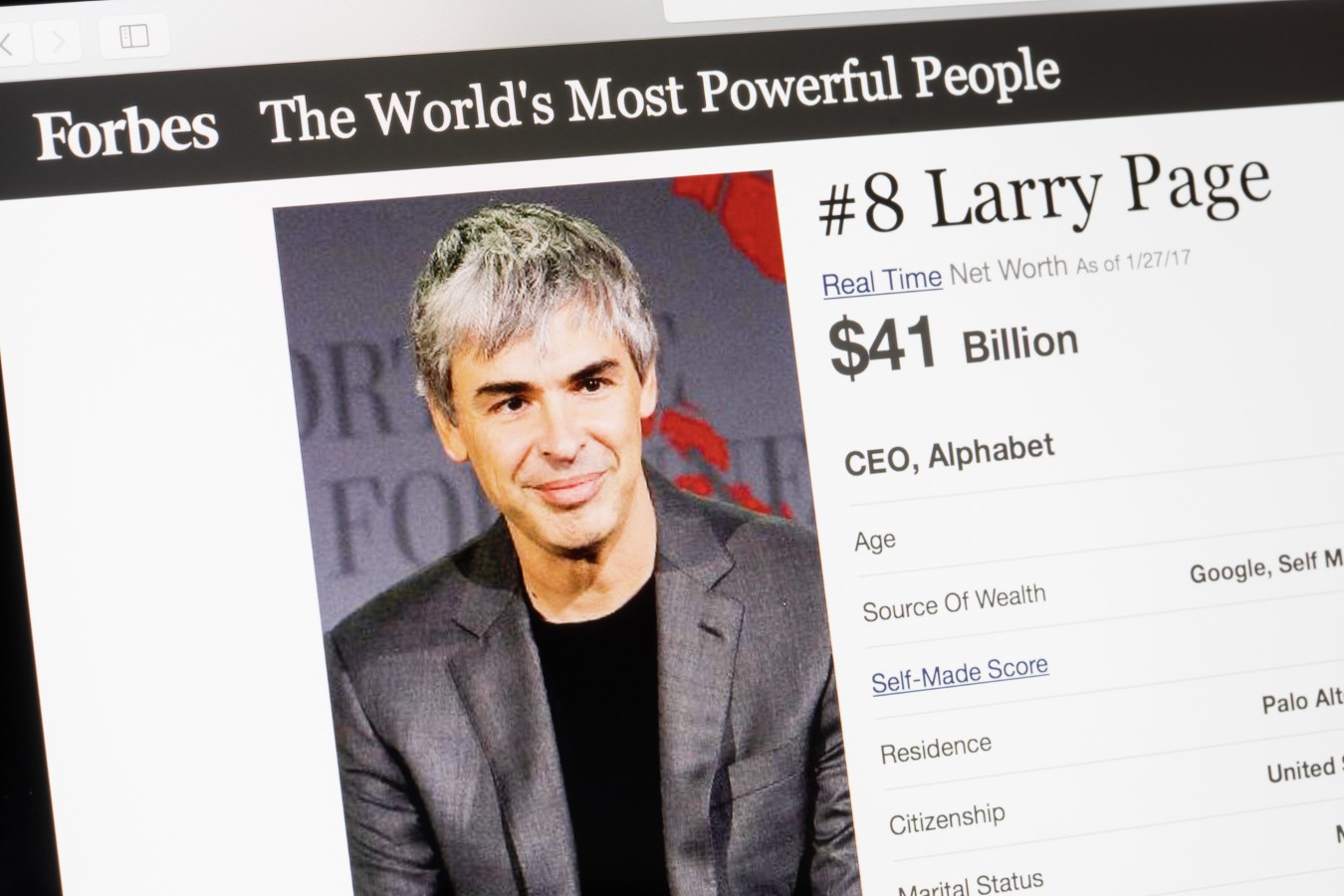
The debate over whether wealthy residents would leave California has also produced competing estimates about the fiscal consequences.
Six billionaires expected to leave California; Brin, Page, Thiel, Hankey, Kalanick and Spielberg; could collectively account for an estimated $27 billion in tax revenue, according to figures cited by proponents. That would represent roughly one-fourth of the $100 billion Proposition 40 is projected to raise.
But a National Bureau of Economic Research working paper offered a different perspective on the potential impact of an exodus.
The paper noted that California billionaires paid approximately $4.1 billion in income taxes in the previous year, equal to about 0.2% of their collective $2 trillion net worth. Based on those figures, the researchers estimated that it could take roughly 25 years of lost income-tax revenue to offset the $100 billion that Proposition 40 could raise.
Even if one-quarter of the state’s billionaires left, the researchers estimated that the lost income-tax revenue could take about a century to equal the projected Proposition 40 proceeds.
“The proposed one-off California billionaire tax of 5%, payable over five years, is both small relative to California billionaires’ wealth gains and large relative to the taxes they currently pay,” the authors wrote.
Emmanuel Saez, director of UC Berkeley’s James M. and Cathleen D. Stone Center on Wealth and Income Inequality and a co-author of an expert report supporting Proposition 40, has argued that founders with illiquid wealth could use a deferral mechanism.
Saez said founders without enough cash to immediately pay the tax could “use a deferral option,” paying 5% of “whatever proceeds they take out of their business (as dividends or sales of stock) moving forward.”
“If the business fails, they won’t have to pay anything,” Saez said. “If the business succeeds, they’ll have to pay 5% of that success eventually.”
Supporters therefore characterize Proposition 40 as a manageable one-time assessment on a small group of extremely wealthy Californians, while opponents view it as a precedent that could make the state less attractive to entrepreneurs and investors.
California’s wealth tax fight goes beyond Proposition 40
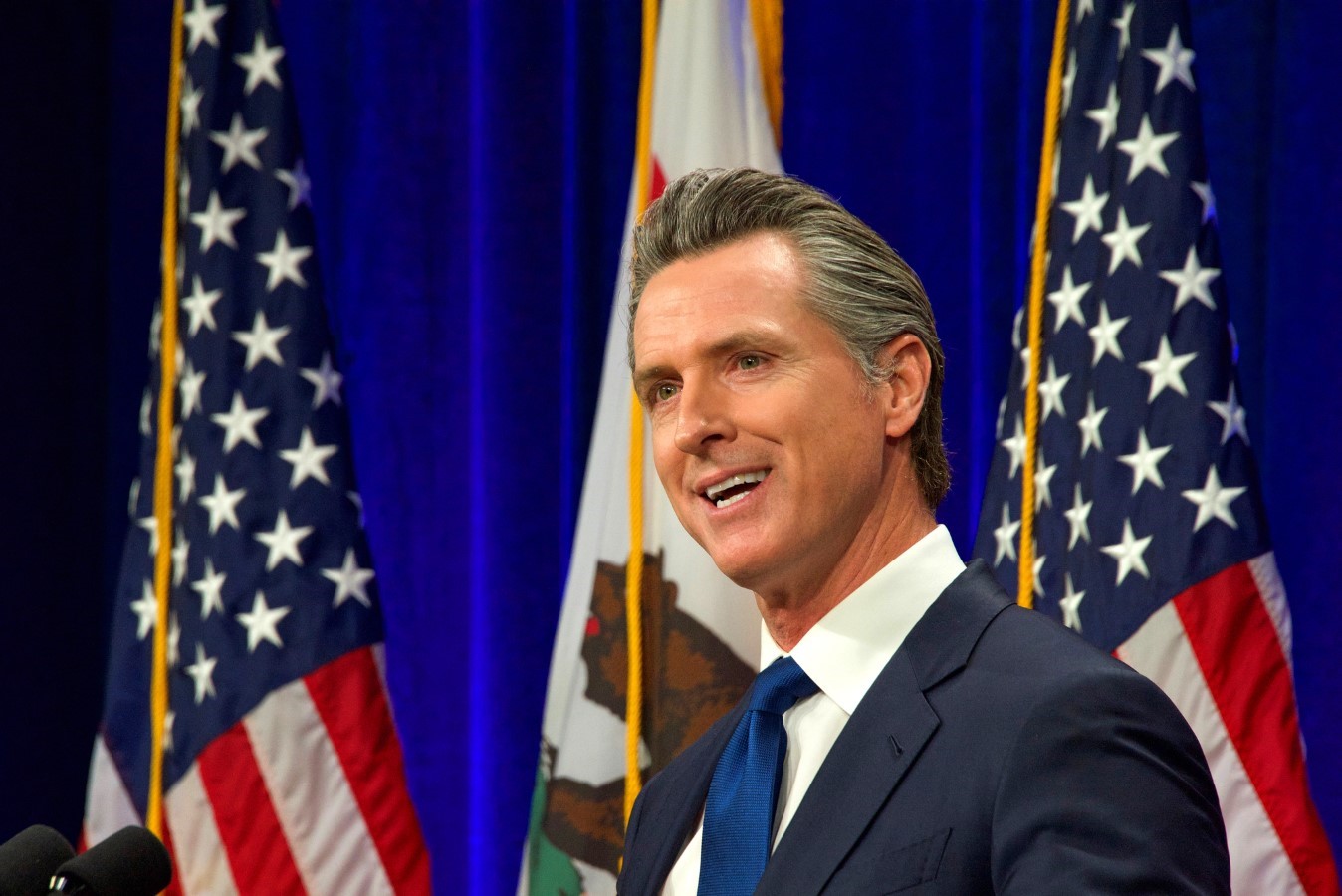
The dispute is increasingly becoming a broader argument about taxation, entrepreneurship and California’s economic model.
California has an economy of roughly $4 trillion, but it also faces significant income inequality and a high cost of living. The state has become a focal point for the debate over the K-shaped economy, in which wealthier households and those with fewer resources experience sharply different economic outcomes.
Khanna has sought to take the debate beyond California. In March, he and Sen. Bernie Sanders, I-Vt., introduced federal legislation proposing an annual 5% wealth tax on Americans worth more than $1 billion, with some proceeds earmarked for $3,000 payments to lower- and middle-income households.
For California voters, however, the immediate question will be whether to approve Proposition 40 in November.
The measure has turned into a high-dollar battle involving billionaires, venture capitalists, technology executives, labor groups and political leaders. With more than $100 million already committed by Brin alone and millions more coming from other prominent technology and investment figures, the campaign against the tax is demonstrating just how much is at stake for the people it would target; and for the state seeking the revenue.
California’s vote could become a test case for whether Democrats can sell a billionaire wealth tax nationally, putting potential 2028 rivals Gavin Newsom and Ro Khanna on opposite sides of the issue.
Like Financial Freedom Countdown content? Be sure to follow us!
14 essential strategies to maximize your Social Security and avoid costly mistakes

Social Security is a vital lifeline for many seniors, providing crucial income support during retirement. With inflation at its highest in four decades, Social Security’s inflation-adjusted benefits offer protection against rising costs.
Rising interest rates have disrupted many retirement portfolios, causing bond fund values to plummet. In this volatile financial landscape, Social Security can stabilize a typical stock-bond retirement portfolio. By implementing smart strategies, retirees can maximize their Social Security benefits and ensure a more secure financial future.
14 Essential Strategies to Maximize Your Social Security and Avoid Costly Mistakes

Did you find this article helpful? We’d love to hear your thoughts! Leave a comment with the box on the left-hand side of the screen and share your thoughts.
Also, do you want to stay up-to-date on our latest content?
1. Follow us by clicking the [+ Follow] button above,
2. Give the article a Thumbs Up on the top-left side of the screen.
3. And lastly, if you think this information would benefit your friends and family, don’t hesitate to share it with them!

John Dealbreuin came from a third world country to the US with only $1,000 not knowing anyone; guided by an immigrant dream. In 12 years, he achieved his retirement number.
He started Financial Freedom Countdown to help everyone think differently about their financial challenges and live their best lives. John resides in the San Francisco Bay Area enjoying nature trails and weight training.
Here are his recommended tools
Personal Capital: This is a free tool John uses to track his net worth on a regular basis and as a retirement planner. It also alerts him wrt hidden fees and has a budget tracker included.
Platforms like Yieldstreet provide investment options in art, legal, real estate, structured notes, venture capital, etc. They also have fixed-income portfolios spread across multiple asset classes with a single investment with low minimums of $10,000.