Jeff Bezos torches progressive tax plans: “When you don’t know how to solve a problem, create a villain”
Amazon founder Jeff Bezos recently directed sharp criticism at the fiscal management of the New York City public school system. During an interview on CNBC, Bezos spotlighted the massive $43 billion budget poured into the city’s education infrastructure. He argued that the staggering levels of capital are being undermined by operational mismanagement and administrative inefficiencies rather than a lack of available funding.
Bezos supported his criticism by referencing specific per-pupil spending metrics across different regions, noting that New York City allocates roughly $44,000 per student. “That’s 30% more per student than other big cities like Chicago, LA, and Boston, and it’s three times more than Miami and Houston,” he observed. He added that despite this immense financial premium, “And by the way, New York City doesn’t get better outcomes.”
How Amazon would operate under the city’s management model
Drawing from his experience building one of the world’s most sophisticated logistical empires, Bezos claimed that any commercial enterprise would face ruin if it mimicked the operational workflows found in New York City’s public institutions. He pointed out that efficient execution requires addressing root operational issues rather than continuously demanding more tax capital from residents without a clear track record of delivering positive academic results.
To illustrate his point regarding bureaucratic inefficiency, Bezos offered a vivid logistical comparison during his appearance. “If we ran Amazon the way New York City runs their school system, your packages would take six weeks to arrive, we’d have to charge you a $100 delivery fee, and then when the package did finally arrive, it’d have the wrong item in it anyway.” This hypothetical scenario underscored his view that the school system fails to provide a viable return on the public funds it consumes.
Why doubling taxes on the wealthy will not solve the issue
During a discussion regarding the progressive wealth taxes advocated by local politicians, Bezos dismissed the idea that increasing the tax burden on top earners would automatically remedy institutional shortcomings. “I pay billions of dollars in taxes,” replied Bezos. “If people want me to pay billions more, then let’s have that debate. But don’t pretend, you know, that that’s going to solve the problem. You could double the taxes I pay, and it’s not gonna help that teacher in Queens, I promise you.”
The Amazon founder took issue with the broader rhetorical strategies used by democratic socialist politicians, accusing them of deflecting from governance failures by focusing exclusively on the wealthy. Summarizing what he considers a major political misstep by current leadership, Bezos remarked, “When you don’t know how to solve a problem, create a villain, blame them” instead of looking at the real administrative obstacles causing stagnation.
Bezos said, “What’s happening here is politicians are using the kind of age-old techniques … you know, picking a villain and pointing fingers,” he said, calling the fiscal mess a “tale of two economies.”
“But the problem is that doesn’t solve anything. And so like, if you want to help the group of people who are struggling, you have to figure out real root causes and solutions. And that takes skill.”
At Amazon, Bezos said staffers use “the five whys” when problems erupt to get to a “root cause” and find a permanent fix.
“What we don’t do, because it doesn’t work, is just point fingers and blame people,” he added after Mamdani singled out billionaire Citadel CEO Ken Griffin.
“It might feel good for 10 seconds, but it doesn’t accomplish anything.”
A proposal to eliminate income taxes for the bottom fifty percent
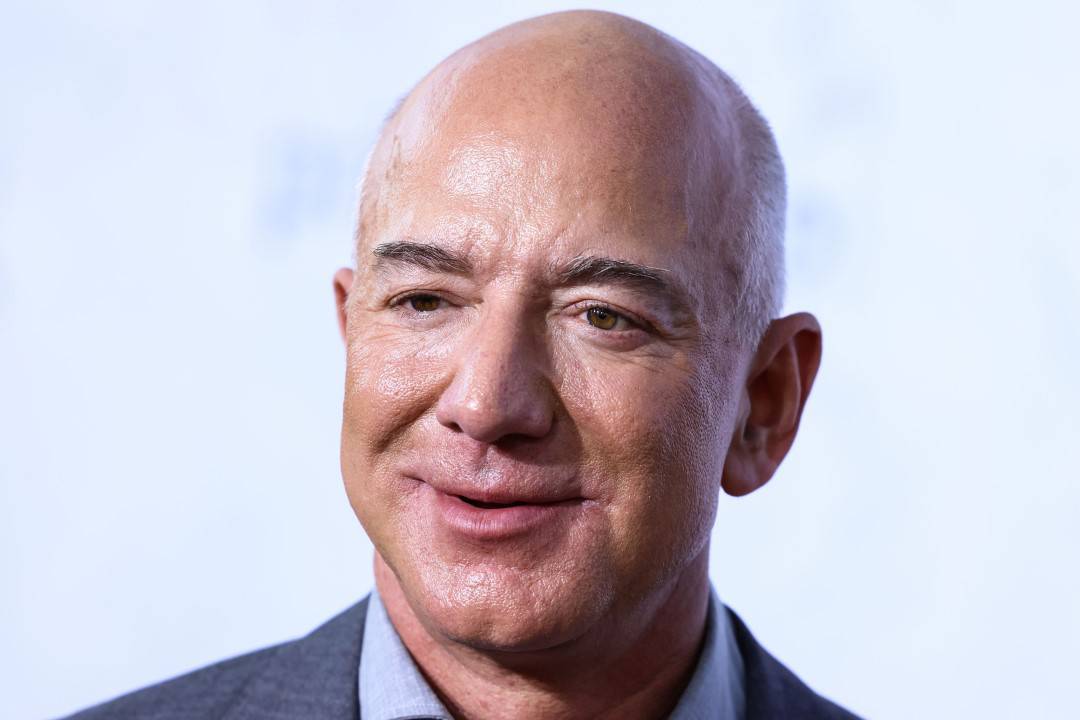
Rather than raising taxes on billionaires, Bezos proposed restructuring the current tax code to give immediate relief to lower-income citizens. He pointed out that the bottom half of workers contribute relatively little to the aggregate tax base but bear significant daily financial pressure. To address this, he suggested to “stop taxing the bottom 50% of wage earners….they only account for 3% of the tax revenue” noting that eliminating this burden entirely would provide a more outsized, positive impact on communities and working teachers than targeting the ultra-wealthy.
“We don’t have a revenue problem in this country,” he stated. “We actually have a spending problem.”
The role of billionaire wealth taxes in the mayoral campaign of Zohran Mamdani
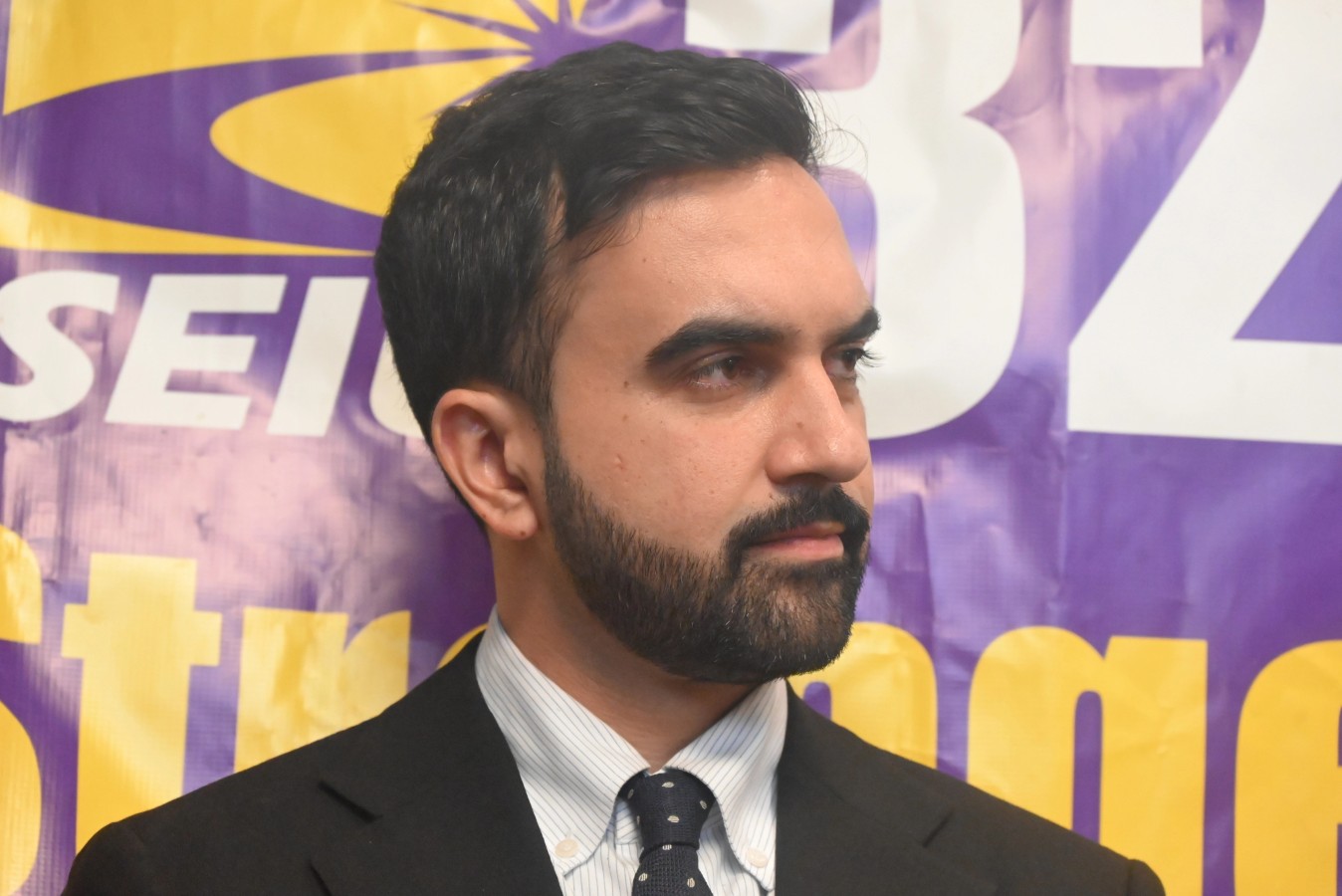
The comments come amid an ongoing clash over the economic agenda of New York City mayoral candidate Zohran Mamdani, who has frequently campaigned on taxing the rich and implementing wealth taxes to fill municipal budget gaps. Critics of Mamdani’s platform have echoed Bezos’s concerns, warning that aggressive wealth redistribution policies could prompt high earners to relocate while leaving underlying structural deficits in the Department of Education completely unaddressed.
Bezos’s remarks immediately ignited heated online debates and drew sharp responses across social media platforms like X. Mamdani quickly pushed back against the billionaire’s claims, stating online that he knows a few teachers in Queens who would beg to differ regarding whether more funding would help. Meanwhile, community notes added on social media platforms reminded observers that the vast majority of New York City public school funding is derived from local and state tax revenue rather than federal brackets.
The exchange underscores a deep ideological divide concerning how public goods should be managed in major American metropolises. While progressive advocates argue that the city’s schools require sustained, robust funding to support teachers and reduce class sizes, business leaders maintain that throw-money-at-it solutions fail without a rigorous framework of accountability and efficiency metrics modeled after successful modern enterprises.
Like Financial Freedom Countdown content? Be sure to follow us!
14 essential strategies to maximize your Social Security and avoid costly mistakes
Social Security is a vital lifeline for many seniors, providing crucial income support during retirement. With inflation at its highest in four decades, Social Security’s inflation-adjusted benefits offer protection against rising costs.
Rising interest rates have disrupted many retirement portfolios, causing bond fund values to plummet. In this volatile financial landscape, Social Security can stabilize a typical stock-bond retirement portfolio. By implementing smart strategies, retirees can maximize their Social Security benefits and ensure a more secure financial future.
14 Essential Strategies to Maximize Your Social Security and Avoid Costly Mistakes
11 reasons you should claim Social Security early

Deciding when to claim Social Security is often about maximizing your benefit. Financial planners usually advise delaying your claim for as long as possible to secure the highest monthly payment. Your benefit is based on your lifetime earnings, with a full payout available at your full retirement age (FRA), which is currently between 66 and 67 depending on your birth year. Claiming before FRA results in a permanent reduction in your monthly benefit, while waiting beyond FRA leads to a permanent increase. However, the decision isn’t solely about maximizing the monthly check. Personal factors such as health, family circumstances, and financial needs can play a significant role in determining the right time to claim.
11 Reasons You Should Claim Social Security Early
Did you find this article helpful? We’d love to hear your thoughts! Leave a comment with the box on the left-hand side of the screen and share your thoughts.
Also, do you want to stay up-to-date on our latest content?
1. Follow us by clicking the [+ Follow] button above,
2. Give the article a Thumbs Up on the top-left side of the screen.
3. And lastly, if you think this information would benefit your friends and family, don’t hesitate to share it with them!

John Dealbreuin came from a third world country to the US with only $1,000 not knowing anyone; guided by an immigrant dream. In 12 years, he achieved his retirement number.
He started Financial Freedom Countdown to help everyone think differently about their financial challenges and live their best lives. John resides in the San Francisco Bay Area enjoying nature trails and weight training.
Here are his recommended tools
Personal Capital: This is a free tool John uses to track his net worth on a regular basis and as a retirement planner. It also alerts him wrt hidden fees and has a budget tracker included.
Platforms like Yieldstreet provide investment options in art, legal, real estate, structured notes, venture capital, etc. They also have fixed-income portfolios spread across multiple asset classes with a single investment with low minimums of $10,000.