
Trump pushes to expand $1,000 retirement match beyond low-income workers

President Donald Trump is seeking to expand a federal retirement savings incentive currently limited to lower-income Americans, saying congressional approval to broaden eligibility “should be very easy to get.”
The effort builds on his recent executive order promoting retirement access through TrumpIRA.gov and could eventually allow more middle-income workers to receive up to $1,000 a year in federal retirement matching funds.
President Donald Trump signed an executive order aimed at expanding retirement savings opportunities for millions of Americans who currently lack access to employer-sponsored plans. The initiative combines a new federal enrollment platform with the Saver’s Match program, which provides eligible workers with government retirement contributions worth up to $1,000 annually.
Trump signals push to expand Saver’s Match eligibility

While the Saver’s Match was originally designed for lower-income workers, Trump said during the White House signing ceremony that the administration wants to widen access to additional income groups.
“To take it to the next level, we need congressional approval, which should be very easy to get,” Trump said at the executive order signing.
The order directs the administration to prepare legislative recommendations that would establish a “path for all Americans to access high-quality, low-cost IRAs and a Federal matching program.”
The Treasury Department is expected to launch TrumpIRA.gov as a centralized portal where workers without employer-sponsored retirement benefits can enroll in private-sector retirement plans.
According to the administration, the site will offer several index-based investment options modeled after the federal government’s Thrift Savings Plan. Officials also said the portal will help workers identify whether they qualify for federal matching contributions.
Saver’s Match offers up to $1,000 a year

The Saver’s Match program was created under the SECURE 2.0 Act passed in 2022 and officially takes effect on Jan. 1, 2027.
Under the program, eligible workers receive a federal contribution equal to 50% of their retirement savings deposits, up to a maximum government contribution of $1,000 annually. Workers would need to contribute $2,000 of their own money each year to receive the full match.
At present, the Saver’s Match applies to single taxpayers earning less than $35,500 annually and married couples filing jointly with income up to $71,000.
The White House has indicated it wants Congress to expand the program to cover more middle-income workers who also lack access to employer retirement plans.
Kevin Hassett, director of the White House National Economic Council, said the administration is already working with lawmakers on legislation.
“We’re working with Congress to significantly expand this program and are looking forward to legislation this year,” Hassett said.
Millions of workers still lack retirement plans

The administration says the executive order is intended to help roughly 50 million to 56 million Americans who currently do not have access to an employer-sponsored retirement plan.
According to AARP, workers at small businesses are among the least likely to receive retirement benefits through their employers. Many lower-income and minority workers are also disproportionately affected by the retirement access gap.
Experts say broader access could improve savings rates

Some retirement experts say expanding automatic access to retirement plans, along with matching incentives, could encourage more Americans to save consistently.
Shai Akabas, vice president of economic policy at the Bipartisan Policy Center, said building on the existing Saver’s Match framework could be “really important and well received” if it helps more Americans prepare for retirement.
Supporters argue that government matching contributions can motivate participation in the same way employer 401(k) matches have historically boosted savings rates.
According to reports, the Treasury Department and National Economic Council are also developing recommendations that could include automatic enrollment into private-sector IRAs.
Automatic enrollment has long been viewed by retirement policy experts as one of the most effective ways to increase participation, particularly among younger and lower-income workers.
Additional proposals could expand eligibility thresholds and simplify enrollment for workers without employer-sponsored benefits.
Critics say affordability remains a major challenge

Despite support for broader retirement access, some analysts caution that simply offering retirement accounts may not solve deeper financial pressures facing many households.
Critics note that workers still need disposable income available to contribute in order to receive the federal match. For families struggling with housing, healthcare, childcare, and food costs, setting aside retirement savings may remain difficult.
Others argue that retirement reforms must also be paired with long-term efforts to stabilize Social Security and address rising living costs.
Retirement insecurity continues to grow

The executive order arrives as many Americans remain financially underprepared for retirement. Studies have shown that a significant share of workers have little or no retirement savings, while concerns continue to grow about the future solvency of Social Security.
Longer life expectancies and rising healthcare costs are also increasing the amount of savings many households may need in retirement. Many employers do not provide 401(k) options.
Financial planners often recommend that workers begin contributing early and consistently, especially when employer or government matching contributions are available.
What happens next

The executive order itself does not immediately expand eligibility beyond current income limits. Any broader rollout of the Saver’s Match to middle-income workers would require congressional approval.
Still, the administration’s push signals that retirement policy could become a larger economic issue ahead of upcoming elections, especially as affordability concerns and retirement insecurity remain top issues for many Americans.
Like Financial Freedom Countdown content? Be sure to follow us!
14 essential strategies to maximize your Social Security and avoid costly mistakes
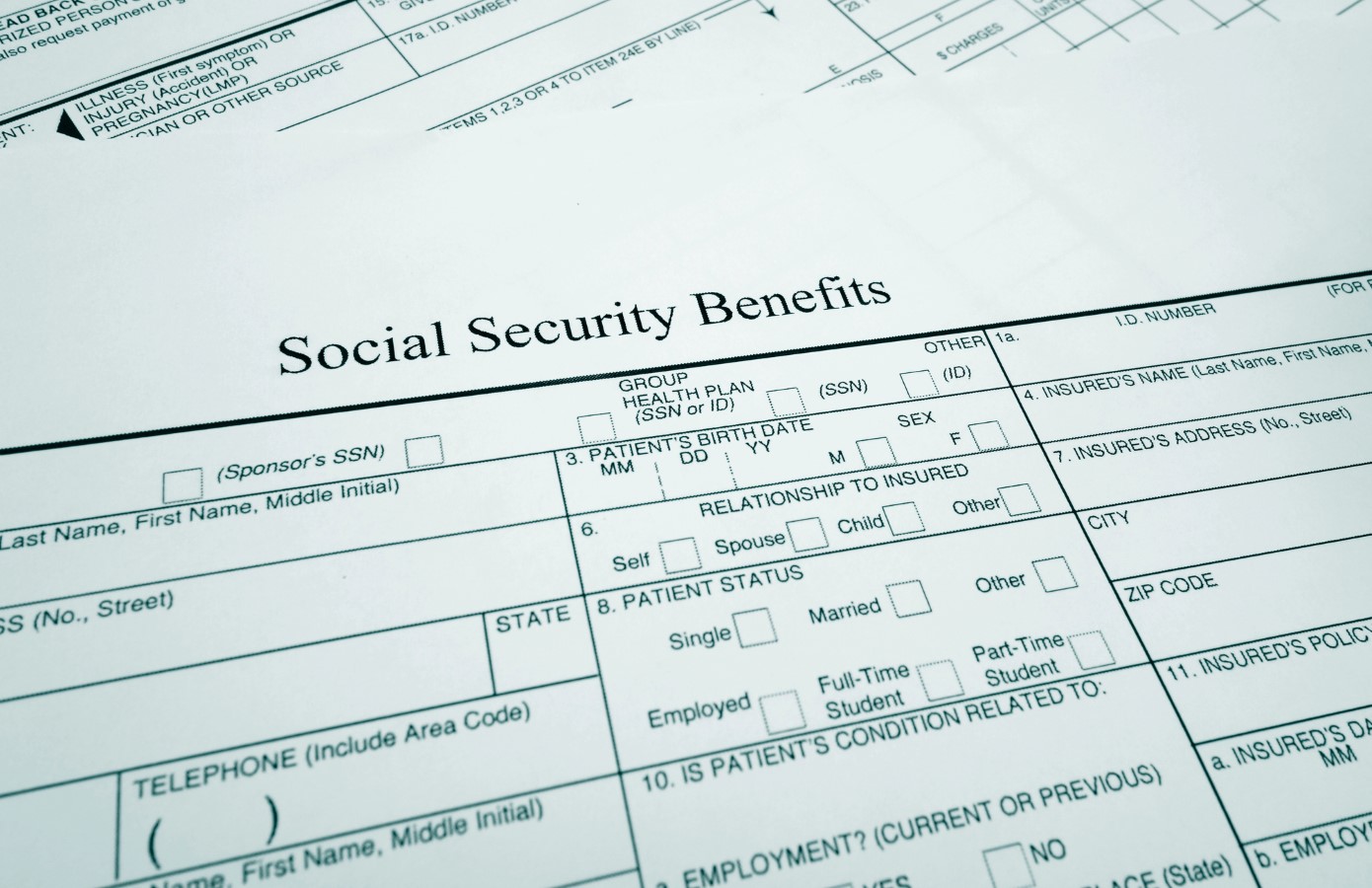
Social Security is a vital lifeline for many seniors, providing crucial income support during retirement. With inflation at its highest in four decades, Social Security’s inflation-adjusted benefits offer protection against rising costs.
Rising interest rates have disrupted many retirement portfolios, causing bond fund values to plummet. In this volatile financial landscape, Social Security can stabilize a typical stock-bond retirement portfolio. By implementing smart strategies, retirees can maximize their Social Security benefits and ensure a more secure financial future.
14 Essential Strategies to Maximize Your Social Security and Avoid Costly Mistakes
11 reasons you should claim Social Security early

Deciding when to claim Social Security is often about maximizing your benefit. Financial planners usually advise delaying your claim for as long as possible to secure the highest monthly payment. Your benefit is based on your lifetime earnings, with a full payout available at your full retirement age (FRA), which is currently between 66 and 67 depending on your birth year. Claiming before FRA results in a permanent reduction in your monthly benefit, while waiting beyond FRA leads to a permanent increase. However, the decision isn’t solely about maximizing the monthly check. Personal factors such as health, family circumstances, and financial needs can play a significant role in determining the right time to claim.
11 Reasons You Should Claim Social Security Early

Did you find this article helpful? We’d love to hear your thoughts! Leave a comment with the box on the left-hand side of the screen and share your thoughts.
Also, do you want to stay up-to-date on our latest content?
1. Follow us by clicking the [+ Follow] button above,
2. Give the article a Thumbs Up on the top-left side of the screen.
3. And lastly, if you think this information would benefit your friends and family, don’t hesitate to share it with them!

John Dealbreuin came from a third world country to the US with only $1,000 not knowing anyone; guided by an immigrant dream. In 12 years, he achieved his retirement number.
He started Financial Freedom Countdown to help everyone think differently about their financial challenges and live their best lives. John resides in the San Francisco Bay Area enjoying nature trails and weight training.
Here are his recommended tools
Personal Capital: This is a free tool John uses to track his net worth on a regular basis and as a retirement planner. It also alerts him wrt hidden fees and has a budget tracker included.
Platforms like Yieldstreet provide investment options in art, legal, real estate, structured notes, venture capital, etc. They also have fixed-income portfolios spread across multiple asset classes with a single investment with low minimums of $10,000.