
U.S. debt hits new milestone as borrowing tops $1.4 trillion and interest costs near $24 billion a week

The U.S. government is borrowing at a pace that continues to alarm fiscal watchdogs, with the federal deficit reaching nearly $1.4 trillion during the first nine months of fiscal year 2026. That already exceeds the borrowing recorded over the same period in fiscal 2025, even as the economy continues to expand and unemployment remains relatively low.
At the same time, the government’s growing debt burden is driving interest costs to record levels. Net interest payments have climbed to roughly $857 billion for the fiscal year so far; equivalent to nearly $24 billion every week; while economists warn that rising borrowing, an aging population and higher interest rates are combining to put increasing pressure on the nation’s finances.
Federal borrowing has already surpassed last year’s pace

The federal government has accumulated a deficit of just under $1.4 trillion during the first nine months of fiscal year 2026, which began in October. That figure has already exceeded the borrowing recorded during the same period in fiscal 2025, when deficits totaled just over $1.3 trillion.
Based on current borrowing levels, the Treasury has been adding roughly $155 billion in new debt every month, or about $39 billion every week. The total U.S. national debt now stands at approximately $39.4 trillion, accumulated under administrations led by both Republicans and Democrats.
Interest payments are approaching $24 billion every week. As borrowing has increased, so has the cost of servicing that debt.
According to the Congressional Budget Office (CBO), net interest payments on the public debt have reached $857 billion during the first nine months of fiscal 2026, or approximately $23.8 billion every week.
That represents an increase of roughly $100 billion, or 13%, compared with the same period last year, driven by both higher debt levels and elevated long-term interest rates.
The interest bill alone now exceeds the combined spending on the Departments of Defense, Commerce, Homeland Security and Education.
Social Security, Medicare and Medicaid continue driving spending higher

Mandatory spending continues to rise as America’s population ages.
The CBO reported that Social Security spending increased by $62 billion, or 5%, due to both larger average benefit payments and a growing number of beneficiaries.
Medicare spending climbed by $58 billion, an 8% increase driven by higher enrolment and higher payment rates for medical services. Medicaid spending rose by $49 billion, or 10%, largely because of rising healthcare costs per enrollee.
These programs represent some of the fastest-growing areas of federal spending and are expected to place additional pressure on future budgets.
America’s aging population is adding long-term fiscal pressure

Demographic trends suggest these spending pressures are unlikely to ease anytime soon.
According to the U.S. Census Bureau, the country’s median age increased from 39.2 years in 2024 to 39.4 years in 2025, continuing a decades-long aging trend.
The bureau also noted a significant shift among older Americans. In 2001, there were 70.6 men for every 100 women aged 65 and older. By 2025, that figure had risen to 81.6 men per 100 women, reflecting longer life expectancy and changing population dynamics.
An older population generally translates into greater demand for retirement and healthcare programs, increasing long-term government spending.
Fiscal watchdogs warn the debt path is becoming unsustainable

The latest budget figures have intensified warnings from organisations monitoring the nation’s fiscal outlook.
Maya MacGuineas, president of the Committee for a Responsible Federal Budget, said: “The FY 2026 deficit has now passed the FY 2025 deficit–and it is likely to stay that way for the rest of the fiscal year … We will likely borrow $2 trillion or more this fiscal year—an astounding figure given that the economy keeps growing and unemployment is low.”
She warned that today’s deficits may represent “likely the tip of the iceberg,” unless lawmakers address entitlement spending and revenues.
MacGuineas added: “Social Security and Medicare are within seven years of trust fund exhaustion, and action needs to be taken to prevent across-the-board cuts to both programs.”
She has advocated reducing the federal deficit to around 3% of GDP and argued that policymakers should be “honest with the public about the grave dangers we face by remaining on this unsustainable path.”
Why America’s debt worries economists despite lower debt ratios than Japan

Although the United States has the world’s largest national debt in dollar terms, it does not have the highest debt relative to the size of its economy.
According to the International Monetary Fund’s latest World Economic Outlook, U.S. government debt is roughly 126% of GDP. Japan’s ratio stands at approximately 204%, while Singapore’s is about 172%.
However, economists caution that debt-to-GDP figures alone do not tell the full story.
Apollo chief economist Torsten Slok argued that the rapid pace of U.S. borrowing; around $7 billion per day; is reducing the government’s ability to respond during future recessions.
“The U.S. has never entered a recession with this little fiscal buffer,” Slok wrote. “The standard recession playbook that growth slows, the Fed cuts, rates fall, and multiples expand breaks down when the sovereign borrower is already stretched.”
Japan’s debt structure makes its situation fundamentally different. Several economists argue that comparing the United States directly with Japan overlooks major structural differences.
Around 90% of Japan’s government debt is owned domestically by local banks, pension funds and insurance companies, reducing reliance on foreign investors.
Japan also maintains a much higher household savings rate, giving the government a stable domestic investor base.
Not everyone believes debt-to-GDP ratios provide an accurate picture of a country’s fiscal health.
Some economist argue that the metric overlooks important factors affecting a government’s ability to manage its obligations.
Treasury’s reliance on short-term debt increases refinancing risks

While the government’s debt load continues to grow, the Treasury has attempted to limit borrowing costs by issuing large amounts of short-term debt.
Capital Economics estimates that around 85% of Treasury issuance in recent years has consisted of Treasury bills that mature within one year.
As a result, roughly 20% of outstanding federal debt must be refinanced over the next four months, with that figure expected to rise to about one-third within a year.
Capital Economics economist Ariane Curtis warned: “Therefore, the biggest risk to the debt burden would be a sharp rise in short-dated yields if the Fed were to hike rates by more than expected in the coming year.”
This refinancing schedule leaves government borrowing costs increasingly sensitive to Federal Reserve policy.
A hawkish Federal Reserve could further increase borrowing costs
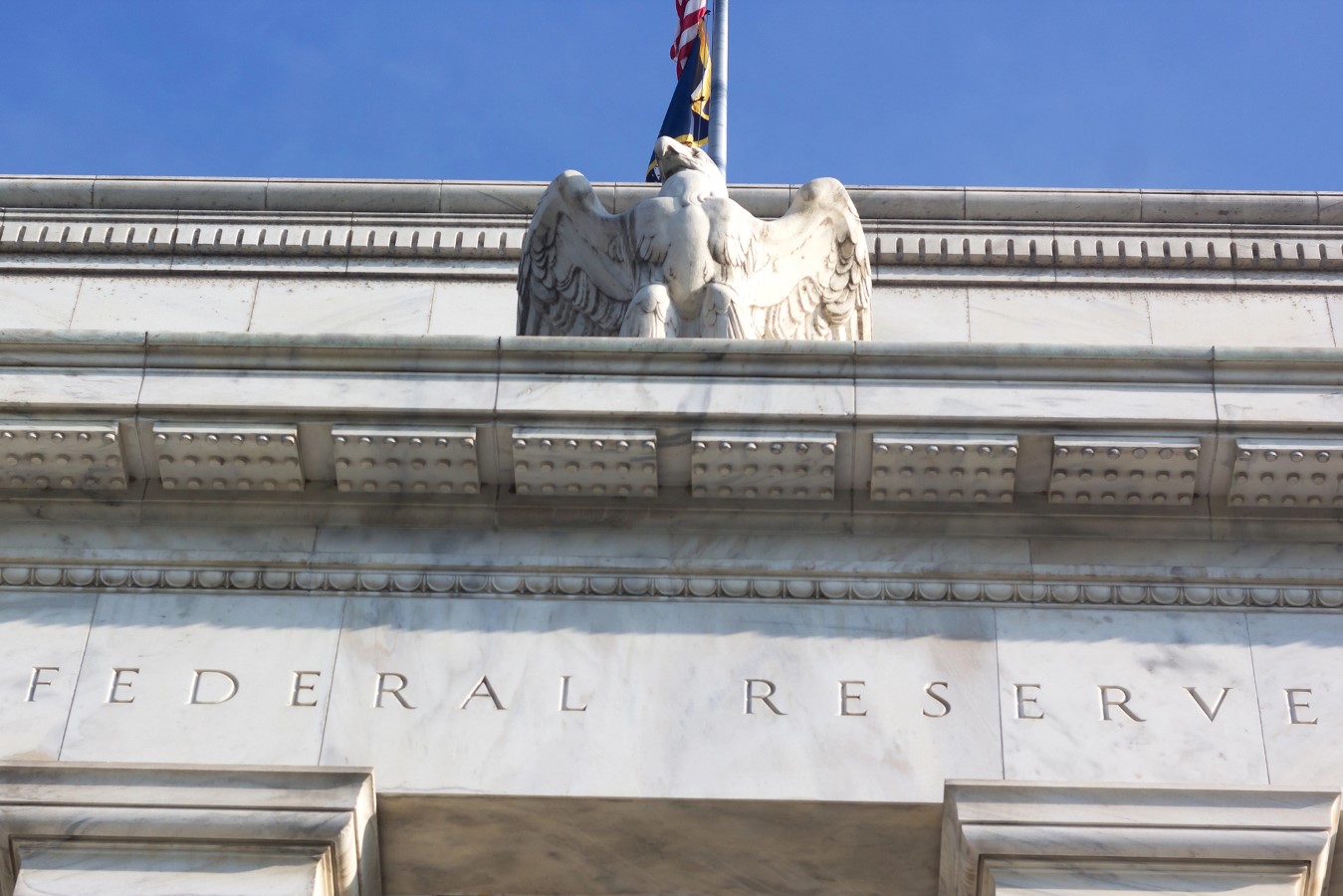
Those refinancing risks have become more significant as Federal Reserve officials adopt a firmer stance on inflation.
Fed Chair Kevin Warsh has signalled a stronger commitment to returning inflation to the central bank’s 2% target, while several policymakers have suggested additional interest-rate increases may still be necessary.
Dallas Fed President Lorie Logan said: “Inflation has been too high, for too long, and does not appear to be on track all the way back to 2%,” adding that inflation risks remain tilted to the upside.
Cleveland Fed President Beth Hammack echoed those concerns, stating that inflation remains too elevated while the labour market is close to maximum employment.
“For the first time in my tenure, I’m hearing from businesses who say they think we need to take action to curb inflation, and from consumers who can’t make ends meet about a growing sense of despair,” she wrote in a social media post.
Analysts at Bank of America have since revised their outlook to expect three quarter-point interest-rate increases this year instead of rates remaining unchanged through 2026.
Bond markets are demanding higher compensation for lending to the U.S. Beyond Federal Reserve policy, several broader trends are contributing to higher Treasury yields.
The federal government continues to finance projected annual deficits approaching $2 trillion while competing with corporations and foreign governments issuing record amounts of debt.
Large technology companies are borrowing heavily to finance AI infrastructure investments, while Germany plans to issue hundreds of billions of euros in new debt over the coming years.
Investor appetite has also softened. The longer that yields stay high, and the more debt is refinanced or issued at those levels, the more unsustainable the debt path will become. And with bond markets becoming more sensitive to high debt and fiscal credibility concerns in advanced economies more broadly, fiscal risks remain significant.
Like Financial Freedom Countdown content? Be sure to follow us!
14 essential strategies to maximize your Social Security and avoid costly mistakes

Social Security is a vital lifeline for many seniors, providing crucial income support during retirement. With inflation at its highest in four decades, Social Security’s inflation-adjusted benefits offer protection against rising costs.
Rising interest rates have disrupted many retirement portfolios, causing bond fund values to plummet. In this volatile financial landscape, Social Security can stabilize a typical stock-bond retirement portfolio. By implementing smart strategies, retirees can maximize their Social Security benefits and ensure a more secure financial future.
14 Essential Strategies to Maximize Your Social Security and Avoid Costly Mistakes
11 reasons you should claim Social Security early

Deciding when to claim Social Security is often about maximizing your benefit. Financial planners usually advise delaying your claim for as long as possible to secure the highest monthly payment. Your benefit is based on your lifetime earnings, with a full payout available at your full retirement age (FRA), which is currently between 66 and 67 depending on your birth year. Claiming before FRA results in a permanent reduction in your monthly benefit, while waiting beyond FRA leads to a permanent increase. However, the decision isn’t solely about maximizing the monthly check. Personal factors such as health, family circumstances, and financial needs can play a significant role in determining the right time to claim.
11 Reasons You Should Claim Social Security Early

Did you find this article helpful? We’d love to hear your thoughts! Leave a comment with the box on the left-hand side of the screen and share your thoughts.
Also, do you want to stay up-to-date on our latest content?
1. Follow us by clicking the [+ Follow] button above,
2. Give the article a Thumbs Up on the top-left side of the screen.
3. And lastly, if you think this information would benefit your friends and family, don’t hesitate to share it with them!

John Dealbreuin came from a third world country to the US with only $1,000 not knowing anyone; guided by an immigrant dream. In 12 years, he achieved his retirement number.
He started Financial Freedom Countdown to help everyone think differently about their financial challenges and live their best lives. John resides in the San Francisco Bay Area enjoying nature trails and weight training.
Here are his recommended tools
Personal Capital: This is a free tool John uses to track his net worth on a regular basis and as a retirement planner. It also alerts him wrt hidden fees and has a budget tracker included.
Platforms like Yieldstreet provide investment options in art, legal, real estate, structured notes, venture capital, etc. They also have fixed-income portfolios spread across multiple asset classes with a single investment with low minimums of $10,000.