Bessent says Biden left a “mess” as U.S. debt hits $40 trillion, vows fiscal consolidation and says America must “grow our way out”
The U.S. national debt has crossed $40 trillion for the first time, prompting fresh concerns about the government’s fiscal trajectory as Treasury Secretary Scott Bessent defended the Trump administration’s approach and said the country can “grow our way out” of the debt burden. Speaking outside the White House Thursday, Bessent acknowledged the significance of the $40 trillion milestone but argued that the headline figure does not fully reflect the portion of debt held by the public.
“The $40 trillion is a big number. It is smaller when we look at the publicly traded amount. There are Social Security funds and other government entities,” Bessent said. “What we’re going to do – we have to grow our way out of this.” He said the administration, along with Office of Management and Budget Director Russell Vought, has also been tasked with pursuing fiscal consolidation, while promoting a broader U.S. growth strategy.
Bessent also pushed back against criticism of Trump’s fiscal record, arguing that the administration inherited significant budget problems from Biden. “We did not get here today. We were left with a mess. The Biden administration had the highest deficit-to-GDP in history when we weren’t at war and we weren’t in a recession.” Bessent said the administration reduced the deficit-to-GDP ratio by more than 10% in 2025 and told CNBC there is a “very good chance” the budget deficit under Trump has already peaked.
He also pointed to tariff revenue as part of the administration’s strategy for addressing the fiscal imbalance. Although substantial tariff refunds are expected following legal challenges to some levies, Bessent said he believes revenue from the Section 301 tariffs will return to roughly the level collected in 2025.
“There’s nothing magic about the 40-trillion number,” Bessent said. “We can grow our way out of that.”
“But what we do want to signal is I think there’s been a lot of misinformation in terms of what’s going on with the deficit, what’s going on with the deficit to GDP,” he added.
Bessent said that a temporary aspect of the debt comes from tariff refunds ordered by the Supreme Court in a February ruling against emergency tariffs from President Trump. The new tariffs are expected to replace most of the refunds currently provided to the corporations.
Vance says Bessent has “very discreet plan” to grow the economy faster than the debt

Vice President Vance said Thursday night that Treasury Secretary Scott Bessent has a “very discreet plan” to shrink the nation’s debt.
“He [Bessent] has had a very discreet plan, of course, supported by the president of the United States, to get the United States to a point where our economy is growing faster than our debt,” Vance said on Newsmax’s “Carl Higbie Frontline.”
“And if you look, we are on track. So, even though the debt is too high, even though we inherited this debt bomb from the Biden administration, we actually do have a plan to get the economy growing faster than the debt and that’s the most important thing,” the vice president added.
The $40 trillion debt milestone comes as the federal deficit continues to run at historically high levels. The Treasury reported a July deficit of more than $432 billion, while the fiscal-year-to-date deficit has climbed to nearly $1.8 trillion. Bessent said the administration is “going to be laser focused” on fiscal consolidation and that several hundred billion dollars could potentially be saved through those efforts.
U.S. debt has more than doubled since 2017

The Treasury Department’s latest daily cash and debt balances statement showed total public debt outstanding at $40.047 trillion on Tuesday, including $32.266 trillion in debt held by the public and $7.782 trillion in intragovernmental holdings. The milestone comes less than five months after the debt surpassed $39 trillion and less than a decade after it stood at $19.95 trillion when President Trump first took office in January 2017.
The federal government’s debt has more than doubled in less than 10 years, highlighting the scale of the borrowing increase across the Trump and Biden administrations.
Roughly one-third of the increase occurred during the lockdown, when the federal government borrowed heavily to finance emergency programs and economic relief. Other increases have resulted from persistent gaps between federal spending and revenue, along with policy decisions made by both administrations.
The debt increased by about $7.8 trillion during Trump’s first term and another $8.4 trillion during Joe Biden’s presidency. Since Trump returned to office in January 2025, the national debt has increased by roughly $3.8 trillion, bringing the increase across his two terms so far to about $11.6 trillion.
The speed at which the debt has climbed has alarmed fiscal watchdogs. The national debt first reached $1 trillion in 1981, but it has now quadrupled in less than 20 years.
The country passed $20 trillion in late 2017 and $30 trillion in early 2022 before reaching $40 trillion in August 2026. The latest $1 trillion increase from $39 trillion took less than five months.
Maya MacGuineas, president of the nonpartisan Committee for a Responsible Federal Budget, said the pace of borrowing should serve as a warning to lawmakers.
“Forty trillion dollars of debt doesn’t exist solely on the government’s ledgers; it is felt throughout the economy and finds its way to the pocketbooks of people one way or another,” MacGuineas said.
“The more we borrow, the more we exacerbate inflation, squeeze out other priorities in the budget, and leave ourselves vulnerable to emergencies at home and turmoil abroad,” MacGuineas said in a statement just after the Treasury data was released.
She added that the $40 trillion milestone was reached less than five months after the debt crossed $39 trillion.
“It is staggering how predictable the fiscal decline of a global power can become,” MacGuineas added.
Interest costs are becoming a larger budget burden

The size of the debt is only part of the fiscal challenge. The cost of servicing that debt has also risen sharply as the government borrows more and interest rates remain elevated.
The federal government is on pace to spend more than $1 trillion on interest this year. The Congressional Budget Office reported that net interest payments totaled about $963 billion during the first 10 months of fiscal 2026, while other estimates put the annual interest burden even higher.
Interest costs have already overtaken some major federal spending categories. During fiscal 2025, debt service costs exceeded defense funding for the first time. In the first 10 months of fiscal 2026, interest costs have also surpassed Medicare spending to become the second-largest federal budget line after Social Security.
The government is now caught in a difficult cycle: higher debt produces more interest expense, while higher interest rates make refinancing and issuing new debt more expensive.
Social Security and Medicare add to the long-term pressure

Mandatory programs represent the largest portion of federal spending, limiting how much policymakers can reduce the deficit through discretionary spending cuts alone.
The federal government spends roughly $7 trillion annually, with about 60% going toward mandatory programs such as Social Security, Medicare, Medicaid and veterans’ care. Those costs generally increase as the population ages and benefits rise with living costs.
The retirement of the baby boom generation is placing additional pressure on Social Security and Medicare trust funds. At the same time, payroll and income tax revenues are not sufficient to cover the government’s overall spending.
The Committee for a Responsible Federal Budget estimates that the Social Security trust fund could run out of reserves in less than eight years, while Medicare faces a similar challenge in less than seven years under current projections.
Deficits remain large despite higher revenues and tariffs

The debt milestone comes as the federal government continues to run exceptionally large monthly deficits.
The Treasury reported a $432 billion deficit in July, the fourth-highest monthly deficit in U.S. history. Tariff refunds pushed customs receipts into negative territory for the third consecutive month, while Social Security and Medicare spending continued to increase.
The government has borrowed roughly $1.8 trillion during the first 10 months of fiscal 2026. The Congressional Budget Office projects the full-year deficit could reach approximately $2.1 trillion.
That would put the annual deficit substantially above the level many policymakers had hoped to achieve through spending reductions, tariffs and other revenue measures.
Trump’s tax and spending law adds to the debt outlook

The fiscal trajectory has also been shaped by major legislation enacted during Trump’s second administration.
The One Big Beautiful Bill Act, signed into law in July 2025, contains significant tax cuts and spending provisions. Estimates cited in the supplied material put its projected effect on the federal deficit at between $3.4 trillion and $4.7 trillion through 2032, depending on the methodology and assumptions used.
Trump has also promoted federal cost-cutting efforts, including reductions in agency staffing and discretionary programs. But discretionary spending represents a smaller portion of the federal budget than mandatory programs and interest payments.
That makes it difficult to substantially reduce the overall deficit without addressing the larger categories of federal spending, raising additional revenue, or both.
Higher rates could eventually hit households

The consequences of rising Treasury yields can extend well beyond Washington and Wall Street.
Long-term Treasury yields influence mortgage rates and other borrowing costs, meaning a sustained increase can make it more expensive for households to purchase homes, finance vehicles or carry credit-card and other debt.
The average 30-year fixed mortgage rate has risen to around 6.67%, according to the supplied material. Housing could face additional pressure if Treasury yields remain elevated, particularly after single-family housing starts fell sharply in July.
Businesses can also face higher financing costs when Treasury yields rise. More expensive credit can discourage investment, hiring and expansion, potentially weighing on economic growth.
Michael Peterson, chairman and CEO of the Peter G. Peterson Foundation, said the effects of rising debt can reach households even without a direct bill.
“When the U.S. borrows this much—and continues to borrow more and more—that drives up interest rates, which then increases household expenses because your mortgage goes up, your car loan, your credit card bills, and inflation more generally. So [we] may not get a bill at the end of the month for national debt, but [we] are paying that bill both in the form of taxes as well as an inflated level of expenses.”
Trump calls for lower interest rates

The increase in borrowing costs has also renewed Trump’s criticism of Federal Reserve interest-rate policy.
Asked at the White House whether Americans should worry about bond market volatility, Trump said: “I don’t think so at all. I think we have a very powerful country, and we’re powering through these ridiculous interest rates — they’re ridiculous. Look, when our country is strong, interest rates should go down.”
Trump also argued Wednesday that U.S. interest rates are “artificially high” and that the world’s largest economy should pay less to finance its debt.
“I see countries like Switzerland where they’re the number one lowest interest rates, a half a percent, and we pay three and a half percent,” he said. “I have the absolute right to cut off all business with a country like Switzerland.”
The administration’s efforts to lower long-term Treasury yields, however, come as inflation remains above the Federal Reserve’s 2% target. Some economists warn that efforts to suppress longer-term borrowing costs could complicate monetary policy if they contribute to inflationary pressure.
The $40 trillion milestone puts pressure on Congress
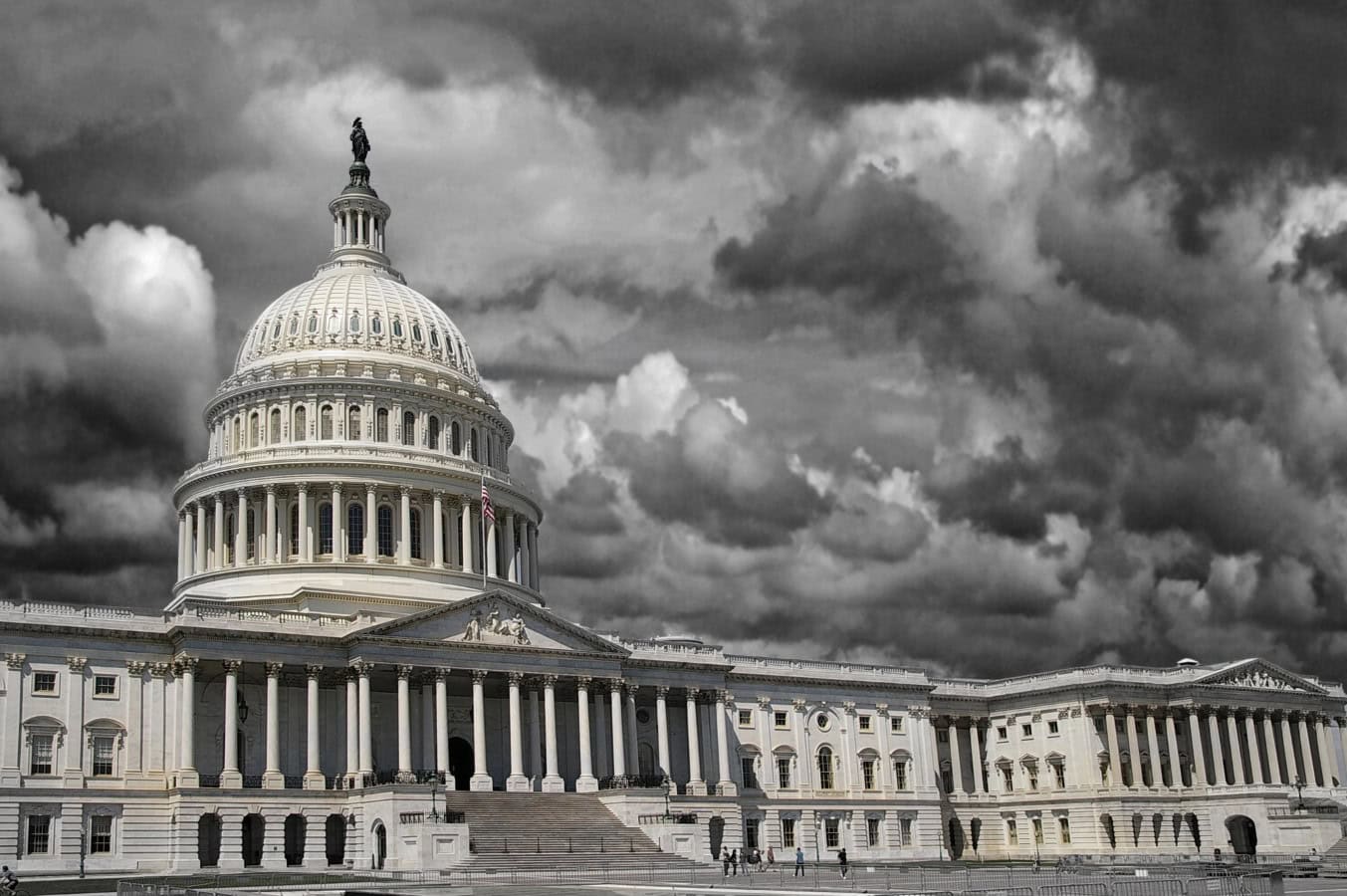
The debt milestone is ultimately a fiscal policy challenge for Congress, which controls taxation and federal spending.
MacGuineas has urged lawmakers to respond before financial-market pressure forces more difficult choices like a recession.
“Whatever motivation our elected officials need to find to finally take action – whether the worries of their constituents back home, the alarm signaled by financial markets, competition from abroad, or the consequences of failing to act – they ought to find it soon,” she said.
Rep. Warren Davidson, R-Ohio, also warned that the trajectory was unsustainable.
“Runaway spending and debt weaken the dollar, drive up costs, and make everyones paycheck worth less,” Davidson wrote Wednesday on X. “Congress needs to take this seriously by rooting out more waste, making real spending cuts, and getting us back to a balanced budget.”
The debate now extends beyond the headline $40 trillion figure. Policymakers face the combined challenge of slowing deficits, managing mandatory spending, controlling interest costs and maintaining investor confidence in Treasury securities.
Peterson described the situation in stark terms: “To anyone who cares about America, about democracy and our future, in my view, this is already a crisis,” Peterson said, “because the level of fiscal mismanagement is tragic. It is burdening every household today, it’s laying more and more debt on our children and grandchildren, and that’s not how America got to be the great country that it is.”
The U.S. has not experienced a debt-driven market crisis despite years of warnings, and Treasury securities remain central to the global financial system. But with debt above $40 trillion, annual deficits measured in the trillions and interest costs consuming an increasingly large share of federal resources, the pressure on Washington to address the country’s long-term fiscal path is intensifying.
Like Financial Freedom Countdown content? Be sure to follow us!
Social Security 2027 COLA estimate drops to 3.6% after July inflation data; but remains above 2026 increase

Social Security beneficiaries could receive a larger cost-of-living adjustment in 2027, although the latest inflation data has prompted forecasters to trim their estimates slightly. The Senior Citizens League now projects a 3.6% COLA, down from its earlier 3.8% estimate but still higher than the 2.8% increase beneficiaries received in 2026. The latest estimate comes after the Bureau of Labor Statistics reported that the Consumer Price Index for Urban Wage Earners and Clerical Workers, or CPI-W, increased 3.4% from July 2025 to July 2026. July is the first of three months of inflation data used to determine the annual Social Security adjustment.

Did you find this article helpful? We’d love to hear your thoughts! Leave a comment with the box on the left-hand side of the screen and share your thoughts.
Also, do you want to stay up-to-date on our latest content?
1. Follow us by clicking the [+ Follow] button above,
2. Give the article a Thumbs Up on the top-left side of the screen.
3. And lastly, if you think this information would benefit your friends and family, don’t hesitate to share it with them!

John Dealbreuin came from a third world country to the US with only $1,000 not knowing anyone; guided by an immigrant dream. In 12 years, he achieved his retirement number.
He started Financial Freedom Countdown to help everyone think differently about their financial challenges and live their best lives. John resides in the San Francisco Bay Area enjoying nature trails and weight training.
Here are his recommended tools
Personal Capital: This is a free tool John uses to track his net worth on a regular basis and as a retirement planner. It also alerts him wrt hidden fees and has a budget tracker included.
Platforms like Yieldstreet provide investment options in art, legal, real estate, structured notes, venture capital, etc. They also have fixed-income portfolios spread across multiple asset classes with a single investment with low minimums of $10,000.