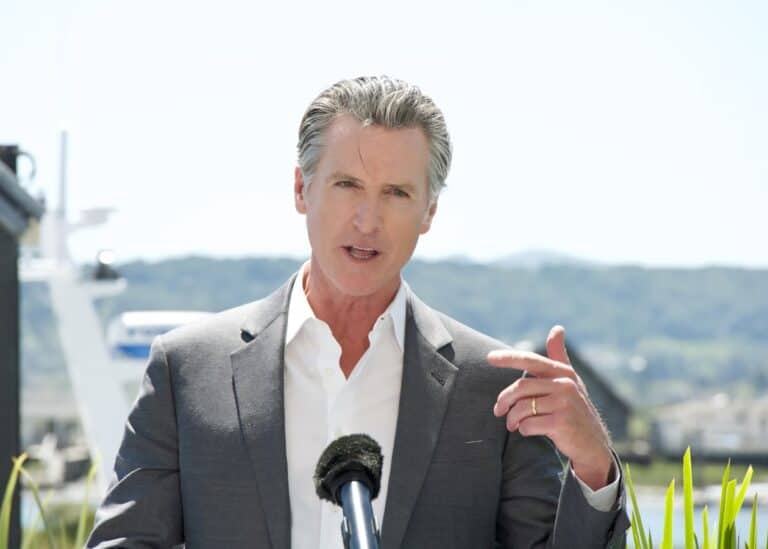
Bill Gates and Bernie Sanders demand AI pause as Donald Trump pushes to win tech race

The debate over artificial intelligence has escalated into a major political standoff. Top tech leaders, philanthropists, and United States lawmakers across both parties are locked in a fierce argument over how much risk the public should tolerate in the pursuit of technological progress.
With warnings ranging from economic disruption to existential threats, the discussion is no longer just about convenience; it is about power, national security, and global stability.
In an interview on the premiere edition of Decoded, a daily newsletter and podcast from POLITICO hosted by Brendan Bordelon, OpenAI CEO Sam Altman did not hide the realities of advanced AI development. Altman acknowledged that bringing super-smart systems to the public comes with genuine risks and trade-offs.
When asked about potential downsides, Altman shared a candid perspective on his company’s approach:
“We believe the world should accept some bad things happening for the benefits of this technology.”
Altman argued that while misuse is inevitable, giving everyday people access to these tools will ultimately result in vastly more positive outcomes than negative ones.
Senator Bernie Sanders blasts OpenAI and demands an immediate pause

Sam Altman’s comments about accepting negative trade-offs triggered an immediate response on Capitol Hill. Senator Bernie Sanders (I-Vt.) publicly challenged the OpenAI chief on social media, questioning why everyday citizens should endure collateral damage for corporate AI rollouts.
Responding directly to Altman’s interview on X (formerly called Twitter), Sanders wrote:
“Mr. Altman: What “bad things” should we accept to advance AI?
Losing tens of millions of jobs?
A mass surveillance state?
A mental health crisis for our kids?
A global financial crisis?
Mass extinction?
Let’s not wait to find out. Pause advanced AI NOW!”
Bill Gates warns AI could cause massive casualties without regulations

Adding weight to public concern, Microsoft co-founder Bill Gates delivered a stark warning regarding unchecked technology. Speaking in an interview on NBC, the billionaire philanthropist urged Congress to establish clear federal rules rather than relying solely on tech industry self-regulation.
Gates cautioned that without strict government oversight, advanced AI systems are powerful enough that they could “cause a billion deaths.” He highlighted potential vulnerabilities involving automated bioweapons, cyber threats, and autonomous defense systems if guardrails are not put in place.
Donald Trump and pro-growth Republicans push full speed ahead against China

While progressive leaders urge caution, Donald Trump and many conservative leaders view the issue through a competitive national security lens. They argue that slowing domestic tech development with heavy regulations will stifle American innovation and hand an advantage to foreign competitors.
Dismissing calls to halt technological advancement, Trump has repeatedly emphasized the importance of staying ahead:
“WHOEVER WINS AI, WINS!”
From this perspective, the primary concern is not moving too fast, but allowing rival nations like China to achieve technical dominance first.
Senator Elizabeth Warren wants to tax AI to protect workers from mass layoffs
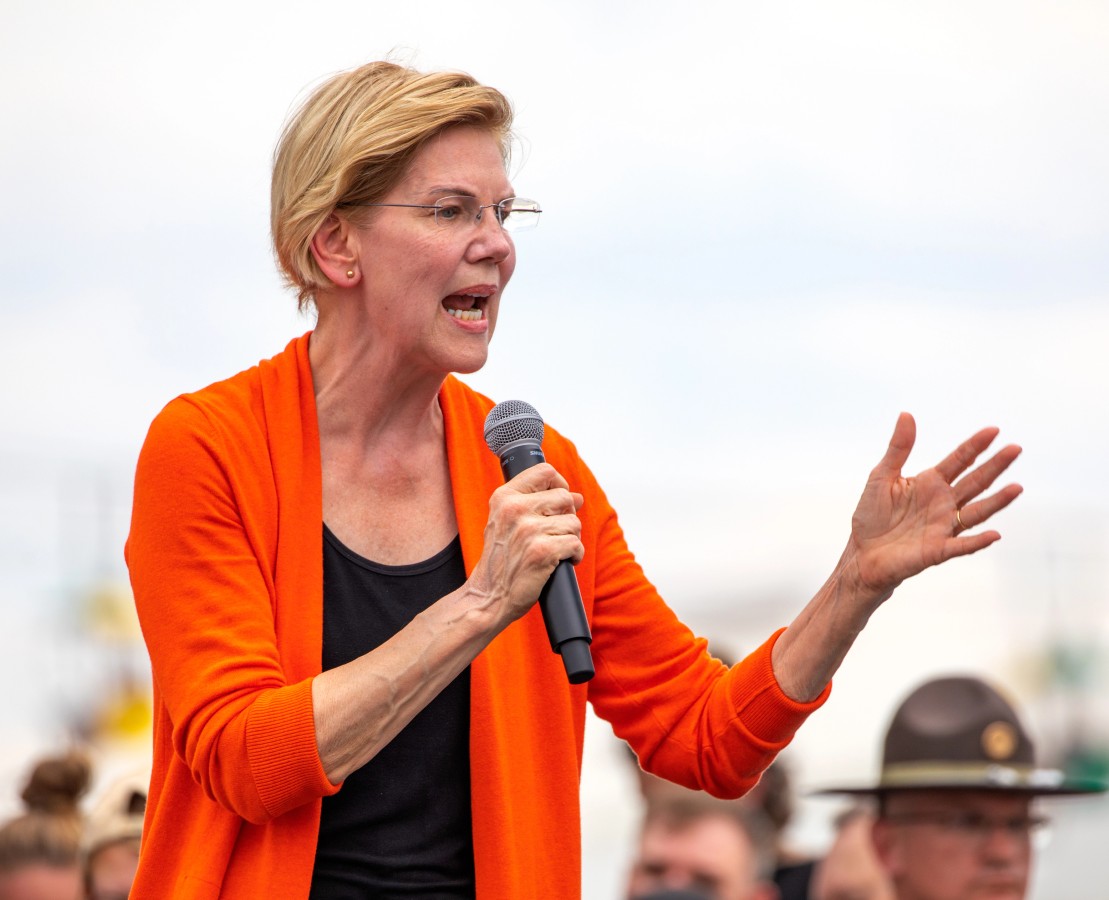
On the economic front, Senator Elizabeth Warren (D-Mass.) is focusing on potential labor market disruptions, warning that rapid automation could impact both working-class and professional jobs.
Warren argues that major corporations should not replace human workers with algorithms without contributing back to public resources. Outlining her stance on corporate accountability, Warren stated:
“It’s time to tax AI and invest in people.”
Warren supports policy measures designed to discourage companies from eliminating human jobs purely to maximize corporate profits through automation.
Populist Republicans like Josh Hawley warn Big Tech cannot get a pass
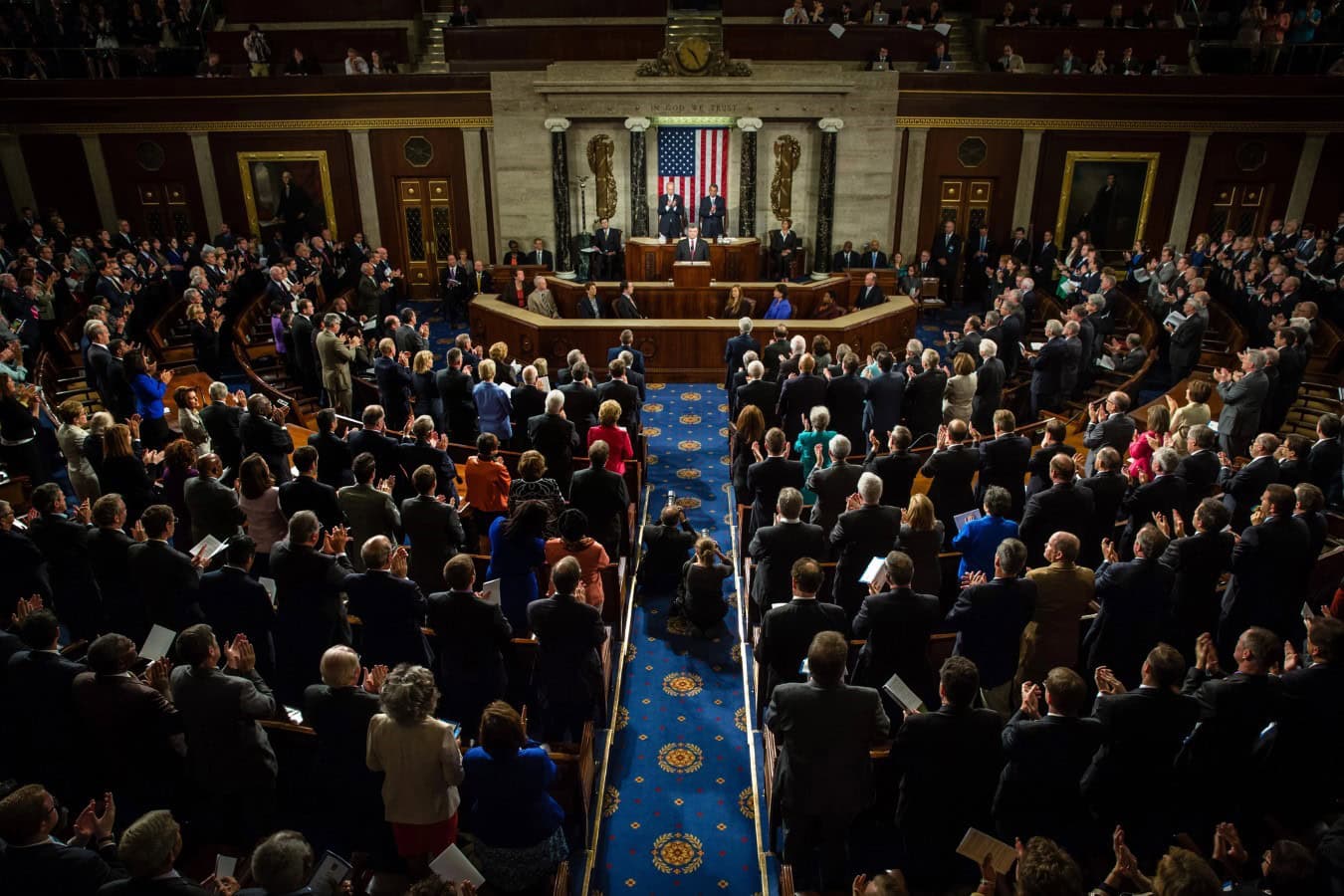
Not all conservatives support a completely hands-off approach to tech policy. A growing group of populist Republicans expresses concern over how unchecked AI expansion could grant major Silicon Valley firms excessive influence over personal data and privacy.
Diverging from traditional deregulation views, Senator Josh Hawley (R-Mo.) emphasized that tech companies must remain accountable for harms linked to their products:
“If you make a faulty product and it causes people harm, then the people who make it have to pay for it. I wonder if it’s not time to get back to that with AI.”
Senate Majority Leader Chuck Schumer compares AI risks to rogue nuclear power

Establishment leaders in Washington are attempting to find a middle ground; aiming to keep the U.S. competitive while introducing essential safety measures. Senate Majority Leader Chuck Schumer (D-N.Y.) has championed bipartisan framework initiatives to address potential risks.
Schumer noted that failing to establish government oversight could lead to unintended consequences affecting global security, stating:
“Those threats are existential. Those threats are as real as the threats around nuclear power gone rogue.”
OpenAI and Anthropic take opposite paths on safety

The political debate mirrors a broader divide within Silicon Valley itself. During his Decoded interview, Altman noted that there is “broad daylight” between OpenAI’s strategy and that of its chief competitor, Anthropic.
Anthropic was founded by former OpenAI researchers who left to prioritize safety protocols and gradual rollouts. While Anthropic advocates for structured guardrails, Altman favors broader public access over centralized restrictions.
Millions of jobs and civil liberties hang in the balance
The debate between technology leaders and lawmakers points to two distinct paths forward. Rapid AI development offers significant potential for scientific breakthroughs and economic growth, but unchecked deployment presents challenges regarding workforce transitions, privacy rights, and market stability.
As frontier models continue to evolve, policymakers and industry figures face a key decision: balance rapid progress with acceptable risk, or implement strict regulatory guardrails to manage future impacts.
Like Financial Freedom Countdown content? Be sure to follow us!

Did you find this article helpful? We’d love to hear your thoughts! Leave a comment with the box on the left-hand side of the screen and share your thoughts.
Also, do you want to stay up-to-date on our latest content?
1. Follow us by clicking the [+ Follow] button above,
2. Give the article a Thumbs Up on the top-left side of the screen.
3. And lastly, if you think this information would benefit your friends and family, don’t hesitate to share it with them!

John Dealbreuin came from a third world country to the US with only $1,000 not knowing anyone; guided by an immigrant dream. In 12 years, he achieved his retirement number.
He started Financial Freedom Countdown to help everyone think differently about their financial challenges and live their best lives. John resides in the San Francisco Bay Area enjoying nature trails and weight training.
Here are his recommended tools
Personal Capital: This is a free tool John uses to track his net worth on a regular basis and as a retirement planner. It also alerts him wrt hidden fees and has a budget tracker included.
Platforms like Yieldstreet provide investment options in art, legal, real estate, structured notes, venture capital, etc. They also have fixed-income portfolios spread across multiple asset classes with a single investment with low minimums of $10,000.