Newsom faces lawsuit over health tax as California’s Medi-Cal coverage for undocumented immigrants draws scrutiny
California’s expansion of Medi-Cal coverage to undocumented immigrants is drawing renewed scrutiny as the state grapples with rising healthcare costs, federal Medicaid funding changes and a controversial tax that could increase private health insurance premiums. Republicans have argued that the state’s decision to fund healthcare for immigrants without legal status has added to Medi-Cal’s financial pressures, while Gov. Gavin Newsom’s administration says changes to federal Medicaid financing rules have forced California to restructure its healthcare tax system.
The dispute escalated on Oct. 2, when the California Medical Association and the California Association of Health Plans filed a lawsuit with the California Supreme Court against Newsom and state lawmakers. The groups argue that a revised tax on health insurance plans violates Proposition 35, a voter-approved 2024 measure that restricts healthcare taxes and directs revenue toward specified healthcare purposes.
The tax could increase premiums by about $100 per person annually, according to health insurers. A family of four could face an additional $400 a year, on top of typical annual premium increases. The lawsuit adds a new legal challenge to the state’s effort to preserve Medi-Cal funding while navigating tighter federal restrictions.
Medi-Cal coverage expansion adds to California’s healthcare funding debate

California expanded full-scope Medi-Cal eligibility to income-qualified adults regardless of immigration status, making the state a focal point in the national debate over healthcare access and public spending. The expansion has allowed undocumented immigrants who meet eligibility requirements to receive comprehensive coverage through the state’s Medicaid program.
The policy has also become a major point of contention as California faces growing Medi-Cal expenses and a difficult budget outlook. Republicans have criticized the decision to use state funds to provide coverage to people who are not lawfully present in the United States, arguing that the spending places additional pressure on taxpayers and the healthcare program.
The issue is part of a wider debate over how California should prioritize limited healthcare dollars. Supporters of the expansion argue that access to treatment can help people receive preventive care and avoid more costly emergency services. Critics question whether the state can sustain the expense while also protecting services for other Medi-Cal beneficiaries and balancing its budget.
California Republicans ask Trump administration to block health insurance tax

California Republicans urged the Trump administration to block a newly approved state tax on health insurers, arguing it could increase health insurance costs for millions of residents while helping fund a Medi-Cal program they say has become increasingly expensive following its expansion to eligible undocumented immigrants.
Six Republican members of California’s congressional delegation have asked U.S. Health and Human Services Secretary Robert F. Kennedy Jr. and Centers for Medicare & Medicaid Services Administrator Dr. Mehmet Oz to reject federal approval of the state’s revised managed care organization (MCO) tax. The request marks the latest escalation in a growing political battle over how California should finance Medi-Cal, with Democrats arguing the tax is necessary to preserve billions of dollars in federal funding and Republicans contending it will make healthcare less affordable for working families.
The dispute began after Gov. Gavin Newsom signed the revised managed care organization tax into law following its approval by the Democratic-controlled Legislature.
Because the tax is tied to Medicaid financing rules, it cannot take effect without approval from the Centers for Medicare & Medicaid Services.
Reps. Kevin Kiley, James Gallagher, Vince Fong, Ken Calvert, Young Kim and Jay Obernolte sent a letter to Health and Human Services Secretary Robert F. Kennedy Jr. and CMS Administrator Dr. Mehmet Oz asking the federal government to deny California’s request.
“Californians are already shouldered with the highest cost of living in the United States,” the California House Republicans said in the letter. “This proposal will only make things worse.”
Rep. Kevin Kiley also criticized the proposal, saying: “Policymakers on both sides of the aisle, at both the state and federal level, need to be focused on making healthcare more affordable.”
Republicans link undocumented-immigrant coverage to Medi-Cal cost pressures

Republican lawmakers have argued that California’s coverage expansion for undocumented immigrants contributed to Medi-Cal’s financial strain and that the state should reconsider how it allocates healthcare funding. They have also criticized the administration for pursuing additional revenue from privately insured Californians while continuing to support the expansion.
In earlier budget discussions, California lawmakers faced billions of dollars in healthcare-related pressures. A CalMatters report in 2025 said the state had spent about $8.5 billion on healthcare for immigrants during the preceding year, with projections at the time putting the cost above $12 billion for the following year. The report also noted that growing senior enrollment and pharmaceutical expenses accounted for much of a separate Medi-Cal shortfall, with unexpected immigrant enrollment growth contributing to the gap.
Those figures illustrate why immigrant healthcare spending has become a central political issue, but they do not establish that the coverage expansion alone caused the current tax dispute. The revised tax is also tied directly to federal changes that restrict how states can collect healthcare-related taxes to obtain federal Medicaid matching funds.
Doctors and insurers sue Newsom over the revised health tax

The California Medical Association and the California Association of Health Plans say the new tax structure conflicts with Proposition 35, which voters approved in 2024. The groups filed their complaint with the California Supreme Court, alleging that the state cannot disregard the initiative’s restrictions simply because federal rules have changed.
“California voters passed Proposition 35 and made it law. The state does not get to ignore that law simply because following the law is inconvenient,” said California Medical Association CEO Dustin Corcoran.
The lawsuit raises a question with major financial implications for California: whether the state can redesign its tax system to comply with federal Medicaid financing requirements while also adhering to a voter-approved measure governing healthcare tax revenue.
A ruling against the state could complicate its effort to maintain Medi-Cal funding and make it more difficult to determine how the state will replace revenue affected by the federal changes.
Why privately insured Californians could pay more

California has taxed health insurance plans for more than 20 years to help finance Medi-Cal. Historically, the state imposed a higher tax rate on plans serving Medi-Cal beneficiaries than on private health plans.
In June, state lawmakers approved a revised managed care organization tax, commonly called the MCO tax, that raises the tax burden on private plans as California attempts to comply with new federal requirements. Health insurers have warned that they will pass the additional cost on to consumers through higher premiums.
The California Association of Health Plans estimates that the tax could add about $100 per person annually. For a family of four, that would amount to approximately $400 a year. The increase would come on top of the routine premium adjustments that many households already face.
The projected increase is not a guarantee that every insured Californian will pay the same amount more. Actual premium changes can vary by plan and coverage arrangements, and the revised tax still requires federal approval.
Proposition 35 was approved by California voters in 2024 and established restrictions on healthcare taxes while directing revenue toward designated healthcare purposes, including Medi-Cal improvements.
Healthcare providers and insurers had long argued that revenue from the existing MCO tax was being used to replace state General Fund spending rather than adequately improving healthcare funding. Providers also said Medi-Cal reimbursement rates were too low to cover the cost of many services.
The initiative sought to ensure that certain tax revenue supported healthcare purposes specified in the measure. The medical association and health plans now contend that the revised tax structure undermines those voter-approved requirements.
California officials face a difficult legal and financial balancing act. They must address federal restrictions on the tax while determining how to honor Proposition 35 and keep the state’s healthcare financing system functioning.
Federal Medicaid rules complicate California’s tax plans

The federal government’s changes to Medicaid financing rules are a central reason California is restructuring the MCO tax. Congress changed the requirements governing state healthcare-related taxes, limiting states’ ability to impose disproportionately higher tax burdens on Medicaid plans than on commercial insurance plans.
California has historically relied on the MCO tax to generate revenue that helps draw down federal matching funds for Medi-Cal. If the state cannot maintain a federally compliant tax, it risks losing a significant source of healthcare financing.
Newsom and lawmakers therefore pursued a revised structure intended to comply with federal requirements. But that approach has prompted the lawsuit because the plaintiffs argue it conflicts with Proposition 35.
The state has also contemplated submitting two versions of the tax for federal consideration: one designed to comply with Proposition 35 but expected to face federal objections, and another structured to meet federal requirements while raising concerns about compliance with the voter initiative. The competing legal frameworks illustrate why California’s healthcare funding dispute extends beyond the question of immigrant coverage alone.
Newsom’s administration says the tax is needed to protect Medi-Cal
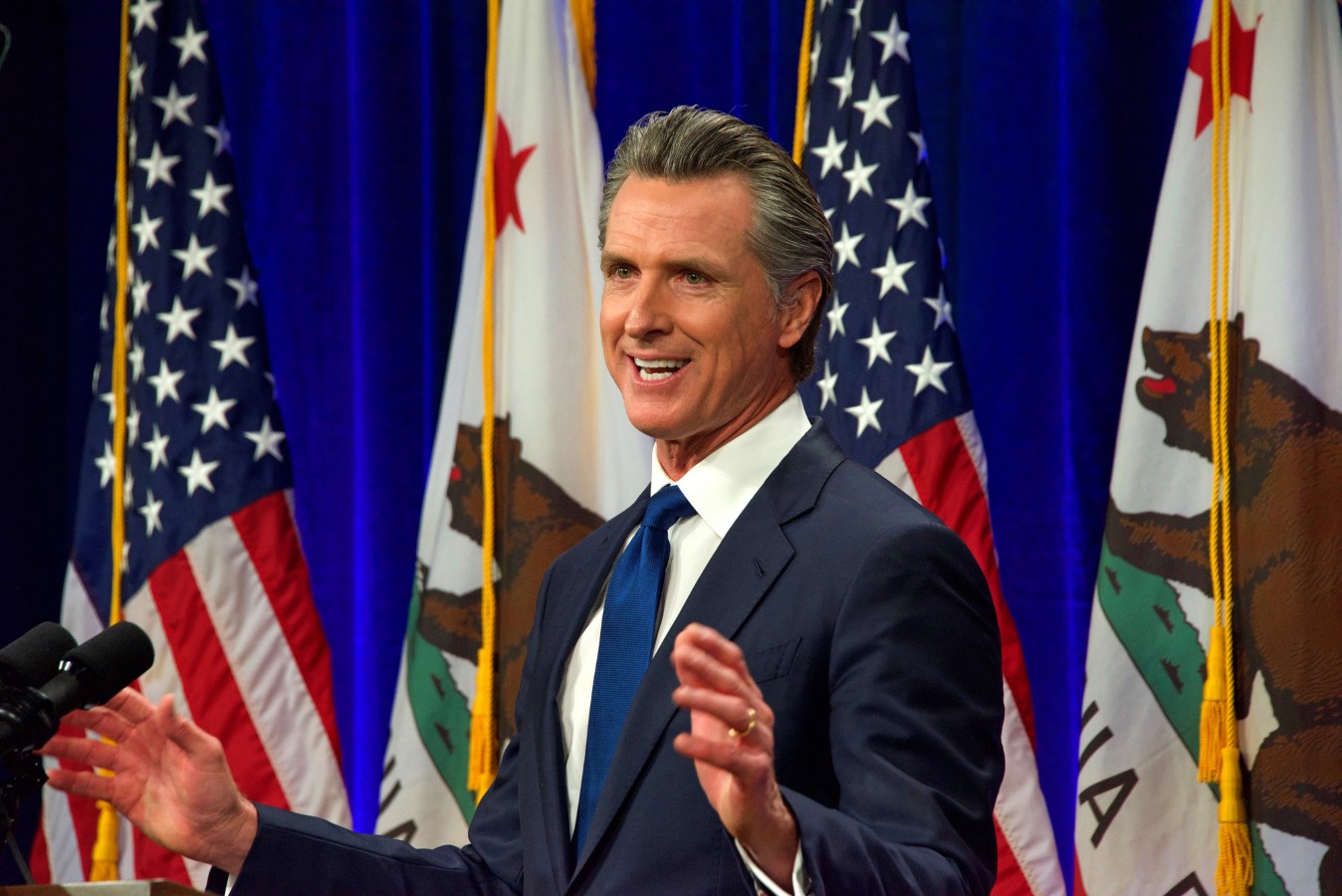
Newsom’s administration maintains that the revised tax is necessary to preserve healthcare financing as federal Medicaid changes put pressure on California’s funding system. State officials have argued that the plan seeks to balance concerns about higher premiums for people with private insurance against the potential loss of federal Medi-Cal funding.
A spokesperson for Newsom rejected the lawsuit’s allegations.
“The state disagrees with their claims, and we believe the courts will too,” said spokesperson Tara Gallegos.
H.D. Palmer, a spokesperson for the California Department of Finance, previously said the state was trying to balance affordability concerns for privately insured patients against large-scale federal Medi-Cal cuts. The administration’s position is that the state must adjust its financing system to comply with federal law and maintain healthcare services.
Newsom had warned during the Proposition 35 campaign that the initiative could “hamstring” the state budget, although he stopped short of opposing it. The current lawsuit puts that tension between voter-approved spending rules and the state’s budget flexibility back before the courts.
Health insurers say the tax conflicts with voter protections

The California Association of Health Plans argues that the revised tax would shift costs onto privately insured households and businesses, despite the voter-approved restrictions intended to govern healthcare taxes.
The medical association and health plans also argue that the state should not use the revised structure to sidestep the requirements of Proposition 35. Their case could determine how much flexibility California has to redirect healthcare tax revenue as federal rules change.
At the same time, healthcare providers have argued that Medi-Cal needs more reliable funding and that reimbursement rates should better reflect the cost of delivering care. That creates competing demands: protecting privately insured consumers from higher premiums, ensuring providers receive adequate payments and maintaining coverage for eligible low-income Californians.
The lawsuit threatens to complicate California’s plan to maintain Medi-Cal financing while adapting to federal Medicaid restrictions. If the state cannot implement a tax structure acceptable under both federal law and Proposition 35, officials could face pressure to find alternative revenue, revise the tax again or reconsider spending.
The potential effects extend beyond undocumented immigrants. Medi-Cal serves a broad population of low-income Californians, and changes in its funding could affect provider payments, healthcare access and the state budget. Meanwhile, privately insured households could face higher premiums if insurers pass along the additional tax costs.
The dispute also raises a broader policy question: how California should balance its commitment to broad healthcare coverage against the limits of public funding and the potential financial burden on taxpayers and private insurance customers.
Republicans are likely to continue emphasizing the cost of coverage for undocumented immigrants as part of that debate. State officials, however, point to federal financing changes as a direct reason for redesigning the MCO tax. Both issues matter to the wider funding debate, but the lawsuit itself focuses on whether the revised tax complies with Proposition 35.
What happens next

The California Supreme Court will consider the legal challenge to the revised tax. The outcome could affect how the state structures its healthcare taxes, directs the resulting revenue and seeks federal approval for the financing arrangement.
Federal approval also remains a key step before the revised tax can take effect as intended. Until the legal and regulatory questions are resolved, the ultimate effect on insurance premiums and Medi-Cal funding remains uncertain.
For Californians, the immediate concern is whether the dispute results in higher private insurance costs, changes to healthcare funding or further pressure on the state budget. The longer-term debate will likely continue to revolve around the cost of Medi-Cal, the state’s coverage policies for undocumented immigrants, federal Medicaid restrictions and how California pays for healthcare without shifting too much of the burden onto privately insured households.
Like Financial Freedom Countdown content? Be sure to follow us!

Did you find this article helpful? We’d love to hear your thoughts! Leave a comment with the box on the left-hand side of the screen and share your thoughts.
Also, do you want to stay up-to-date on our latest content?
1. Follow us by clicking the [+ Follow] button above,
2. Give the article a Thumbs Up on the top-left side of the screen.
3. And lastly, if you think this information would benefit your friends and family, don’t hesitate to share it with them!

John Dealbreuin came from a third world country to the US with only $1,000 not knowing anyone; guided by an immigrant dream. In 12 years, he achieved his retirement number.
He started Financial Freedom Countdown to help everyone think differently about their financial challenges and live their best lives. John resides in the San Francisco Bay Area enjoying nature trails and weight training.
Here are his recommended tools
Personal Capital: This is a free tool John uses to track his net worth on a regular basis and as a retirement planner. It also alerts him wrt hidden fees and has a budget tracker included.
Platforms like Yieldstreet provide investment options in art, legal, real estate, structured notes, venture capital, etc. They also have fixed-income portfolios spread across multiple asset classes with a single investment with low minimums of $10,000.