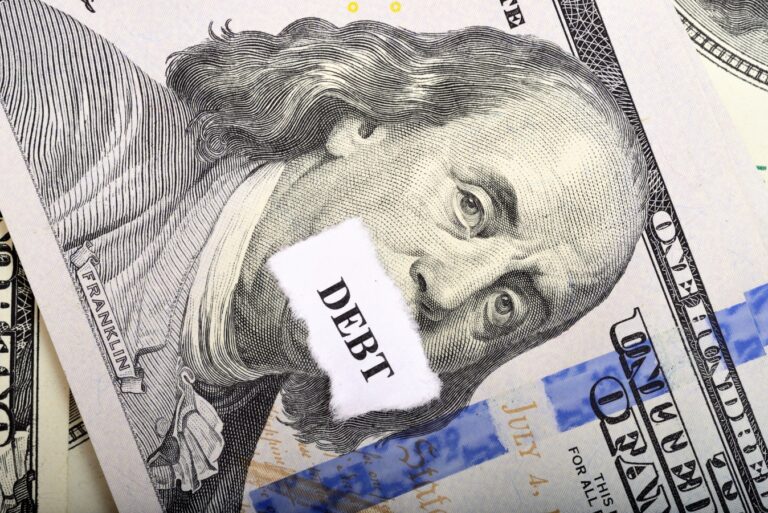
Rep. Anna Paulina Luna says Democrats blocked 2% student loan cap because it could make Republicans “look good”
A bipartisan effort to cap federal student loan interest rates at 2% has hit a new roadblock, with Rep. Anna Paulina Luna (R-Fla.) accusing Democratic House leadership of blocking efforts to advance the measure. In a post on X, Luna said she learned Democratic leaders had instructed members not to support the bill because doing so could make Republicans “look good ahead of the midterms.”
The development comes as millions of Americans continue to face high student loan interest rates and growing repayment pressures. Luna has argued that lowering rates to 2% would provide meaningful relief without broadly canceling student debt.
Luna escalated her criticism in a new post on X, saying Democratic leadership had instructed its members not to sign onto the legislation.
“Found out Democrat leadership has instructed their members NOT to sign onto the bill that would cap student loan interest at 2%… because it would make “Republicans” look good ahead of the midterms,” Luna wrote.
She added: “When you put power over people you have lost sight of what Congress was supposed to be about.”
Luna then summarized her accusation more directly: “Democrat House Leadership BLOCKED efforts to cap student loan interest at 2%.”
The claim adds a political dimension to an effort that Luna and Democratic Rep. Jared Moskowitz had previously presented as a bipartisan attempt to reduce the cost of student debt.
The dispute comes as borrowers could benefit from lower rates

Rep. Anna Paulina Luna (R-Fla.) was leading an effort to force a House vote on the proposal, arguing that soaring interest costs; not just loan balances; have made it increasingly difficult for millions of Americans to repay their student debt. If enacted, the measure would lower interest rates for both new and existing federal student loan borrowers.
Current federal rates are significantly higher, ranging from 6.52% for undergraduate loans to 8.07% for graduate loans and 9.07% for PLUS loans. Supporters argue that bringing those rates down could help borrowers pay more toward principal and less toward interest.
The legislation would also apply the lower rate retroactively to existing borrowers, potentially giving millions of people with outstanding federal loans an opportunity to reduce their long-term repayment costs.
Rep. Anna Paulina Luna announced on June 24 that she is filing a discharge petition to bring H.R. 2003, the Affordable Loans for Students Act, to the House floor for a vote.
Speaking during a CNN interview with Wolf Blitzer alongside Rep. Jared Moskowitz (D-Fla.), Luna argued that student loan reform has become an issue that affects Americans regardless of political affiliation.
A discharge petition is a procedural tool that allows lawmakers to force a vote on legislation if it receives signatures from a majority of House members, bypassing House leadership’s control over the legislative schedule.
“This is not a bailout,” Luna said. “This is about making sure Americans who are trying to build a better future don’t have to spend their whole lives trying to pay off their debts.”
Luna also said borrowers should not spend their working lives in what she described as “indentured servitude” while repaying student debt.
How the proposal would cap student loan interest rates

The legislation at the center of the effort is H.R. 2003, the Affordable Loans for Students Act, sponsored by Rep. Mike Lawler (R-N.Y.). It would amend federal law to cap student loan interest rates at 2%.
A separate procedural measure, H.Res. 1386, was introduced to bring H.R. 2003 to the House floor for debate and consideration. While the two measures are often mentioned together, they serve different purposes. H.R. 2003 contains the actual legislative language, while H.Res. 1386 is designed to force a House vote on that legislation.
The bill has attracted bipartisan support from Reps. Anna Paulina Luna (R-Fla.), Jared Moskowitz (D-Fla.), Jefferson Van Drew (R-N.J.) and Mariannette Miller-Meeks (R-Iowa).
Supporters argue that high interest rates make it difficult for borrowers to reduce their loan balances because much of their monthly payment goes toward interest rather than principal.
“It’s very hard to pay principal when you’re at 6%, 7%, 8%,” Moskowitz said. “You’re mostly paying interest.”
Current federal student loan rates remain well above the proposed 2% cap:
Undergraduate loans: 6.52%
Graduate loans: 8.07%
PLUS loans: 9.07%
Luna has said reducing rates to 2% could provide relief to roughly 42 million Americans with federal student loans while avoiding broad student debt cancellation.
What the legislation would do
The proposal would make several significant changes to the federal student loan program if enacted.
Among its key provisions, it would:
Cap federal student loan interest rates at 2% across all loan types.
Apply the lower rate retroactively to existing borrowers.
Automatically refinance eligible loans through the Department of Education.
Allow borrowers to opt out if they prefer to keep their current loan terms.
Supporters argue the changes would reduce borrowing costs while helping borrowers pay down principal more quickly.
Student loan borrowers face a costly repayment environment

The proposal comes as millions of federal student loan borrowers face significant repayment challenges ahead of major policy changes.
The Department of Education recently announced a temporary interest-rate reduction of up to 1% for eligible borrowers enrolled in automatic payments through June 2028.
Meanwhile, more than 300,000 borrowers have already exited the now-defunct SAVE repayment plan, while millions more remain in transition and could face higher monthly payments if they do not switch to another repayment option.
Higher education experts have previously estimated that the typical SAVE borrower carries approximately $60,000 in student debt at an average interest rate of 6.7%, illustrating how borrowing costs can substantially increase total repayment.
Delinquencies continue climbing across the student loan system. Financial pressures have intensified across the federal student loan system.
Federal Reserve Bank of New York data showed delinquent student loan balances reached a record $171.4 billion during the first quarter of 2026. Separate data also indicate that millions of borrowers remain delinquent or already in default.
How much borrowers could save

Earlier last month, Sen. Elizabeth Warren (D-Mass.) and more than 60 Democratic lawmakers urged the Trump administration to provide additional relief for eligible borrowers and delay collections on defaulted student loans, warning that recent policy changes could push more borrowers into financial hardship.
Across the United States, borrowers collectively owe approximately $1.69 trillion in federal student loan debt, with an average balance of roughly $39,547 per borrower.
Financial experts say the biggest benefit of a 2% interest cap would be lower lifetime borrowing costs rather than simply reducing monthly payments.
Borrowers with balances between $30,000 and $40,000 could save thousands of dollars in interest over the life of their loans while paying them off sooner. Those with graduate or professional school debt could potentially save more than $30,000 over time.
Lowering interest rates on both new and existing federal student loans to 2% would not eliminate monthly loan payments, but it could meaningfully reduce them, particularly for borrowers carrying larger balances. Supporters argue those savings could allow borrowers to purchase homes sooner, increase retirement contributions or invest in starting businesses instead of paying additional interest.
Experts see benefits but also potential drawbacks

While experts agree lower interest rates would reduce repayment costs, some caution that the proposal could create unintended consequences.
A 2% interest rate would lower borrowing costs for current borrowers. However, critics argue the policy could have unintended consequences by encouraging people to borrow more while increasing the federal government’s financial exposure.
Supporters say the proposal would ease repayment burdens, but opponents note that the federal government generates substantial revenue from student loan interest. They argue that reducing rates to 2% while Treasury borrowing costs remain significantly higher could reduce federal revenue by an estimated $16 billion over a decade, making the proposal difficult to advance without offsetting spending cuts or tax increases.
Lawler, one of the bill’s sponsors, said lowering interest rates would remove barriers that prevent borrowers from achieving long-term financial stability.
“This is a game-changer for millions of Americans looking to build a better future without the weight of overwhelming student loan debt holding them back. By adjusting the rate to 2 percent and doing this retroactively, we’re giving borrowers the flexibility they need to pay off their debt without unnecessary obstacles, like the outrageous additional cost post-graduation that is now synonymous with quality education,” Representative Mike Lawler, a Republican from New York, said in a statement.
Now political divisions remain a significant obstacle.
The proposal now faces major hurdles in Congress
The proposal remains in the early stages of the legislative process.
Despite bipartisan backing, the proposal faced significant political hurdles. Congress remains deeply divided over student loan policy, and previous efforts to reduce borrowers’ financial burden have struggled to gain enough support. Even so, reducing interest rates may prove more politically acceptable than broad loan forgiveness because it lowers repayment costs without canceling debt outright.
Rep. Luna has repeatedly argued that the proposal should not be viewed as a bailout or partisan debt-forgiveness measure. She says a 2% cap would instead reduce the cost of existing debt and help Americans repay what they already owe.
Her latest X post, however, has shifted the debate toward the political fight over whether the proposal will receive support in the House.
If Luna’s account of Democratic leadership’s position holds, the 2% student loan interest cap could face a significant obstacle before lawmakers even reach a final vote. For borrowers hoping for lower repayment costs, the next question is whether bipartisan support can overcome the political battle now surrounding the proposal.
Like Financial Freedom Countdown content? Be sure to follow us!
14 essential strategies to maximize your Social Security and avoid costly mistakes

Social Security is a vital lifeline for many seniors, providing crucial income support during retirement. With inflation at its highest in four decades, Social Security’s inflation-adjusted benefits offer protection against rising costs.
Rising interest rates have disrupted many retirement portfolios, causing bond fund values to plummet. In this volatile financial landscape, Social Security can stabilize a typical stock-bond retirement portfolio. By implementing smart strategies, retirees can maximize their Social Security benefits and ensure a more secure financial future.
14 Essential Strategies to Maximize Your Social Security and Avoid Costly Mistakes
11 reasons you should claim Social Security early

Deciding when to claim Social Security is often about maximizing your benefit. Financial planners usually advise delaying your claim for as long as possible to secure the highest monthly payment. Your benefit is based on your lifetime earnings, with a full payout available at your full retirement age (FRA), which is currently between 66 and 67 depending on your birth year. Claiming before FRA results in a permanent reduction in your monthly benefit, while waiting beyond FRA leads to a permanent increase. However, the decision isn’t solely about maximizing the monthly check. Personal factors such as health, family circumstances, and financial needs can play a significant role in determining the right time to claim.
11 Reasons You Should Claim Social Security Early
Did you find this article helpful? We’d love to hear your thoughts! Leave a comment with the box on the left-hand side of the screen and share your thoughts.
Also, do you want to stay up-to-date on our latest content?
1. Follow us by clicking the [+ Follow] button above,
2. Give the article a Thumbs Up on the top-left side of the screen.
3. And lastly, if you think this information would benefit your friends and family, don’t hesitate to share it with them!

John Dealbreuin came from a third world country to the US with only $1,000 not knowing anyone; guided by an immigrant dream. In 12 years, he achieved his retirement number.
He started Financial Freedom Countdown to help everyone think differently about their financial challenges and live their best lives. John resides in the San Francisco Bay Area enjoying nature trails and weight training.
Here are his recommended tools
Personal Capital: This is a free tool John uses to track his net worth on a regular basis and as a retirement planner. It also alerts him wrt hidden fees and has a budget tracker included.
Platforms like Yieldstreet provide investment options in art, legal, real estate, structured notes, venture capital, etc. They also have fixed-income portfolios spread across multiple asset classes with a single investment with low minimums of $10,000.