
Trump lets bipartisan housing bill become law without signing in protest over voter ID bill

One of the most significant bipartisan housing bills in years officially became law Friday after President Donald Trump chose to let it take effect without his signature.
Trump announced on Truth Social that he would not sign the 21st Century ROAD to Housing Act, saying he was protesting the Senate’s failure to pass the SAVE America Act, a Republican-backed voter identification measure he has been urging lawmakers to approve.
The 21st Century ROAD to Housing Act cleared Congress with overwhelming bipartisan support, but Trump unexpectedly halted a planned signing ceremony last week, arguing lawmakers should instead focus on the SAVE America Act, a voter identification proposal that currently lacks enough support to pass the Senate.
Trump chose not to sign the legislation before Friday’s constitutional deadline, allowing it to become law automatically while Congress remained in session.
In a Truth Social post Friday morning, Trump wrote: “I will not sign the Housing Bill, which has been fully approved by Congress and sent to the White House, in PROTEST over the fact that the United States Senate is not capable of passing THE SAVE AMERICA ACT.”
Although Trump declined to sign it, he also chose not to veto the legislation. Because Congress remained in session after formally presenting the bill on June 29, the Constitution allowed it to become law automatically once the review period expired.
The measure has been hailed by supporters as the most significant federal housing package in years, while critics question whether one of its most high-profile provisions will meaningfully improve affordability.
Congress overwhelmingly approved the housing package
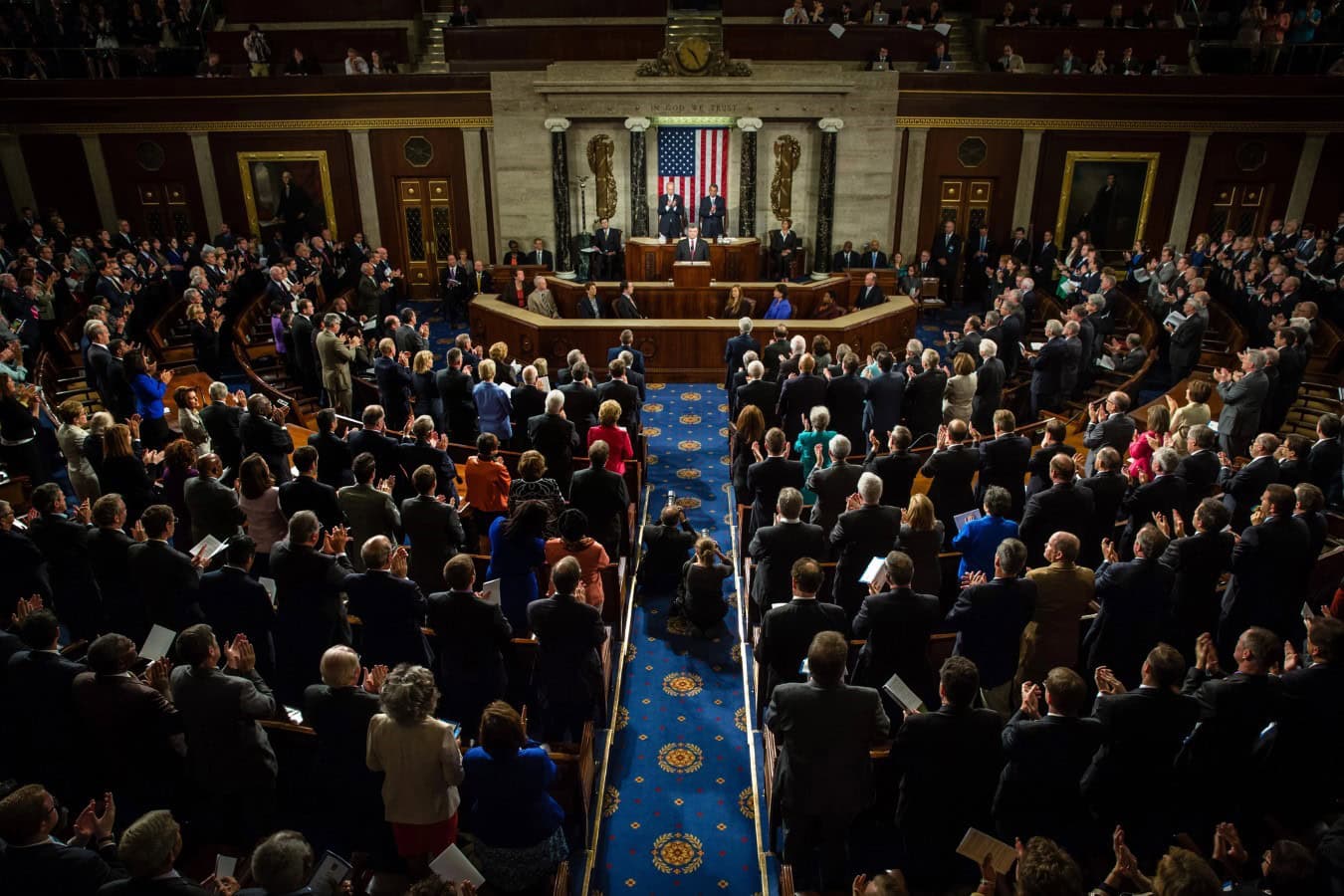
The House of Representatives voted 358-32 to approve the 21st Century ROAD to Housing Act after the Senate previously passed the legislation by an 85-5 margin.
The unusually broad bipartisan support reflects the growing urgency surrounding America’s housing affordability crisis. Major bipartisan legislation has become increasingly uncommon in Washington, making the measure one of the most notable examples of cross-party cooperation in recent years.
House Speaker Mike Johnson formally presented the bill to President Trump on June 29, beginning the constitutional review period for presidential action.
Although Trump declined to sign the legislation, House Speaker Mike Johnson said beforehand that he expected the measure to become law regardless.
“I hope he does sign it,” Johnson told reporters after transmitting the legislation to the White House. “If he doesn’t, it’s still law. We’ll still celebrate it.”
Johnson added that he understood Trump was trying to emphasize the importance of the SAVE America Act.
“And I think he’s making it very effectively,” he said.
Housing affordability has become a nationwide crisis

Lawmakers say the legislation responds to years of worsening affordability that have pushed homeownership beyond the reach of many Americans.
Housing affordability remains a significant challenge. According to the National Association of Realtors, the median existing-home sales price reached a record $440,600 in June, up 1.8% from a year earlier and the highest level since records began in 1999.
According to Redfin, a household now needs to earn nearly $117,000 annually to afford the typical home for sale; roughly $30,000 more than the income earned by the average American household.
Rent has also climbed sharply. Zillow reports the median asking rent is now around $1,951 per month, up roughly 40% from $1,392 seven years ago.
The shortage has also delayed homeownership for younger buyers, with the average first-time homebuyer now reaching 40 years old.
America remains millions of homes short. Supporters of the legislation argue that the country’s housing shortage is the central driver behind rising prices.
The United States is estimated to face a shortage of approximately 4.7 million housing units, a gap created over years of underbuilding, supply chain disruptions, rising construction costs and higher borrowing costs.
During House debate, Financial Services Committee Chairman French Hill emphasized the scale of the challenge.
“America is facing a housing supply shortage that’s been years in the making,” Hill said.
Fresh survey data released this week also showed housing demand remains resilient despite affordability challenges, with a majority of Americans saying they would rather buy a home than rent or move in with relatives for the first time since 2023.
Bill aims to boost construction and expand homeownership

Senator Elizabeth Warren, one of the legislation’s leading Democratic supporters, highlighted the provision after Congress passed the bill.
“This bill helps us demonstrate our commitment to bringing down costs,” Warren said. “We’re not in the majority, but we got in there and fought for 47 different provisions to lower costs for American families and to beat back private equity, and we made it happen.”
The legislation contains dozens of provisions intended to encourage residential construction and improve access to affordable housing.
Supporters say it would streamline regulations that frequently delay projects while modernizing banking rules affecting mortgage lending.
Among the most significant provisions are measures that would:
streamline environmental reviews
incentivize local governments to build more housing
expand modular/manufactured housing
improve mortgage access
limit institutional investors owning 350+ homes
encourage communities that reform zoning
create pattern-book grants
reduce manufactured home costs by an estimated $5,000-$10,000
Supporters argue these changes could help increase housing supply over time and ease upward pressure on prices.
Investor restrictions become one of the bill’s most debated provisions
One of the bill’s highest-profile sections targets large institutional investors in the single-family housing market.
The provision, titled “Homes Are For People, Not Corporations,” would prohibit investors owning more than 350 single-family homes from purchasing additional single-family houses.
The measure reflects bipartisan concerns that Wall Street firms have reduced opportunities for traditional homebuyers in some markets.
Economists question whether the bill will lower housing costs

While lawmakers from both parties backed the investor restrictions, several housing economists cautioned that the policy may have only a limited effect on affordability.
Housing experts also note that many of the factors driving affordability remain outside the federal government’s control.
Local zoning regulations, labor shortages, construction costs and mortgage rates continue to influence how many homes are built and how affordable they become. Mortgage rates remain around 6.5% for a 30-year fixed loan, well above pandemic-era levels.
Sarah Brundage, president of the National Association of Affordable Housing Lenders, said the legislation is an important first step even though meaningful affordability improvements will take years.
“We have to take the time to celebrate that we have bipartisan champions,” Brundage said. “Moving forward in 2028 and beyond, I don’t think anyone can run for public office without having a perspective of how housing needs to be prioritized.”
Institutional investors own roughly 3% of the nation’s single-family rental market, according to economists.
Rental housing economist Jay Parsons argued that many renters served by institutional landlords are not currently in a position to become homeowners regardless of investor ownership.
“People want to identify a boogeyman that can say: ‘Hey, this is the problem, and give me an easy button to solve it right now,'” Parsons said. “It’s an emotionally satisfying answer, even if it’s not a real solution.”
He added:
“These are real people, real families, who live in these homes, and the assumption and the narrative is they would be homeowners, if not for the fact that the investors own these houses. The reality is that most of them can’t.”
According to 2026 Amherst Group data, the average single-family renter has a household income of $88,000 and a 650 FICO score, compared with more than $150,000 in income and a 730 FICO score for the average single-family homeowner.
Rental industry warns of unintended consequences
Opponents of the investor restrictions argue the provision could reduce rental housing supply rather than improve affordability.
The National Rental Home Council, whose members include some of the nation’s largest single-family rental companies, warned that limiting institutional ownership could slow construction of rental homes and reduce housing options for lower-income families.
Industry representatives also note there are approximately 1 million fewer single-family rental homes today than a decade ago, while the share of single-family homes used as rentals has gradually declined since 2014, according to a 2025 National Association of Realtors analysis.
Some economists also point to rising mortgage delinquency rates among lower-income borrowers as evidence that many renters still face substantial barriers to homeownership beyond housing supply alone.
Trump calls the bill “a yawn” as he pushes voting legislation

Despite the overwhelming bipartisan support, Trump declined to sign the legislation and instead urged Congress to prioritize the SAVE America Act, legislation addressing voter identification and mail-in voting.
In a Truth Social post, Trump wrote: “The Elizabeth ‘Pocahontas’ Warren centric housing bill, which is of minor importance compared to lower interest rates, and even FISA, pales in comparison to passing THE SAVE AMERICA ACT.”
He later told reporters the housing legislation was “so unimportant” and “a yawn” compared with the election bill.
Trump also urged Senate Republicans to consider eliminating the legislative filibuster.
“Get the bad Republicans to approve it or, better yet, Terminate the Filibuster and approve it, AND EVERYTHING ELSE REPUBLICANS HAVE EVER DREAMED OF.”
He further warned: “The Dumocrats will do it in hour one, 100%. Republicans will feel very stupid if they don’t do it first. I’ll be watching with tears in my eyes!!!”
Senate Majority Leader John Thune has said Republicans currently do not have enough votes to pass the SAVE America Act.
Warren criticizes Trump for refusing to sign housing bill

Since Congress approved the legislation, Warren has repeatedly urged Trump to allow it to become law.
Among her posts on X, she wrote: “We passed a massive, bipartisan bill to lower housing costs and stop private equity from gobbling up homes.
But Donald Trump won’t sign it.”
She also posted: “We are in a housing emergency all across this country.
Prices are up because we have not built enough housing over the last few decades.
We need millions more units in the United States.
Why is Trump holding up the bipartisan housing bill?”
Later she added: “Tick tock, Mr. President.
The American people are waiting for lower housing costs.”
After House Speaker Mike Johnson transmitted the legislation to the White House, Warren continued criticizing the delay, writing: “It’s been a week and the President still hasn’t signed the bipartisan housing bill.
Donald Trump does not care if you can afford to buy a house.”
She also highlighted Republican support for the measure, posting: “Last week, Congress passed a bipartisan bill to lower housing costs. Now, Trump is refusing to sign it. Listen to the President’s own Republican Party talk about the bill that’s gathering dust on his desk:”
In another post promoting the legislation, Warren wrote: “Our bipartisan housing bill is a big deal for cities across this county. Just one example: it would reduce the cost of a new manufactured home by up to $10,000.
Americans don’t have to time to wait. Republican and Democratic mayors have a united message: let’s get it done!”
Senate Democratic Leader Chuck Schumer criticized Trump’s decision on X, writing: “His priorities couldn’t be clearer: higher cost for families and more power for himself.”
Democrats argued Trump’s refusal to sign the bipartisan legislation undermined Republican efforts to demonstrate progress on one of voters’ biggest economic concerns heading into the midterm elections.
Broad support extends beyond Congress

The legislation has attracted support from mortgage lenders, homebuilders, civic organizations and affordable housing advocates, all of whom argue that increasing housing supply is essential to improving affordability.
Public support also appears strong. A recent poll by the American Property Owners Alliance, a nonprofit funded by the National Association of Realtors, found that 89% of registered voters support the legislation.
Still, analysts caution that the measure is unlikely to produce immediate results because many housing regulations remain under state and local control.
Morgan Stanley strategists led by James Egan wrote in a June research note: “The impact of these changes should be incrementally positive for demand and, depending on implementation, potentially more positive for supply, but those changes will take time.”
What the new housing law means for the housing market

The 21st Century ROAD to Housing Act officially became law Friday despite President Trump’s decision not to sign it, marking one of the largest bipartisan housing reforms enacted in years.
Supporters believe its incentives to build more homes, modernize financing and reduce regulatory barriers could gradually improve affordability, while critics argue its limits on institutional investors are unlikely to substantially lower home prices and that broader challenges; including zoning restrictions, labor shortages and elevated mortgage rates; will continue to weigh on the housing market. Most experts agree that any measurable impact on affordability will take years to materialize.
Like Financial Freedom Countdown content? Be sure to follow us!
Student loan debt is putting retirement plans at risk for millions of older Americans as Social Security withholding concerns grow

Student loan debt is no longer just a challenge for recent college graduates. A growing number of Americans in their 60s and 70s are entering retirement while still making monthly loan payments, with some seeing balances grow despite decades of repayment. More than 3 million people age 62 and older now hold federal student loan debt, according to Education Department data. For many, rising balances, fixed retirement incomes and upcoming federal repayment changes are forcing difficult financial decisions, while borrowers who default could even see a portion of their Social Security benefits withheld.

Did you find this article helpful? We’d love to hear your thoughts! Leave a comment with the box on the left-hand side of the screen and share your thoughts.
Also, do you want to stay up-to-date on our latest content?
1. Follow us by clicking the [+ Follow] button above,
2. Give the article a Thumbs Up on the top-left side of the screen.
3. And lastly, if you think this information would benefit your friends and family, don’t hesitate to share it with them!

John Dealbreuin came from a third world country to the US with only $1,000 not knowing anyone; guided by an immigrant dream. In 12 years, he achieved his retirement number.
He started Financial Freedom Countdown to help everyone think differently about their financial challenges and live their best lives. John resides in the San Francisco Bay Area enjoying nature trails and weight training.
Here are his recommended tools
Personal Capital: This is a free tool John uses to track his net worth on a regular basis and as a retirement planner. It also alerts him wrt hidden fees and has a budget tracker included.
Platforms like Yieldstreet provide investment options in art, legal, real estate, structured notes, venture capital, etc. They also have fixed-income portfolios spread across multiple asset classes with a single investment with low minimums of $10,000.