Elizabeth Warren demands SEC probe into Trump memecoin as an “illegal scam” after 1 million investors lose $3.8 billion

U.S. Senators Elizabeth Warren (D-Mass.) and Richard Blumenthal (D-Conn.) are demanding that federal regulators launch a formal investigation into President Donald Trump’s digital currency venture, questioning whether the token violated securities laws or functioned as an illegal financial scheme.
The call for oversight comes after financial data revealed that nearly 1 million retail investors suffered billions of dollars in losses following the launch of the token, even as the president disclosed hundreds of millions of dollars in personal profits from the venture.
In a joint letter sent to Securities and Exchange Commission (SEC) Chair Paul Atkins on 4th August, lawmakers urged regulators to examine the financial mechanics behind the $TRUMP token. Official statements published by the U.S. Senate Banking Committee confirm that the lawmakers requested a comprehensive probe into potential fraud and unjust enrichment.
In their communication, the lawmakers wrote: “We request that you exercise your authority to investigate the President’s memecoin to detect any illegal fraud or unjust enrichment that the coin may have facilitated.”
Highlighting the token’s dramatic collapse, the senators expressed concern over the disparity between promotional messaging and financial reality. “We are concerned that President Trump’s memecoin scheme may constitute an illegal scam, such as a ‘rug pull,’” the senators noted, adding: “Given sharp depreciation in the coin’s value—despite the hype coming directly from the President’s own public statements—the SEC must investigate whether a fraudulent scheme may be underway, and prevent further extraction of enormous value from the hundreds of thousands of investors who put their faith in Trump’s coin.”
Retail buyers absorb $3.8 billion in losses as token crashes

Close to a million investors of the Trump memecoin lost a collective $3.8 billion, even as the president disclosed $636 million in earnings. Of the 1.48 million wallets that bought the $TRUMP memecoin since it launched just three days before Trump’s second inauguration last year, about 66%, or 988,905 wallets, had lost money by the end of June.
According to data from blockchain analytics firm Nansen, reported by the New York Times and featured in financial analysis by The Straits Times, the combined losses were $3.81 billion.
The $TRUMP crypto is a memecoin, meaning its value isn’t tied to anything intrinsic. Because of this, the coin’s value can vary wildly. And indeed it has: the coin on Tuesday was trading at $1.68, down 97% from its all-time-high of $75.35.
President Trump pockets $636 million despite token collapse
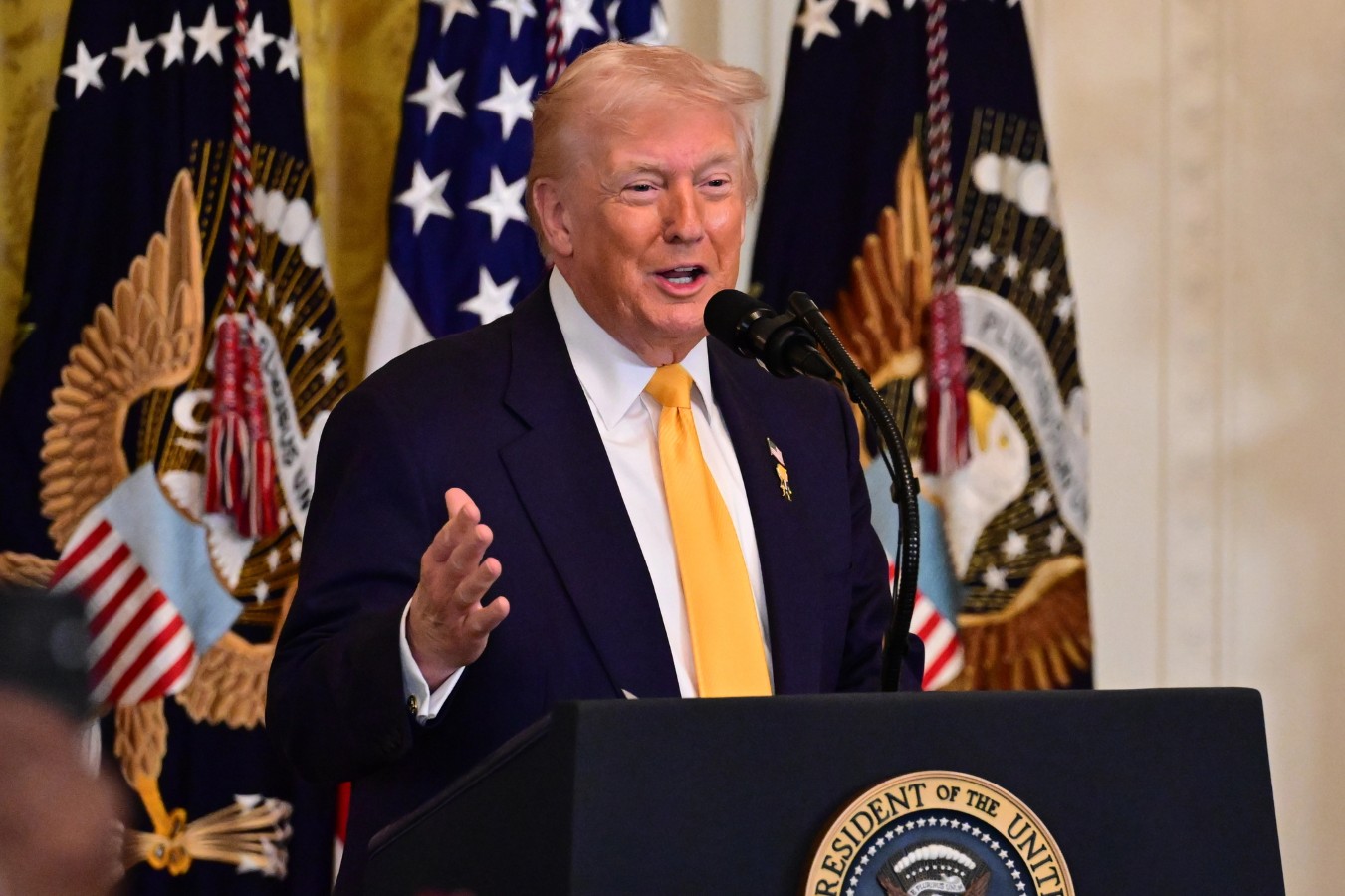
The losses are stark given that President Trump has claimed large profits from the token, which although digital, is represented by a picture of him with his fist in the air and the words “Fight, Fight, Fight,” in reference to the Butler, PA attempt on his life in 2024.
According to the president’s most recent financial disclosures, he had pocketed $636 million from the $TRUMP memecoin alone.
While major losses have hit retail investors, Trump, once a cryptocurrency skeptic, has seen his crypto businesses quickly become a major part of his financial empire. His latest financial disclosure, as required to be filed with the U.S. Office of Government Ethics, showed that his crypto earnings reached $1.4 billion last year, making up the majority of what Trump has earned since returning to office.
Trump Organization affiliates CIC Digital and Fight Fight Fight LLC own roughly 80% of the token supply, and Trump earns transaction fees each time the coin is bought or sold, according to CNN, meaning he profits regardless of whether the price rises or falls.
While the coin’s own website says it is not an investment opportunity and is instead “intended to function as an expression of support for, and engagement with, the ideals and beliefs embodied by the symbol “$TRUMP” and the associated artwork,” many investors bought the coin with the hope that it might surge in value during Trump’s presidency.
Early buyers cash in as broad retail majority suffers losses

With the Trump memecoin, only fewer than 500,000 people actually made money, totaling $4 billion in gains, according to the Nansen report. Still, these gains represented mostly early buyers who got in during the first hours of trading, before the token surged and then crashed.
The Nansen report said that the group who won on Trump’s memecoin “reflects a small number of early buyers capturing enormous gains while the broad retail majority absorbed the losses.”
This is a common dynamic with meme coins. While early buyers and insiders often profit when a coin takes off, retail investors who arrive later are often left with the steepest losses.
Trump also used his large social media presence to announce the coin in posts on both X and Truth Social when the coin launched last January.
“My NEW Official Trump Meme is HERE! It’s time to celebrate everything we stand for: WINNING! Join my very special Trump Community,” he wrote at the time.
But for his followers who put money into the token, the result has brought on less winning than expected.
White House rejects conflict of interest concerns
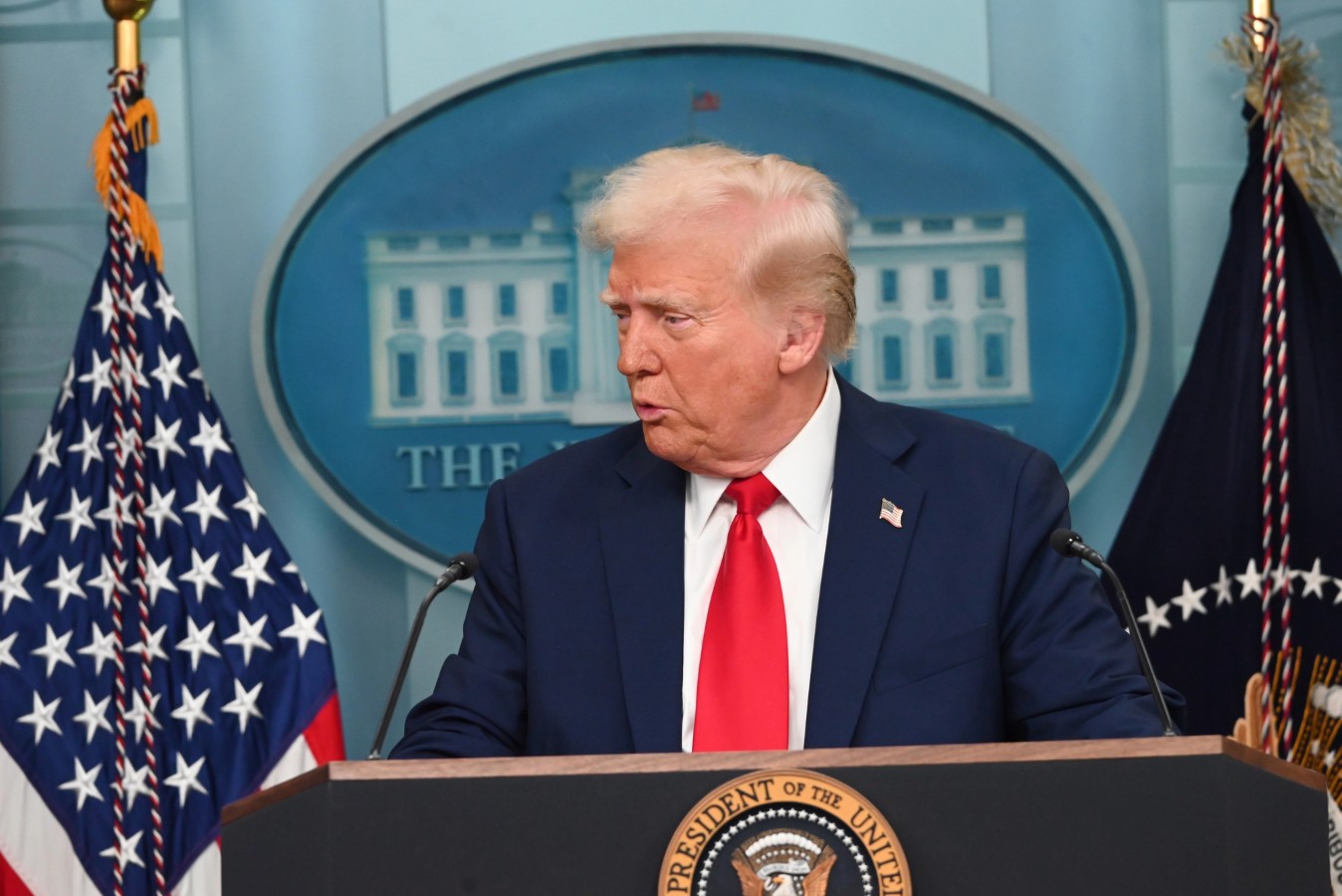
As for the White House, a spokesperson told the Associated Press that Trump is not involved in business decisions, and that “neither the President nor his family has ever engaged—or will ever engage—in conflicts of interest.”
When reached for comment, the White House referred Fortune to the Trump organization. Meanwhile, during public remarks, President Trump maintained that he complied with all applicable regulations and assigned the management of his personal financial holdings to his sons upon returning to public office.
Regulatory uncertainty surrounds SEC enforcement over memecoins
Regulatory enforcement regarding digital tokens faces complex jurisdictional hurdles. As highlighted in reporting by CNN on the SEC investigation, the commission issued updated guidance indicating that memecoins generally do not fit the legal definition of traditional financial securities.
Under that framework, federal guidance notes that “Neither meme coin purchasers nor holders are protected by the federal securities laws.” However, congressional leaders argue that potential conflicts of interest and massive consumer harm justify an extraordinary administrative review to determine whether deceptive practices or unjust enrichment took place.
Growing political fallout sets up high-stakes showdown over crypto ethics
Apart from his earnings from the $TRUMP coin, his companies also received $799 million from World Liberty Financial, the crypto venture he co-founded with his sons, Donald Trump Jr. and Eric Trump.
That sum included about $250 million from selling his interests in World Liberty Financial as well as more than $520 million from sales of another token, World Liberty Financial’s WLFI token, which has also plummeted more than 80% from its peak.
As Congress continues to debate broader crypto market structure legislation, the fallout surrounding the $TRUMP token highlights an unprecedented tension between presidential business interests, digital finance, and retail investor protection.
With lawmakers pressing SEC Chair Paul Atkins to investigate whether laws were broken or investors were exploited, the outcome of this probe could set a lasting precedent for how digital assets are regulated at the highest levels of government. Whether federal regulators take aggressive enforcement action or Congress enacts stricter ethical guardrails, the ongoing scrutiny underscores the mounting political and legal pressure surrounding executive-linked cryptocurrency ventures.
Like Financial Freedom Countdown content? Be sure to follow us!
14 essential strategies to maximize your Social Security and avoid costly mistakes

Social Security is a vital lifeline for many seniors, providing crucial income support during retirement. With inflation at its highest in four decades, Social Security’s inflation-adjusted benefits offer protection against rising costs.
Rising interest rates have disrupted many retirement portfolios, causing bond fund values to plummet. In this volatile financial landscape, Social Security can stabilize a typical stock-bond retirement portfolio. By implementing smart strategies, retirees can maximize their Social Security benefits and ensure a more secure financial future.
14 Essential Strategies to Maximize Your Social Security and Avoid Costly Mistakes
11 reasons you should claim Social Security early

Deciding when to claim Social Security is often about maximizing your benefit. Financial planners usually advise delaying your claim for as long as possible to secure the highest monthly payment. Your benefit is based on your lifetime earnings, with a full payout available at your full retirement age (FRA), which is currently between 66 and 67 depending on your birth year. Claiming before FRA results in a permanent reduction in your monthly benefit, while waiting beyond FRA leads to a permanent increase. However, the decision isn’t solely about maximizing the monthly check. Personal factors such as health, family circumstances, and financial needs can play a significant role in determining the right time to claim.
11 Reasons You Should Claim Social Security Early

Did you find this article helpful? We’d love to hear your thoughts! Leave a comment with the box on the left-hand side of the screen and share your thoughts.
Also, do you want to stay up-to-date on our latest content?
1. Follow us by clicking the [+ Follow] button above,
2. Give the article a Thumbs Up on the top-left side of the screen.
3. And lastly, if you think this information would benefit your friends and family, don’t hesitate to share it with them!

John Dealbreuin came from a third world country to the US with only $1,000 not knowing anyone; guided by an immigrant dream. In 12 years, he achieved his retirement number.
He started Financial Freedom Countdown to help everyone think differently about their financial challenges and live their best lives. John resides in the San Francisco Bay Area enjoying nature trails and weight training.
Here are his recommended tools
Personal Capital: This is a free tool John uses to track his net worth on a regular basis and as a retirement planner. It also alerts him wrt hidden fees and has a budget tracker included.
Platforms like Yieldstreet provide investment options in art, legal, real estate, structured notes, venture capital, etc. They also have fixed-income portfolios spread across multiple asset classes with a single investment with low minimums of $10,000.