Health insurance costs could jump 8.2% in 2027 even as Trump pushes new drug-price cuts nationwide
Millions of Americans could see more of their paychecks go toward health insurance in 2027 as employers prepare for another sharp increase in healthcare costs. At the same time, President Donald Trump is highlighting a new Medicaid drug-pricing agreement covering all 50 states as an administration achievement aimed at lowering prescription drug costs.
More than 165 million Americans rely on employer-sponsored healthcare coverage, making changes to workplace insurance costs significant for households across the country.
Mercer projects healthcare costs per employee will increase 8.2% in 2027, the steepest increase since 2003 and the fifth consecutive year of elevated costs, based on a survey of 1,800 U.S. employers. The increase could affect workers through higher premiums, deductibles and other out-of-pocket expenses.
The healthcare cost pressures come as the administration seeks to demonstrate progress on prescription drug prices ahead of the 2026 midterm elections, when healthcare affordability is expected to remain an important issue for voters.
Employer health costs are projected to rise 8.2% in 2027

Mercer’s projection represents another significant increase in the cost of providing health benefits to employees. The consulting firm said employers are continuing to face medical cost pressures from expensive treatments, provider consolidation and growing use of certain high-cost medications.
The 8.2% projected increase is an employer-side figure, however, and does not necessarily mean every worker will see an 8.2% increase in their insurance deduction.
Instead, companies can decide how much of the increase to absorb and how much to pass on to employees. Two-thirds of companies with at least 500 employees plan to increase workers’ premium contributions, according to Mercer.
That means the impact could extend beyond the health insurance line on a paycheck.
Employees can experience higher healthcare costs in several ways.
Employers can increase the share of premiums workers pay, raise deductibles or increase copays. Mercer found that almost half of companies with 500 or more employees plan to make changes to existing medical plans that could translate into higher costs for employees in 2027.
Workers with family coverage contributed an average of about $6,850 toward premiums last year, according to the supplied data.
Employers are going to absorb some portion of it at the employer level, and then they’re going to push the rest to the employee. An increase in out-of-pocket costs are going to hit the employee, and both of those things are not sustainable.
For households already dealing with higher everyday expenses, additional health insurance costs could therefore become another source of pressure on disposable income.

The cost of health insurance is already a major component of what employers spend beyond workers’ wages.
Private employers paid approximately $3.48 per hour worked for employees’ health insurance in June, according to Bureau of Labor Statistics data. Total benefit costs averaged $14.07 per hour.
That means health insurance represented a substantial portion of employer-paid benefits before the projected 2027 increase.
The distinction between wages and benefits is important because employees may not immediately see the full cost of employer-sponsored coverage. Employers pay part of the premium directly, while workers generally see their own share deducted from their paychecks.
Higher healthcare spending can affect workers even when their direct insurance deduction does not rise dramatically.
Employers generally have a finite amount available for total compensation, including wages, health insurance and other benefits. If healthcare consumes a larger portion of that compensation budget, less money may be available for salary increases.
The Congressional Budget Office considers employer health insurance contributions part of household income because they function as a substitute for cash wages. CBO’s analysis found that salaries declined from 91% of total worker compensation in 1960 to an average of about 82% over the past decade.
CBO also projects that health insurance costs will slightly outpace wages over the next 30 years.
Expensive treatments and GLP-1 drugs are adding to the pressure

Several factors are contributing to the projected 2027 increase.
Mercer pointed to hospital consolidation and reduced government spending on healthcare as structural factors keeping healthcare costs above inflation. Expensive new cancer treatments, GLP-1 weight-loss drugs and AI-enabled medical billing are also contributing to cost growth.
Mercer chief actuary Sunit Patel estimated that GLP-1 use alone accounted for one percentage point of total health cost growth projected for 2027.
The combination of high-cost specialty treatments and growing demand for newer medications means employers are facing pressure from both traditional medical expenses and newer categories of healthcare spending.
Trump announces Medicaid drug-pricing model for all 50 states
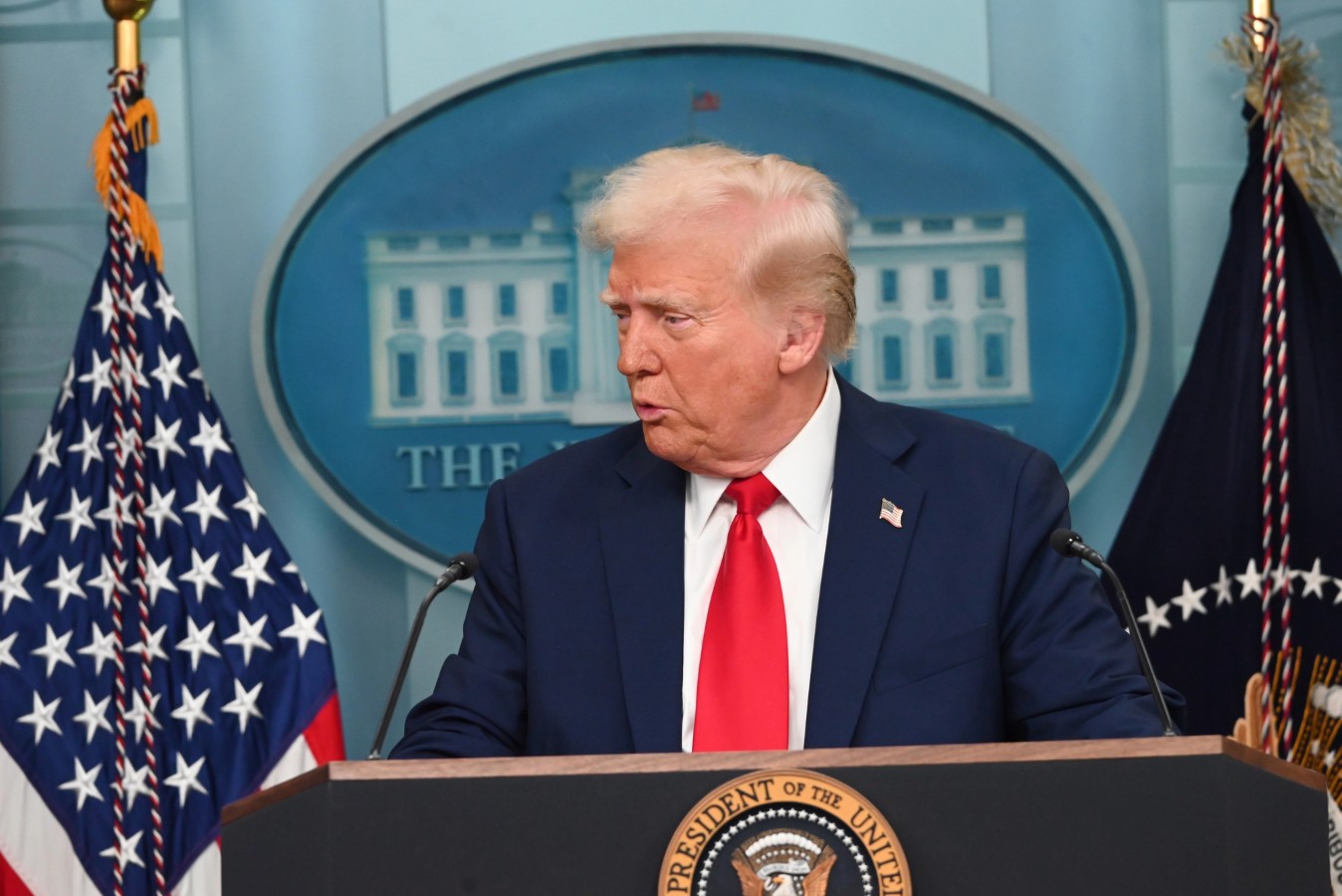
Against that backdrop, Trump announced September 18 that all 50 state Medicaid programs would participate in the administration’s GENEROUS Medicaid Payment Model.
The Centers for Medicare & Medicaid Services said all 50 states, the District of Columbia and Puerto Rico had applied to participate. CMS said 40 states and Puerto Rico had already signed agreements, with the initiative using most-favored-nation pricing for certain prescription drugs.
Under the model, participating pharmaceutical manufacturers provide rebates intended to ensure Medicaid’s final price for selected drugs does not exceed the most-favored-nation benchmark based on prices in other developed countries. The White House said the program covers hundreds of drugs across major categories, including cancer, diabetes and asthma medicines.
Trump presented the nationwide participation as a major healthcare policy achievement.
“This one thing alone should win us the midterms. It won’t, because the press doesn’t report it,” Trump told reporters in the Oval Office.
The announcement comes as healthcare affordability remains a major issue heading into the November 2026 midterm elections.
The White House has pointed to the Medicaid agreement as part of a broader record on prescription drug prices.
In a September 18 release, the administration said 26 major drugmakers covering about 90% of the branded U.S. market had agreed to most-favored-nation pricing arrangements. The White House said those agreements are projected to save Americans more than $600 billion, while the Medicaid agreements could unlock nearly $65 billion in savings over the next decade. Those figures are administration estimates rather than realized savings.
The White House also said TrumpRx, the administration’s prescription drug platform, had generated more than $700 million in savings and covered more than 1,000 branded and generic medicines. These figures were provided by the administration in its September 18 announcement.
The White House described the developments as evidence that Trump’s drug-pricing agenda is producing measurable results.
The administration also highlighted an agreement under which Medicaid programs have already received one million free prescriptions of Eliquis, a widely used heart medication.
Analysts say the Medicaid savings are not guaranteed

The projected savings from the GENEROUS model remain dependent on several factors.
The actual impact will depend on which pharmaceutical manufacturers participate, which drugs are included and the size of the rebates already available to Medicaid.
Medicaid already receives some of the deepest prescription-drug discounts in the U.S. healthcare system. That means the additional savings available under an international price benchmark could vary considerably from one drug to another.
CMS estimates the model could save $64.3 billion in taxpayer dollars over 10 years.
The administration has therefore identified a specific potential savings figure, but the eventual amount will depend on how the model operates over time.
Healthcare affordability is a major issue in the midterm elections
The drug-pricing announcement arrives as healthcare costs rank among voters’ biggest economic concerns.
A January KFF poll found that 66% of Americans worried about being able to afford healthcare for themselves and their families, while 55% said their healthcare costs had increased during the previous year.
A later KFF poll in April found that 64% of adults remained worried about healthcare costs. Nine in 10 voters said healthcare costs would influence their decision to vote in the 2026 midterms, with 55% saying the issue would have a major impact on whether they vote and 61% saying it would have a major impact on which party’s candidate they support.
KFF also found that voters were more likely to trust Democrats than Republicans on addressing healthcare costs in its April survey, although neither party held an advantage on every healthcare issue.
That political backdrop gives both parties an incentive to focus on healthcare affordability as the election approaches.
The administration and Republican officials are presenting the nationwide Medicaid agreement as evidence that Trump has delivered on his campaign focus on prescription drug prices.
The White House has specifically highlighted the participation of every state Medicaid program, projected taxpayer savings and agreements with major drug manufacturers as accomplishments of Trump’s second-term healthcare agenda.
Trump has also directly linked the drug-pricing initiative to the political environment, saying the policy should help Republicans in the midterms.
Arkansas Republican Governor Sarah Huckabee Sanders praised the initiative during the White House event, telling Trump, “You’re the only person who could have gotten this done” and describing it as a potential “generational change in our country’s health care.”
Those statements reflect how Republicans are framing the policy. Whether the projected savings translate into lower costs for Medicaid beneficiaries and taxpayers will depend on the implementation of the program and the drugs and manufacturers ultimately participating.
Workers could still face higher insurance costs in 2027

The Medicaid initiative addresses prescription drug spending within a specific government healthcare program, while the Mercer projection concerns employer-sponsored insurance. The two developments therefore affect different parts of the U.S. healthcare system.
For workers with employer-sponsored coverage, the immediate concern is that health benefit costs are expected to rise again in 2027. Employers may respond through higher employee premiums, deductibles and copays, or by changing the design of their health plans.
At the same time, the Trump administration is seeking to reduce prescription drug costs through international price comparisons and manufacturer rebates in Medicaid.
The contrast underscores the broader challenge facing U.S. healthcare: policymakers and employers are pursuing cost reductions in some areas while medical spending continues to put upward pressure on insurance and compensation costs.
With healthcare affordability expected to remain a major issue through the 2026 midterm elections, both the rising cost of employer coverage and the administration’s drug-pricing initiatives are likely to remain part of the national debate.
Like Financial Freedom Countdown content? Be sure to follow us!
14 essential strategies to maximize your Social Security and avoid costly mistakes
Social Security is a vital lifeline for many seniors, providing crucial income support during retirement. With inflation at its highest in four decades, Social Security’s inflation-adjusted benefits offer protection against rising costs.
Rising interest rates have disrupted many retirement portfolios, causing bond fund values to plummet. In this volatile financial landscape, Social Security can stabilize a typical stock-bond retirement portfolio. By implementing smart strategies, retirees can maximize their Social Security benefits and ensure a more secure financial future.
14 Essential Strategies to Maximize Your Social Security and Avoid Costly Mistakes
Did you find this article helpful? We’d love to hear your thoughts! Leave a comment with the box on the left-hand side of the screen and share your thoughts.
Also, do you want to stay up-to-date on our latest content?
1. Follow us by clicking the [+ Follow] button above,
2. Give the article a Thumbs Up on the top-left side of the screen.
3. And lastly, if you think this information would benefit your friends and family, don’t hesitate to share it with them!

John Dealbreuin came from a third world country to the US with only $1,000 not knowing anyone; guided by an immigrant dream. In 12 years, he achieved his retirement number.
He started Financial Freedom Countdown to help everyone think differently about their financial challenges and live their best lives. John resides in the San Francisco Bay Area enjoying nature trails and weight training.
Here are his recommended tools
Personal Capital: This is a free tool John uses to track his net worth on a regular basis and as a retirement planner. It also alerts him wrt hidden fees and has a budget tracker included.
Platforms like Yieldstreet provide investment options in art, legal, real estate, structured notes, venture capital, etc. They also have fixed-income portfolios spread across multiple asset classes with a single investment with low minimums of $10,000.